Animated short film makes Indigenous girls’ coming-of-age research accessible to community
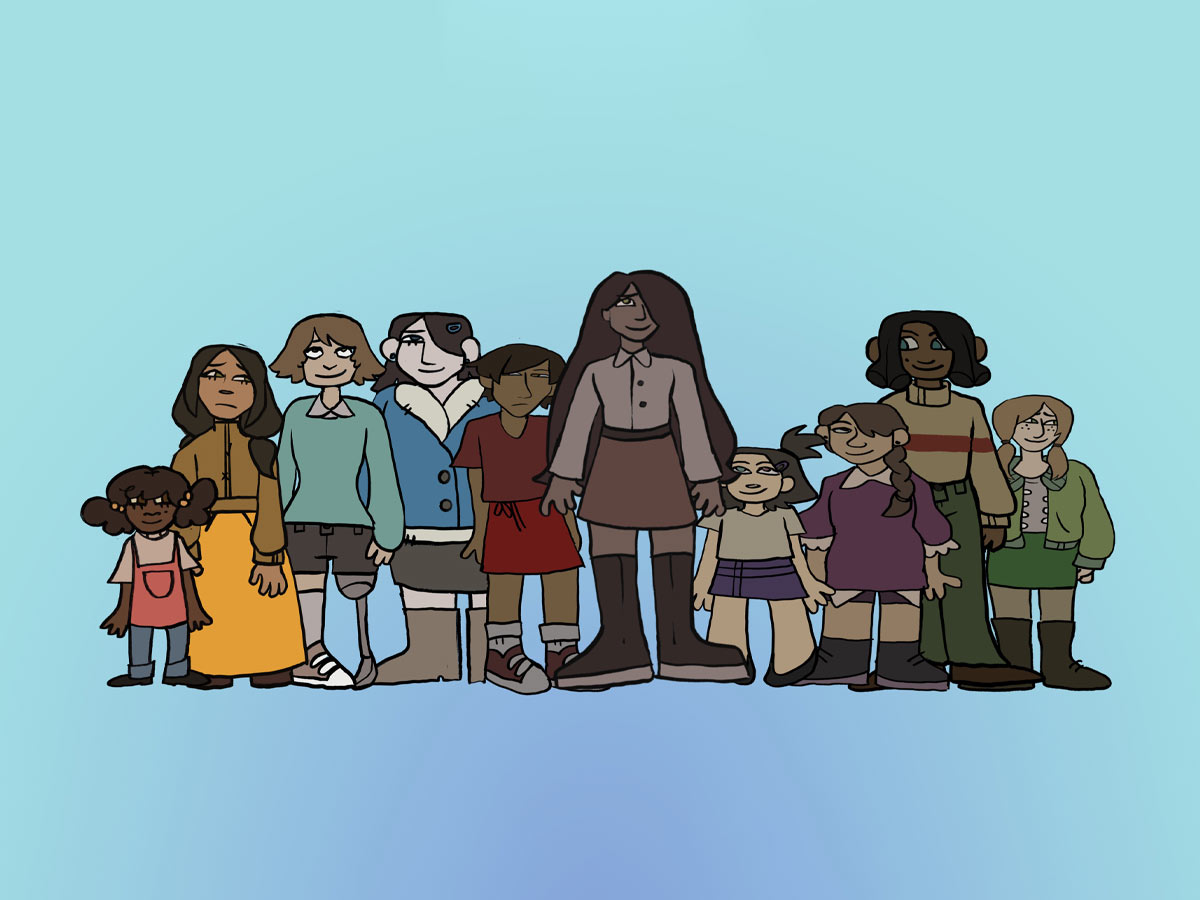
Artist: Remedial V. Wulph. Animated short film Indigenous Girlhood: Narratives of Colonial Care in Law and Literature documents the coming-of-age stories of Indigenous girls and women in Canada.
An animated short film written and directed by Toronto Metropolitan University (TMU) sociology professor Megan Scribe is more than just a product of her doctoral research on violence against Indigenous girls and the narrative surrounding it. Creating the film was also an opportunity to research and demonstrate how to strengthen ties between academic and community-based researchers and disseminate her findings outside academia.
As a member of the Norway House Cree Nation and Education Director of Yellowhead School with the Yellowhead Institute, it was important for professor Scribe to share her research in an accessible way with those directly impacted, including her own family and community.
“The topics that are addressed in the animation are topics drawn from communities that I'm a part of—experiences of discrimination in education systems, in the criminal justice system, in child welfare,” said professor Scribe. “Hopefully the video provides a language and a vocabulary for talking about these kinds of issues and helps us work towards solutions in ways that we previously were unable to do.”
Over the course of a year, professor Scribe worked with Indigenous artists across Canada and the U.S. to create her four-minute short film Indigenous Girlhood: Narratives of Colonial Care in Law and Literature, which is based on her doctoral dissertation.
The film touches on the experiences of Indigenous girls coming of age in the Canadian context and lays out the systems of power, domination and oppression that affect Indigenous girls’ lives, from settler colonialism and the Sixties Scoop to patriarchy and ableism. The film also shows how violence against Indigenous girls and women is talked about in Canada and how legal inquiries leave an incomplete picture of Indigenous girlhood.
“The child welfare system, the criminal justice system, even the education system can become a carceral space,” said professor Scribe. “I explain how this can affect someone's ability to come of age and become an adult and how it can be life threatening to grow up as an Indigenous girl in Canada.”
In order to make her research findings useful for the community, professor Scribe needed to reconceptualize the research in a way that was relevant, compelling and accessible to non-academic audiences. One way to do that was to remove jargon and technical terms from the script. Professor Scribe also believes the animated format helped the film appeal to a wide audience.
The film premiered in February 2022 at an online launch event, where professor Scribe received positive feedback from the community on the topics covered as well as the way the information was delivered. The Yellowhead Institute has also since shared the film, which can be viewed on its YouTube channel (external link, opens in new window) .
“I think one of the most personal measures of the film’s impact was my mom watching the film. She told me what it meant to her and that it was very significant to her. She heard herself in the narrative and asked, ‘Which one of these girls am I?’ One of the girls in the film is actually modelled after one of my sisters, so it was very meaningful for us to share that together.”
Professor Scribe created the film with producer and animator Graham Constant from Opaskwayak Cree Nation, graphic designer Remedial V. Wulph, performer and playwright Darla Contois from Misipawistik Cree Nation and composer Zane Constant from Opaskwayak Cree Nation. The film is a snapshot of professor Scribe’s Indigenous girlhood research. She is also working on a book for academic audiences based on the same research.