Recap – A display of Ryerson’s innovation excellence at the OCE Discovery conference
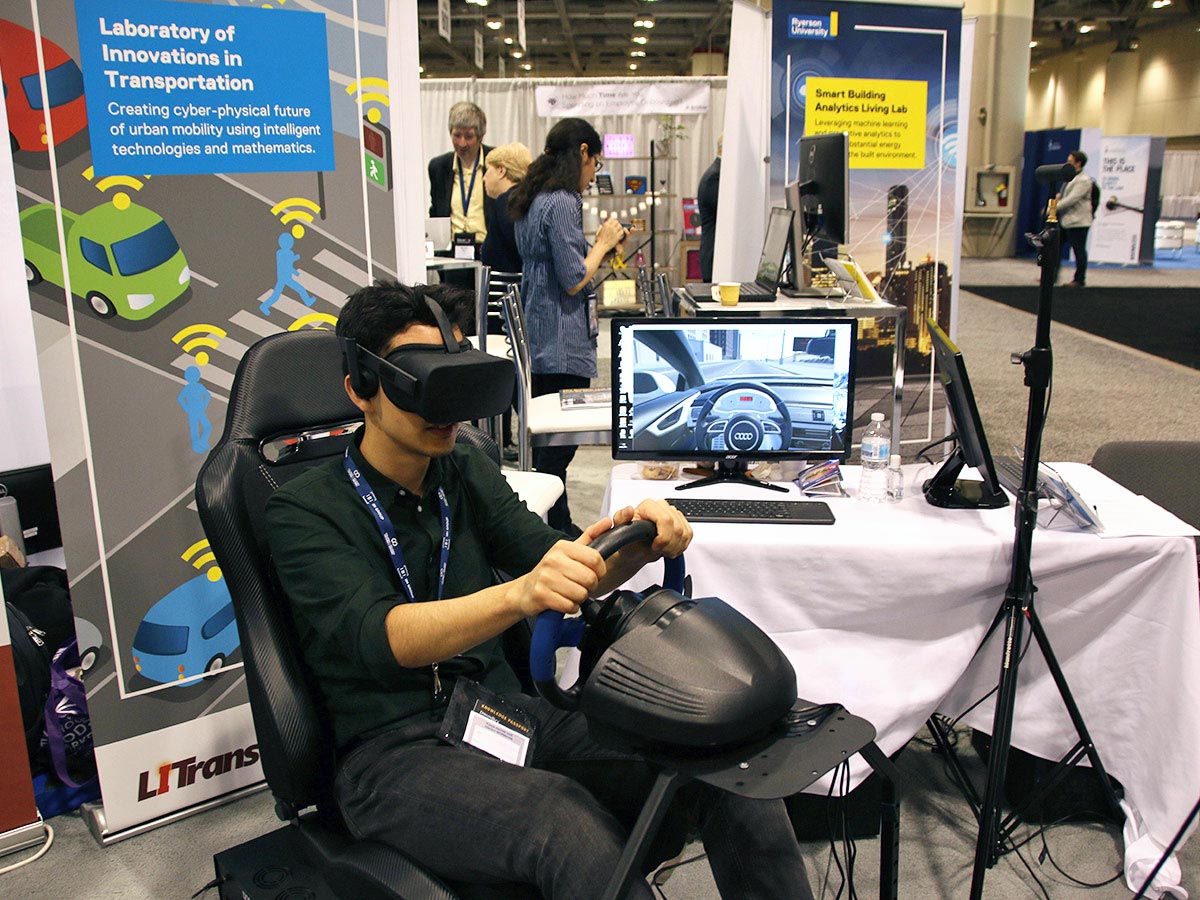
Rafael Vasquez, a civil engineering masters student and part of professor Bilal Farooq’s team at the Laboratory of Innovation in Transportation (LiTrans), demonstrates the virtual and immersive reality driving experience that the lab brought to the conference.
Ryerson researchers recently showcased their forward-looking projects at a conference dedicated to Ontario’s thriving innovation ecosystem.
The Ontario Centres of Excellence (OCE) Discovery conference, held on May 13 and 14 at the Metro Toronto Convention Centre, was attended by more than 3,000 people and featured close to 500 exhibitors. The conference theme of “what’s next” was strongly represented at the Ryerson display booth, including an interactive remote conferencing system to enable students with autism spectrum conditions to attend school, developed by information technology management professor Deb Fels and early childhood studies professor Jason Nolan. Civil engineering professor Bilal Farooq and architectural science professor Jenn McArthur demonstrated their use of next-generation machine learning and sensors in autonomous vehicles and building energy performance, respectively. Aerospace engineering professor Jeff Xi also attended the conference, displaying Ryerson’s aerospace research with a demonstration of a morphing aircraft winglet.
With representatives from Ryerson centres, like the Centre for Urban Energy, the Cybersecure Catalyst, the DMZ and the Clean Energy Zone, Ryerson researchers networked and connected with key players from government and the investment community, as well as potential industry partners. Networking was also a valuable new experience for the student members of the Ryerson research teams, said professor Fels.
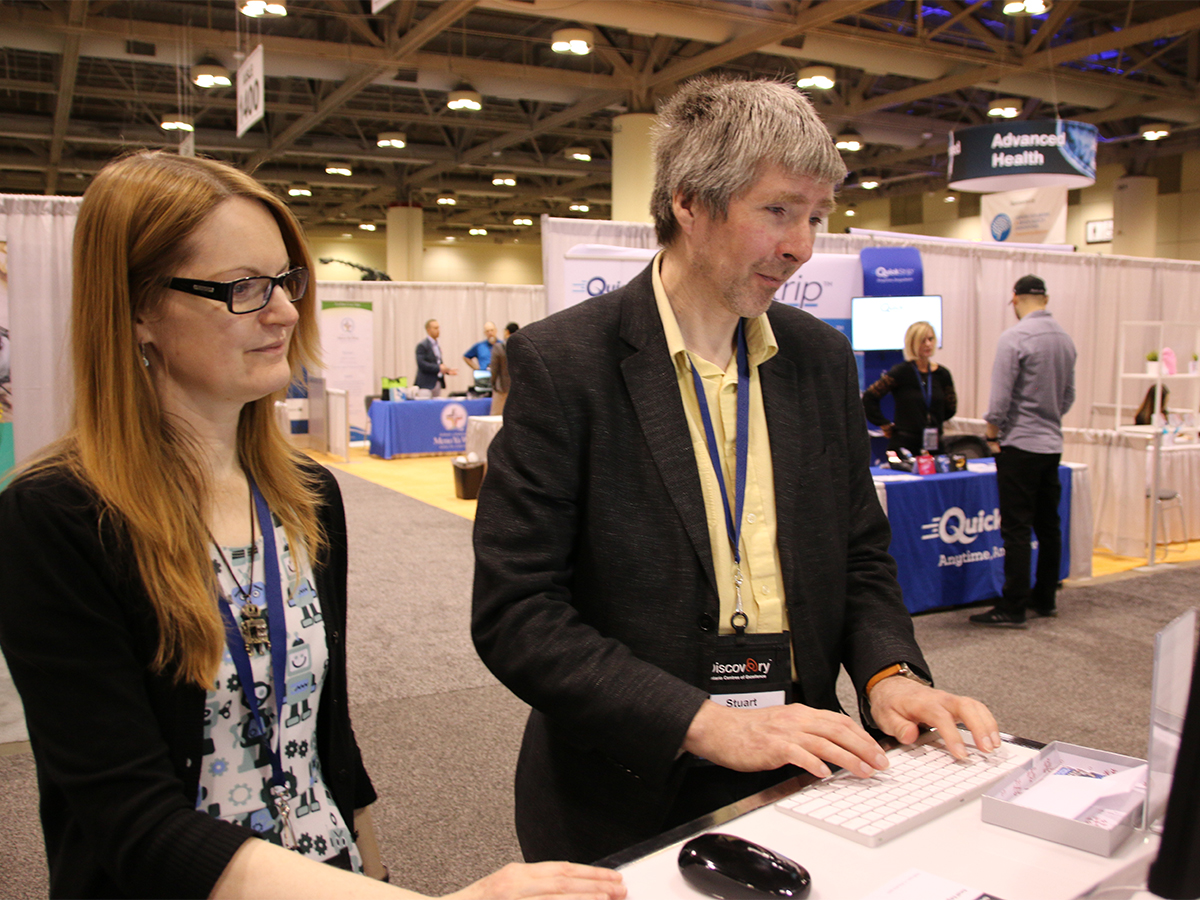
“It’s good for the students because it gets them out in public,” she said at the WebMoti project display at Ryerson’s booth, where student researchers were on hand to help explain and demonstrate the project.
OCE Discovery provided not only a unique opportunity for Ryerson researchers to share knowledge, translate innovation to commercialization and ignite new collaborations at the provincial, national and international level. It also helped cement Ryerson’s reputation as a leading incubator of transformative ideas.
Ryerson featured the following at the conference this year:
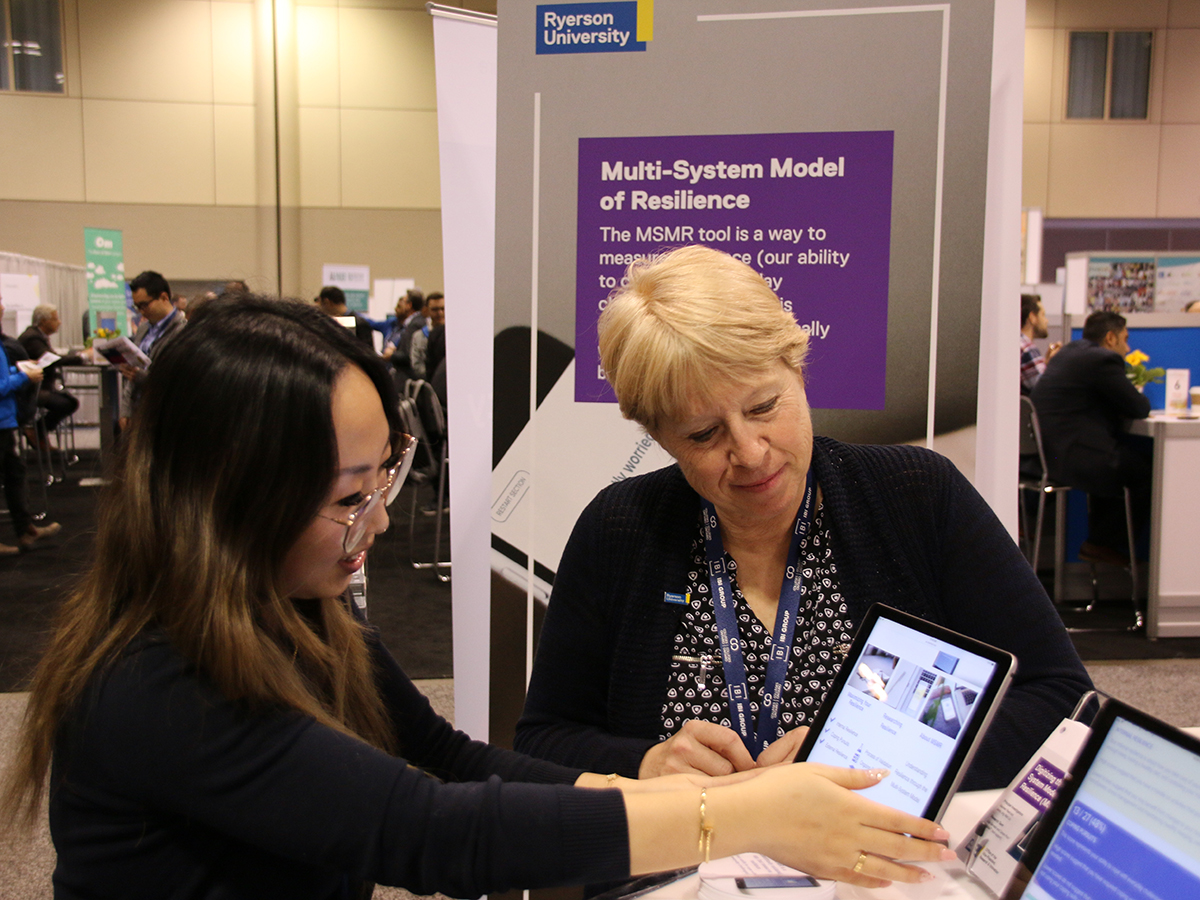
- Faculty of Arts professor Maureen Reed, PhD candidate Jenny Jing Wen Lieu and their research team presented their project, Digitizing the Multi-System Model of Resilience. An app has been developed that can help assess personal sources of resilience along with offering resources on how to improve personal resilience.
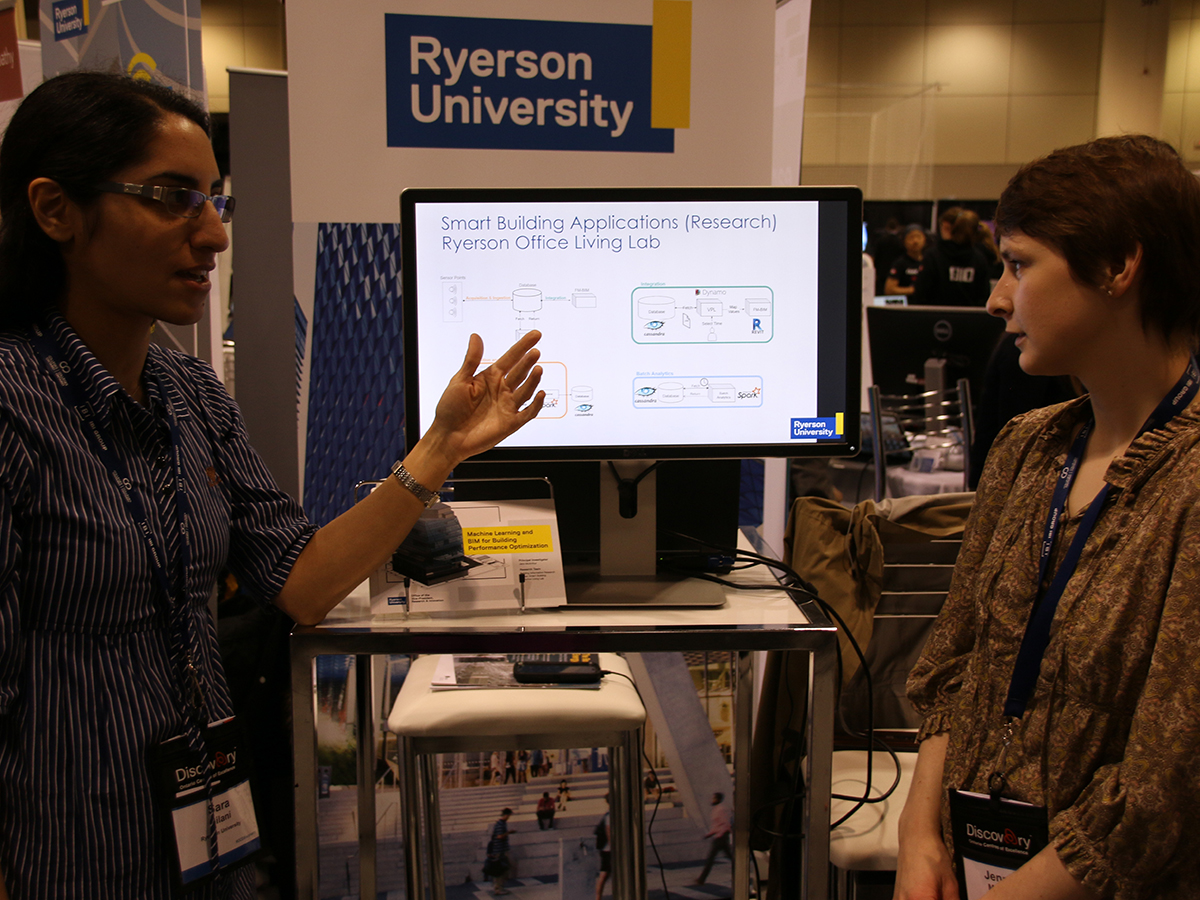
- Professor Jenn McArthur from the Faculty of Engineering and Architectural Science and her Smart Building Analytics Lab research team showed off information on the Machine Learning and BIM (Building information Model) for Building Performance Optimization project. Professor McArthur is investigating how to leverage sensor networks to optimize the energy performance of buildings.
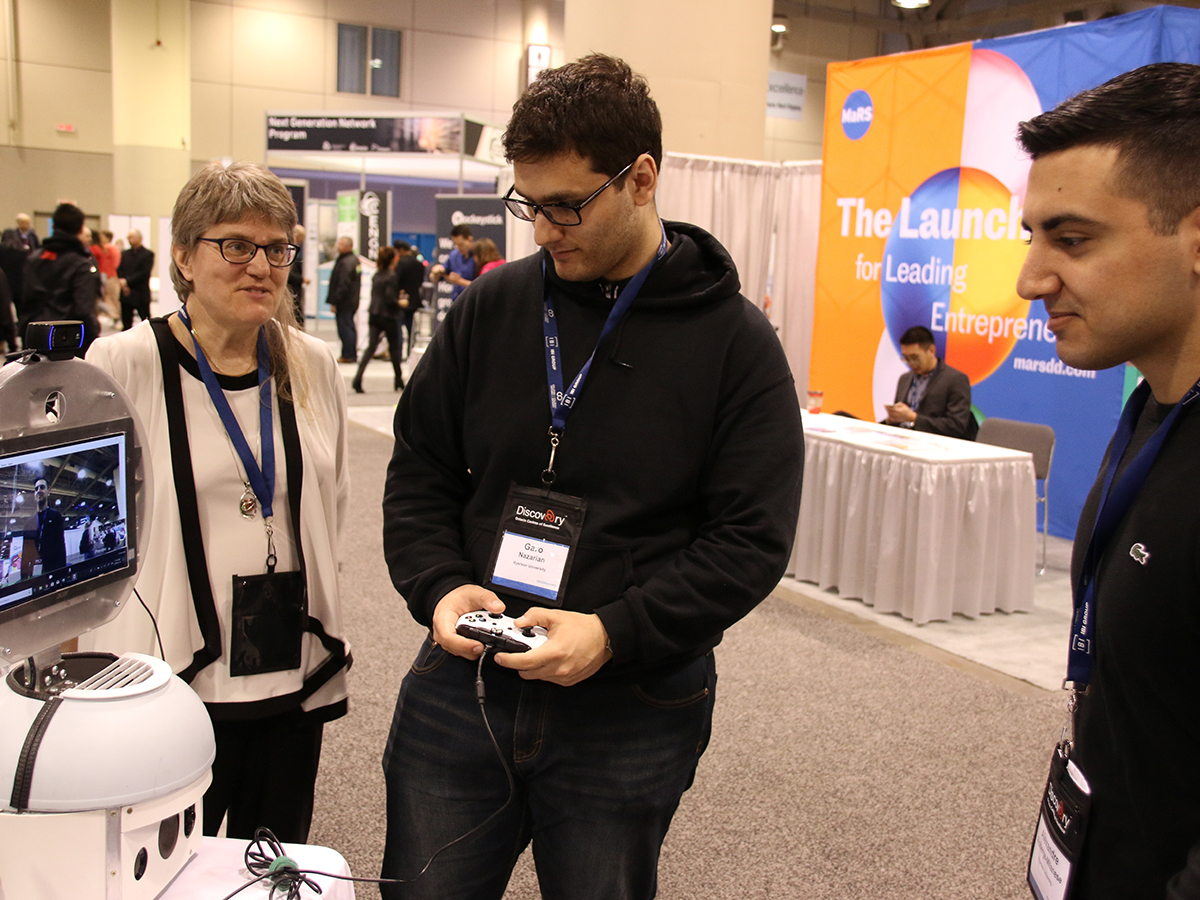
- WebMoti, a collaboration between Ted Rogers School of Management professor Deborah Fels and Faculty of Community Services professor Jason Nolan, is a remote conferencing technology that can be used by students with autism spectrum disorder to participate in a classroom setting while controlling stimulus exposure.
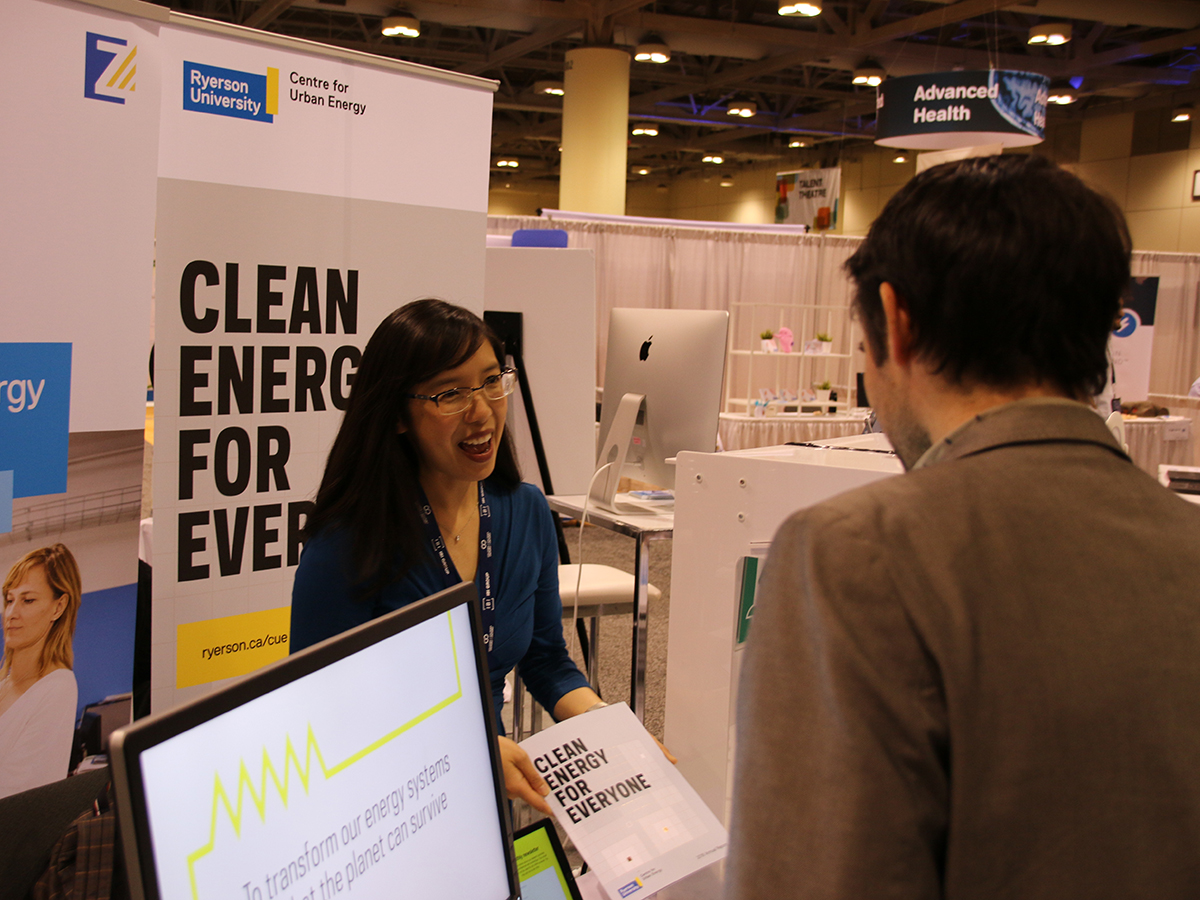
- The Centre for Urban Energy (CUE) was represented by Faculty of Engineering and Architectural Science professor Bala Venkatesh and his research team. They promoted CUE projects, Partnership with India sparks innovation in Canada: Tata power Delhi Distribution Limited and Plugging into a new market for electricity: The Independent Electricity System Operator (IESO).
- The Clean Energy Zone, an incubator housed in the Centre for Urban Energy, showcased startup Argentum Electronics. Founded by Bolis Ibrahim, Argentum Electronics has developed a new Power-over-Ethernet product, a single cable that can deliver both a secure data connection and power to electrical devices.
- The DMZ, a world-leading university-based technology incubator, showcased startup company Turalt and its product, a software tool designed to help people add more empathy to their online communications.
- Professor Bilal Farooq from the Faculty of Engineering and Architectural Sciences and his team from the Laboratory of Innovations in Transportation (LiTrans) held a virtual reality demonstration for their project, the Cyber-Physical Future of Urban Mobility. Participants could experience being a pedestrian or in a vehicle on roadways with connected cars.
- The Cybersecure Catalyst, Ryerson’s new national centre for helping Canadians and Canadian businesses address the opportunities and challenges of today’s cybersecurity industry, was represented at the conference.
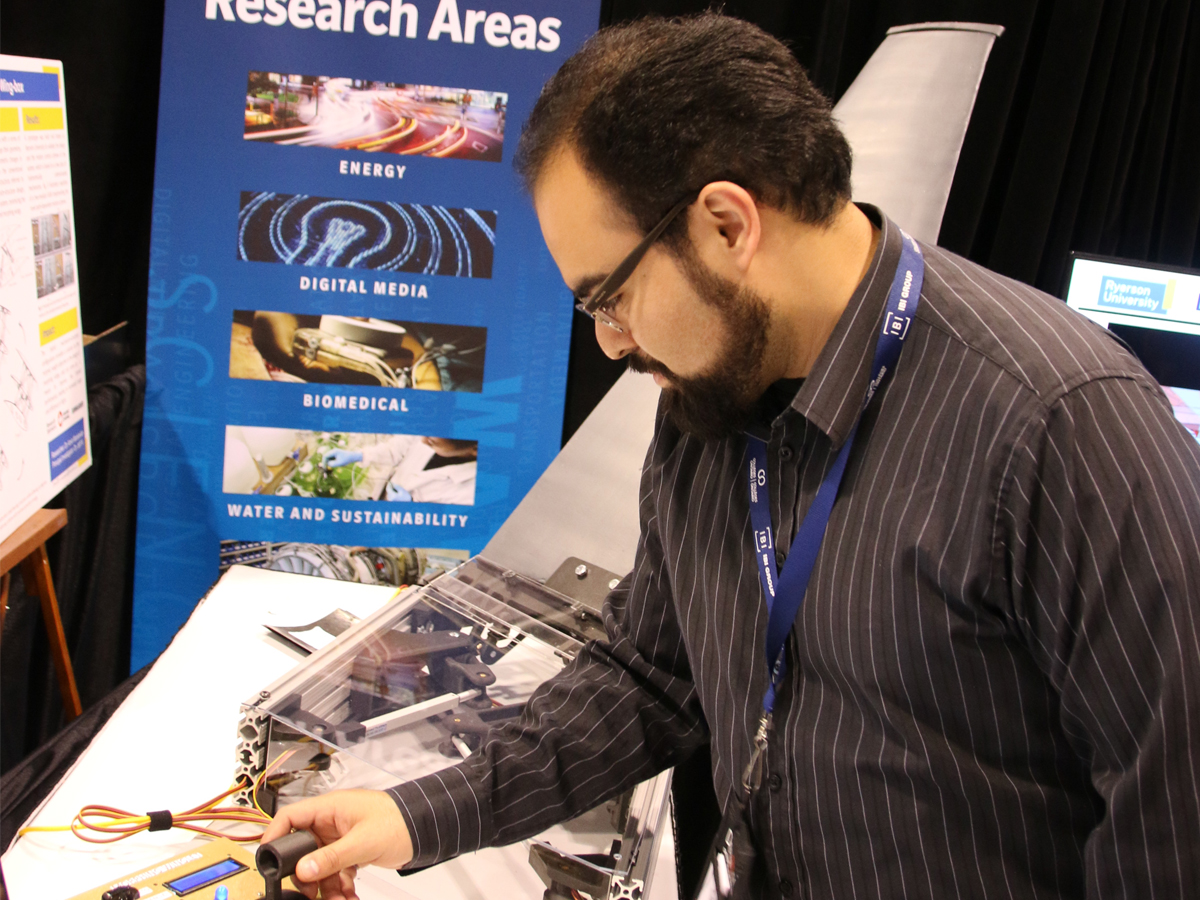
- In the advanced aerospace demonstrations area, professor Fengfeng (Jeff) Xi from the Faculty of Engineering and Architectural Science displayed his morphing winglet prototype. The morphing winglet is designed to help aircraft achieve more lift for improved fuel efficiencies.