Discovery Grants provide funding to help advance Ryerson research
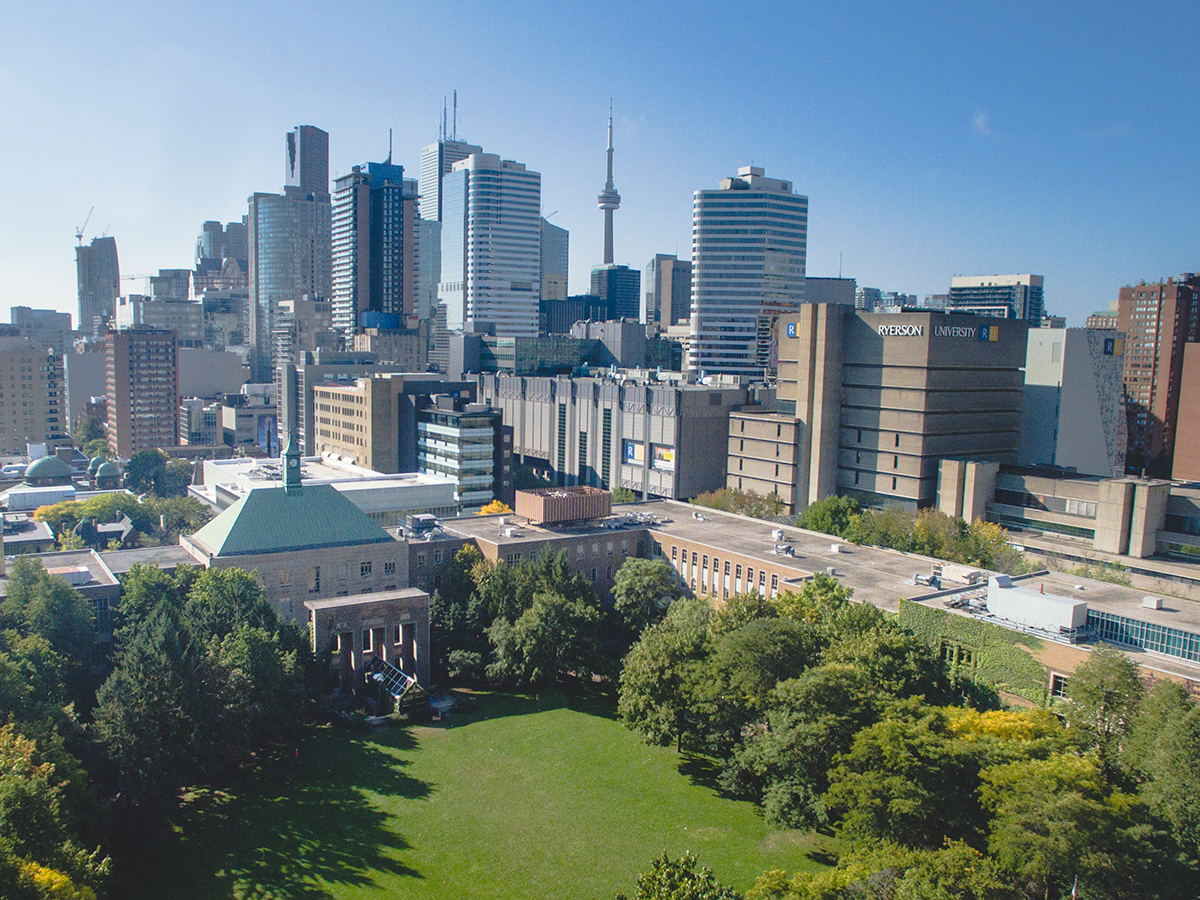
Ryerson researchers are set to receive $6.76 million in Discovery Grants from the Natural Sciences and Engineering Research Council of Canada.
Earlier this week it was announced that Ryerson University researchers will receive $6.76 million in Discovery Grants from the Natural Sciences and Engineering Research Council of Canada (NSERC).
The Discovery Grant program supports ongoing research programs with long-term goals and awards funding to individual researchers for terms of up to five years. Applications are reviewed by Canadian and international peers through a merit-based selection process.
“Congratulations to the many Ryerson researchers whose research projects will be supported by these Discovery Grants,” said Steven N. Liss, vice-president, research and innovation. “This support is key in helping to advance innovation and knowledge in natural sciences and engineering. Ryerson’s ongoing commitment to the cultivation of research excellence across disciplines is demonstrated by this success.”
The funds are part of $588 million awarded to more than 4,850 researchers and students through the program this year, money originating in the 2018 federal budget’s $4 billion commitment to funding research.
Close to 40 Ryerson researchers will be supported by the Discovery Grants, including 10 early career research supplements. The following lists the researchers who have received a Discovery Grant and the names of their projects:
- Haitham Aboshosha (Civil Engineering): Hybrid CFD-wind tunnel platform for wind load evaluation of tall buildings
- Habiba Bougherara (Mechanical and Industrial Engineering): Creating the next generation of antimicrobial hybrid composites for biomedical applications: Manufacturing, multiscale modelling, and mechanical characterization
- Neil Bruce (Computer Science): Attention and selection mechanisms in neural networks and computer vision
- Lesley Campbell (Chemistry and Biology): What are the fitness and evolutionary consequences of the Y chromosome?
- Mucahit Cevik (Mechanical and Industrial Engineering): Novel optimization methods for cancer screening and treatment
- David Cramb (Chemistry and Biology): The biophysical chemistry of nanoparticle-biosystem interactions
- Konstantinos Derpanis (Computer Science): Deep video analysis
- Seth Dworkin (Mechanical and Industrial Engineering): Understanding soot formation from combustion with numerical modelling
- Farhad Ein-Mozaffari (Chemical Engineering): Investigation of continuous-flow mixing of non-Newtonian fluids with energy-efficient coaxial mixers through advanced flow visualization techniques and computational fluid dynamics
- Alan Fung (Mechanical and Industrial Engineering): Novel renewable energy based integrated energy systems towards net-zero energy buildings and communities
- Anatoliy Gruzd (Information Technology Management), Studying human dynamics at a massive scale: The development and assessment of a distributed approach for effective visualization of 100+ million-node social networks
- Xijia Gu (Electrical, Computer, and Biomedical Engineering): Laterally-distributed fiber Bragg gratings for fibre laser and fibre sensing applications
- Aziz Guergachi (Information Technology Management): Explainable AI, data analytics and industrial engineering methods for primary care
- Khandaker M. Anwar Hossain (Civil Engineering), Smart high-performance concrete composites for developing robust and resilient infrastructures
- Qinmin (Vivian) Hu (Computer Science): When search goes cognitive
- Darko Joksimovic (Civil Engineering): Decision support for urban water management - Enhanced technology design, modelling and optimization approaches for collection systems
- Gul Khan (Electrical, Computer, and Biomedical Engineering): CAD tools for multi/many-core NoC and heterogeneous computing system design
- Miranda Kirby (Physics): Development of image analysis tools for pulmonary spatial and temporal mapping
- Ali Lohi (Chemical Engineering): Modelling and control of membrane fouling in ultrafiltration of water and wastewater
- John Marshall (Chemistry and Biology): Biophysical and biochemical techniques for the analysis and targeting of ligand-receptor supramolecular complexes
- Atefeh Mashatan (Information Technology Management): Cryptographic enhancing of data security in IoT devices
- Mehrab Mehrvar (Chemical Engineering): Actual wastewater treatment using integrated advanced oxidation technologies and biological processes
- M.W. Mohamad Ismail (Mechanical and Industrial Engineering): Investigating supply chain contracts under weather-sensitive demand
- Farah Mohammadi (Electrical, Computer, and Biomedical Engineering): Développement d'outils de simulation pour la qualification fiable de systèmes micro / Nanoélectroniques en boitier de circuit intégré
- Saber Moradi (Civil Engineering): Development of high-performance structural steel systems for resilient and sustainable buildings
- Margaret Moulson (Psychology): Exploring mechanisms underlying face learning in infants and adults
- Mohammad Nikoofal (Business Management): Defending against intentional and non-intentional threats under information asymmetry
- Pablo Olivares (Mathematics): Environmental financial derivatives: Pricing and risk management
- Marcello Papini (Mechanical and Industrial Engineering): Modelling and validation of constructive and destructive solid particle erosion processes
- Jonghun (Jay) Park (Graphic Communications Management): Evaluating returnable packaging systems for sustainable electronic commerce supply chains
- Russell Richman (Architectural Science): Residential building archetype classification to drive net-zero energy planning for the Canadian residential building stock
- Cory Searcy (Mechanical and Industrial Engineering): Transitioning to sustainable supply chains
- Khaled Sennah (Civil Engineering): Development of cost-effective box girder bridge design and accelerated construction in skew and straight alignments
- Mark Towler (Mechanical and Industrial Engineering): Structure-property relationships in ionically substituted bioactive glasses
- Scott Tsai (Mechanical and Industrial Engineering): All-aqueous water-in-water droplet microfluidics
- Bala Venkatesh (Electrical, Computer, and Biomedical Engineering): Optimal planning and operation of AC-DC distribution systems
- Foivos Xanthos (Mathematics): Applications of functional analysis in foundational aspects of mathematical finance
- Victor Yang (Electrical, Computer, and Biomedical Engineering): Optical coherence tomography, molecular guided imaging, and surgical navigation for targeted and controlled laser ablation
- Kourosh Zareinia (Mechanical and Industrial Engineering): Telerobotic systems for medical and industrial applications