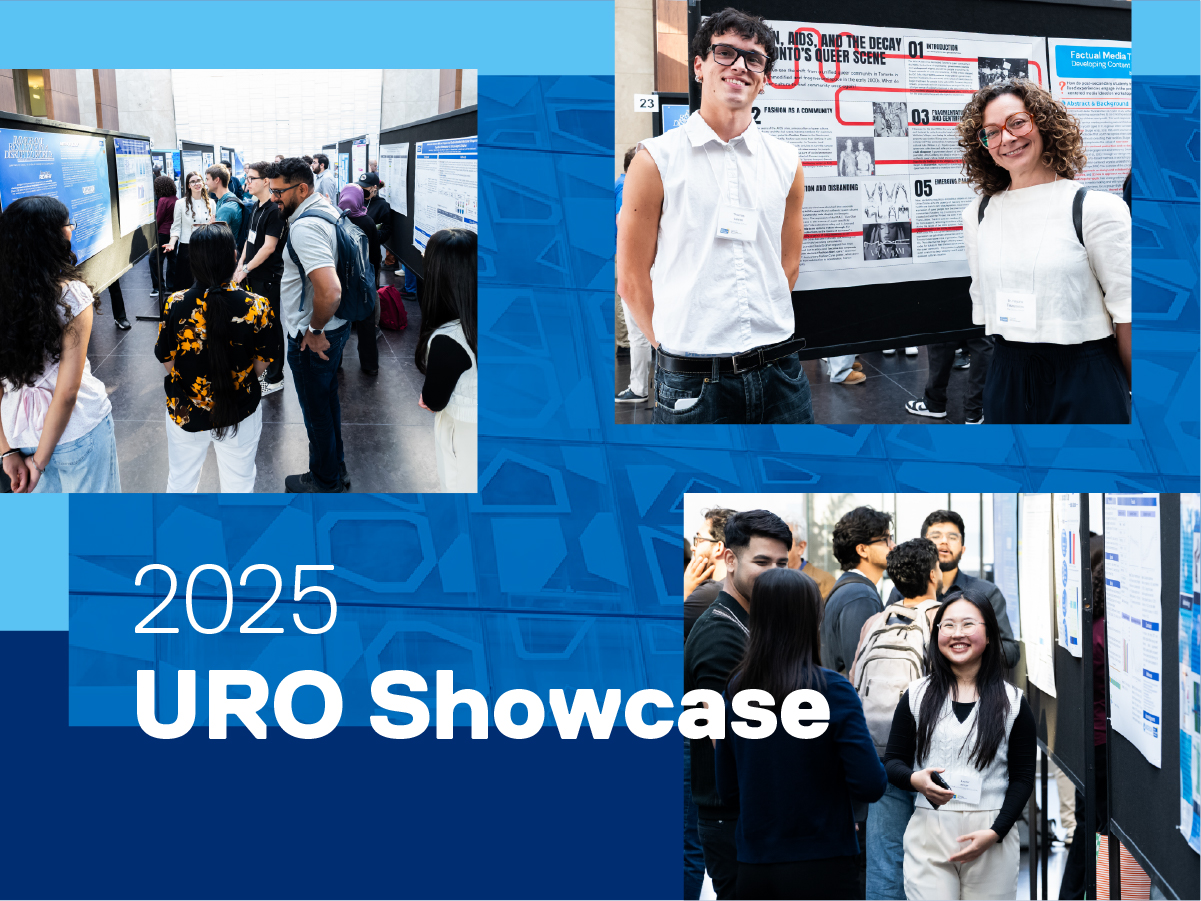
Student SRC projects highlight innovation at 2025 Undergraduate Research Opportunities Showcase
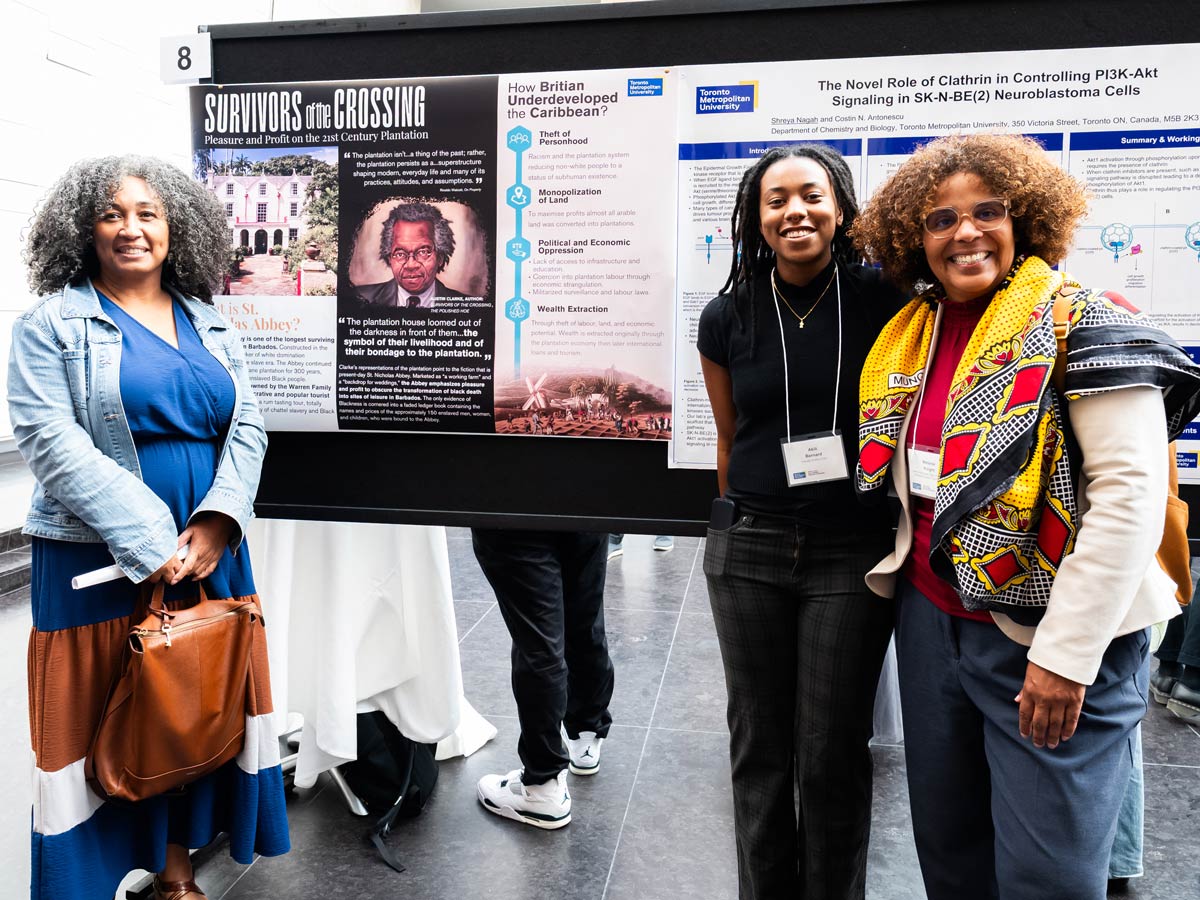
Toronto Metropolitan University students showcased their Undergraduate Research Opportunities projects at the Sears Atrium on September 29, 2025
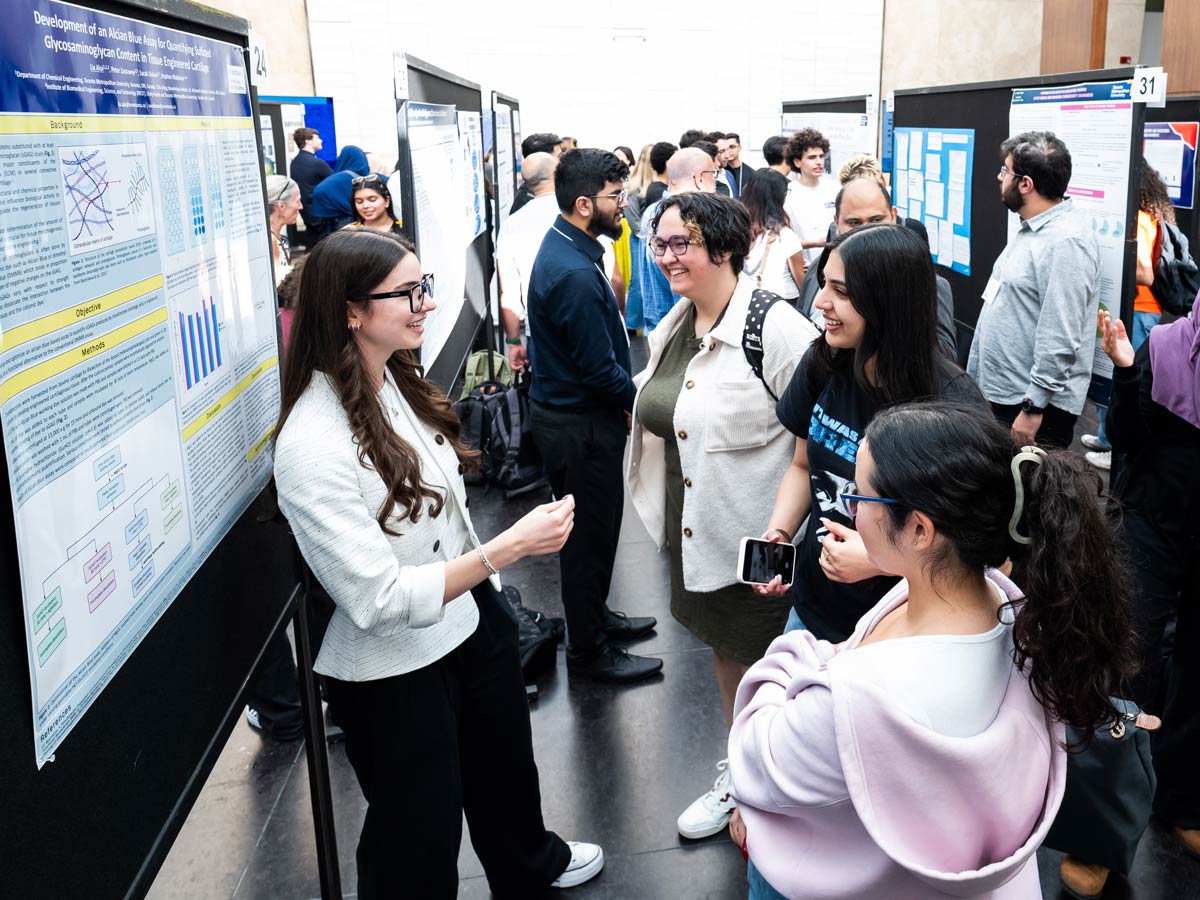
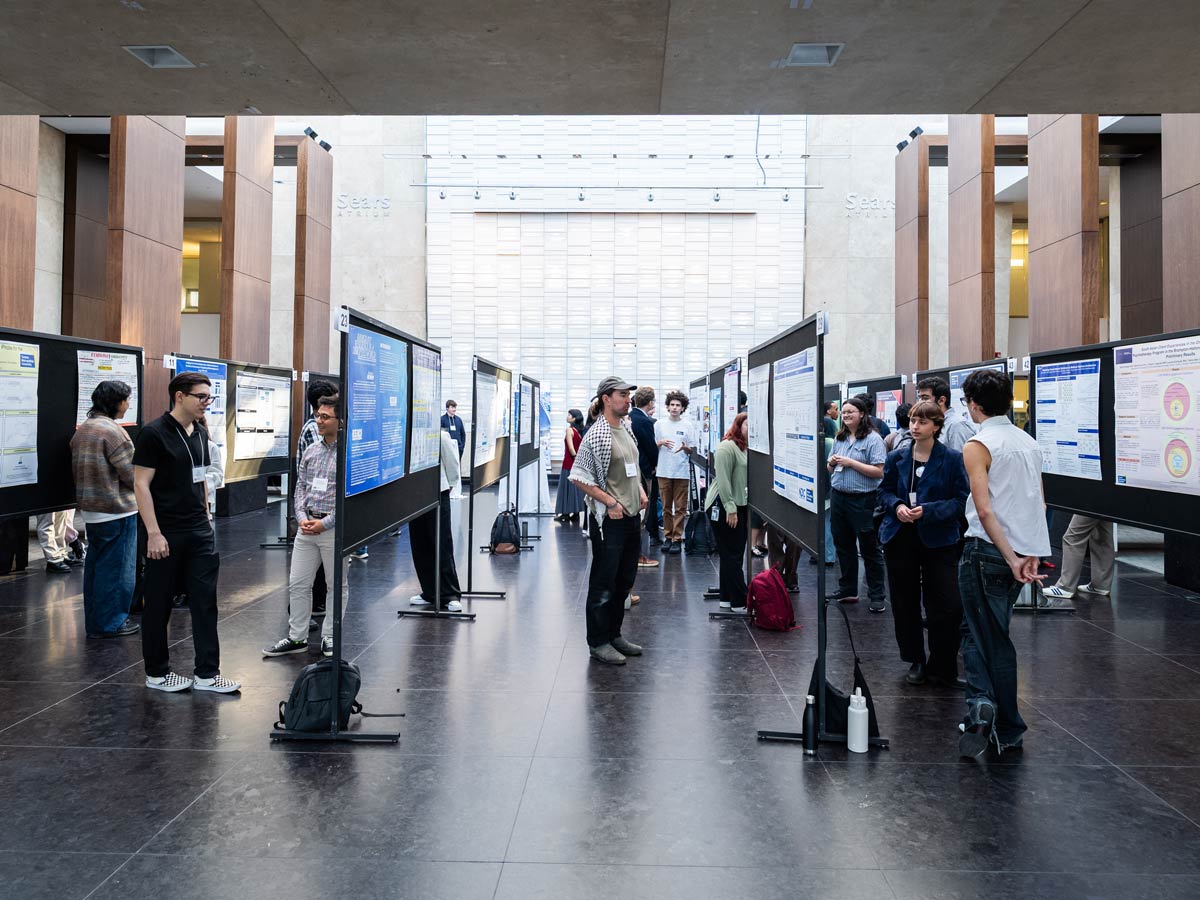
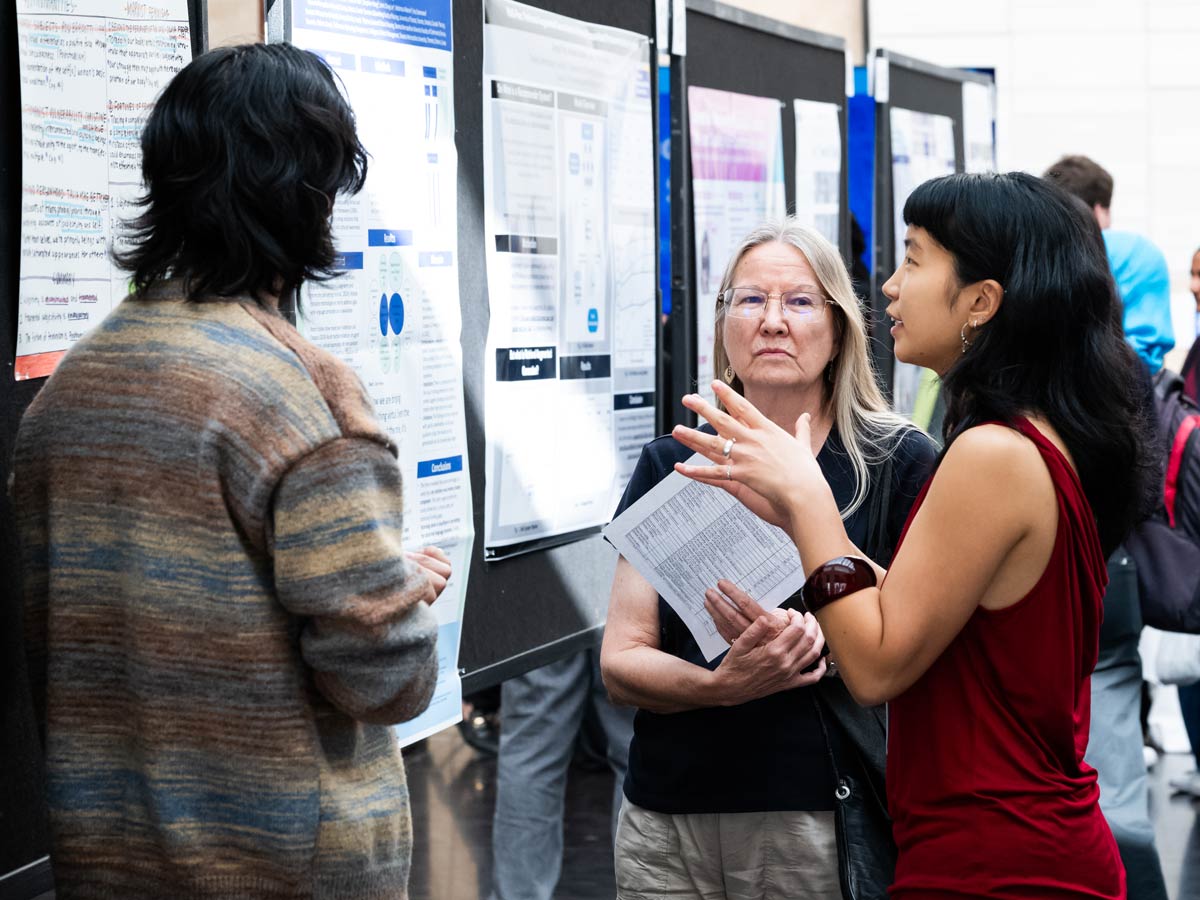
Over 50 Toronto Metropolitan University (TMU) student research projects from across six faculties were presented at the Undergraduate Research Opportunities (URO) Showcase in the Sears Atrium on September 29, 2025. The showcase was the culmination of the summer URO program, where students worked directly with faculty mentors and expanded their research-related skills.
Student project topics ranged from tracking the evolution of anti-hate laws since WWII to looking at improving reporting in Black communities, among many others. This year’s two-hour event gave students the chance to share their projects with attendees.
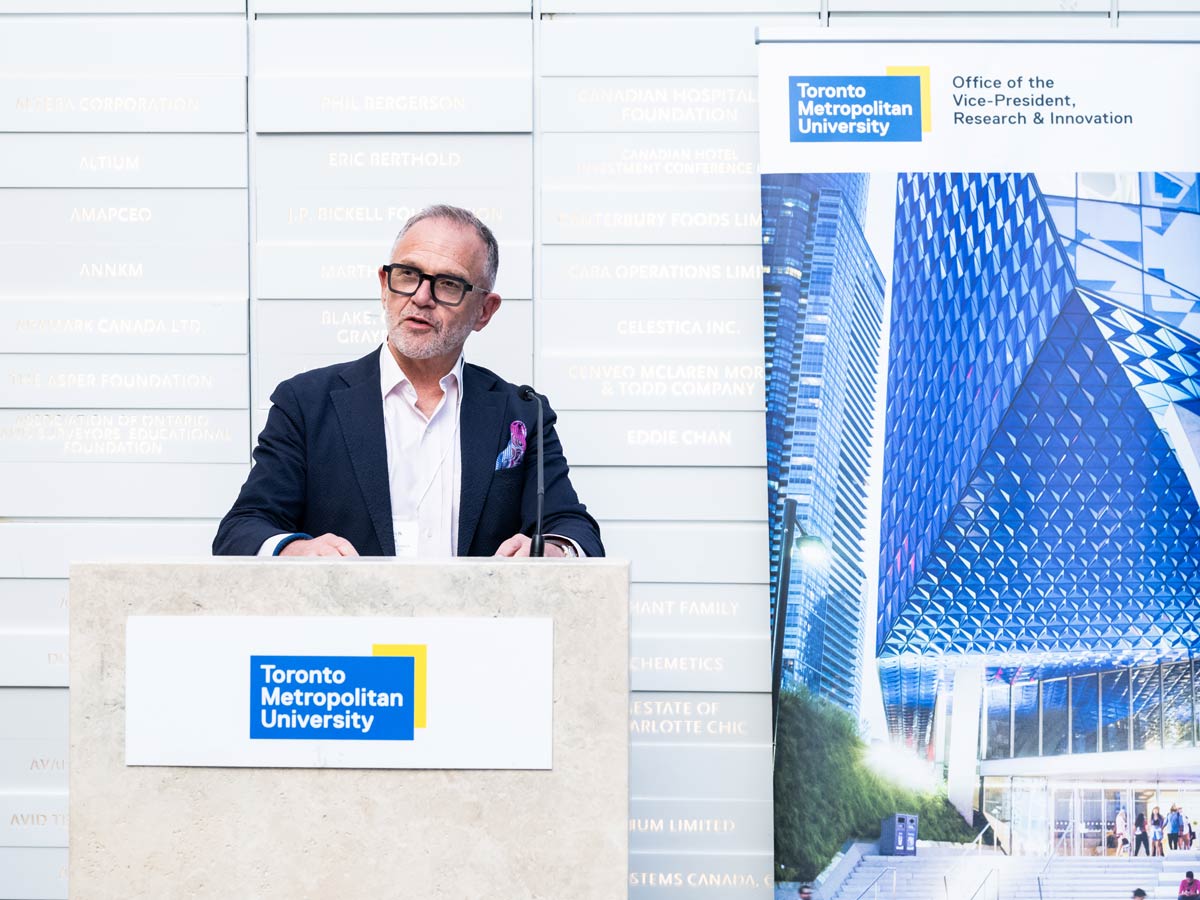
“Today’s event is a wonderful opportunity to come together to showcase the excellence of our undergraduate researchers and discuss the ideas and diverse projects, spanning a range of disciplines, that have taken shape over the summer,” said Steven N. Liss, TMU’s vice-president, research and innovation, during his opening remarks.
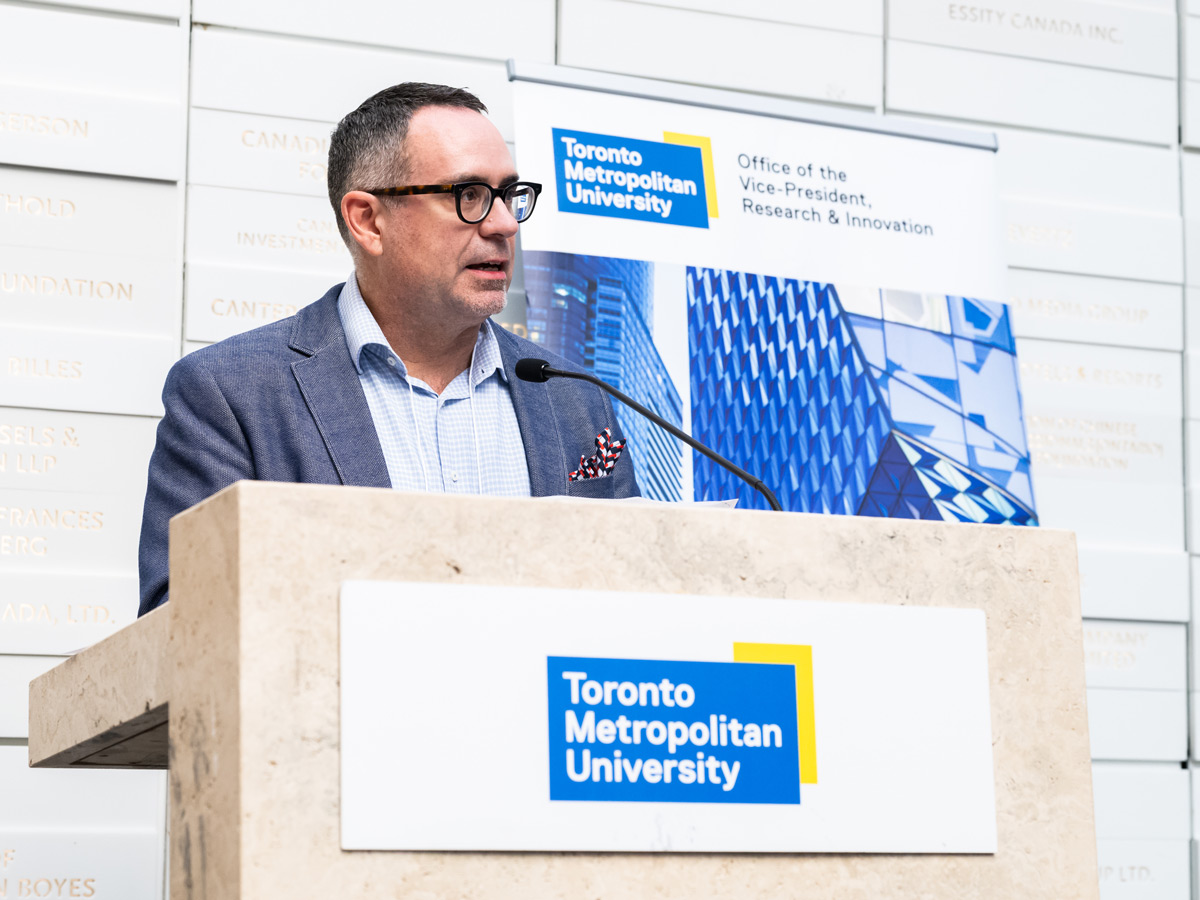
Dean of Libraries, Mark Robertson, described how the URO Showcase “perfectly embodies” the mission of the TMU Libraries. “This event is the living, breathing example of communities forging connections and igniting discovery,” he said in his speech to attendees.
Running annually since 2019, the faculty-based, competitive URO program is funded by the Office of the Vice-President, Research and Innovation (OVPRI). In addition to the URO Showcase, the 14-week program includes poster presentation workshops focused on key knowledge translation skills led by TMU Libraries. For the second consecutive year, the OVPRI funded five TMU students to participate in a program hosted by William Osler Health System, which focused on health-related work. Applications for the next URO will open early in 2026.
Learn more about the URO program.
URO Showcase select projects
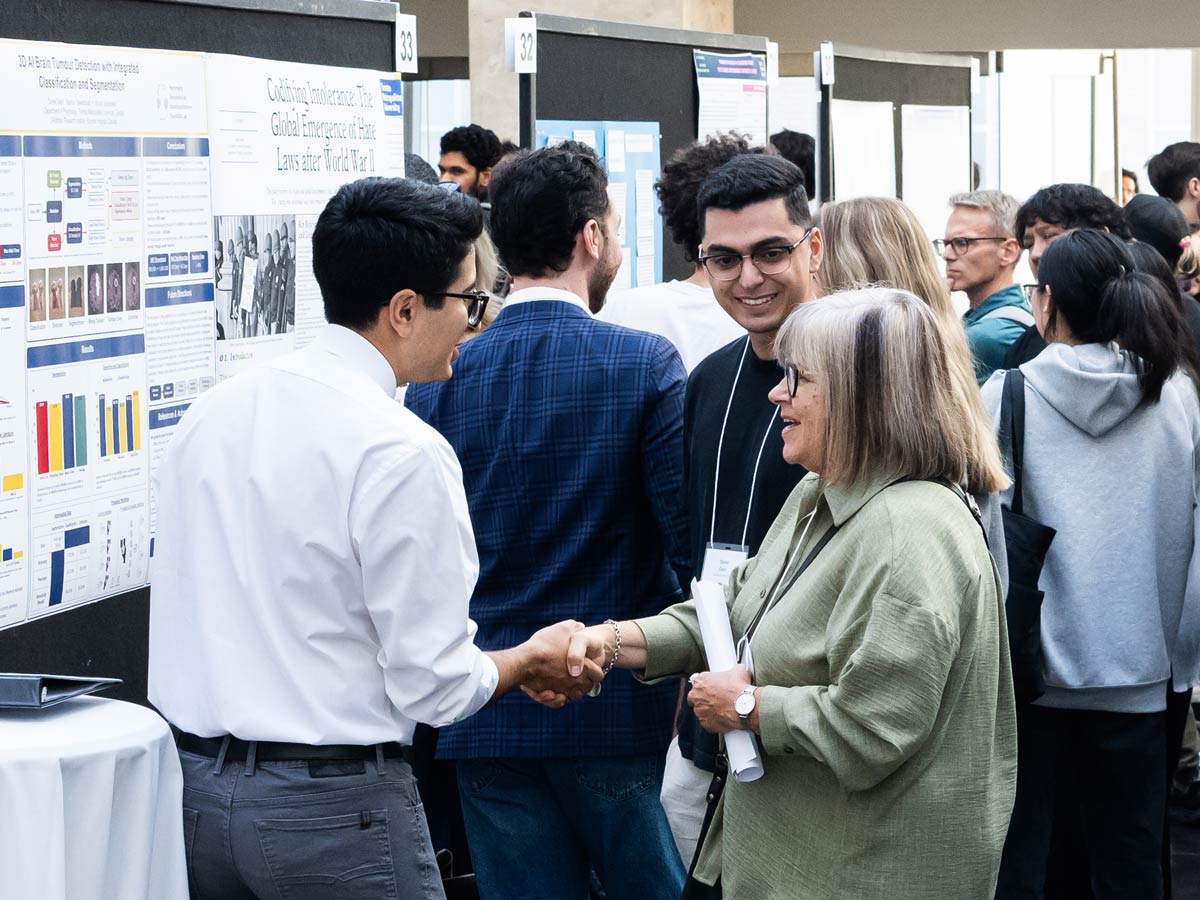
Codifying Intolerance: The Global Emergence of Hate Laws After World War II
Fourth-year history student Max Obadia, who hopes to study law, looked at court cases from around the world to track the evolution of anti-hate legislation, starting with the post-Second World War Nuremberg Trials through to the 1964 passage of the Civil Rights Act in the United States. He also looked at the adoption of similar legislation in Canada, which happened in 1970 with changes to the criminal code.
Obadia’s project, supervised by history professor Jennifer Tunnicliffe, acknowledged that anti-hate laws have always had to strike a balance with free speech to avoid “replicating the very authoritarianism the postwar order sought to defeat.” He said the current charged political climate in the United States offers a fascinating opportunity for comparison with the past.
“People say history repeats itself, and there are certain patterns that you see,” Obadia said. “That’s why I really enjoyed doing this, to see where they were at that time period and where we are today. Where have we gone with this? Has this really been implemented as we hoped? That’s something that piqued my interest for sure.”
Effect of an Allulose Preload on Diet-induced Thermogenesis, Substrate Oxidation, Glycemic Response, and Satiety Over 5 hours in Normal-weight Adults
When healthy adults eat allulose, a low-calorie sugar substitute, with a meal, does it affect calorie burning, blood sugar levels, energy use and appetite compared to regular sugar or other sweeteners? That question was at the heart of third-year nutrition student Rachel Lo’s project. She worked with Faculty of Community Services professor Nick Bellissimo at TMU’s Nutrition Discovery Labs to find the answer.
While the lab had already studied allulose on its own, its impact within a full meal was unknown. For Lo’s research, 12 healthy men and women received one of four randomized treatments in water: allulose, one of two other low-calorie sweeteners, or plain water. They consumed these alongside a standard breakfast on four separate mornings at least five days apart. After each meal, participants’ blood sugar levels, calories burned, the type of energy source used (fat or carbohydrates) and how full they felt after eating were all measured.
The findings were surprising. “We found that allulose significantly suppressed appetite compared to other low-calorie sweeteners, even though all participants consumed the exact same meal,” said Lo. “This could have major implications for the fields of nutrition and product development.”
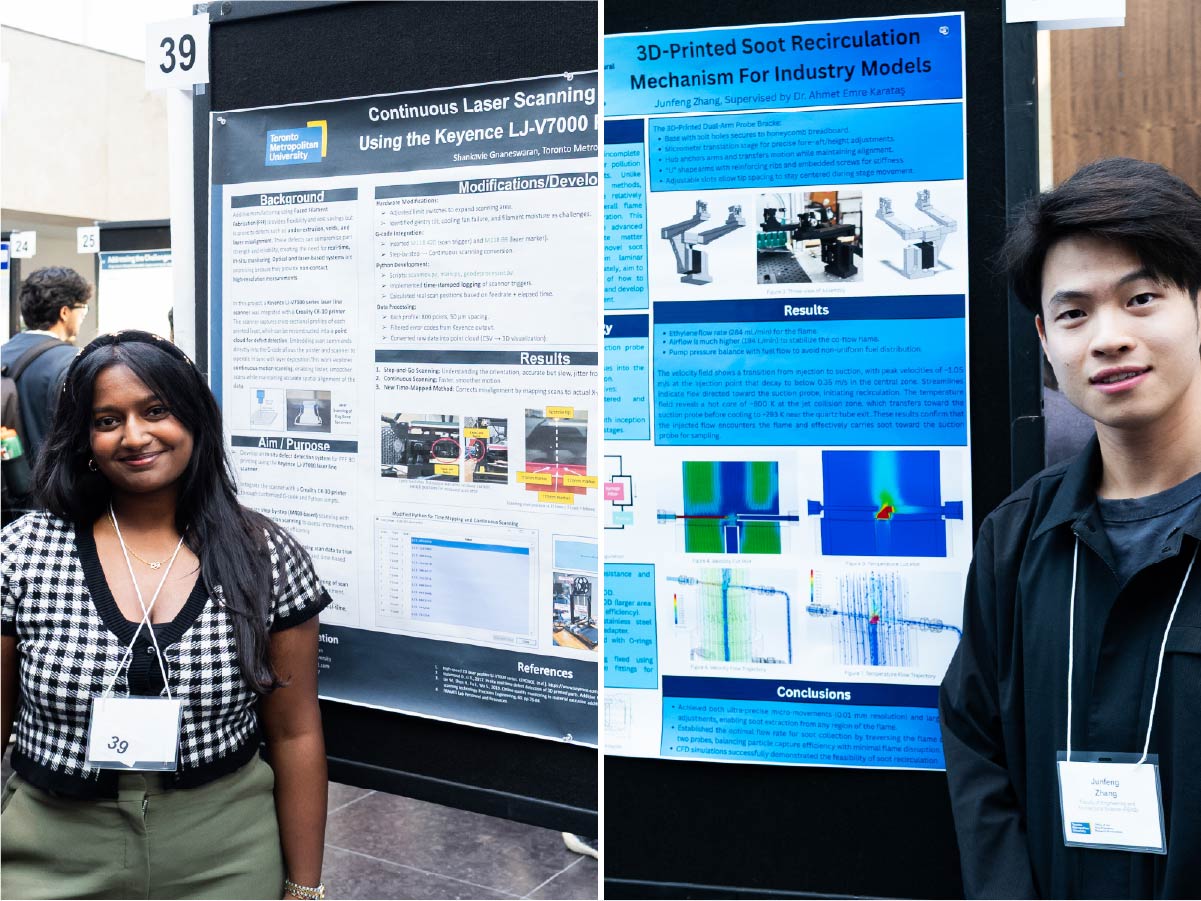
Continuous Laser Scanning for Additive Manufacturing Using the Keyence LJ-V7000 Profiler and CR-10 3D Printer
In industries such as aerospace, automotive and health care, 3D printing must be extremely precise, as even minor defects, such as air gaps or misaligned layers, can compromise safety and quality. But efficiently spotting and fixing these flaws during printing remains a challenge.
Fourth-year aerospace engineering student Shankavie Gnaneswaran tackled this problem by developing a system that uses continuous laser scanning to monitor the printing process in real time. She upgraded the scanner to cut inspection time per layer from 20 minutes to just 15 seconds, allowing defects to be detected and corrected on the spot.
This innovation could help 3D printing compete with traditional manufacturing by being more time- and cost-efficient and creating less waste. “This method shows a lot of promise and improves the scanning efficiency greatly,” said Gnaneswaran, who was supervised by Faculty of Engineering and Architectural Science professor Kazem Fayazbakhsh.
Machine Learning-driven Classification of Cerebral Hemodynamics Using Hyperspectral NIRS
Chemistry and biology student Amirhossein Foroughianyazdi explored how artificial intelligence (AI) could help health-care workers spot the warning signs of cardiac arrest earlier. Working with Faculty of Science professor Vladislav Toronov, Foroughianyazdi used a safe, non-invasive technique called near-infrared spectroscopy (NIRS), which tracks changes in blood oxygen levels, to gather data from body tissues.
He then tested 30 different machine learning models to see which ones were best at detecting patterns linked to cardiac arrest. The results showed that decision tree and ensemble models consistently outperformed others. By identifying which AI tools work best, this project aimed to support smarter, faster emergency care, thereby improving patient outcomes and advancing the integration of AI in health care. “Our main goal is to save lives,” said Foroughianyazdi.
U.S. Geopolitical Risk and Economic Policy Uncertainty: Impact on the Canadian Stock Market
Which has shaped Canadian financial markets and trade policy more: U.S. geopolitical risk – events such as wars, pandemics and elections – or U.S. economic policy uncertainty? While past research has focused on the impact of these uncertainties within the U.S., little has explored how they affect closely linked yet separate economies like Canada. Accounting and finance student Chaaru Chaaru’s project aimed to fill that gap by analyzing how U.S. geopolitical risks and economic policy uncertainty influence the performance of Canada’s stock market.
She analyzed monthly data from 2017 to 2025 from the U.S. Geopolitical Risk Index and the Canadian stock market across 11 sectors, including health care, technology and resources. Supervised by Ted Rogers School of Management professor Vik Singh, Chaaru found that geopolitical risk had the strongest influence, especially on the resources and consumer staples sectors. Events such as the COVID-19 pandemic, the 2020 U.S. election and the Russia-Ukraine war caused notable spikes in the Canadian market.
“These findings highlight the strong economic ties between Canada and the U.S. and the importance of monitoring U.S. political risk for Canadian market stakeholders,” said Chaaru.
Reporting in Black Communities
As a fourth-year journalism student, Jisele Bayley-Hay spent her summer researching ways to improve how news media represent Black communities. Supervised by The Creative School professor Eternity Martis, she used the Black Emancipatory Action Research (BEAR) Framework – a methodology developed by a Black scholar to make research involving Black communities more ethical, inclusive and supportive – to gather input from 100 participants.
Through focus groups and interviews with Black community members in Montreal, Toronto, Edmonton and Halifax, as well as Canadian journalists and newsroom leaders, Bayley-Hay gathered feedback on media representation. Participants reported that negative stereotypes, including associations with criminality, violence, laziness and the over-sexualization of Black women, remain common, along with over-representation in crime, sports and entertainment coverage.
The research team will next focus on developing curriculum resources and a guidebook to help journalism publications improve reporting on Black communities. They also plan to present their findings at a national symposium.
Undergraduate students who participated in the 2025 URO Program and their projects
Worlds Apart or Two Sides of the Same Border? A Cross-National Analysis of the Impact of Knowledge About Indigenous People on Support and Prejudice Toward Indigenous People.
Argo Basembe
Supervised by Iloradanon Efimoff
Austin Clarke, Survivors of the Crossing, and the St. Nicholas Slave Village
Akili Bernard
Supervised by Darcy Ballantyne
She Said No, He Heard Maybe: Gender and Toxic Masculinity on Perceptions of Stranger Sexual Harassment
Danielle Castelhano
Supervised by Caroline Erentzen
AI Tool For Brain Tumor Detection
Daniel Dabir
Supervised by Moriah Sokolowski
Evaluating Evidence-based Psychological Interventions for Marginalized Populations in the Halton and Peel Regions
David Guangyu Diao
Supervised by Fiona Thomas
Relationship Dynamics, PrEP Use, and Decisions to Use Condoms Among Sexual Minority Men
Nicholas Fabro
Supervised by Trevor Hart
The Impact of Addiction Framing on Public Views of Alcohol Use Disorder
Mojdeh Jankouk
Supervised by Sarah S. Dermody
Targeting the Trailblazers: Assessing the Prevalence of Violence and Harassment Against Women Mayors in Canada.
Parmida Khanchi
Supervised by Tracey Raney
The Concept of a Person
Giovanni Lammirato
Supervised by David Hunter
A Feminist Critique of the Fragmented Subject
Charles Liu
Supervised by Jeta Mulaj
Codifying Intolerance: The Global Emergence of Hate Laws after World War II
Max Obadia
Supervised by Jennifer Tunnicliffe
Interaction between Milk and Yogurt and Gastrointestinal Hormone Response on Cognitive Performance in School-Aged Children
Anabel Arroyo
Supervised by Nick Bellissimo
Prevalence of Nutrition Education Delivered by Registered Dietitians for Adults with Hypertension
Anastasia Bashkirtseva
Supervised by Daniela Malta
A Comparison of Knowledge and Skills Retention Rates Between Intraosseous (IO) Cannulation and Umbilical Vein Catheterization (UVC) in Midwives and Midwifery Students over 12 Months
Momina Khan
Supervised by Patrice Latka
Effect of an Allulose Preload on Diet-induced Thermogenesis, Substrate Oxidation, Glycemic Response, and Satiety over 5 Hours in Normal-Weight Adults
Rachel Lo
Supervised by Nick Bellissimo
Moving Beyond: Lost in Translation - Community Knowledge Exchange Forum
Andrew Marciniak
Supervised by Rosanra Yoon
Access Activations
Finn Stanners
Supervised by Eliza Chandler
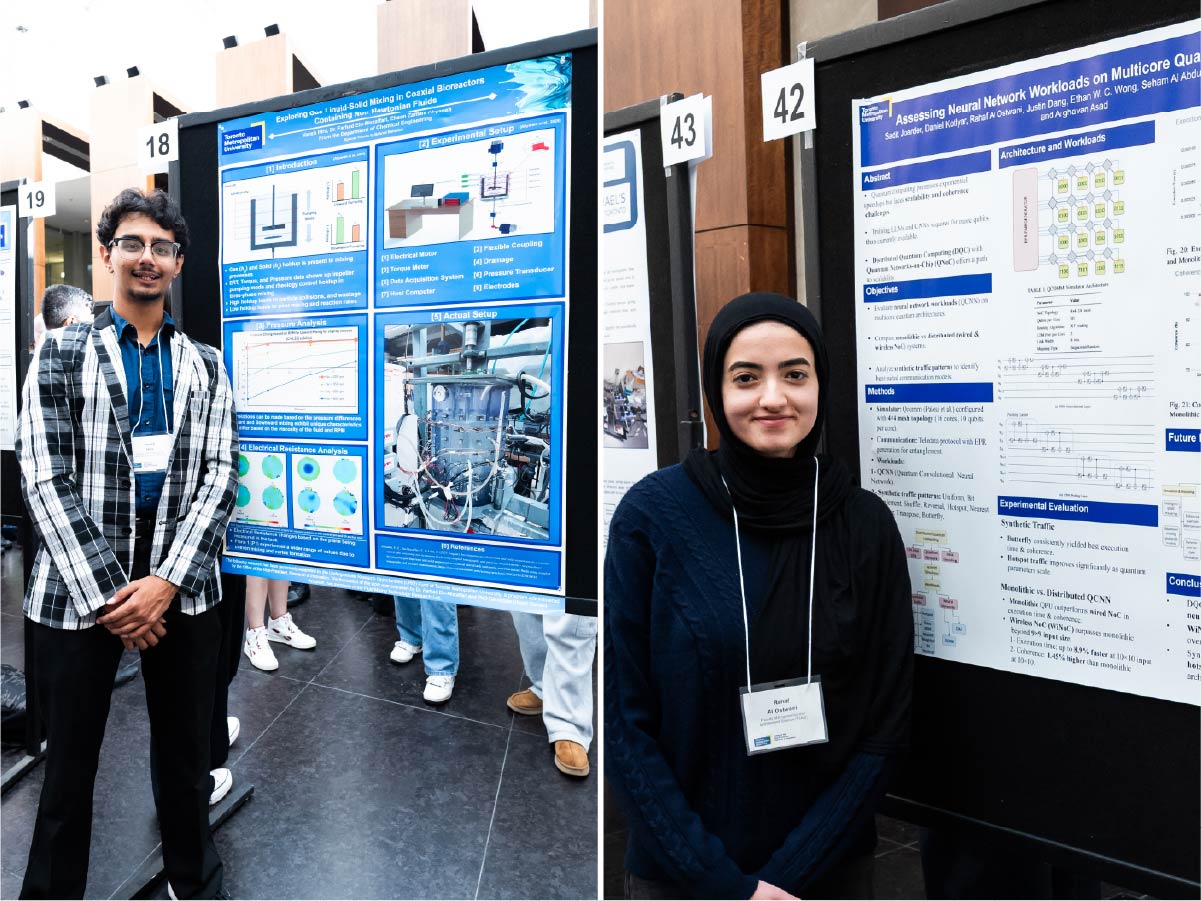
Assessing Synthetic Traffic and Neural Networks Workloads on Mesh Quantum Network
Rahaf Al Ostwani
Supervised by Farahnaz Mohammadi
Development of an Alcian Blue Assay for Quantifying Glycosaminoglycans in Cartilage Tissue Culture
Lia Aloi
Supervised by Stephen Waldman
RAG-Rec: Retrieval Augmented Generation for Personalized Recommendation Systems
Ahmed Aly
Supervised by Rasha Kashef
Assessing Neural Network Workloads on a Quantum Multicore Architecture
Justin Dang
Supervised by Farahnaz Mohammadi
Continuous Laser Scanning for Additive Manufacturing Using the Keyence LJ-V7000 Profiler and CR-10 3D Printer
Shankavie Gnaneswaran
Supervised by Kazem Fayazbakhsh
Gas-Liquid-Solid Mixing in Coaxial Bioreactors Containing Non-Newtonian Fluids
Vansh Hira
Supervised by Farhad Ein-Mozaffari
Optimization of an Acoustic Flow Cytometer for Characterization of Biological Sample
Fawwaz Khan
Supervised by Michael Kolios
BioPrint
Jake Levy
Supervised by Vincent Hui
Addressing the Challenges of Control over LoRa Networks
Khaja Kamil Ahmed Mohiuddin
Supervised by Mohamad T. Shahab
Embedded-AI Techniques for Digital and Remote Health Applications
Ifeanyi Michael Oguamanam
Supervised by Sri Krishnan
Design and Testing of a 3D-Printed Recirculation Mechanism for Better Understanding of Soot Formation in Industry Models
Junfeng Zhang
Supervised by Ahmet Emre Karataş
The Role of pmrAB in the Regulation of virF and the Shigella Type 3 Secretion System
Rana Elsharkawy
Supervised by Joseph McPhee
Machine Learning-Driven Classification of Cerebral Hemodynamics Using Hyperspectral NIRS
Amirhossein Foroughianyazdi
Supervised by Vladislav Toronov
Novel Inhibitors of MRCK as Potential Anticancer Therapeutics
Jordhane Hyde
Supervised by Marc Adler
Characterization of ZEF1
Jatin Kumar
Supervised by Jeffery Fillingham
Influences on Academic Failure and Resilience in STEM Graduate Students
Mathumitha Logathas
Supervised by Krystal Nunes
Exploring Changes in Clathrin-mediated Endocytosis in Aging Human Cells
Gurjyot Kaur Makhija
Supervised by Mojca Mattiazzi Usaj
The Novel Role of Clathrin in Controlling PI3K-Akt Signalling in Neuroblastoma Cells
Shreya Nagah
Supervised by Costin Antonescu
Investigating CesT Recognition of NleG in Enteropathogenic Escherichia coli
Paniz Pour Abdi
Supervised by Dustin Little
PIKfyve Inhibition Disrupts Calcium Homeostasis by Affecting ER-plasma Membrane Contact Sites
Khansa Mahia Sayyada
Supervised by Roberto Botelho
Thermal Stress Effect on the Uptake of Fluorescently Conjugated Dextrans in Triple-Negative Breast Cancer
Daron Savaya
Supervised by Raffi Karshafian
Synthesis of a Fluorescent Molecular Probe for the Endoplasmic Reticulum
Cameron Stanger
Supervised by Russell Viirre
The Comparison Between Public-Private Partnerships (PPPs) and Traditional Procurement (TP) in Infrastructure Finance
Abdullahi Abshir
Supervised by Yuanshun Li
Assessing the Effectiveness of Cybersecurity Training on Phishing Awareness Among Enterprise Users
Massi Ahmed
Supervised by Xingwei (Nancy) Zhang
U.S. Geopolitical Risk and Economic Policy Uncertainty: Impact on the Canadian Stock Market
Chaaru Chaaru
Supervised by Vik Singh
Immigrant Resilience in a Disrupted World: A Study of Chinese Immigrant Entrepreneurs in Canada
Luka Panic
Supervised by Arthur Li
Analyzing the Evolution of Occupations and Skills Using Job Posting Data
Afeef Shaikh
Supervised by Pedro Seguel
Environmental Discourse in Political Speeches: NLP study
Mayank Singal
Supervised by Pedro Seguel
Reporting in Black Communities
Jisele Bayley-Hay
Supervised by Eternity Martis
Factual Media that Matters for/with/by Children and Youth: Developing Content Through Peer-Based Learning and Collaboration (Phase 1)
Isabella Bracaglia
Supervised by Tatyana Terzopoulos
Fashion, AIDS, and the Devolution of Toronto’s Queer Scene
Thomas Carron
Supervised by Nigel Lezama
Open Hearing - a Community Survey of an Art Sector in Crisis
Jennifer Harwart
Supervised by Annie MacDonell
Uncovering Sociocide in Bosnia: An Investigation Through Journalism Research, Creation and Study
Grace Henkel
Supervised by Sonya Fatah
(Re)-claiming digital sovereignty in discourse, policy and practice (DigSov)
Saif Christopher Hilal
Supervised by Jeremy Schtern
Amorous Architectures
Jay Moore
Supervised by Evan Pavka
Systematic Literature Review on Evaluation Tools for Alt-Text Quality in E-Commerce Websites
Sheilae Siagian
Supervised by Reem El Asaleh
Spatial Immersive Geolocated Audio Experiences
Olivia Stecina
Supervised by Finlay Braithwaite
2021: The Makings of a Performance
Daibei Wang
Supervised by Cole Lewis