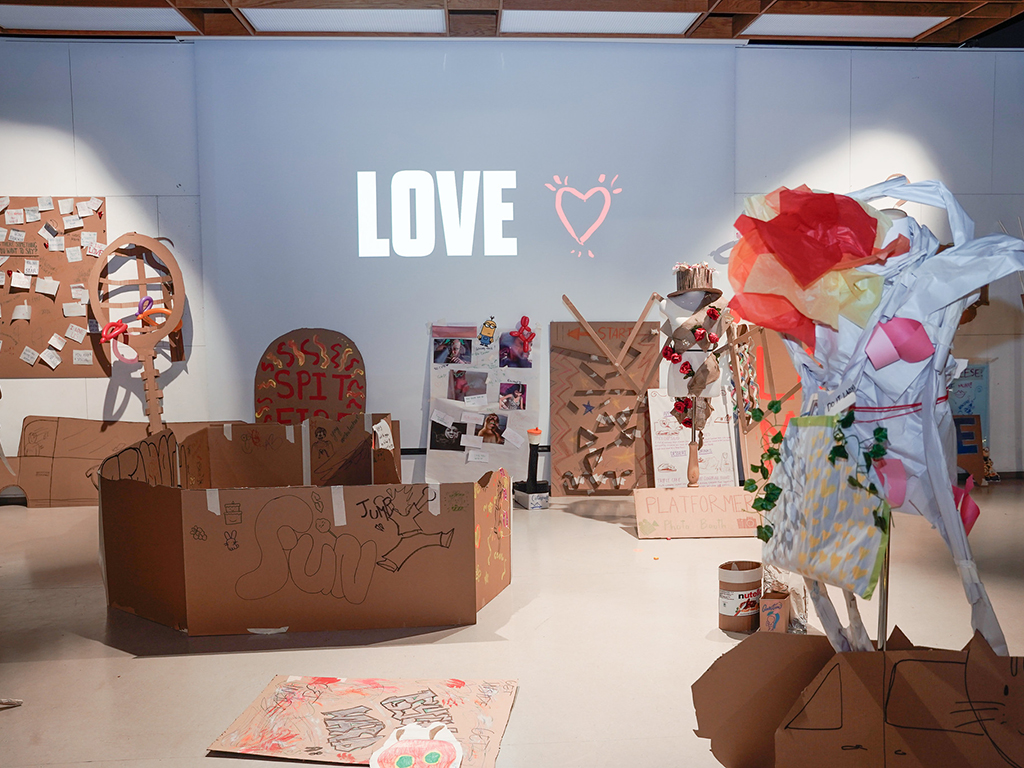
Practicing Radical Hospitality: Collaborative Exercise 2026
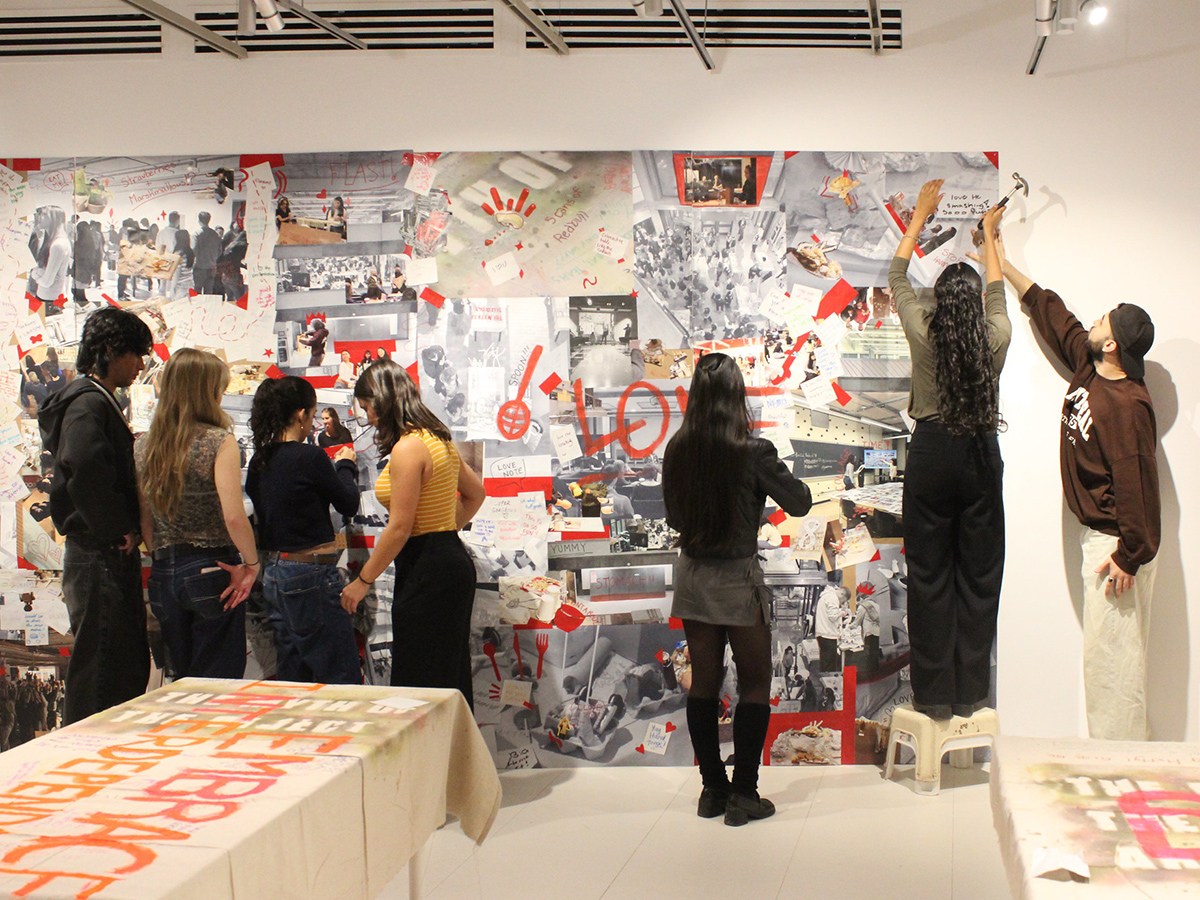
This year’s Collaborative Exercise was unconventional in its approach, asking students to interrogate the assumptions, norms, and conventions underlying architecture. Activities were more focused on the body and interpersonal relationships than on designing a built environment. We sat down with this year’s student facilitators: Yaxin Jiang, Saroash Haider, Aileen Alinsod, and Dharma Capitao, to speak about their experiences and key takeaways from the week-long event.
How would you describe this Collaborative as different from previous years?
Dharma: Well, typically we would be given architectural projects with designs specifically oriented for the urban fabric. This year, though, the Collaborative Exercise (Collab) pulled away from architecture quite a bit through design thinking ‘outside the box’. There was some critique about how far away it was from architecture itself. Though, I love that we built a playground at the end. Without pushing students out of their comfort zone, taking them out of what they usually do, they wouldn't have been as creative as they were. I truly did enjoy that last project. I think it was so fun to just go upstairs and see the mayhem, and to play with what they were envisioning—it felt like we were children, but children with a purpose! By the end of the week, you could see everything they were trying to convey.
Saroash: I've done four years of Collab, and last year I helped facilitate it with Yaxin. This year I had the opportunity to facilitate again and was able to see the differences in approach; last year was conventional - we knew what to expect and what it entailed in terms of the students and ourselves. I think this year was very different, which comes with its own challenges because we weren’t familiar with the kind of approach that the team who conceptualizes Collab was trying to convey. So in terms of getting into this new headspace, there was a learning curve, but we adapted pretty quickly. Some students were confused or disoriented, which is expected with a Collab that isn’t conventional. But the activities were building blocks for the project they would have to create at the end. There was some confusion as to why they had to create garments, but I think it was beneficial to think outside the box and approach architecture with creative thinking. Many students towards the end gave positive feedback - they enjoyed the process.
Aileen: I also participated in Collab for four years, and they were very competition-based. There’s a push to be the best, and when you’re working across years it can be daunting. I’m also a GA for first-year studio, so I had familiar faces walking into Collab. The first few days dealt with tackling architecture pedagogy and dismantling systems from higher years. This year, everyone got to participate equally, in a way where everyone was in the same boat in terms of constructing garments and making the playground. We didn't need any software. Instead, we just needed to create a space in the architecture building, which is familiar to everyone. So I think this was a strength and very different from my experience as an undergraduate. You couldn’t differentiate years; everyone was working together and everyone was able to contribute in different ways.
Dharma: A benefit of previous Collabs was the opportunity to work with upper years and learn from people who were very familiar with the software we all needed to learn how to use. We lost that a bit. However, it was great that we didn’t have to bring work home with us—at 5 p.m. you’re done, and you don't have to think about it or stay up until midnight making a site plan to get everything submitted on time.
Yaxin: I coordinated and facilitated Collab last year with Dr. Terri Peters, where we had an urban site and students proposed highly speculative concepts for unconventional public spaces under the Gardiner Expressway. I think this Collab treats design differently than previous ones—in that it involves everyone’s body and mind. It’s not about using tools to produce a speculative solution, instead, design happens around people and emerges from interactions between each person; using temporary materials and techniques you can quickly build, prototype, and test spatial interventions or elements or devices that help you re-interpret norms or buildings. So it’s more about providing an unconventional lens rather than producing an unconventional design of a building. By the end, it does transform the way we use this building—it becomes more about the spatial experience than the final set of drawings or models. We looked at the design process from ‘the inside’ and not a third-person perspective.
Saroash: Preconceived notions about architecture and space start before we begin undergrad, and then continue throughout our undergraduate experience and the projects we do. Because of the way we are taught, it’s easy to be conditioned to think of architecture as solely about tangible aspects. So in a way, this year we disengaged with that, paying attention to the process and intangible ideas. We looked at myths around architecture and design—especially perfectionism, this culture that surrounds architecture—and the hierarchical systems in place around architecture and architectural systems. It is difficult for younger years to get out of that thinking; they’re so excited to jump into this completely different realm. They've never been exposed to this level of detail in terms of being steeped in the process of making rather than the final outcome. The importance always seems to be on the final outcome and not the experience it’s providing or the relationships it creates along the way. Because previous Collabs were more conventional, this one really forces people to think in a different way, and not to think solely about physical aspects, but the experiences and relationships that you as the inhabitant need and want, and other people experience as well.
We started with the myth of competition. This week pulled out all these problems we’ve been feeling and finally put them into words! We all gasped when we were confronted with these myths. It was nice to see all the frustration we’ve been feeling put out there. There’s so much more to our discipline than the professional side, and it was good to be a bit more casual with it and allow these conversations to happen.
Yaxin: Students designed something based on their own experiences and not on some exemplary precedents or ‘good work’, like examples of previous award winners or feedback from profs or suggestions from upper-year students. Students produce meaning and effect both for themselves and for others. It touches on something that is implied—inclusive design and accessibility. It goes beyond accommodations for special needs, but looks into different experiences of different people with different needs, physically and mentally. Those needs could also change how they experience or interact with the space.
Aileen: Even from a facilitator and student perspective, there was a lot of self-reflection and being able to ask yourself the question, “Why does this make me feel uncomfortable or why is this out of the ordinary?” Why is it making me think in different ways and why is this applied to architecture? When they described the myths, it laid a foundation for the rest of the four days. For the rest of Collab you are met with reflection - why are we making garments and why are we making certain things - and seeing all these myths laid out, you are asked to self-reflect again and again. One specific question I was asked as a facilitator was, “How am I meant to put this in my portfolio?” A portfolio is refined, but studio spaces are the opposite of that. This is the myth of authorship: don’t look at your own contribution but take a step back and look at the work produced over the last four days. You could put it in a portfolio, but you have to make sure you’re looking at your portfolio through a different lens - so it gets students outside of conventional thought.
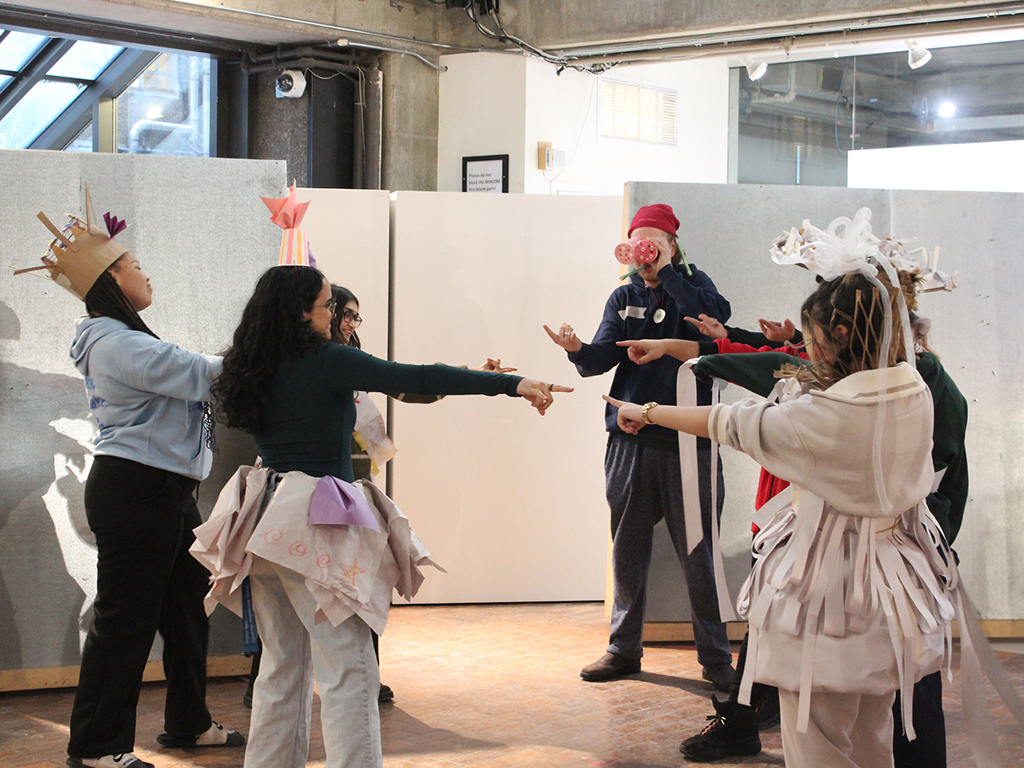
How does this year’s Collaborative Exercise Look at Systemic Issues?
Dharma: In terms of systemic change, the way Vlad and Kris talk to students is so different from previous instructors. They used a different kind of vocabulary. It was radical and ‘loving’ towards them. The way they were talking to you was so different - and it was both good and difficult for students. When we’re introducing vocabulary that is personable, it’s pushing the envelope of what is professional or professionally presented.
Saroash: There are lots of systemic issues, not just at this program but at the university level. Lots of design programs have systemic issues if you consider the way things are run and taught. The first few years of undergrad feel like a bootcamp, a competition with colleagues and with yourself; the idea that I have to be the best designer, have the best design. Once you remove that aspect from architecture itself, you can produce something that’s more meaningful because it’s shaped by your experiences and relationships with other people and spaces you’ve interacted with. It removes the hierarchy, but it also emphasizes the part that—with our tacit knowledge and lived experiences—we are all very unique, and that’s beneficial to creating space; there's no formula to architecture or design making. This can sometimes be difficult to grasp, especially for younger students. We would do everything to get to that goal, having the most innovative design. It is enforced, whether consciously or not. The culture cultivates that. This Collab disengages with that. It doesn’t always have to be this way. It’s a shock - this Collab had big shock value.
Even as architecture students, it can be difficult sometimes to grasp why other ways of designing can impact our way of designing architecture. A beautiful relationship was created. It removed the reliance on precedent in a sense - because that’s not explicitly what architecture is about!
Students can think about alternative ways of designing—systemic thinking in design, the design process versus the outcome. Many times in architecture education, we learn what is good or what to design, but we don't really know how to design.
Aileen: The application of the myths is really embedded in the activities they’re doing over the four days. The reflection of “Why am I doing this?” or “Why do I feel uncomfortable?” Taking that away from the Collab exercise, being able to question this outside of Collab, is what makes this year ‘radical’.
Yaxin: This Collab provides one alternative to design. It forces students to experience the design process in a very radical way that is totally different from what they are used to. I think it would have been very valuable to have had more time to reflect on what design emerged from the first week (how did they arrive at that design; what procedures can they bring into the process and what kind of outcomes can that bring). This is easier learned by doing than being taught because it’s hard to prescribe a way of designing to them. There needs to be space for students to discover their own way of design thinking.
Dharma: I want to add onto what Yaxin said - the concept of the journey. This Collab had no software, and that was a huge thing too. We are so enveloped in the software and learning how to design… We no longer want to build models or use our hands to draw. And yet we only used our hands in this Collab! It was a different way of looking at designing - being fully comfortable with the messiness. What if we just showed a half-finished drawing? None of the playgrounds looked perfect—it was allowed to be unfinished.
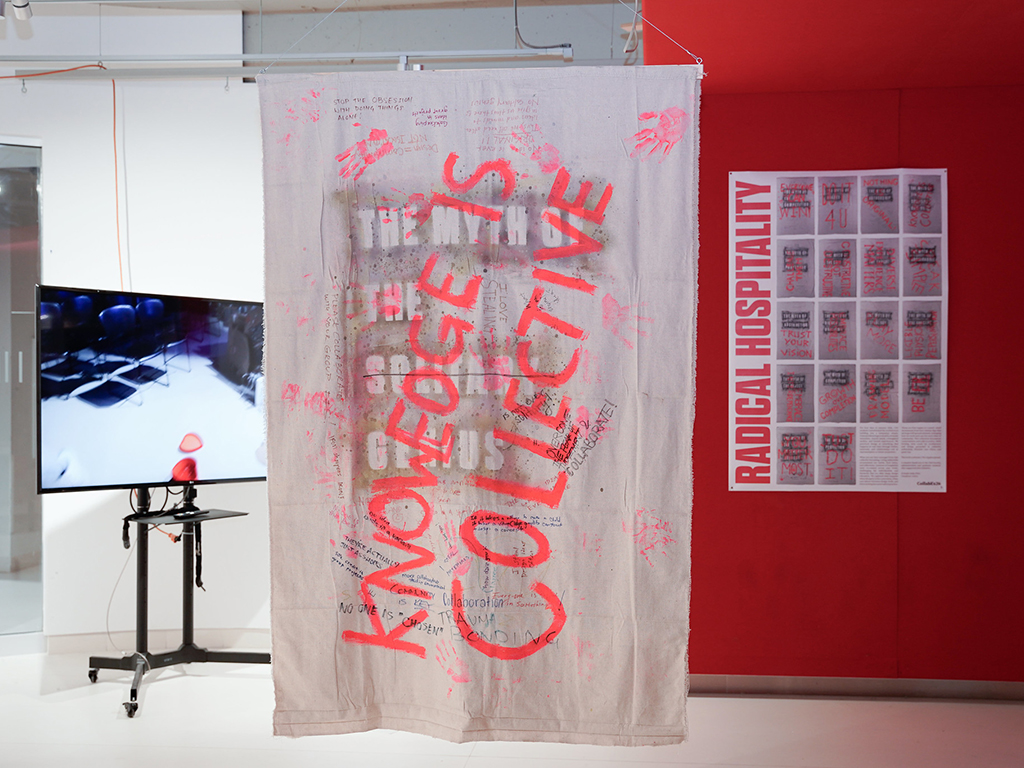
What are you taking away from this week - in terms of implementing what you’ve learned and applying it to your own work and future practice?
Saroash: This Collab also engaged with queer and posthumanist theory—something I'm exploring in my grad thesis. It felt unique in that we were able to make this digestible for people while making strides in design. It was also the first time I’ve done a partnership with external designers. You see different reactions to the way that the information is being received; we shouldn't be so comfortable in design. There’s beauty in discomfort. We should also take into consideration that not everyone is at that level yet. Creating a program or framework for individuals is important to consider so that we aren’t scaring people away.
Dharma: What I took away is that perfectionism doesn’t need to be a priority, and critique doesn’t have to be destructive.
Aileen: The myths we discussed and how they can be applied not just to architecture pedagogy but throughout life and practice was a key takeaway for me. The hospitality portion of the Collab—the affect theory—the food they were using and how it affected the space is also something that was really impactful.
Yaxin: The process itself can have effects on us, on the relationships and connections it creates, and can be a meaningful part of the experience. What I learned in this will inspire me to reflect on design as something responsive to changing perspectives and diverse uses as they arise, rather than a finished polished artifact. I am currently working with a research team studying the social impacts of small urban interventions. A large part of this research is highly quantitative, while we are also exploring ways to observe and interpret social impact beyond intervention’s direct outcomes, but also about the process: how the decisions were made, clarifying who it’s for, and attending to the collaborations that shapes it.
Dharma: I wanted to bring up some challenges this year. I think a huge aspect of it was the planning of the actual event itself, in that it was so free-form. I think it was something that we said constantly: embrace the chaos and kind of plan as you go. I think there is an aspect to that that is helpful, and I do want to bring that into my life as well, but I think it was brought to an extreme where we didn’t know what was going on. Having some structure would be a little more helpful. I am happy that I saw it happen to help me learn from this experience, and I think that was probably my biggest criticism.
Yaxin: I want to add that, as I was working mostly with the gallery team from the beginning, we did have a mechanism to absorb all these moments into a very structured gallery exhibition that was executed exactly as planned. I think it’s very interesting how simple and straightforward the design of the gallery space was, that it allowed those reflections to happen in a structured way, although the process itself was very unstructure
Saroash: To go off of Yaxin and Dharma’s point—I agree. It was like, you didn’t know what to expect or anticipate. I think as designers, we want to control things. We want to know how to do it and we want to know how to pass on that knowledge properly. I think there was frustration in that because we’re volunteers and facilitators, so we wanted them to be able to receive this in the best and most productive way possible. But I think what kept us together was we all didn’t know what was going on, so we’re like, "Alright, we’re in this together." It kind of forced us to have the confidence to make the decisions ourselves because there was no other choice. I think there’s beauty in experimentation, but you have to have some structure, and I think a balance is really important.
Dharma: I think that on the other hand, there were certain aspects of being personable that were uncomfortable and challenging for students who rightfully had concerns (for example, saying "I love you" to the students). I think sometimes we need to sympathize when that discomfort can be harmful - and acknowledge this harm. Feelings are valid, and we should acknowledge that? It was one thing to talk about the pedagogy of being uncomfortable, and then it was another thing to be a part of it. And again, being uncomfortable is fine, but it’s a valid feeling to feel, and that should be addressed.
Aileen: After the second day (when they had to wear the garments they made outside) the reflection afterwards was great to see because the students really applied the myths during the conversations around power and authority - for example how they felt uncomfortable on the street. It was interesting how quickly students applied what they learned and put it into writing—having their safe space to actually say, "Hey, I’m a little bit upset that you made me do this." That was really interesting. But from the perspective of a facilitator, it was hard to have these conversations with students because we were all already a bit confused about the structure. Students are coming up to you and saying, "Why would you make me do this?" And not really having a good answer. When we weren’t fully on board with having the students go out and wear their garments, it was hard to advocate for them, because I wasn’t fully on the same page in terms of the structure of the exercise.