LEED Certified - DAS Students Rehearse Efficiency Excellence
Leadership in Energy and Environmental Design or LEED® (external link) is an international symbol of sustainability excellence. The certification is sought by many professionals for projects performing at high global standards in green building.
In the Department of Architectural Science (DAS), fourth year undergraduate students and first year master’s students in Architecture and Building Science are already rehearsing how to earn this efficiency distinction through adaptive strategies.
As part of a cross-listed elective, ASC855 / AR8220 Sustainable Rating Systems, taught by Dr. Letzai Ruiz in Fall 2025, students developed a proposal for an existing non-LEED building to earn LEED Platinum certification by applying the LEED v5 framework.
This process involved students selecting an existing project and identifying enhancement strategies across the following categories: Location and Transportation, Sustainable Sites, Water Efficiency, Energy and Atmosphere, Materials and Resources, Indoor Environmental Quality, and Project Priority.
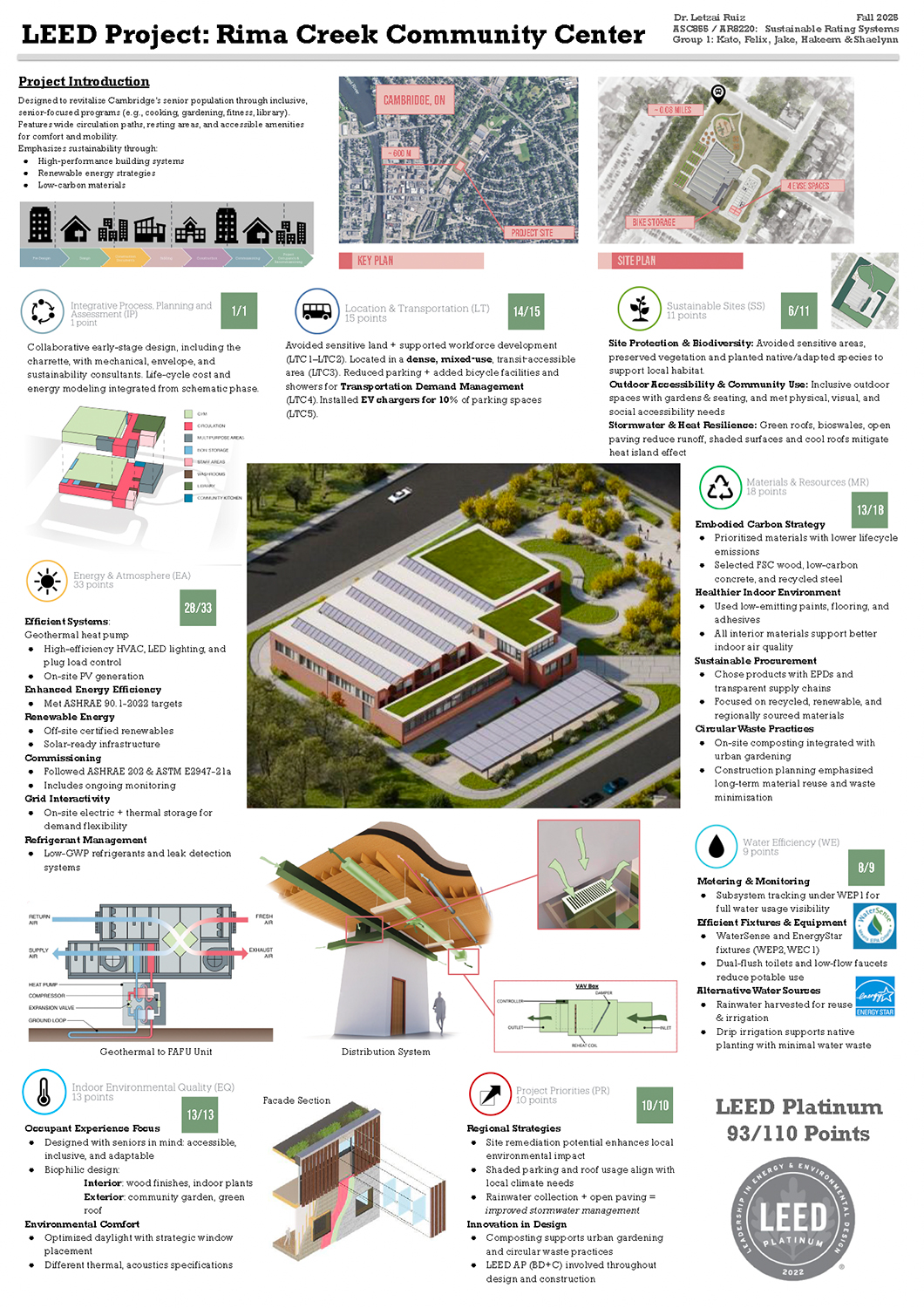
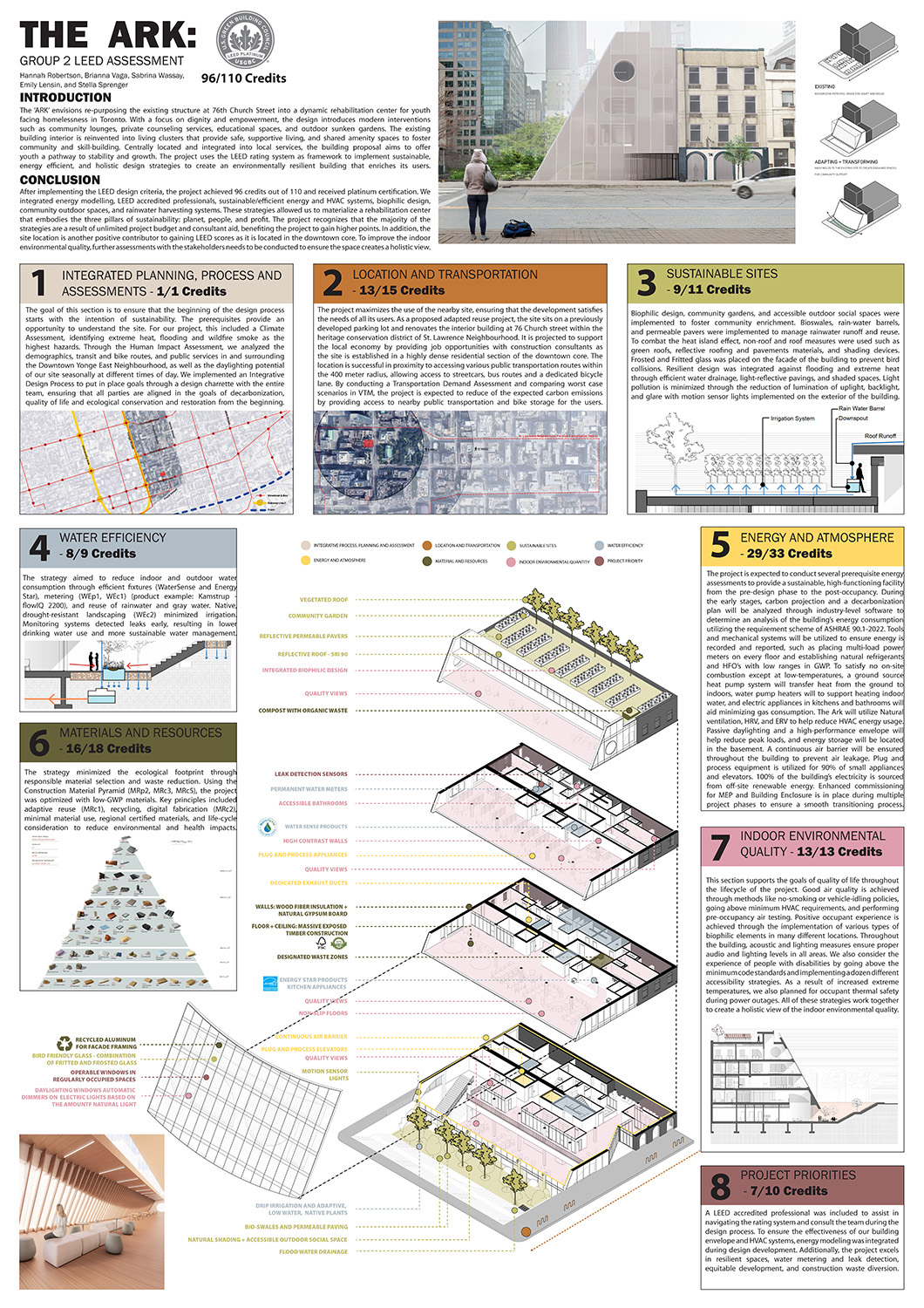
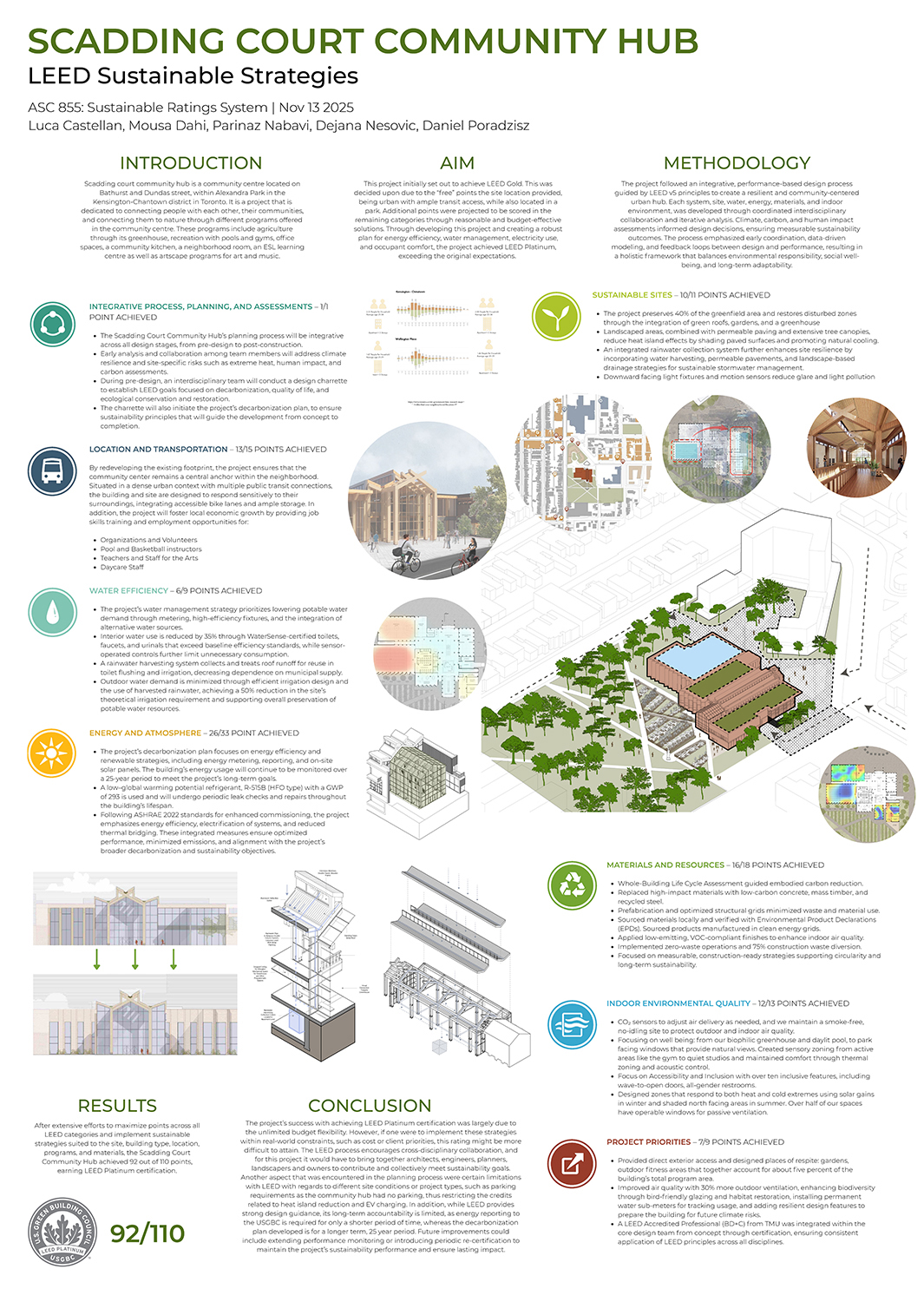
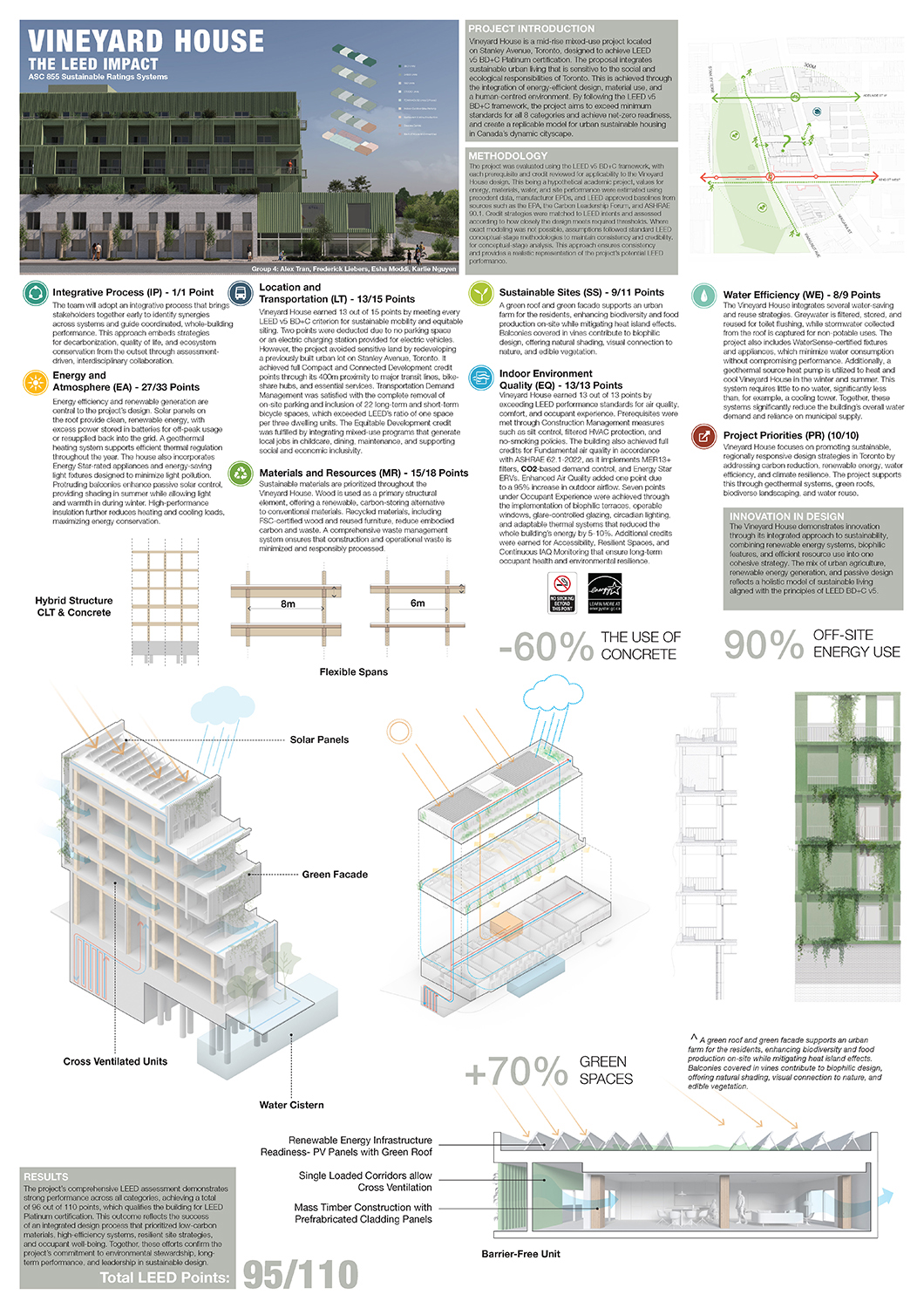
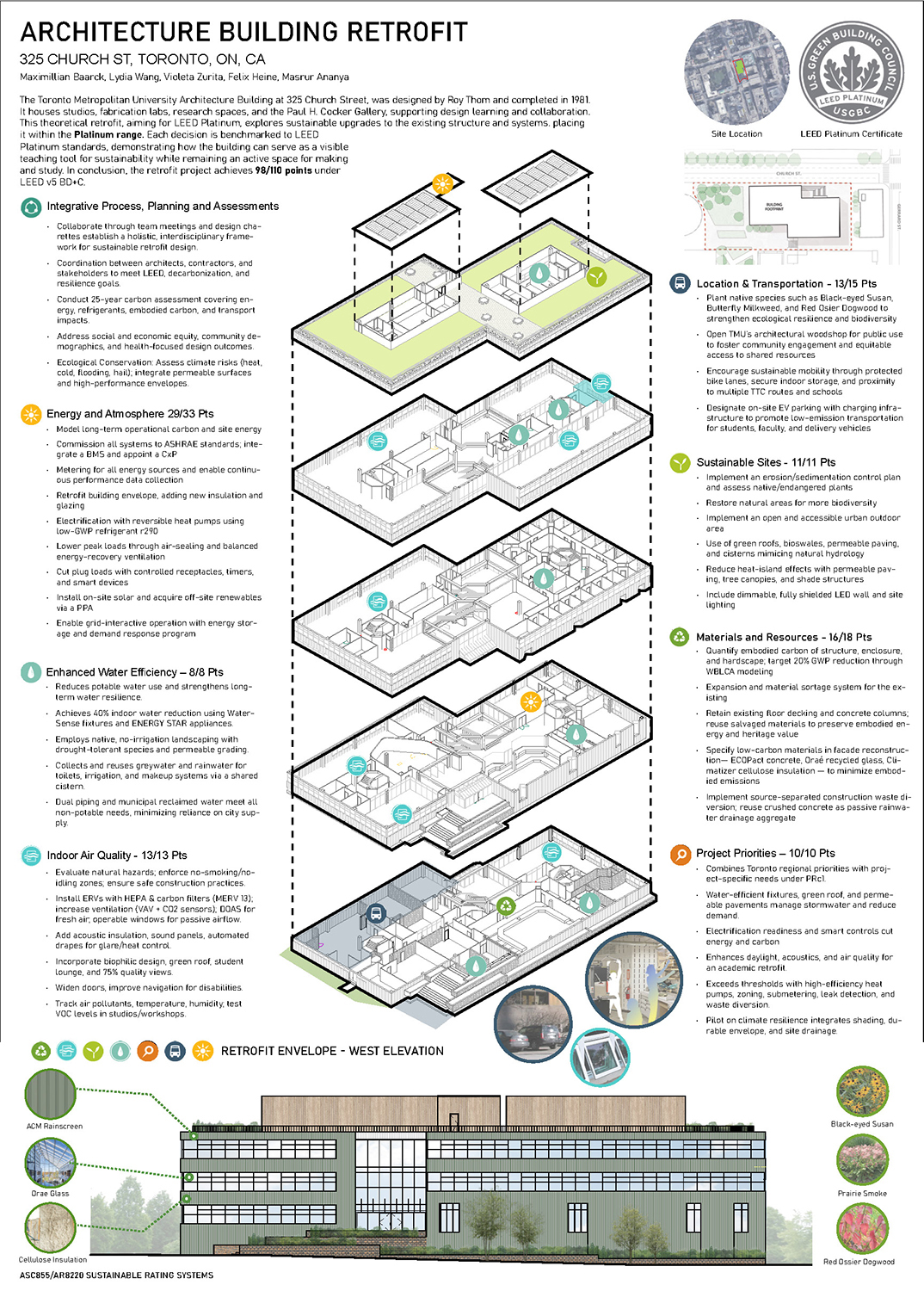
In addition, students evaluated how their project addressed the Climate Resilience Assessment, Human Impact Assessment, Carbon Assessment, and the Integrative Design Process across the aforementioned categories.
The diverse projects included theoretical retrofits of academic buildings and existing structures—such as TMU’s 1981 Architecture Building and The ARK youth rehabilitation center (in a 19th century shell)—as well as new designs like the Cambridge Senior Community Centre, the Scadding Court Community Hub, and the Vineyard House urban housing project.
Projects integrated high-performance strategies across all categories. In energy, solutions included geothermal systems, high-efficiency HVAC systems, on-site PV generation, and low-GWP refrigerants, positioning several buildings for net-zero readiness. Water efficiency was maximized through WaterSense fixtures, greywater reuse, and rainwater harvesting. Material selections prioritized sustainability, featuring low-carbon concrete, recycled steel, and mass timber, guided by whole-building life cycle assessments. Furthermore, site strategies incorporated green roofs, permeable paving, and bioswales to enhance biodiversity and improve stormwater management. Occupant experience was central, supported by biophilic design, optimized daylighting, enhanced air quality and thermal comfort, and accessibility measures.
After extensive efforts, the final projects demonstrated outstanding results and were assessed using the LEED Scorecard to determine the final certification level. All groups successfully achieved—or were projected to achieve LEED Platinum certification, with final scores ranging from 92 to 98 out of 110 points. This outcome reflects the successful application of sustainable, holistic design principles in a hypothetical exercise aimed at creating resilient and community-centered built environments.
This assignment taught us how even small design interventions can create meaningful change. In the midst of a growing climate crisis, we need to explore every opportunity to improve energy performance in the built environment. I’m excited to carry the skills I developed in this course into future projects.
This project helped us explore practical sustainability strategies that can be integrated even in modest community developments. The LEED framework challenged us to think critically about real-world energy, water, and design decisions. It gave me a toolkit I plan to carry into future research and professional practice in building science.
This assignment showed how sustainability rating systems can turn ambitious climate goals into concrete design decisions. In the middle of a global climate crisis, architects have a responsibility to use every tool available to reduce the environmental impact of buildings. The knowledge and skills from this course will guide how I approach future projects and my role in creating more resilient communities.”