Being, Knowing, Doing: Fostering Indigenous Discourse with DAS
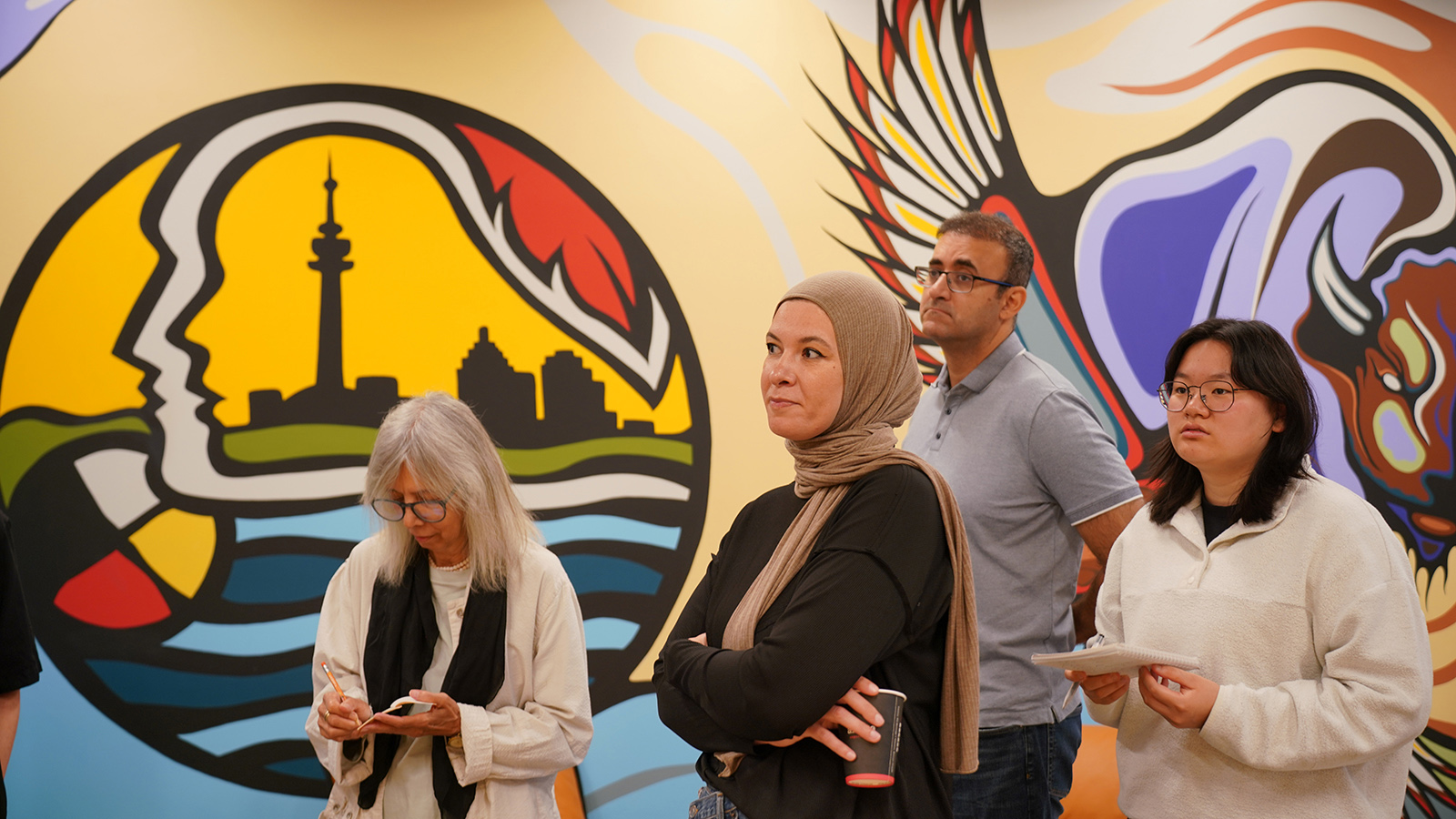
DAS faculty at TASSC, with artwork by Emily Kewageshig. Photo by Mark Boulos.
For a second year in a row, the Department of Architectural Science (DAS) is using a modest grant from TMU’s Indigenous Education Council to support knowledge sharing and course enhancements that infuse Indigenous design perspectives across the curriculum.
Central to the initiative is holding significant faculty meetings in Indigenous-owned spaces that may open hearts and minds to more relational and restorative ways of thinking, while also learning about important Tkaronto centres and services. As DAS Chair Lisa Landrum explains, “We are placemakers. The places where we meet matter. Places can also be good teachers. Being in powerful places helps attune us to this potential.”
Being Present
On August 18, 2025 DAS members met at the Toronto Aboriginal Support Services Council (TASSC (external link) ), which recently opened in a newly renovated space, designed by Two Row Architect (external link) , who also designed TMU’s Indigenous Ring, among many other cultural places.
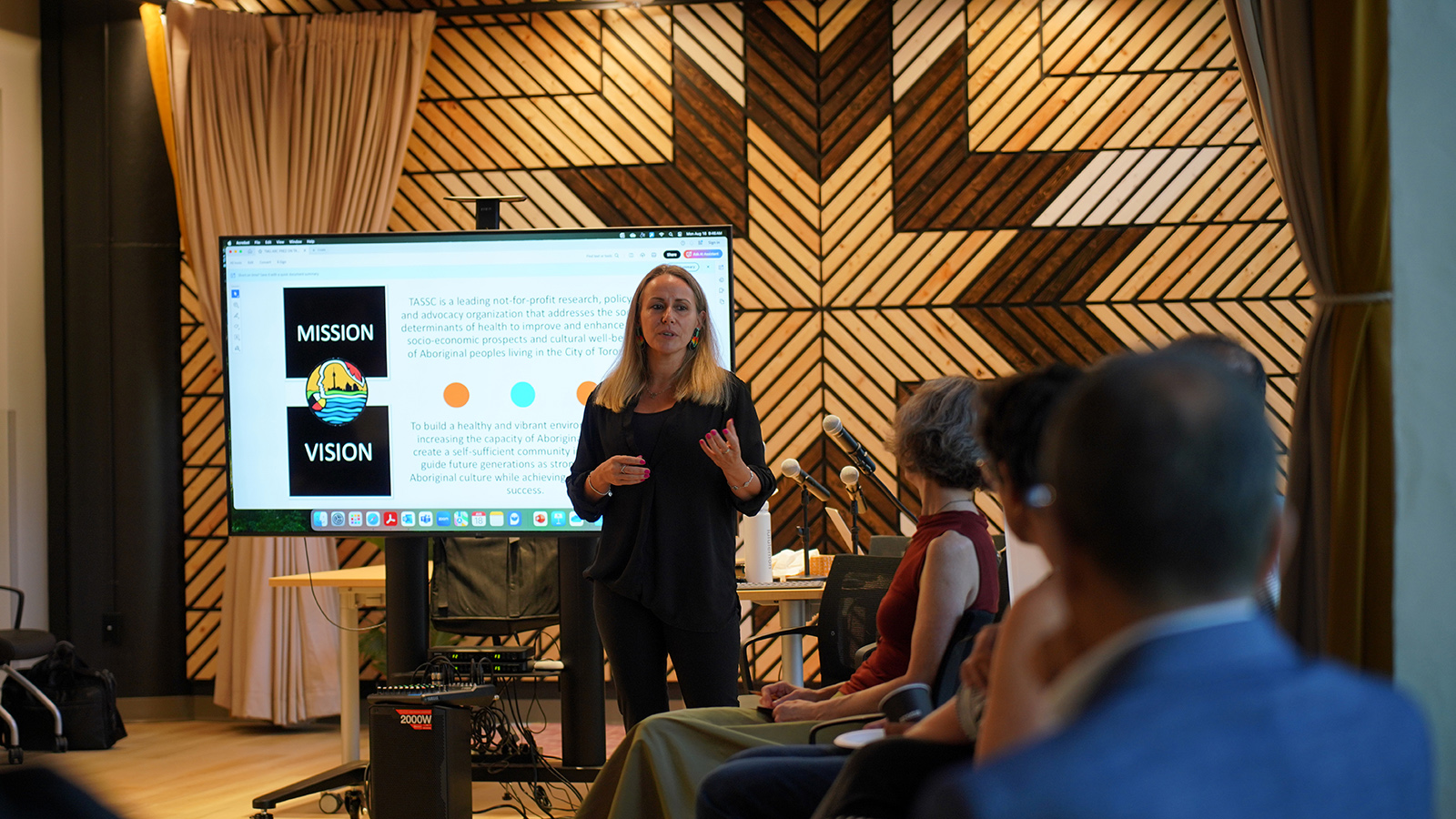
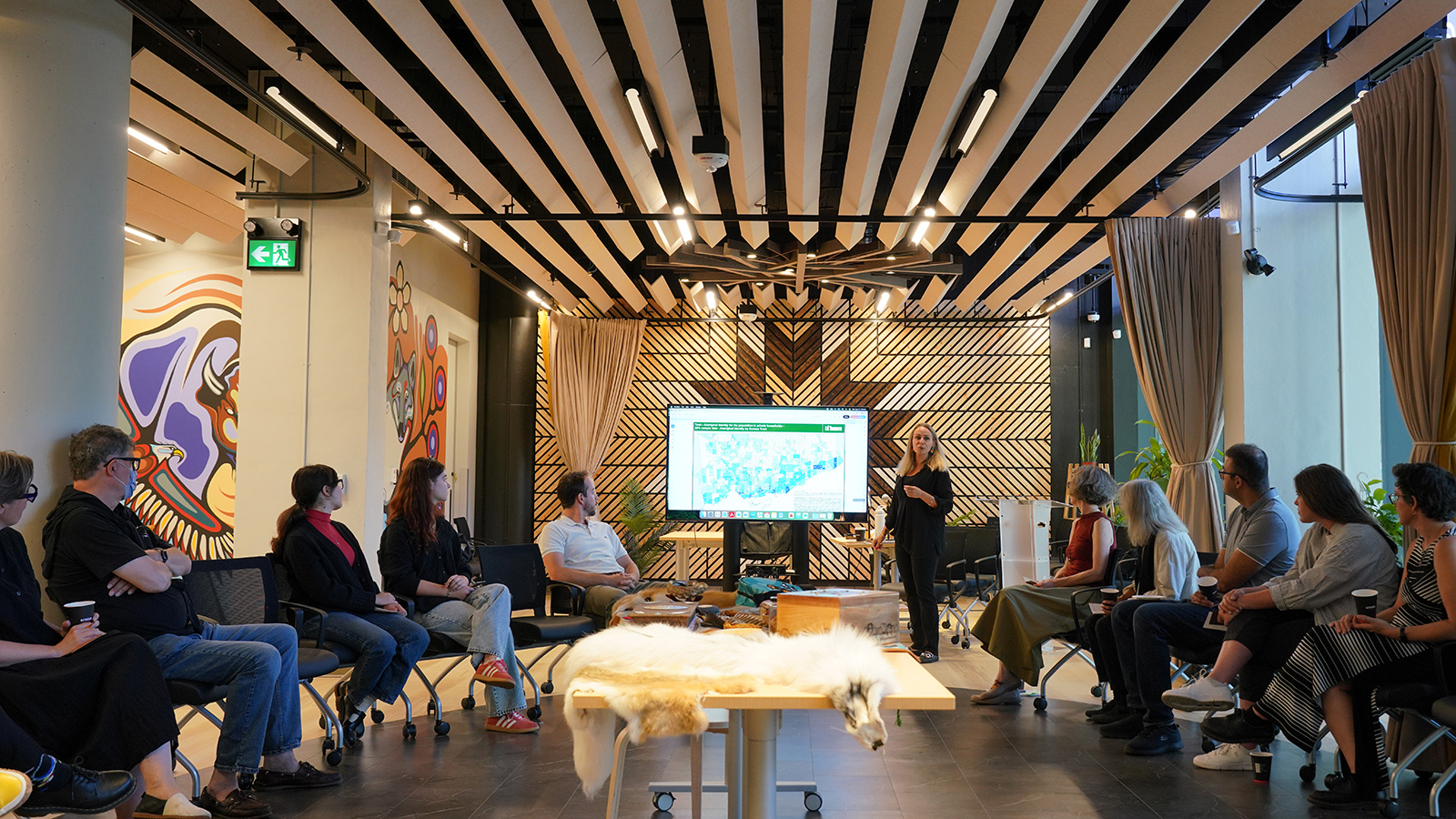
Photos by Mark Boulos.
TASSC Executive Director, Lindsay (Swooping Hawk) Kretschmer, opened the morning with an overview of TASSC’s mission, describing how its 27 member agencies work together on research, policy and advocacy to empower Indigenous communities across the Greater Toronto Area.
Erik Skouris, Two Row Architect and design lead for the new TASSC location, narrated key design philosophies and features of the space, including visual storytelling in murals of the seven grandfather teachings (Wisdom, Love, Respect, Bravery, Honesty, Humility, and Truth) by Anishinaabe artist Emily Kewageshig. He pointed out the role and symbolism of the east wall, marking the rising sun with a star blanket configuration made from reclaimed lumber by woodworker Jon Bird.
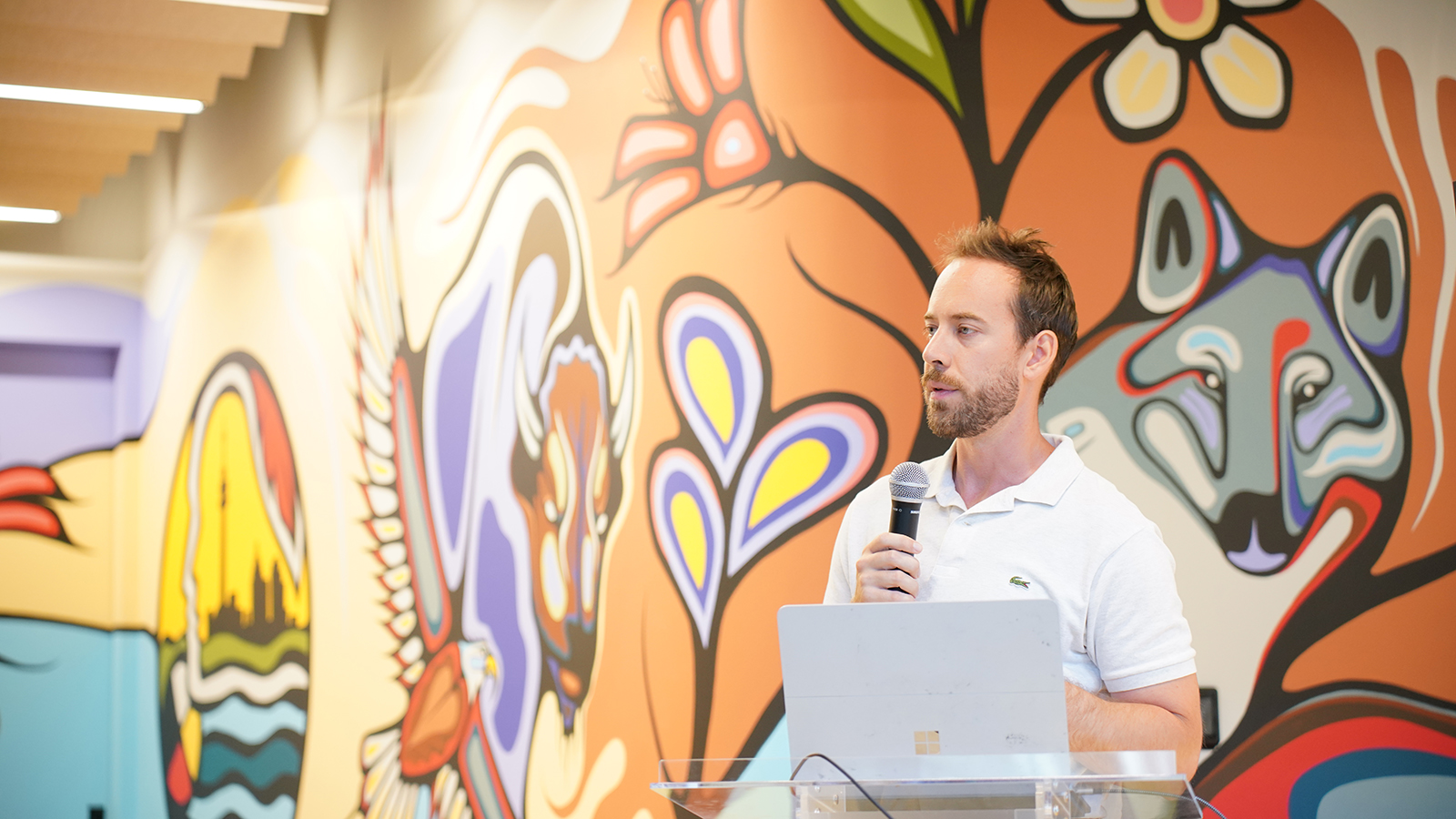
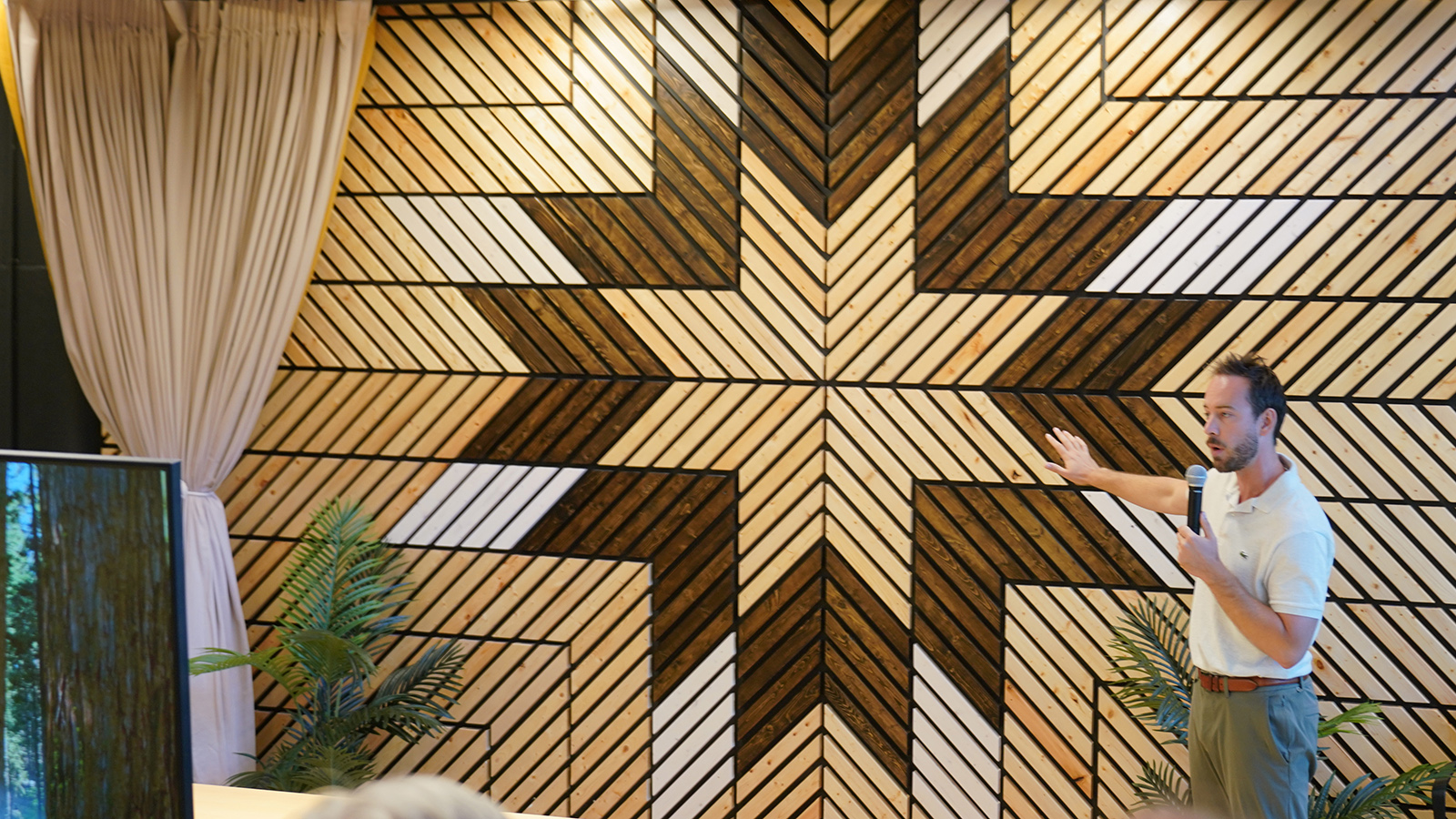
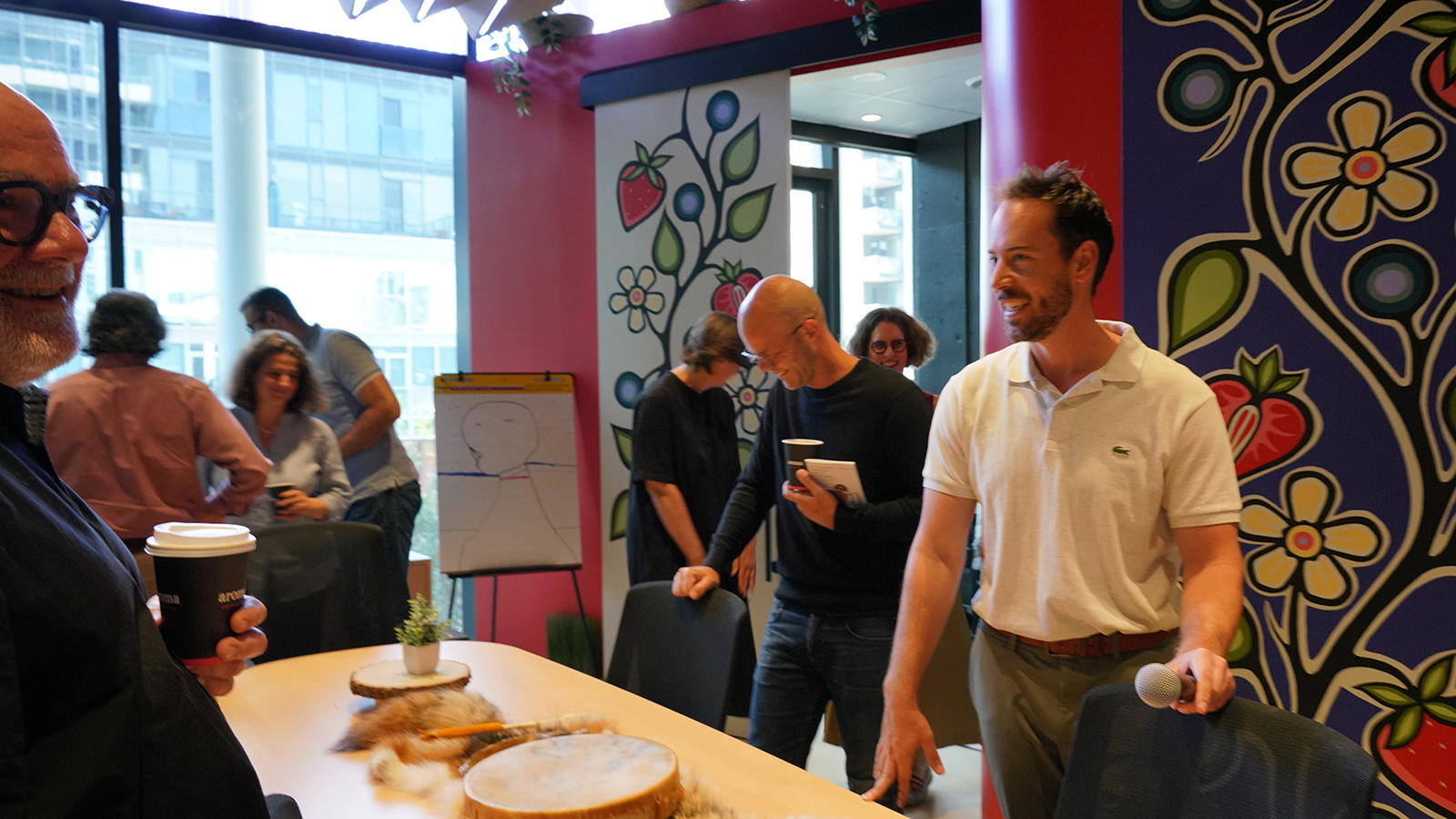
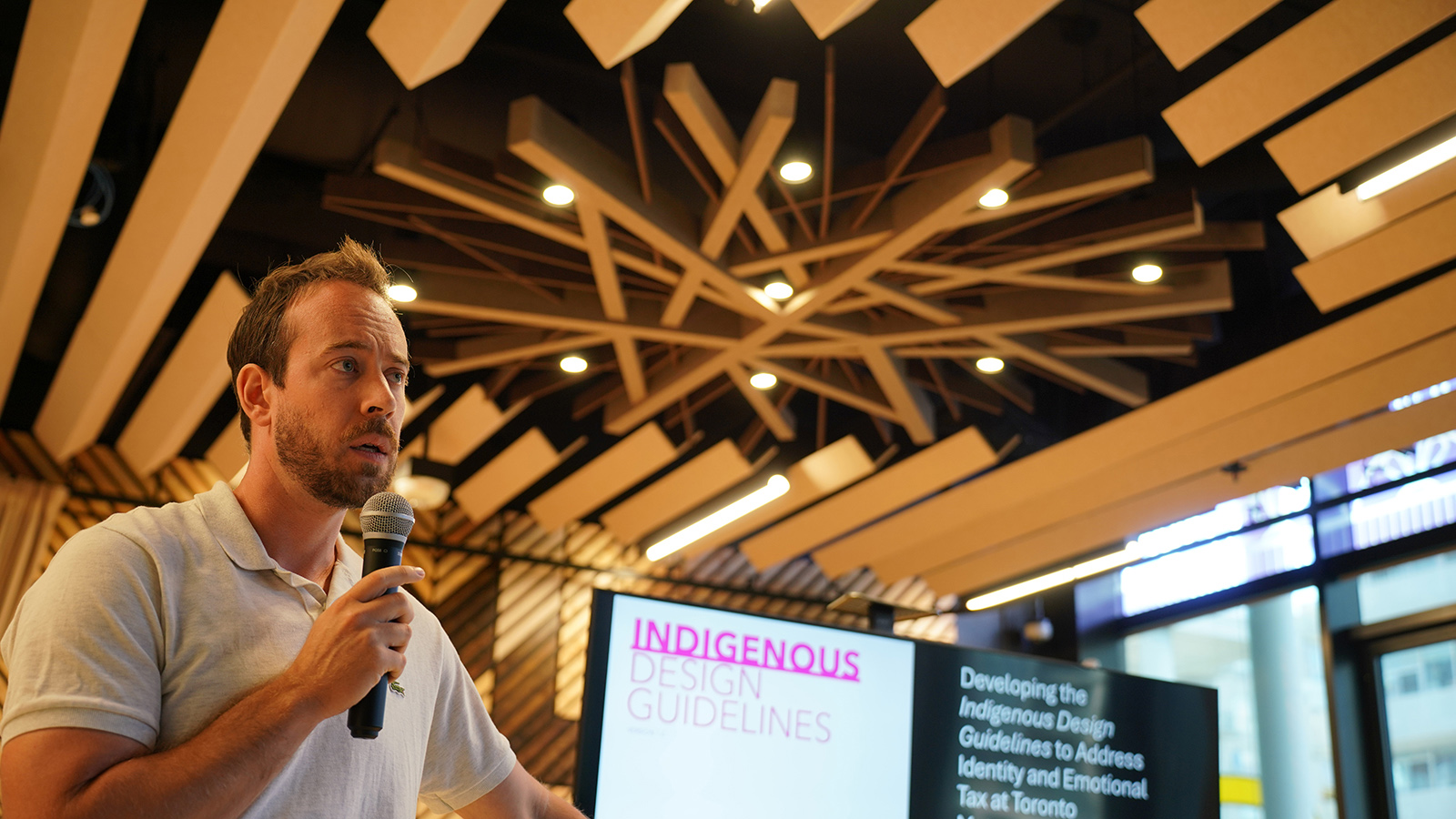
Photos by Mark Boulos.
Skouris also presented TMU’s Indigenous Design Guidelines (IDG), developed by Two Row Architect and TMU’s Indigenous Space Sub-Working Group (ISSWG) through five years of consultation. Centring Indigenous ways of being, knowing and doing, the guidelines describe open-ended principles (like ceremony, naming and access to nature) along with areas of impact, such as formal and informal learning spaces. A living document, these guidelines are informing renovations for TMU’s new Brampton School of Medicine, and may inspire relationship-building and other TMU placemaking projects.
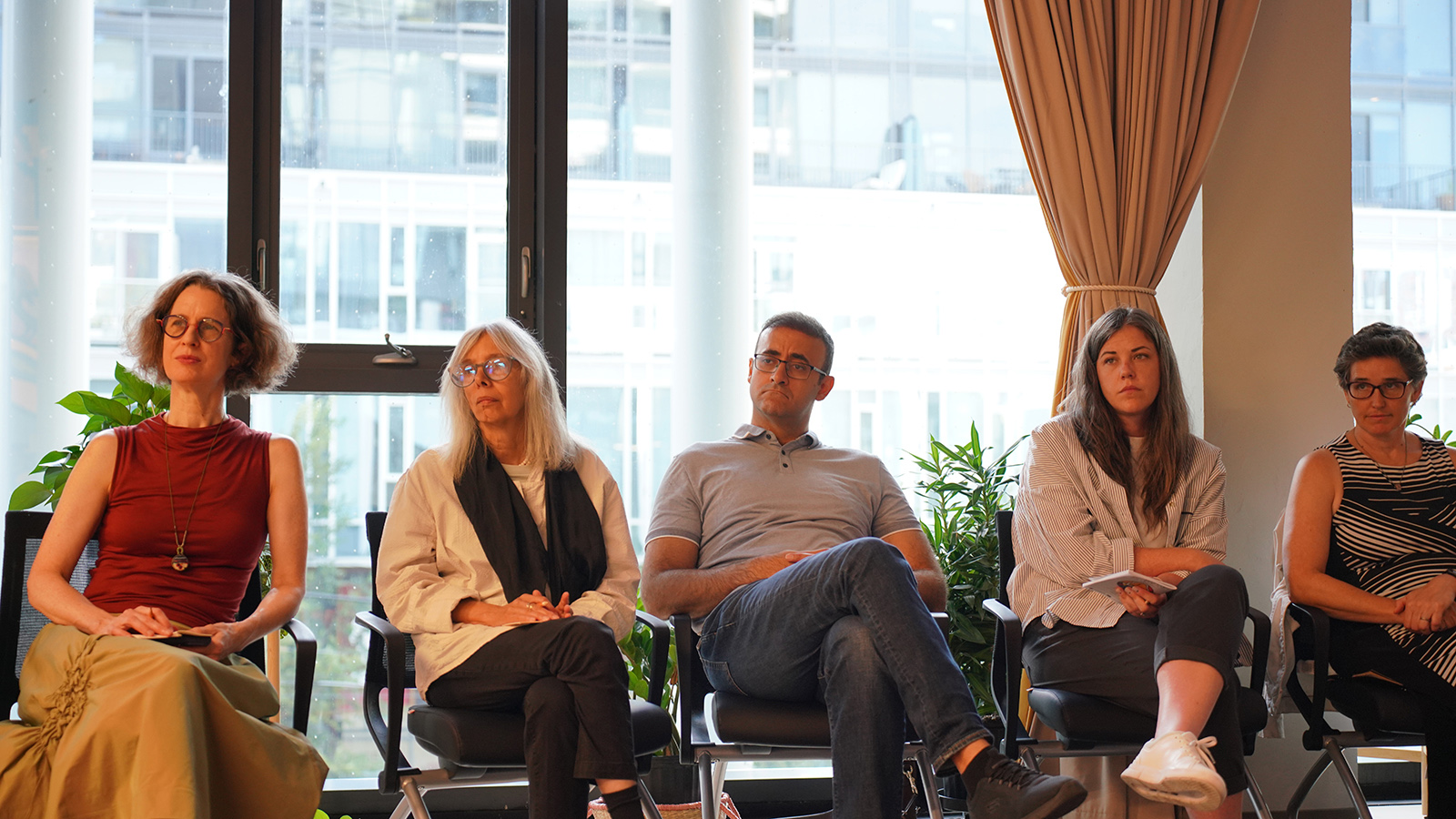
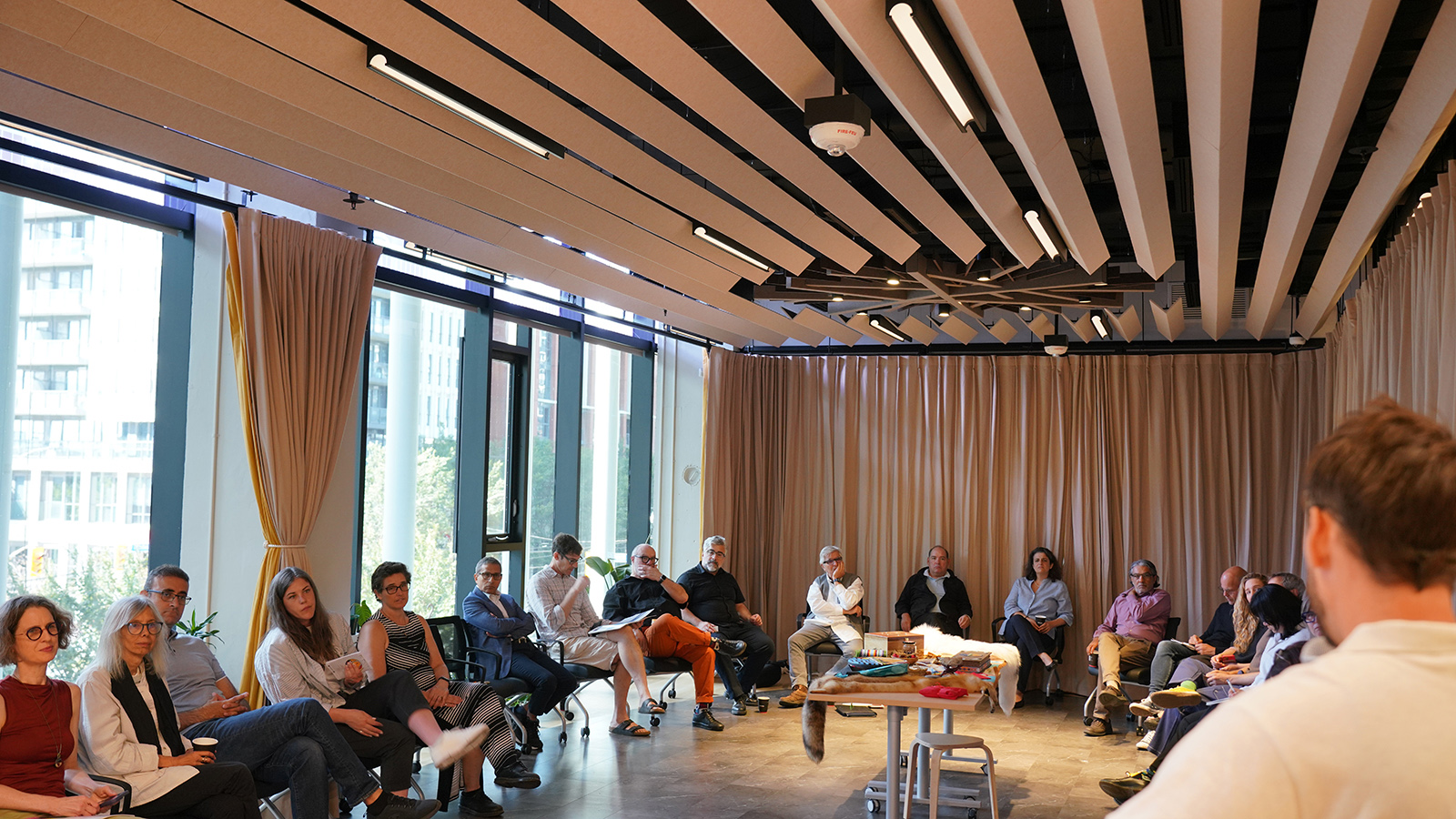
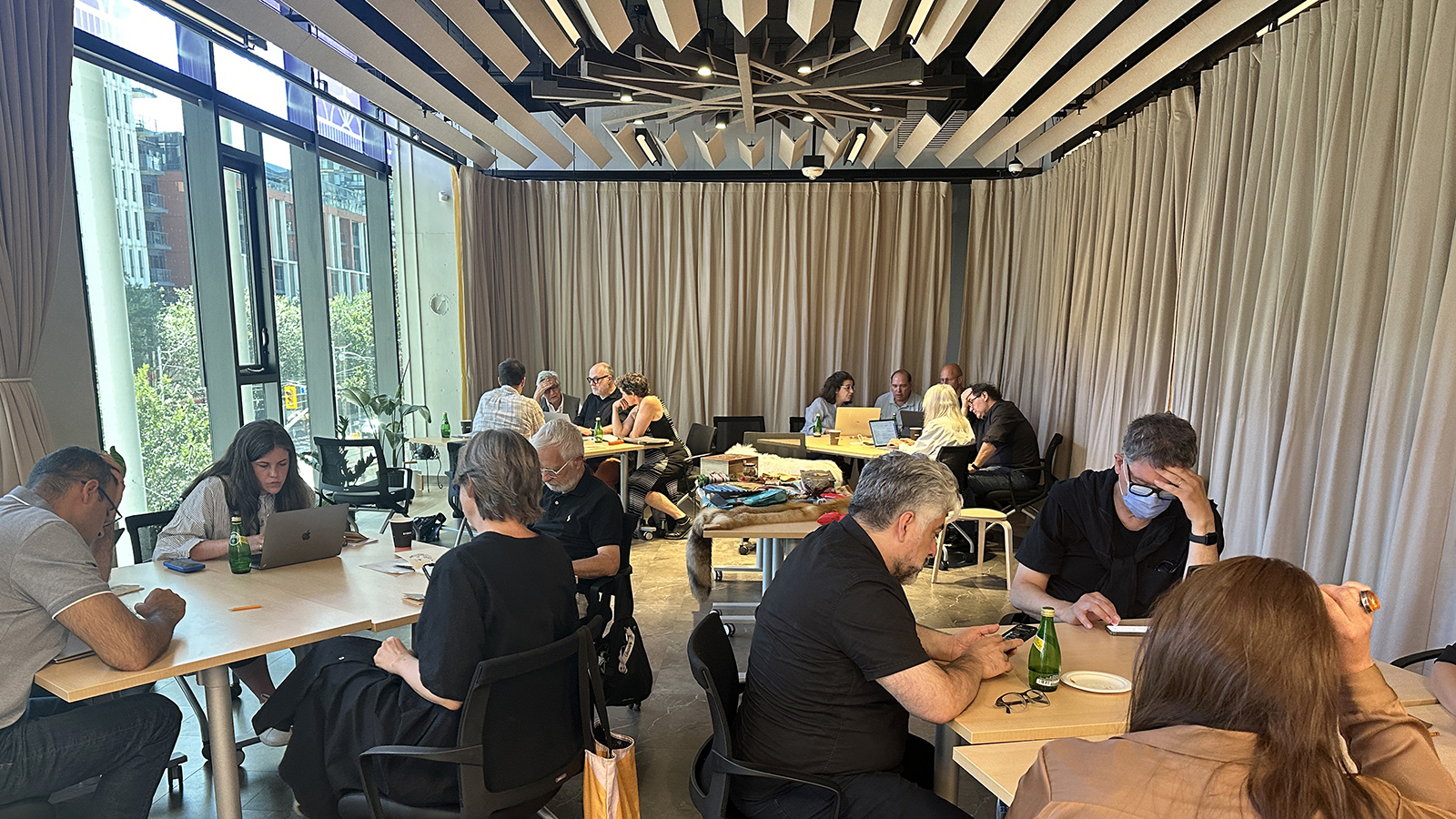
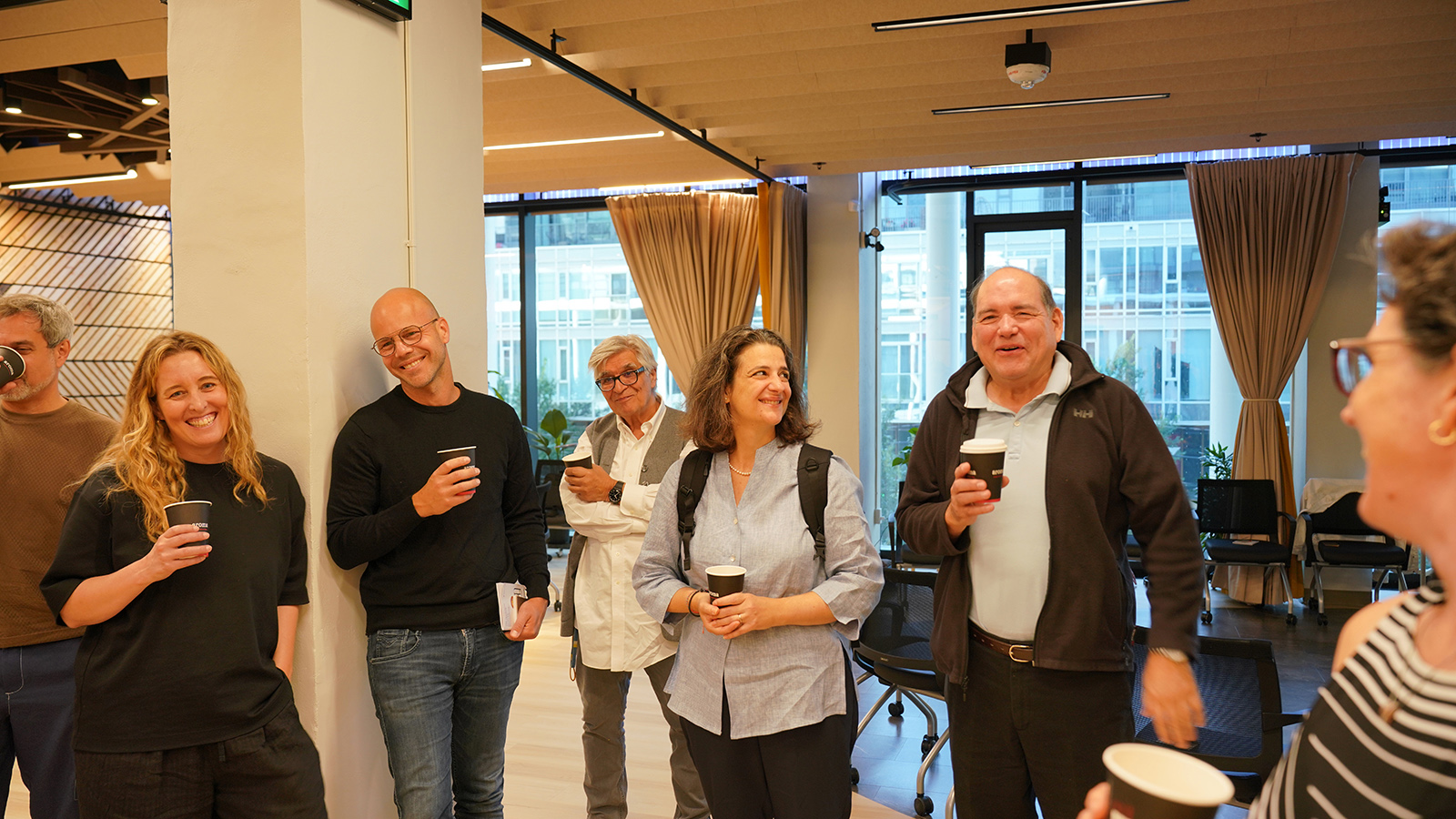
Photos by Mark Boulos.
The morning presentations helped set a tone for DAS dialogue on goals and value-setting, including course-specific actions and possibilities for developing indigenous curriculum content and approaches. Students attending the event, reflected on the session:
For Master of Architecture student Alexandra Waxman, the session aligned with her thesis project on cultural reclamation: "Indigenous perspectives provide a better understanding of reciprocity and relationships of trust and selflessness. I feel these relationships are lost in most architectural developments. I’m glad to participate in promoting awareness about the importance of reconciliation in architectural practice."
For Master of Architecture student Mark Boulos, the conversation resonated with global challenges: “The communal body of Canadians is largely made up of people whose families fled their countries of origin after being stripped of their identities. While few of us are of Indigenous descent, we can relate to their experience. Embedding Indigenous knowledge in our pedagogy and acknowledging Indigenous identity can help make Canada a refuge for all those facing persecution or longing for their land.”
Since the start of DAS’ Indigenous curriculum development initiative in 2024, when faculty met at the Native Canadian Centre of Toronto (NCCT) (external link) , the aim has been to engage the DAS community in reflective conversation and purposeful action. Over the last year, actions have included mobilizing knowledge, amplifying voices, and listening to the land. Here are some examples:
Mobilizing Knowledge
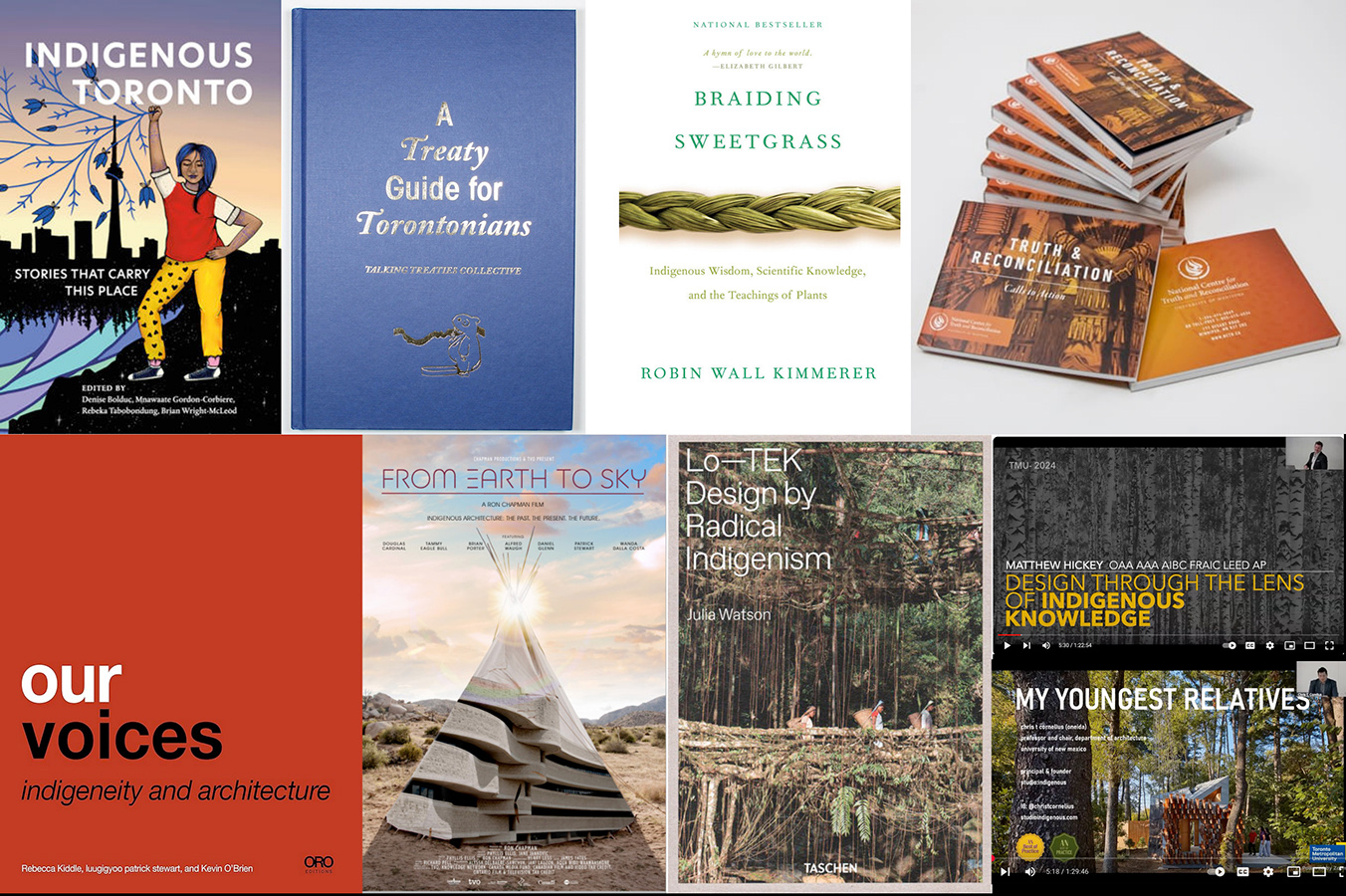
Student research assistants have helped to assemble and share (google doc) resources to support Indigenous curriculum development (external link) . These include resources on Indigeneity in architectural education, Tkaronto sites for possible field trips, and recent Indigenous-led design projects that might serve as precedent studies. (google slide) Results of a 2025 faculty survey (external link) show good progress, with nearly 90% of respondents having consulted the resources, and 50% having already made some adjustment to their course outline and/or assignments. In March 2025, DAS also participated in an Empowering Indigenous Youth in Stem recruitment event, facilitating knowledge sharing among 400 attendees from across Turtle Island.
Amplifying Voices
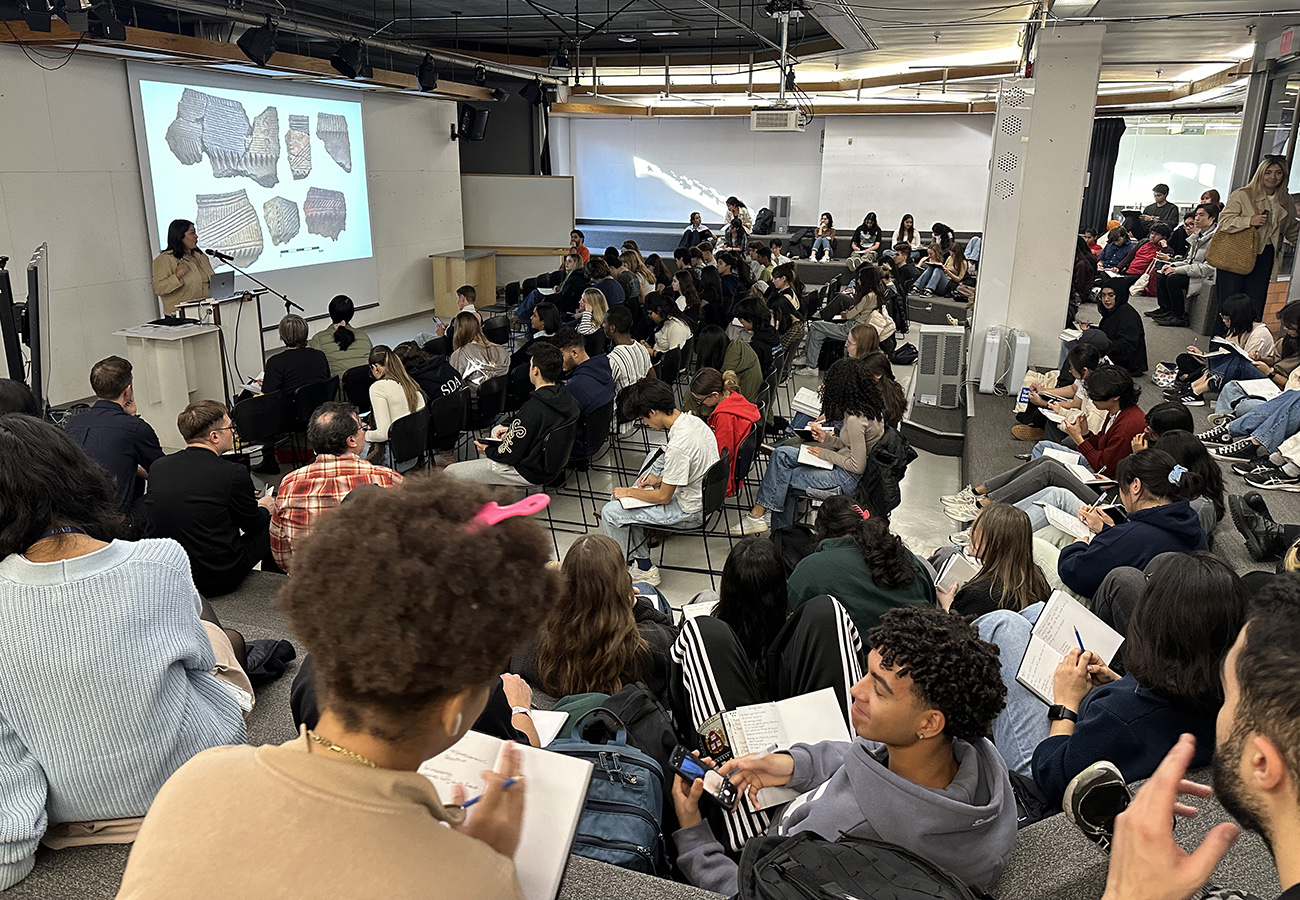
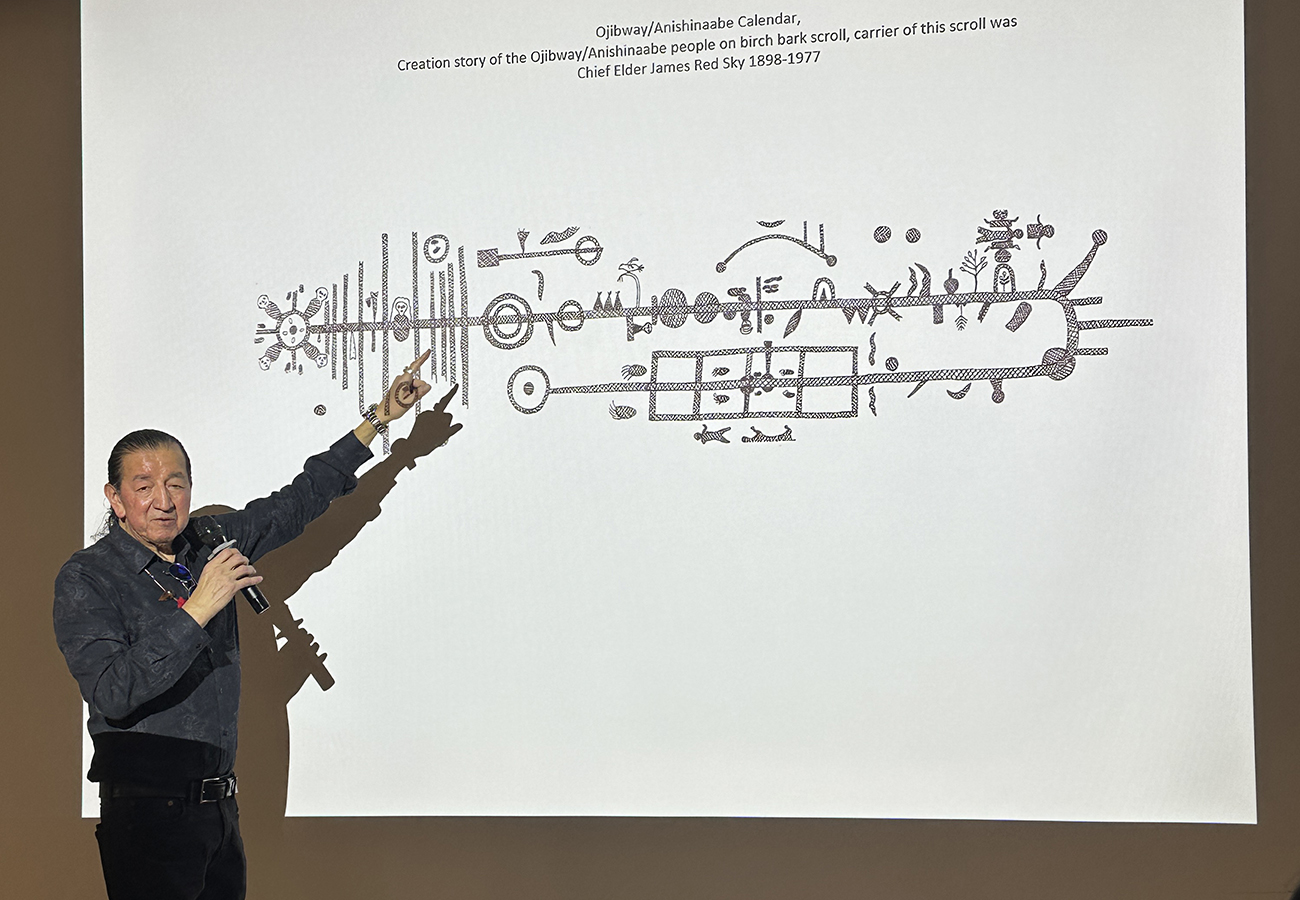
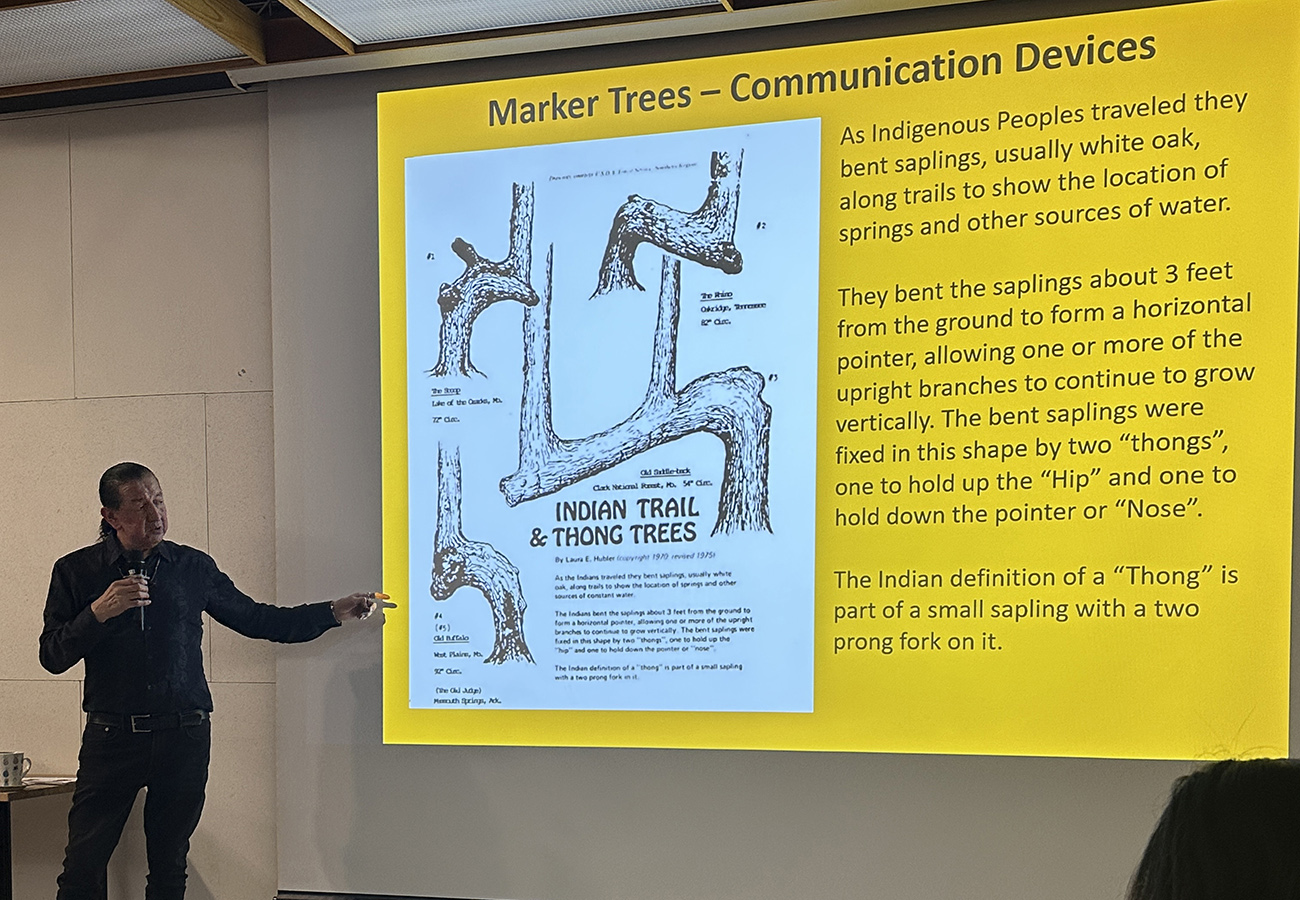
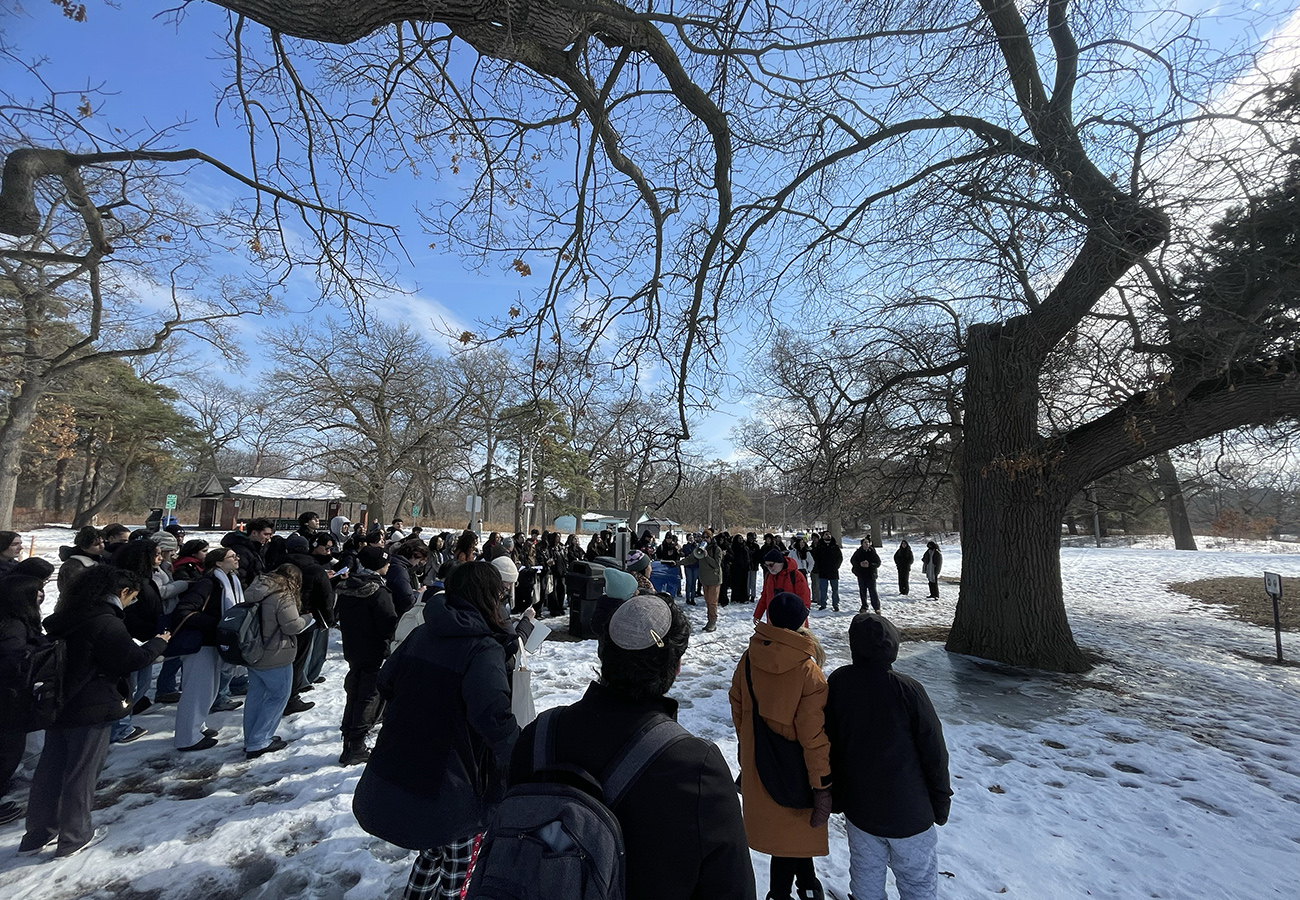
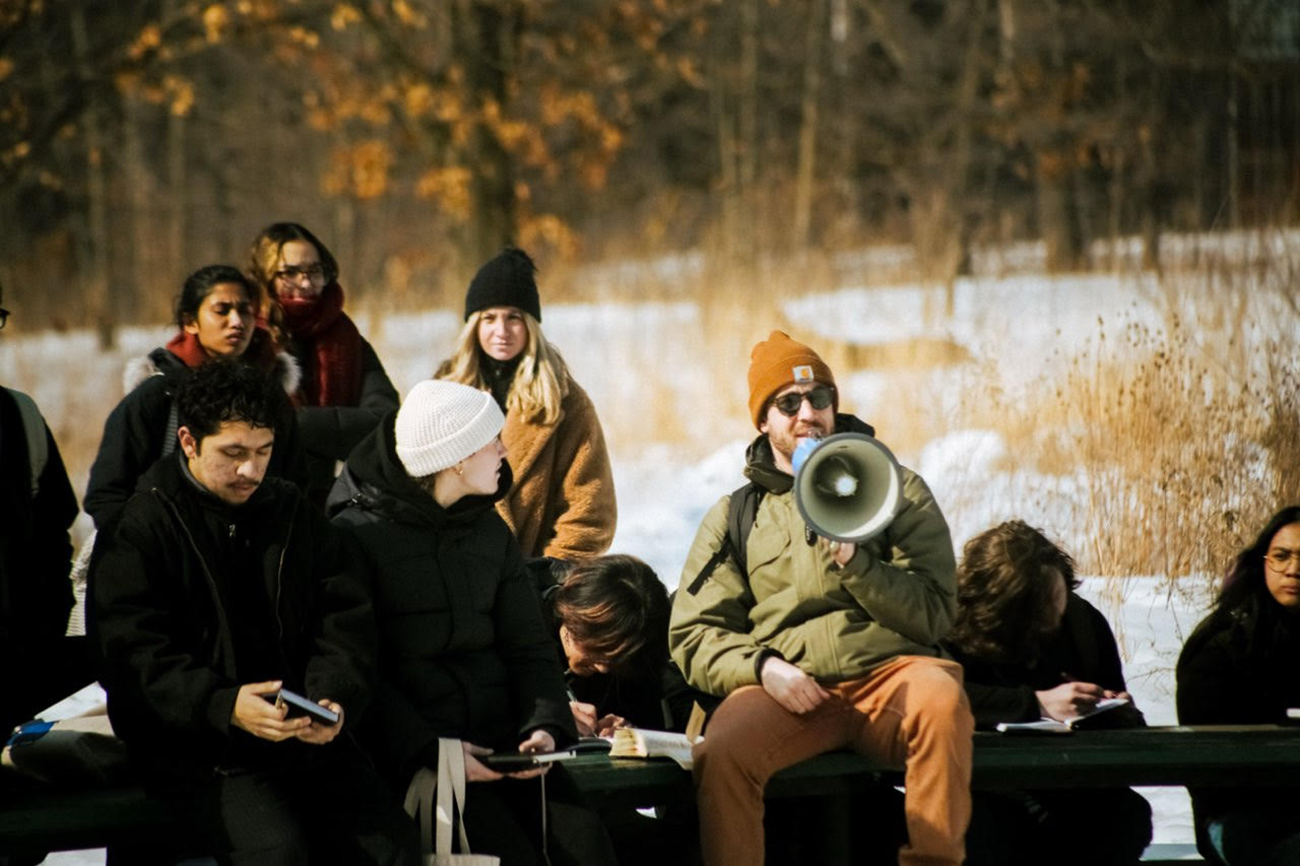
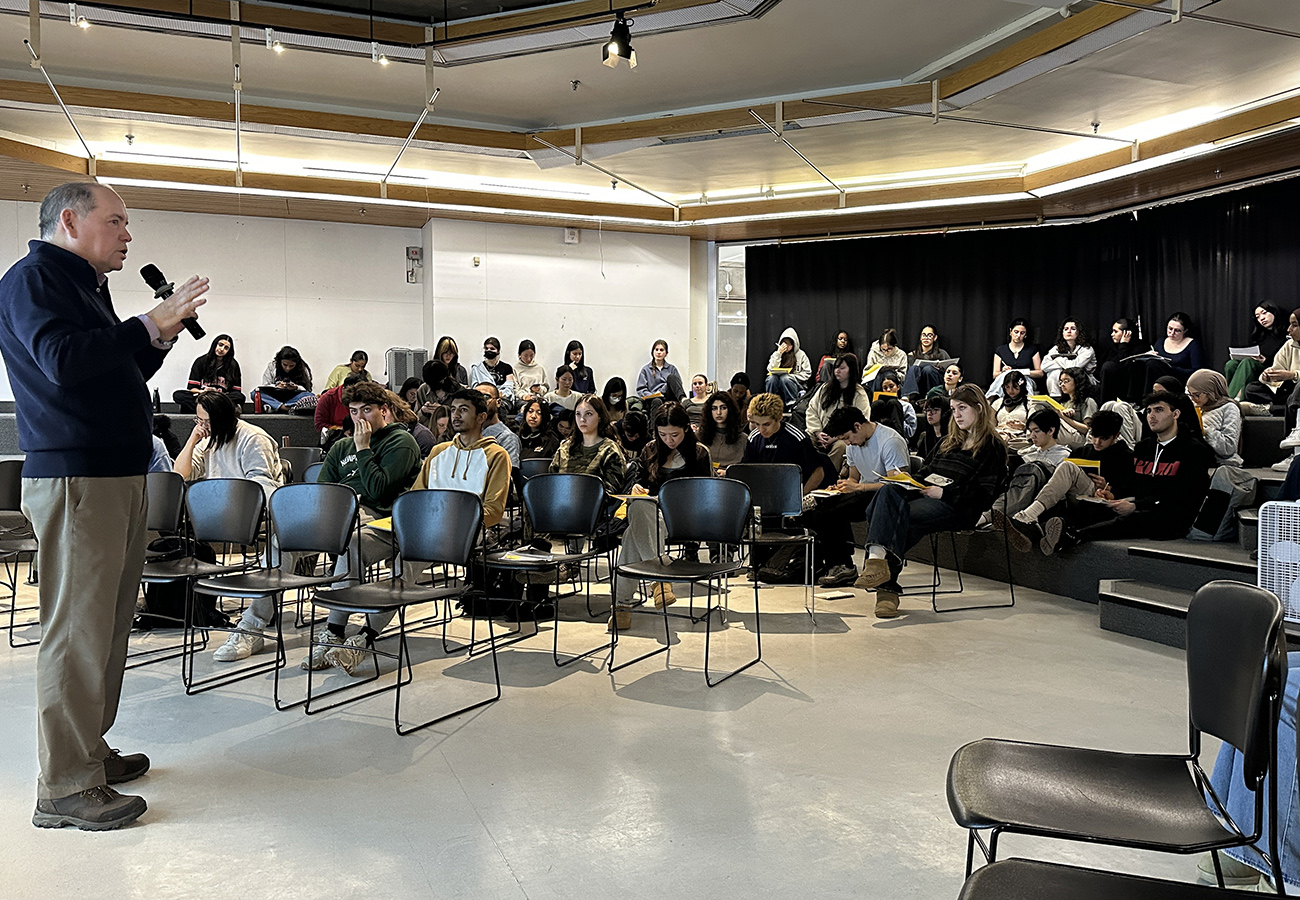
TMU Indigenous Education Council funds have supported several guest speakers, including Kahnawake Mohawk artist-researcher Ange Loft, who engaged students in hands-on drawing and deciphering of First Nations archaeological traces; artist and ancestral knowledge holder Philip Cote, who shared stories of birch-bark scrolls and marker-trees; Anishinaabe Ojibwe, architect Erik Skouris, who guided a site visit of High Park mounds and marker trees; and Knowledge Keeper of the Dënësųłinë́ and Nêhiyawak Nations James Bird, who shared insights on language and land, and encouraged students to explore interactions of drawing and storytelling.
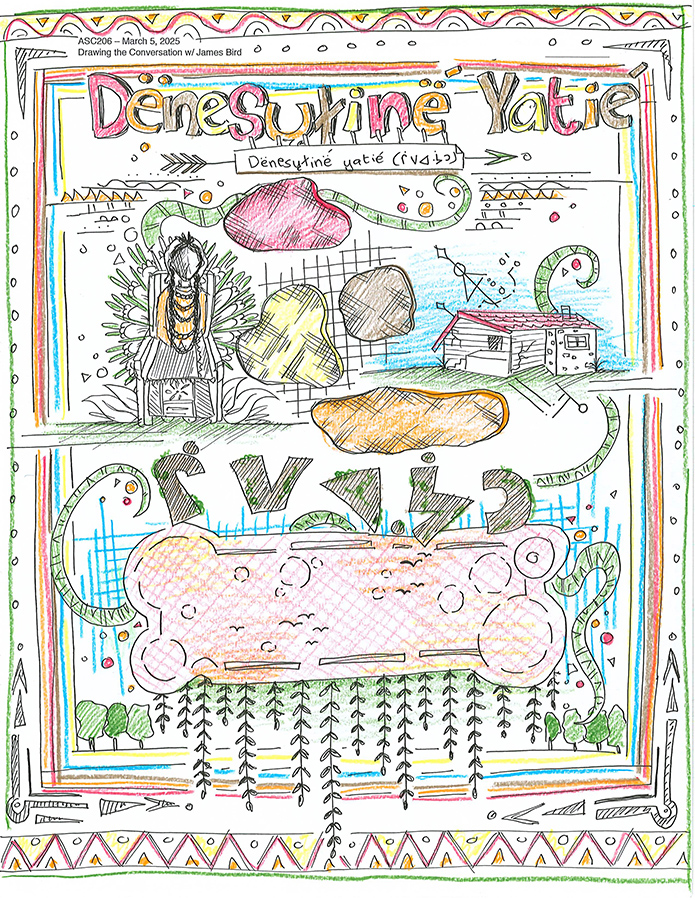
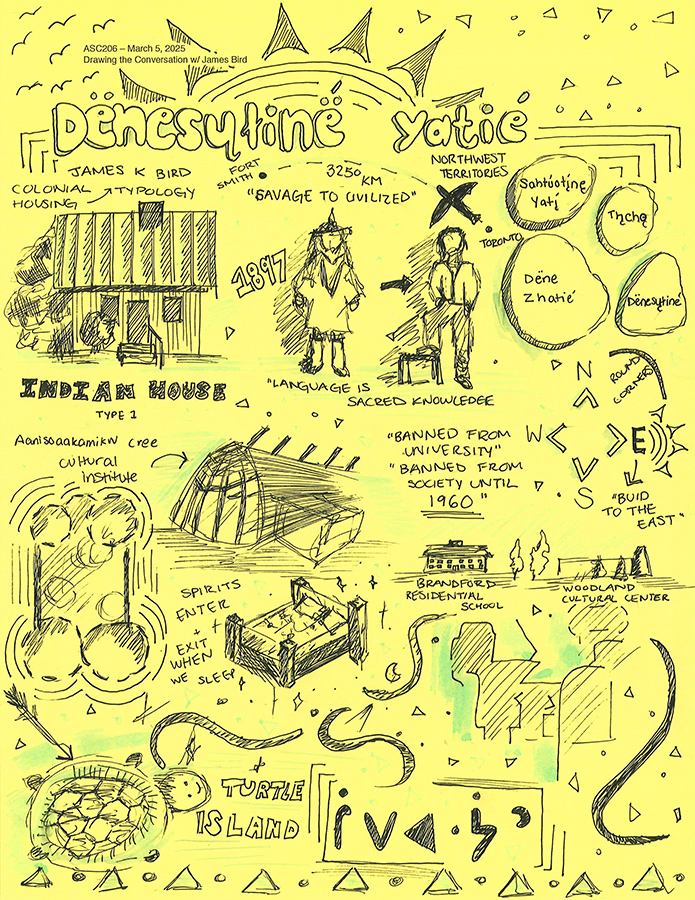
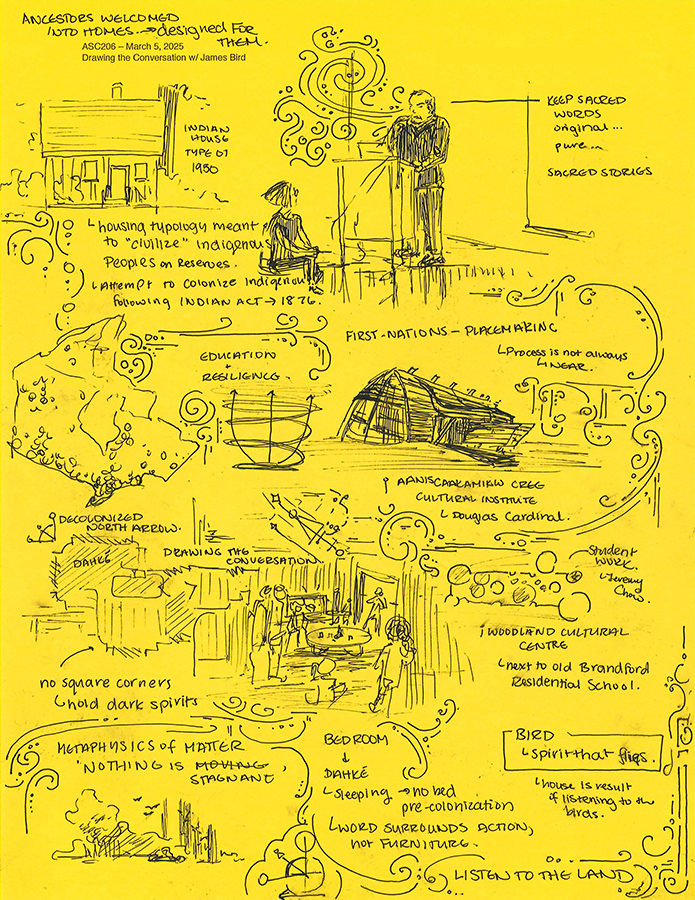
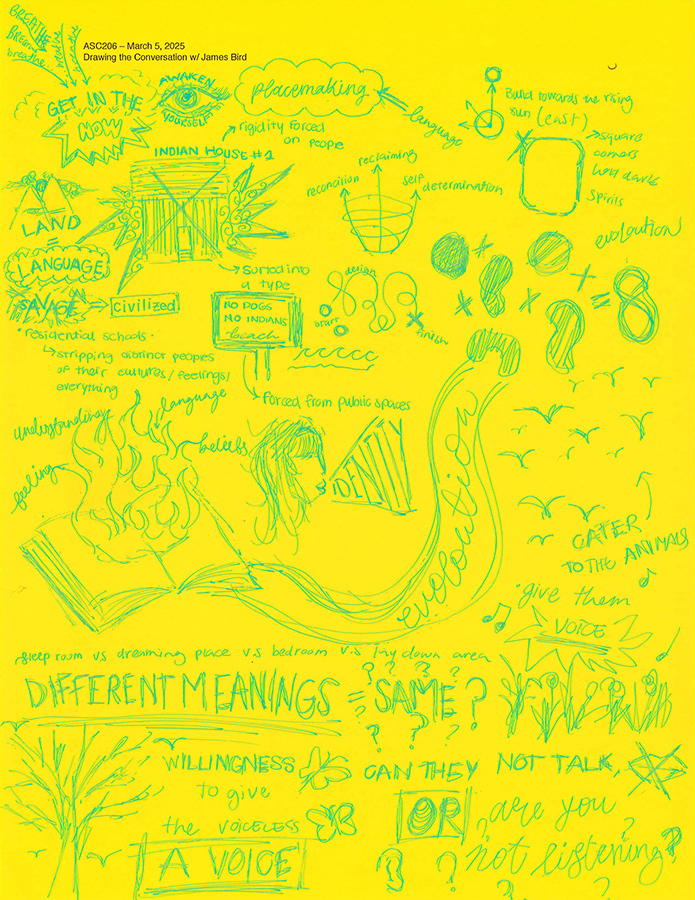
Student work for ASC206 “drawing the conversation” led by James Bird.
In 2024-2025 the DAS public lecture series included Chris Cornelius, Oneida Nation founder of studio.indigenous and Chair of the Architecture Department at the University of New Mexico. The 2025-2026 series includes, on September 11, Danny Roy and Dani Kastelein, of Brook McIlroy’s Indigenous Design Studio (external link) .
Listening to the Land
In fall 2024, Anishinaabe Ojibwe architect Erik Skouris taught an Advanced Architecture Studio, entitled Listening to the Land, involving students and community partners in reimagining the Native Canadian Centre of Toronto (NCCT). Grounded by Values / Apiitenim; heritage / Mewinzha; Land / Aki; and Home / Waakaa’igan, student designs embraced ecological diversity, locally-sourced materials, and social configurations to interweave the NCCT with community, ceremony and context.


Next steps
DAS aims to advance TMU’s priority to “continue our commitment to Truth and Reconciliation,” putting reconciliation into action and creating meaningful, lasting commitment and change. This will involve continuing and expanding the dialogue, strengthening relationships for sustainable partnerships, sharing best practices for curriculum adjustments, and working toward full-time engagement with Indigenous faculty members and knowledge holders.
Thank you to all DAS colleagues and students who are helping with this initiative, including Grace Asselin, Emma Trudeau, Mark Boulos and Alexandra Waxman. If you are interested in becoming involved, please reach out to Lisa Landrum.