From Rice Hulls to Ribbons: The Making of the ん Wave Installation
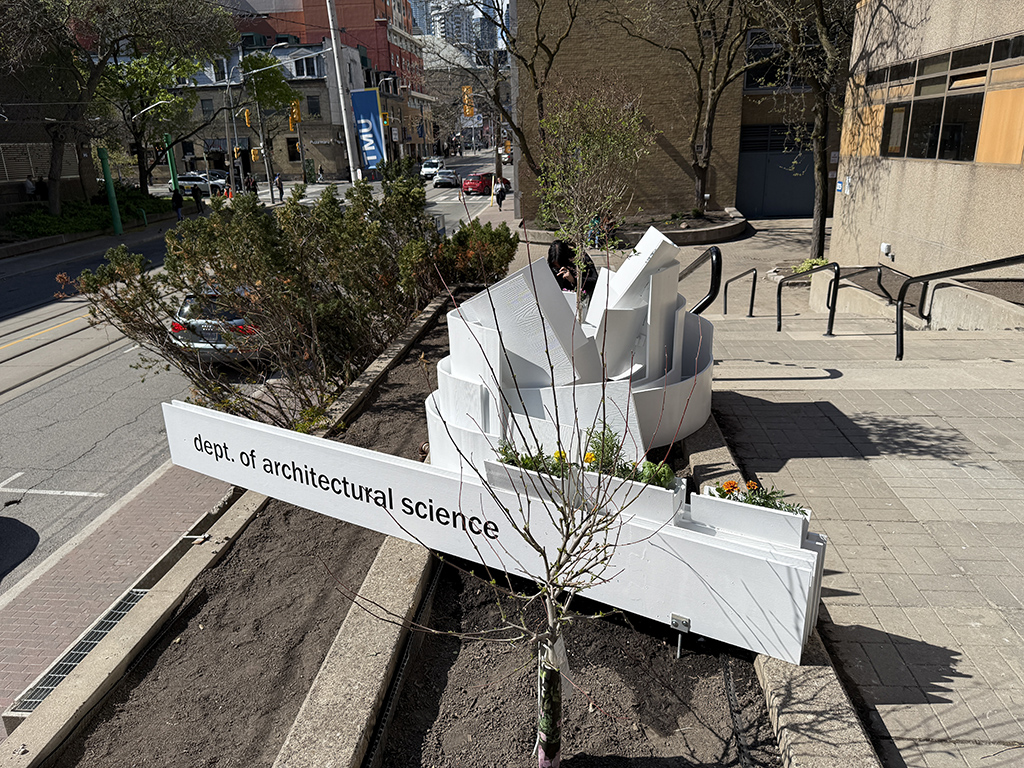
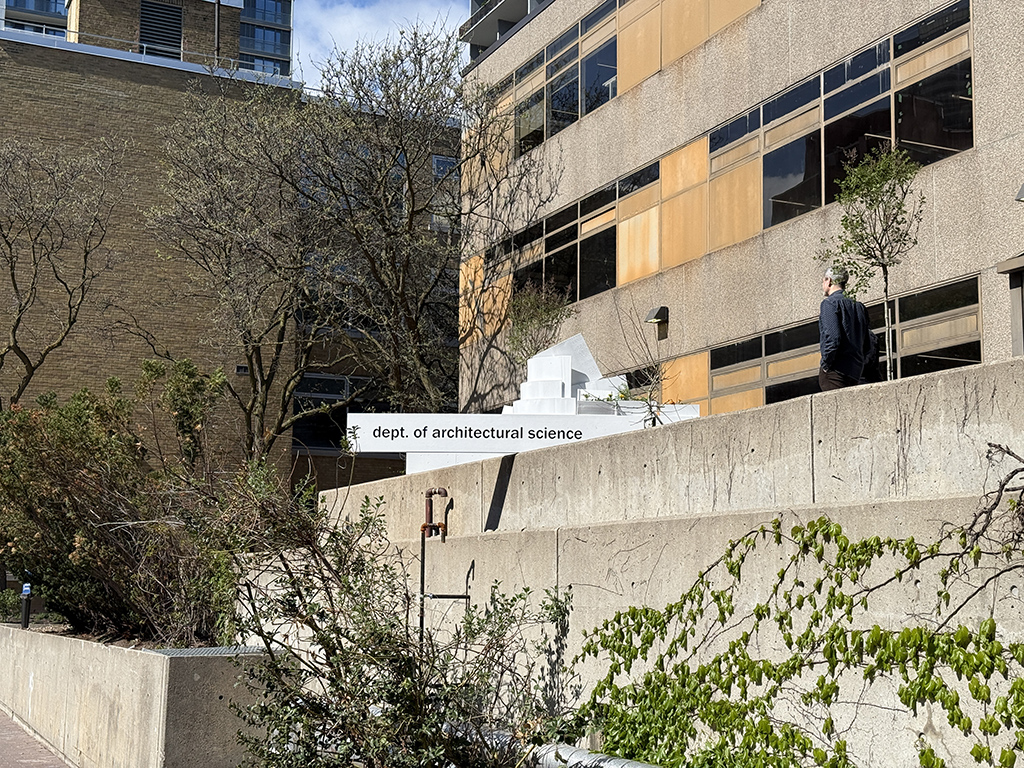
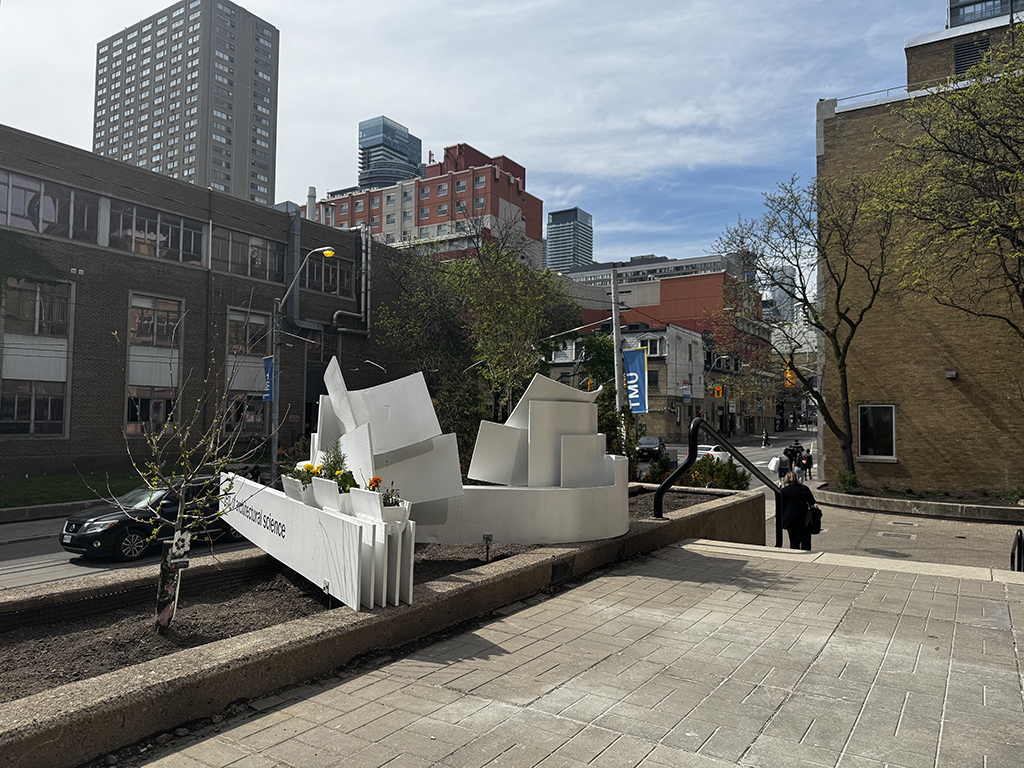
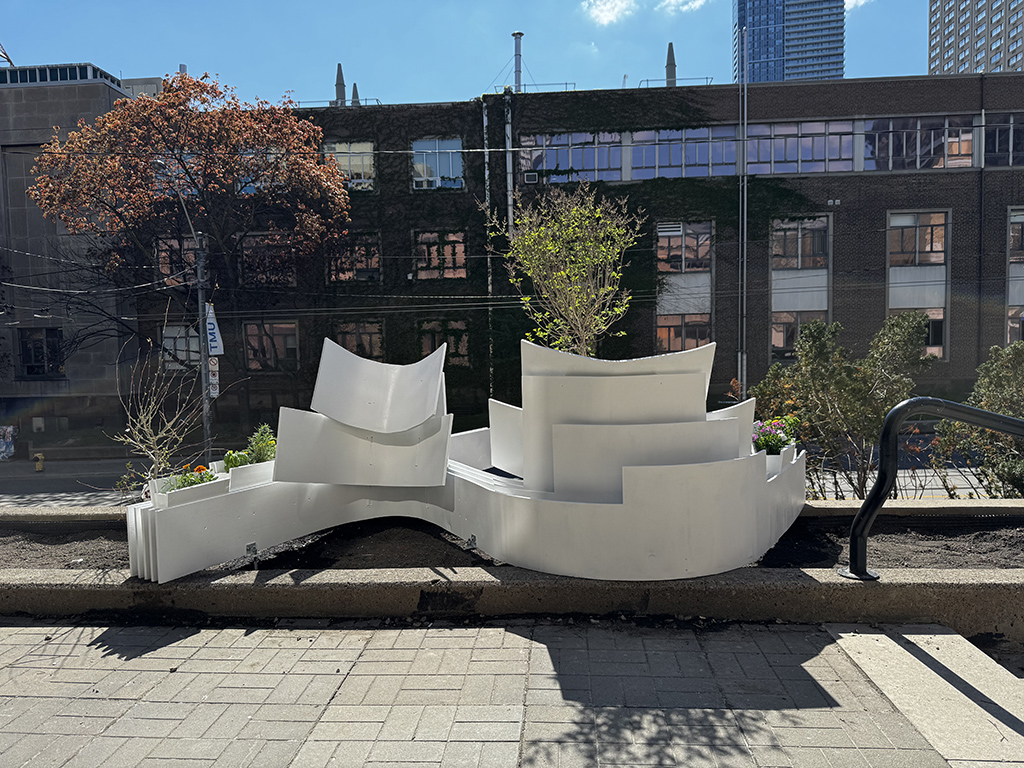
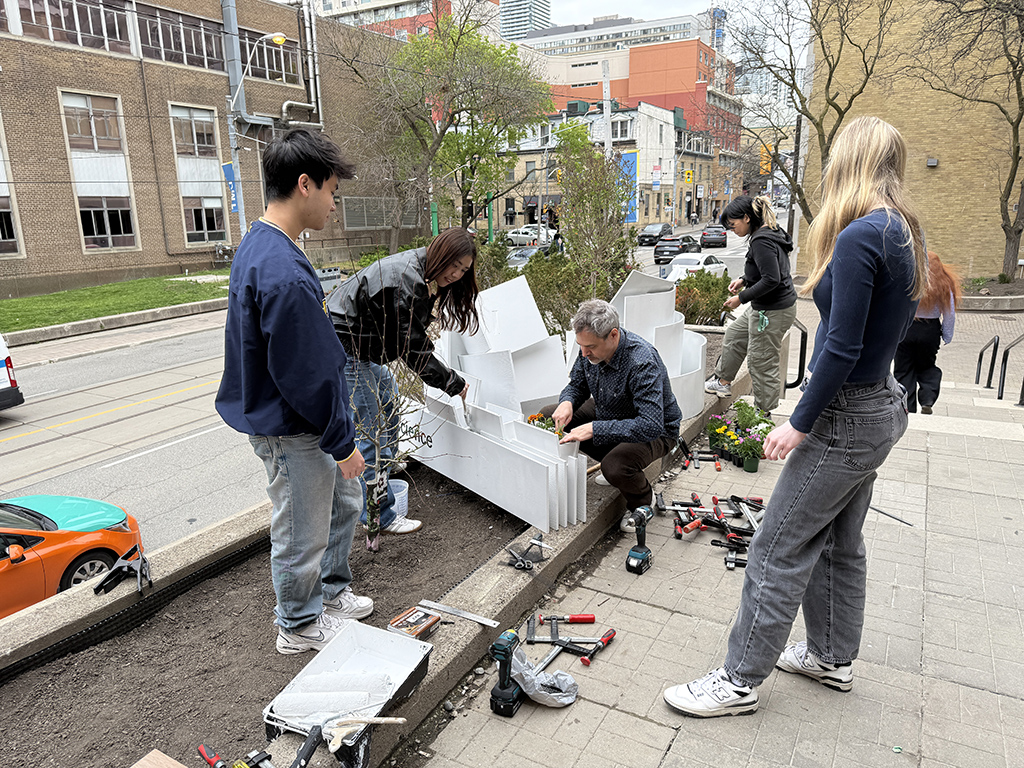
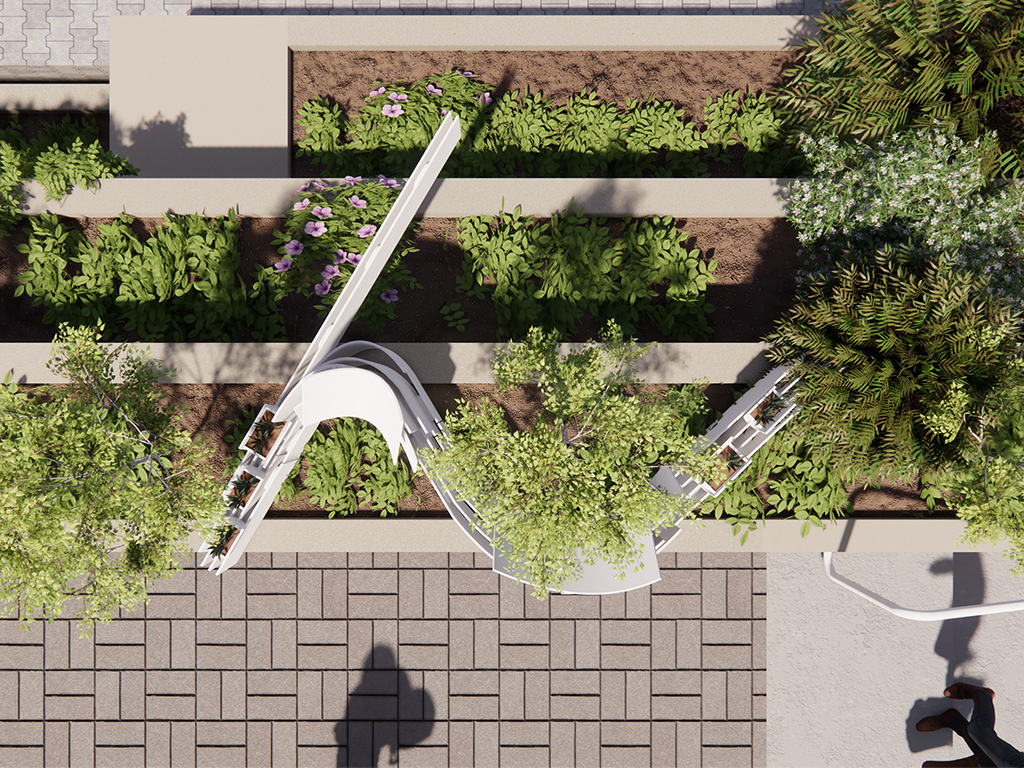
The ん Wave is a new installation at the DAS Building’s Church Street entrance, replacing the 2022 Cloud installation (external link) . Designed and fabricated by students and staff, ん Wave tests the capabilities of plastic composite rice husk wood and digital fabrication to create a playful configuration of curving planks that weave themselves into the existing landscaping, and provide an armature for future plantings.
Professor William Galloway, who supervised the project, highlighted its advantages:
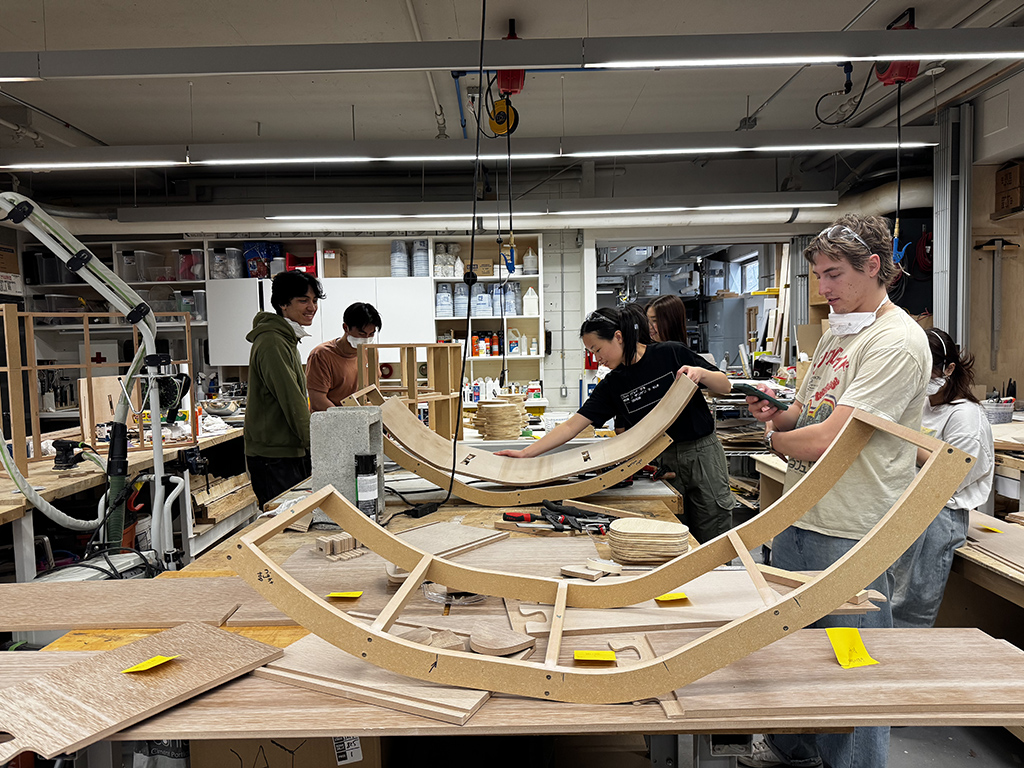
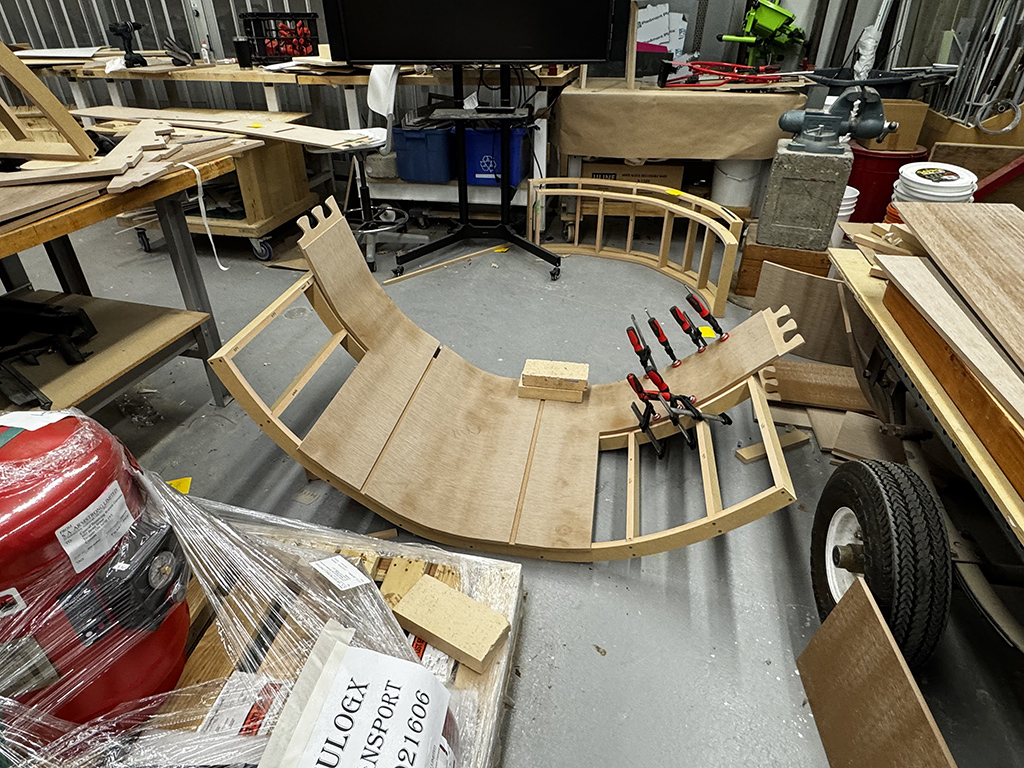
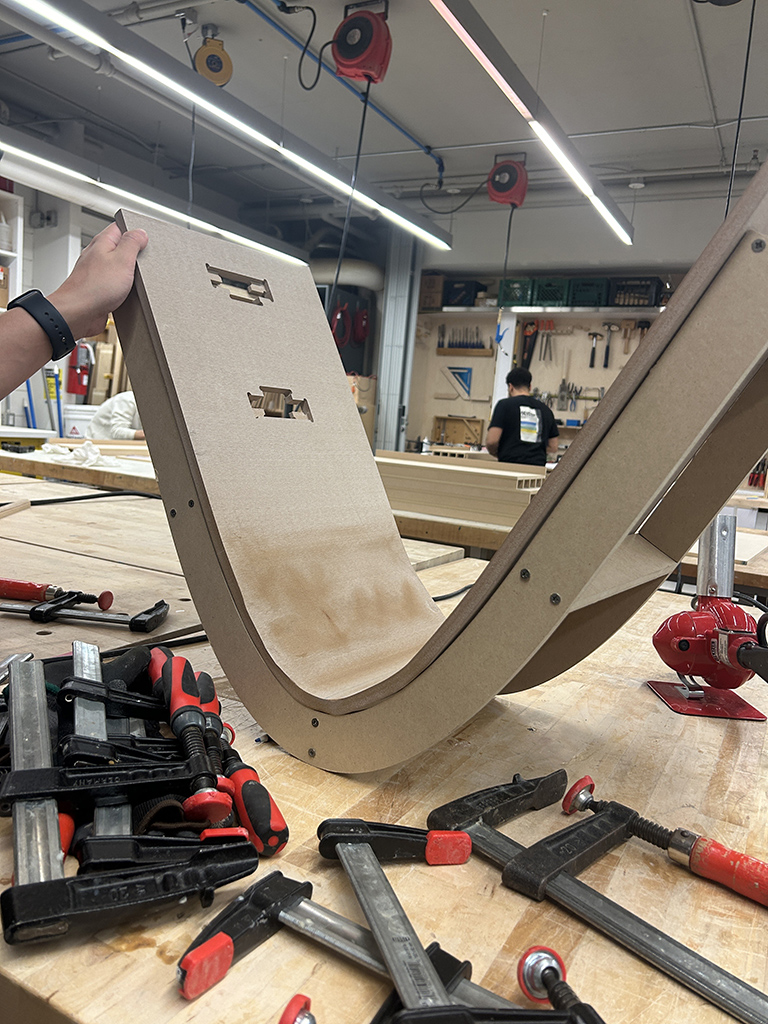
It can be used in multiple ways, with its strongest selling point being that it is resistant to rot because it is not made from wood, and can be recycled after use... It is also easy to shape into different shapes. With this project, we created molds to bend the planks around, then joined them together to create the ribbon-like design.
Student Perspectives: Design, Experimentation, and Fabrication
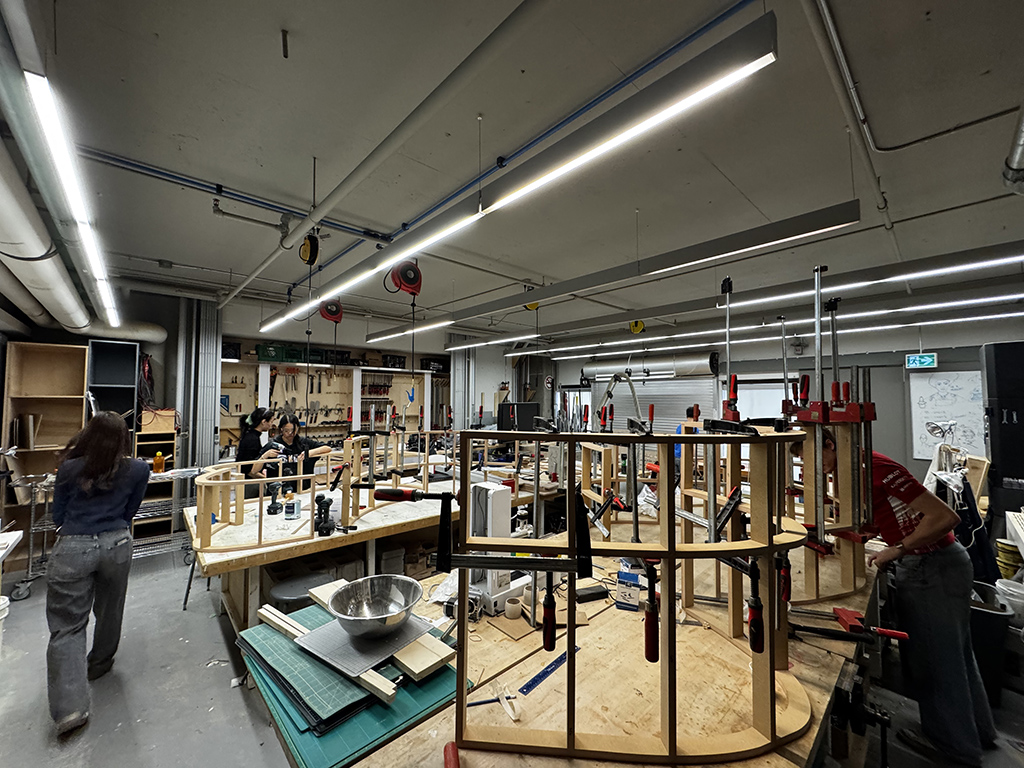
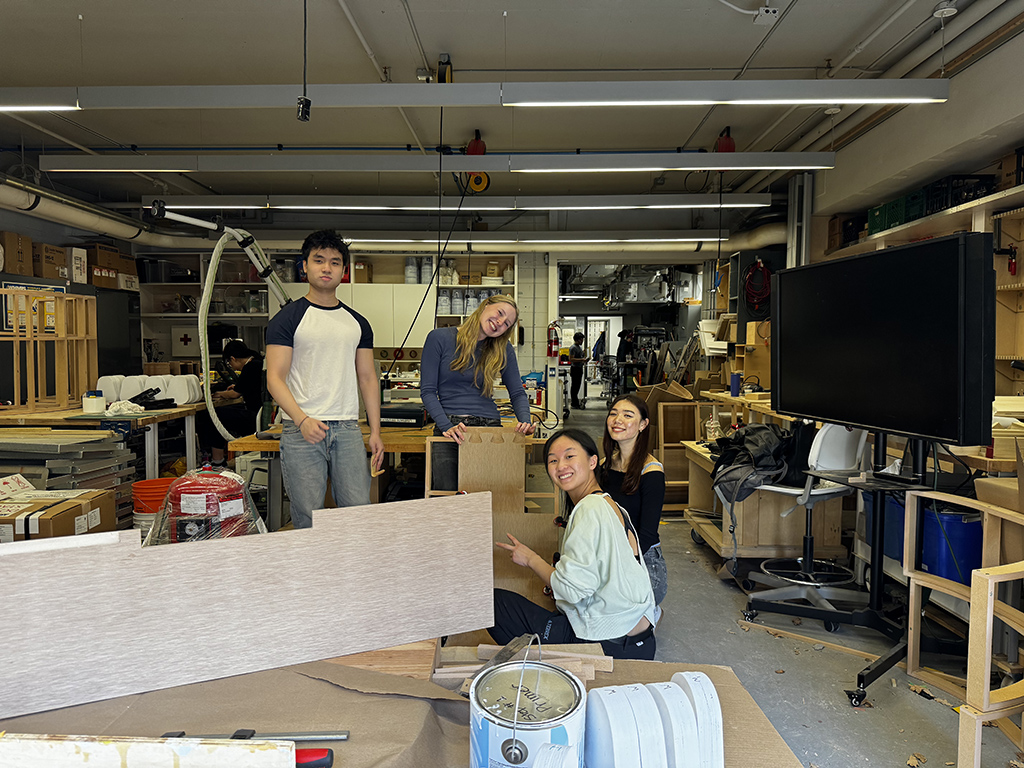
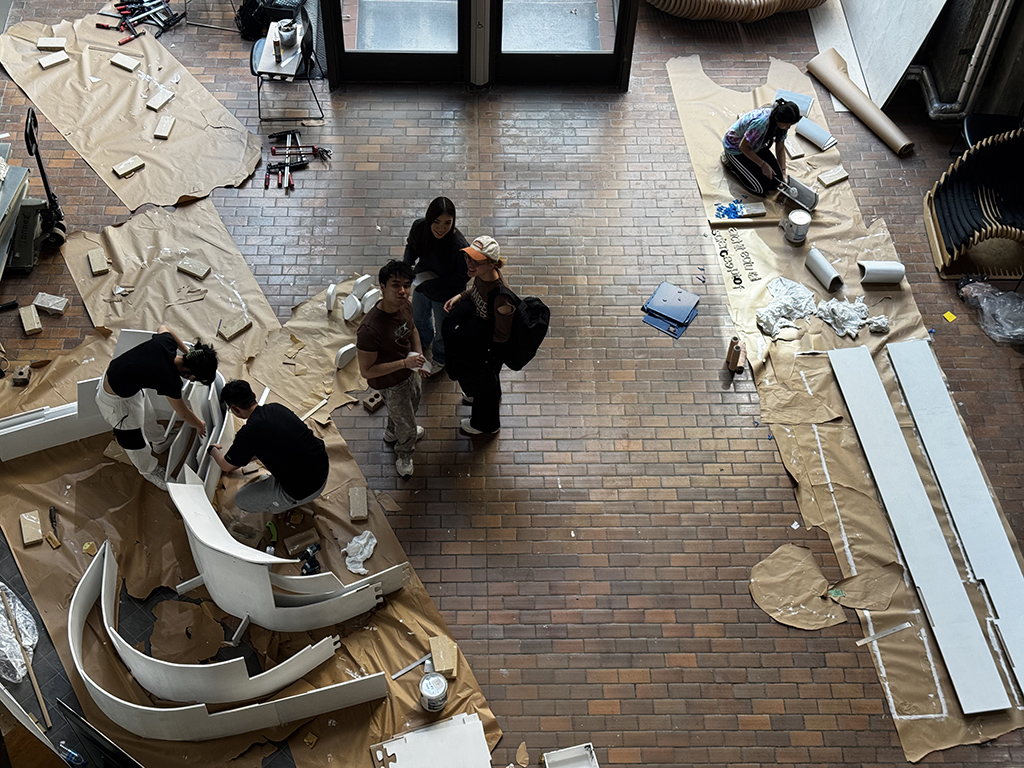
The project was a collaborative effort between supervising Professor William Galloway, the design team (Leshin Chew, Samantha Wu, Jeffrey Zee) and the fabrication team (Katy Cao, Bernadette Galingan, Sana Galloway, Cici Huang, Avery Jordan, Grace Lee, Massimo Montanari, Angel Nguyen Tran, Rafa Tohan, Jade Yu Tung Wong), supported by workshop staff Jordan So, Jason Ramelson, and Filip Tisler.
Jeffrey Zee reflected on the process:
"The project was a pretty interesting way to experiment with unique fabrication methods. We learned a lot about the limits of the ricewood and how much we can manipulate its properties through heating and bending... It was a fun experience to use tools in the workshop I traditionally would never think about and create an unconventionally constructed project."
Leshin Chew, having worked on both installations, shared:
"I found both experiences extremely eye-opening... I had previously worked with William Galloway two years ago on the ‘Cloud’ installation, alongside Samantha Wu and Jeffrey Zee on the fabrication team... I found both experiences extremely eye-opening. I was exposed to diverse design inputs, a new material, and small-scale project management. We worked closely with Will to explore the physical properties and limitations of the rice husk composite boards—testing carving, molding, and durability.
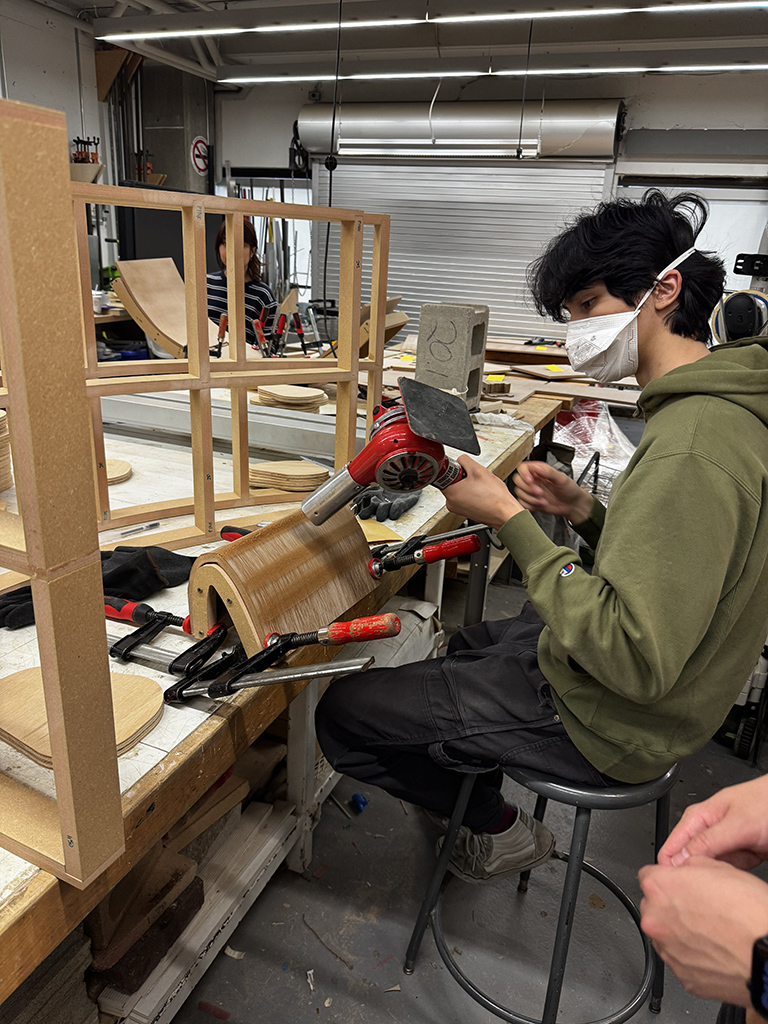
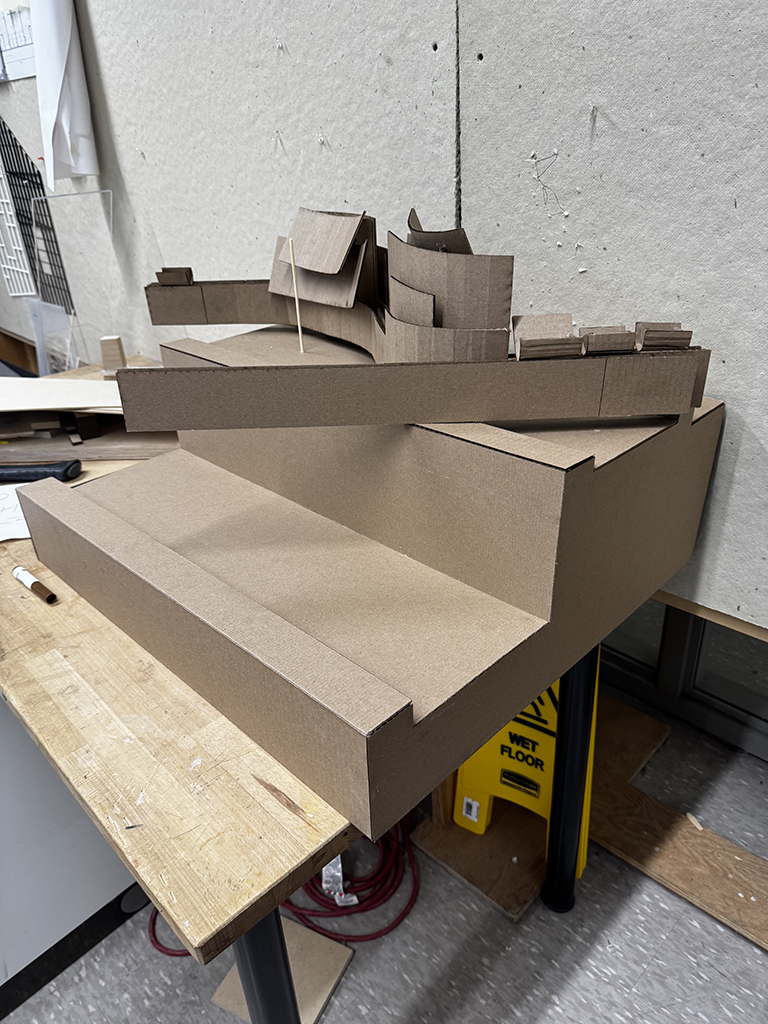
We created prototypes, experimented with forms at different scales and angles, and developed project-specific techniques using heat tools. We also became more familiar with workshop machinery. A lot of lessons emerged: coordinating within our design team, communicating with the fabrication team, and adapting quickly when things didn’t cut or mold as planned. This experience was super fun—I personally love the fabrication and design process, and working at full scale felt entirely different from typical studio models."
Samantha Wu emphasized the project’s technical challenges and innovations:
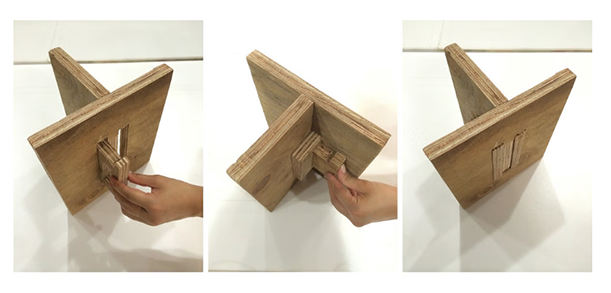
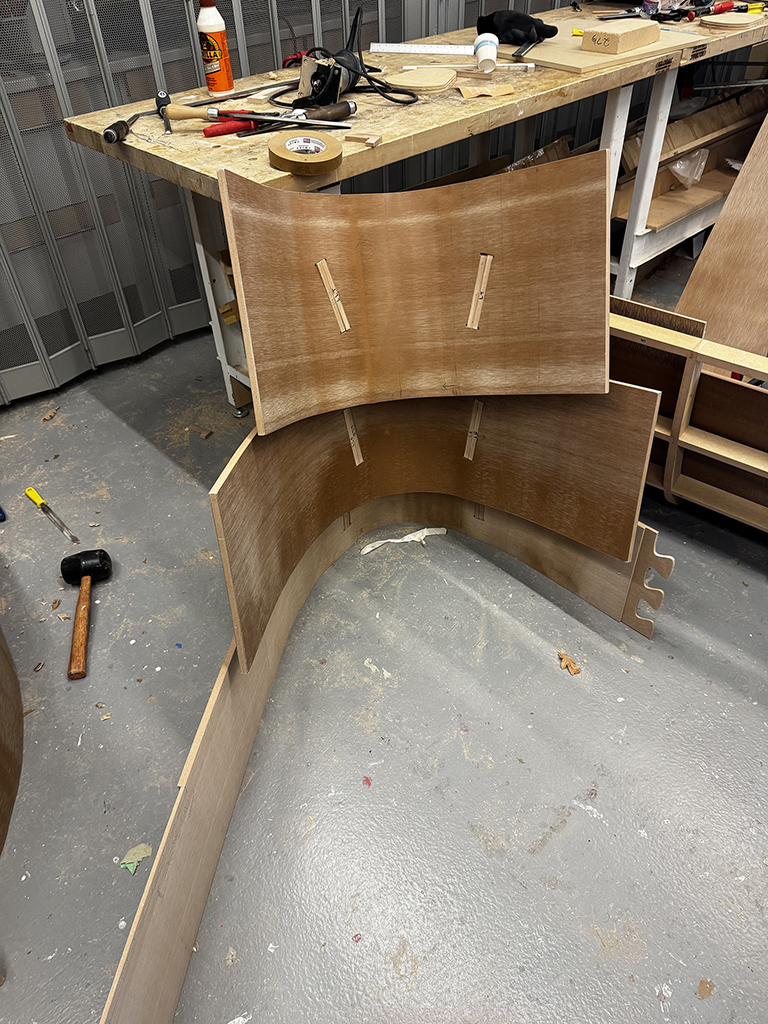
"This project gave us deep insight into creating fluid shapes with unique construction methods and new materials. During design and prototyping, we explored wood joinery and the rice wood’s amazing properties – how heating made it pliable, letting us combine techniques to achieve the Wave’s complex curves. We wanted something striking that located the building yet integrated with the site and future plantings.
Fabrication taught us about constructability and assembly. Digital fabrication was essential – the CNC machine brought our design to life, cutting precise curves and joinery channels we could never achieve by hand. We developed methods to heat and bend sections using molds, then used custom wood joints for both structural stability and design freedom in attaching the floating curves."
A Welcoming Landmark
The ん Wave cascades and cantilevers playfully along the entrance stairs, serving as both a wayfinding element and an architectural statement. Its flowing form invites visitors into the building while announcing the Department of Architectural Science to passersby.
By pushing the boundaries of material innovation and digital fabrication, this project not only continues the legacy of experimental installations at DAS but also demonstrates the potential of sustainable design in architectural practice.