From Harvest to House: Thesis Work Thrives with Community Engagement
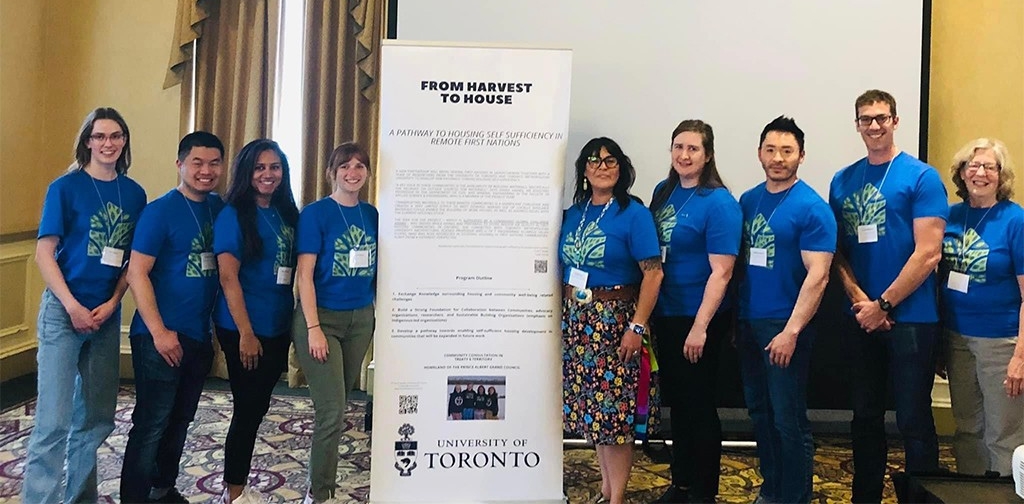
In August 2024, Building Science graduate student Michael Wong successfully defended his Master’s of Applied Science thesis, “A Community-Based Qualitative Review of Housing In Saskatchewan First Nations,” advised by Dr. Helen Stopps. The road to success included community engagement in collaboration with a team of researchers from Toronto Metropolitan University (Dr. Russell Richman, with undergraduate Architectural Science students Odel Linetska and Daniel Wolinkski), the University of Toronto (Dr. Sarah Haines, Dr. Nicholas Spence, Dr. Penny Kinnear, Zoe Hoskin, Fatima Ahmed) and housing and homelessness advocates (Natalie Clyke and Becky Big Canoe) in partnership with Saskatchewan First Nations partners and community consultants.
From Harvest to House Gathering (text by Michael Wong)
During a two-day Harvest-to-House workshop held in Saskatoon, Saskatchewan (Sept 11-13, 2023) our research team met with nearly three dozen First Nations housing professionals to explore on-reserve housing, uncover shared challenges, and pave the way for new and long-lasting partnerships. The workshop aimed to connect different First Nations communities with new resources and information to improve on-reserve housing. By fostering networking opportunities and providing a platform for storytelling and rich pictures, attendees shared their experiences and perspectives, enriching the dialogue and collaborative efforts.
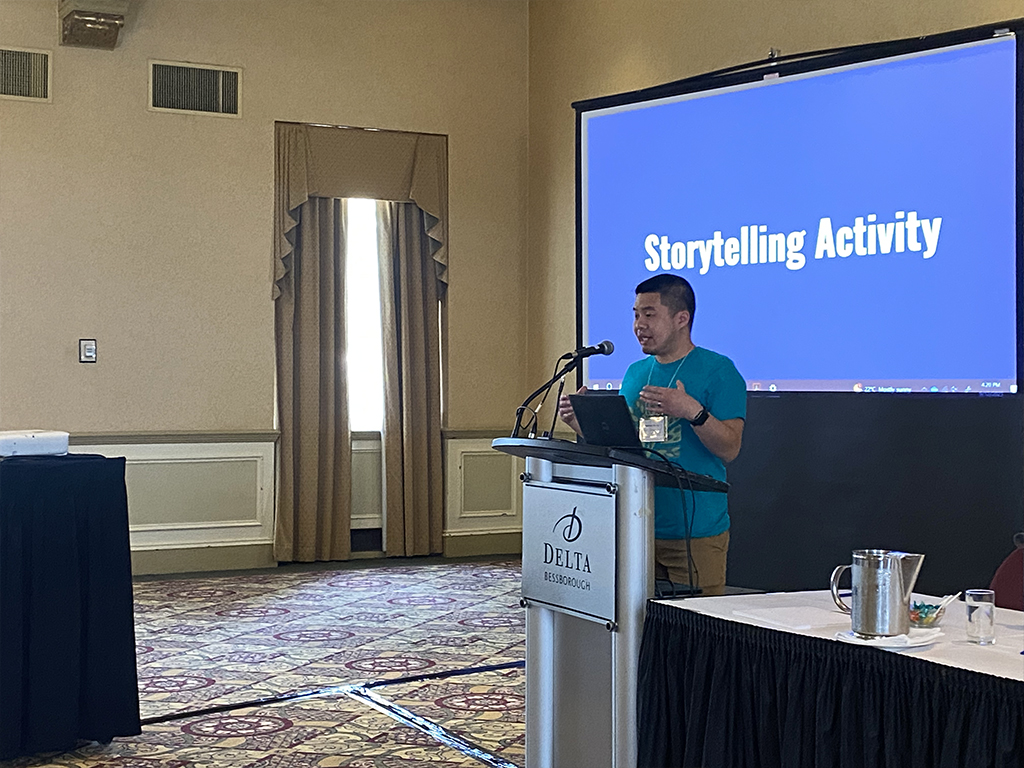
Storytelling Activity: During this activity we delved into the essence of why storytelling matters in our shared journey towards improving on-reserve housing. Recognizing the diverse backgrounds and experiences present among us, we embarked on a journey of sharing personal narratives about what "home" means to each individual. The use of storytelling honours traditional Indigenous practices of knowledge sharing, and privileges First Nations voices and perspectives over conventional Western research approaches, to weave a common understanding about the factors that make a house a home and the common challenges limiting on-reserve housing.
Air-Filters: We constructed air cleaners using a box fan, air filters, duct tape, and scissors, addressing indoor particulate matter. Through hands-on assembly, we learned about particulate matter's sources, health risks, and practical filtration solutions. This activity demonstrated our commitment to improving indoor air quality and respiratory health within communities.
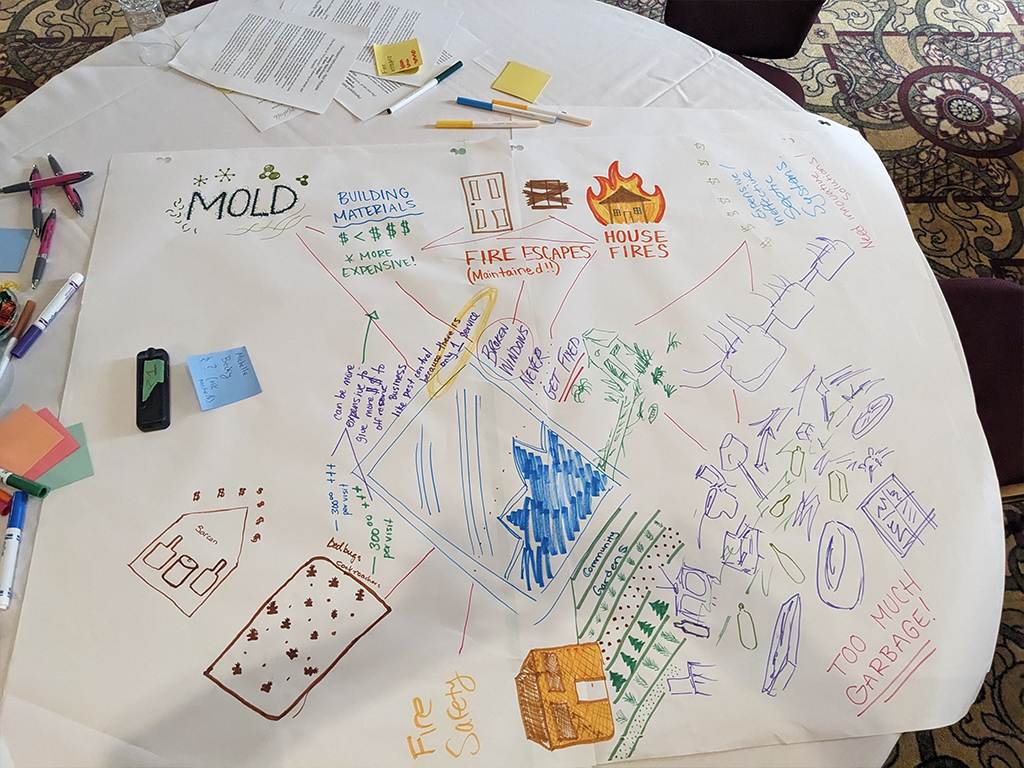
Rich-Pictures: Acknowledging the intricate nature of challenges related to housing, we used the opportunity to create visual representations that capture the multifaceted aspects of the problem. By incorporating diverse perspectives and experiences, we aimed to pave the way for innovative solutions and collaborative strategies. Through this collaborative process, we sought to gain deeper insights and generate new ideas to address on-reserve housing concerns effectively.
Ways Forward
Moving forward, our commitment to collaborating with these communities remains steadfast as we strive to develop effective and sustainable solutions for their housing issues. Regular meetings with community members have been instrumental in discussing the progress of our findings, ensuring that their voices and perspectives are an integral component of the research process throughout the analysis and dissemination. Looking ahead, we plan to host community meetings to further discuss our findings and explore potential solutions together, fostering continued engagement and collective action towards positive change.
This work was made possible through funding from the TMU FEAS Dean’s Booster Fund, SSHRC Connections Grant Program, the Connaught Global Challenge Award and the collaboration of the following First Nations communities: Pelican Narrows; Red Earth Cree Nation; Wahpeton Dakota Nation; Montreal Lake Cree Nation; Sturgeon Lake First Nation; and Hatchet Lake Denesuline First Nation.