Associate Professor Jenn McArthur on the Smart Campus Integration and Testing Lab

Assistant Professor Jenn McArthur
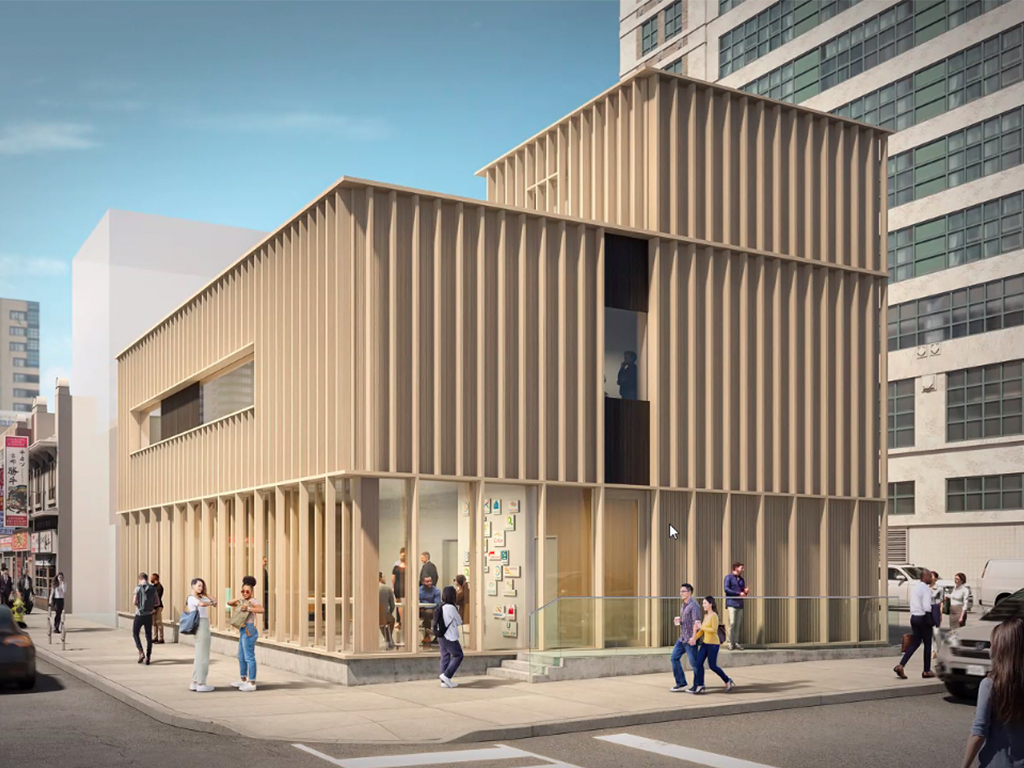
SCIThub rendering by WZMH Architects
The Smart Campus Integration and Testing Lab will be the world’s first ever fully digitally enabled building. Can you tell us a bit about what this means?
SCIThub is so exciting – we get absolute control over every aspect of the building, of how we control and integrate its systems. We have three different HVAC systems that run in different places, so we’ll be testing out how they interface and how to optimize efficiency. A lot of my facilities data research has come from pre-existing buildings; the whole campus has been my lab, in a way – but it’s kind of a “read only” situation. Now, with SCIThub, it’s a researcher’s dream come true: we can actually run the building independently and run tests. We can compare things in terms of efficiency, generate data, and fine-tune and control any aspects of the building we want. We can look at the occupants’ experience of the space in great detail: everything from lighting and electrical to glazing. We can achieve a level of co-optimization which hasn’t been possible before.
We have absolute control over every space through an IT network that ties the whole lab together. This includes building controls, HVAC, lighting, and all the other smart systems so they can be accessed remotely. The building will also be equipped with visualization suites and display screens so you can see the systems live - including one facing the street - which is super cool! The building will also have AI interfacing with BIM-based digital twins in order to run simulations and use those to improve the building.
The other thing that totally excites me, because we used a modified integrated project delivery approach, is all the various stakeholders and sponsors who have had input in the design. For example, we had a future PV-thermal hybrid solar array donated to help us achieve our nearly-net-zero carbon ambitions despite how shaded our site is. Our goal is to integrate an adsorption chiller to use that heat and balance our geo-exchange system because right now it, we’ll have to melt snow with embedded piping because our building is so efficient that we’ll need to get rid of that heat in the winter!
You're aiming for net-zero carbon over the life cycle of the building - is there one strategy or piece of technology you're especially excited about? What do you think this will be able to tell us about net-zero carbon buildings in the long run?
A net zero lifecycle is doable, I think, since we’re designing a cross laminated timber structure. We're trying to use the lowest possible embodied carbon. I have Masters of Building Science students doing feasibility studies for the building if we don't hit net zero, or will be looking into what options we have for renewables (like a wind turbine to supplement solar power).
What do you hope to learn from this project, in terms of sustainable building?
This project really showcases what smart sustainable buildings of the future can look like - if you build every single new building using these strategies, our entire built environment would be net zero. Everything from the environmentally sustainable insulated glass, to the responsive facade, to the completely controllable environment inside, presents us with an opportunity to learn more about sustainable building in a comprehensive way. We’re taking that first step forward: in Toronto, designers often say that everyone wants to be first to be second, no one wants to be the first one to take that risk. I think this is the role of academics - to do something which hasn’t been done before.
When is the project going to be completed and how long will it be around for?
The SCIThub should be completed in the next year and Campus Planning has no other plans for the site so I’m hoping it will be there at least until I retire… which is a long way off!
Will it be in any way intersecting with Toronto Met's smart campus initiative?
It’s at the center of it, actually. I’ve been working with a few colleagues in Civil to take the Virtual Campus Model I created for FMD over the past few years and turn it into a cognitive digital twin to support smart campus integration. We call it the “Smart Campus Integration Platform” and SCIThub has a specially designed control center to interface with it.
How do you think this is going to impact teaching and learning at Toronto Met?
I’m collaborating with Ehsan Azar for the new Masters of Project Management in the Built Environment program to create a design, construction, and operations handover case study that we can use in its core courses. Our case study will use real-time construction data in order to document the construction process of SCIThub via a time-lapse camera onsite. So, there’s a lot of case-based learning that it will support. g We’re also building extra sensors into the envelope - so SCIThub it’s going to be a great teaching tool for building science students. Last winter, we had an Architecture option studio propose various designs for the project, and WZMH (external link) attended the final reviews which inspired some of the things they came up with. At DAS we are also quite enthusiastic about timber structures: it’s one thing for students to read about them, it’s another to actually be able to visit a timber structure in real life, which is what SCIThub is going to be. The more we document this project, the more valuable it will be - even on the scale of the small building.
Eventually, academics from all over Toronto Met (and at our partner institutions) will be able to book SCIThub test cells for their own research; I think it will give the entire community a window into how we can operate buildings in the future. In terms of raising awareness around sustainable building, SCIThub is going to host tours, and we’re planning on being part of Open Doors Toronto (external link) .
I think SCIThub is going to make a significant contribution to design management case studies because all of the information needed is already here. It has all the best aspects of Integrated Project Delivery. We have manufacturers, speciality contractors, and maintenance all sitting at the same table working through things even at the detailed design stage. The construction will be very well documented, in addition to online optimization and everyday maintenance, which means students can learn how to manage smart buildings and integrate systems. All of this data will be available to all building science professors: here’s how things are running, and here’s how we manage the project to address different issues. It’s kind of a building science teaching story–we will have a real thing that people can go see and touch - they can log into the SCIThub portal and observe everything from the sensors of the wall of the envelope to how the HVAC systems are operating in real time.