M.Arch Students at the Venice Biennale
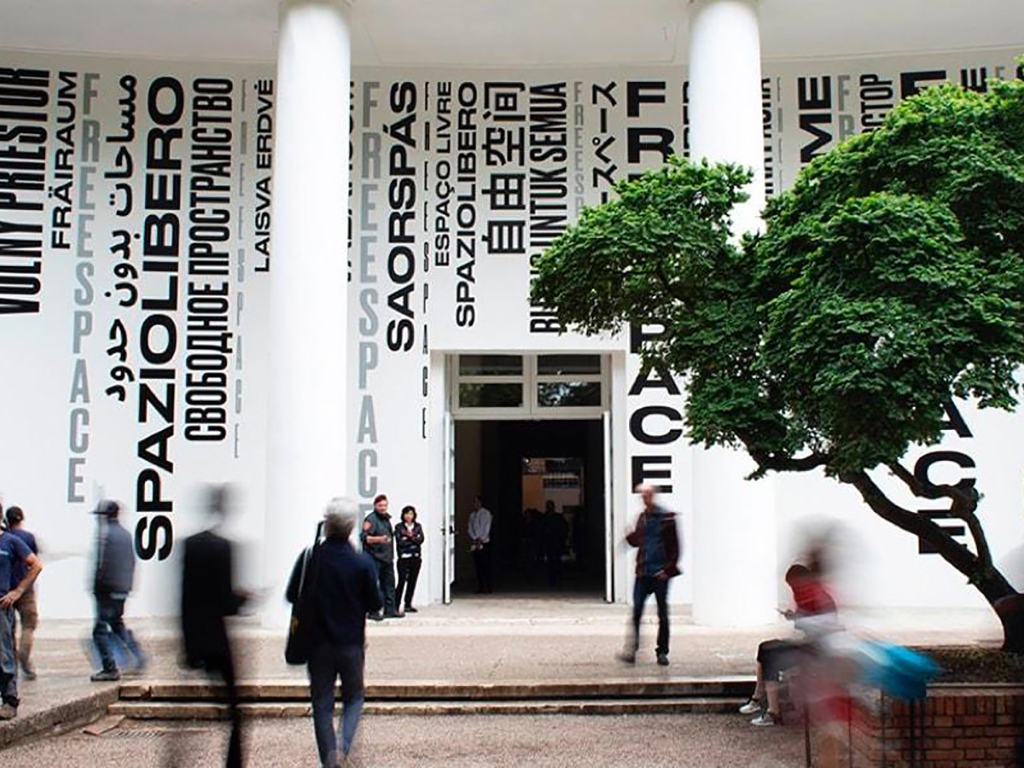
Over the fall semester study week, students enrolled in the first year of Toronto Met's Master of Architecture program took part in the Biennale Sessions, a special educational program at the 16th Biennale of Architecture in Venice, Italy. Led by faculty members Dr. Paul Floerke, Professor Marco Polo and Professor Colin Ripley, students attended the world's most important international architectural exhibition and visited sites of architectural significance throughout the city.
This year, Biennale curators Yvonne Farrell and Shelley McNamara of Dublin-based Grafton Architects established the theme of “Freespace", about which they state the following:
“We see architecture as the translation of need in its widest sense into meaningful space. In the effort to translate FREESPACE into the many wonderful languages of the world, we hope that it prises open the ‘gift’ which architectural invention has the potential to contribute with each project. Translation allows us all to map and rename intellectual as well as actual territory. It is our hope that the word FREESPACE allows us to burrow into the aspirations, ambitions and generosity of architecture.”
Since 2012, Toronto Met architecture students have participated in the biennial event, one of a few North American universities to attend this important international exhibition. This year, in addition to the Biennale, students also studied various aspects of Venice as a city in crisis, a city whose success as a tourist destination is straining its limited resources. Increasingly, Venice serves as a concentrated microcosm, a “canary in the coal mine” of larger global concerns: rising sea levels due to climate change; wholesale transformations of productive economies into service industry; the loss of local identity and culture in the face of global pressure; the displacement of resident populations by foreign competition for scarce real estate; overwhelming strains on vulnerable infrastructure. Venice represents a unique example of the tension between history and modernity, between the local and the global and between craft and technology. In its concentration of these profound 21st century challenges, Venice provides a powerful laboratory for the exploration of urban, environmental, technical, cultural and architectural experimentation in the context of current theoretical discourses represented in the Biennale of Architecture.
For more information on the Venice Biennale of Architecture, visit https://www.labiennale.org/en/architecture/2018 (external link, opens in new window)
For more information on the Biennale Sessions and the participating universities, visit https://www.labiennale.org/en/architecture/2018/biennale-sessions (external link, opens in new window)