Undergraduate Student Tatiana Estrina Wins First Place in the Association of Collegiate Schools of Architecture (ACSA) Steel Competition


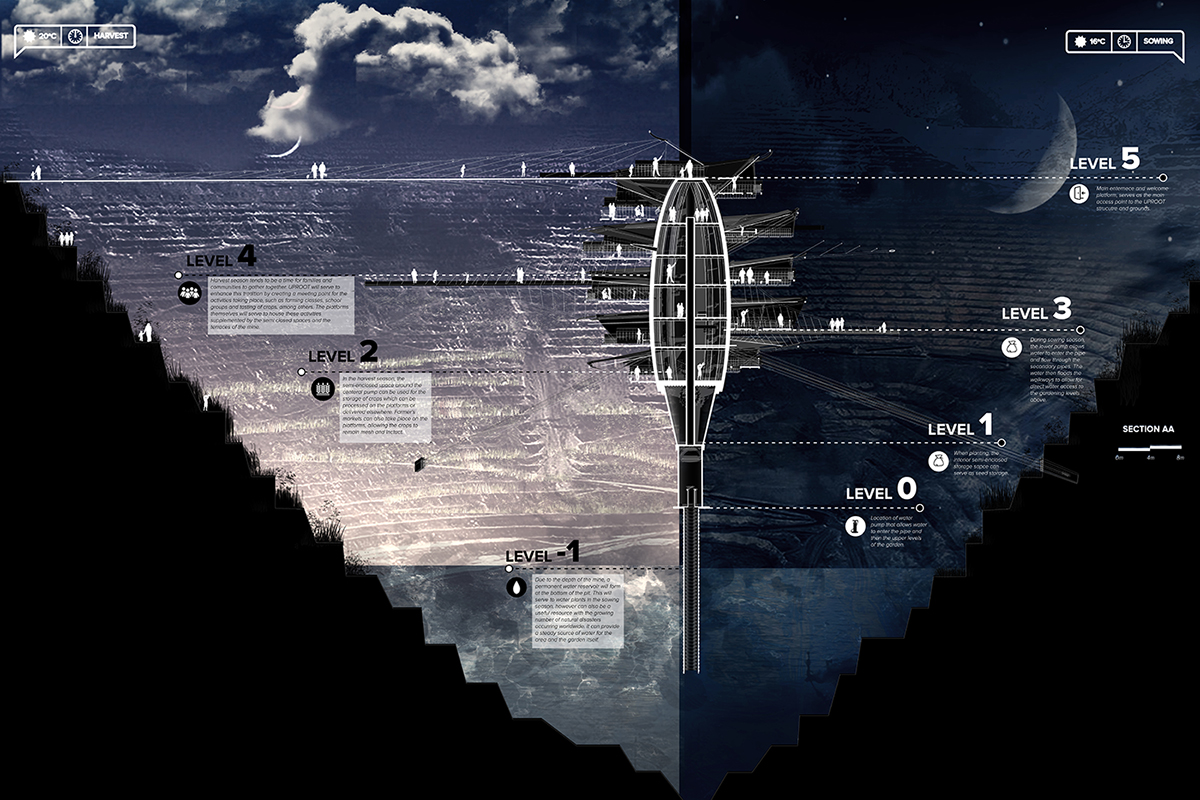
Third year undergraduate student Tatiana Estrina won first place in the ASCA Steel international competition (external link, opens in new window) , where she competed against 900 undergraduate and graduate entries worldwide. She placed first in the open category with the submission of Uproot, a mining reclamation project.
Uproot aims to redevelop open-pit mines into community farmland, giving mines new life after their closure. Each level of the pit serves a purpose for planting seeds, crop maintenance and tool storage, water pumps, and a communal space during harvest season for farming classes, school groups and crop tasting.

Uproot: About the Project
As Canada is very much still a resource economy, all Canadians are in some way related to fisheries, forestry, and mining.
Estrina’s submission denotes the idea of reimagining an abandoned open-pit mine as fertile farmland. The project provides a social and environmental solution to problems faced outside of big cities.
“As Canada is very much still a resource economy, all Canadians are in some way related to fisheries, forestry, and mining. However, as the economy begins to develop, different secondary and tertiary activities are beginning to rise to prominence. My design sheds light on the transition of towns trying to break out of the industrial stereotype and create a new identity for themselves,” Tatiana says when asked about the inspiration behind the submission.
By law in Ontario, companies are required to re-vegetate their mining sites. Unfortunately, they tend to plant simple grasses and stop their involvement with the area within their 5-year period. Uproot offers a sustainable resolution to the effects of the mining industry. The project upcycles industrial areas into a location that will bring the community together by taking social, cultural, economic, health, and environmental concerns into account. Learn more about the undergraduate experience (opens in new window) at DAS which encourages addressing real-world problems through sustainable design and building expertise.



Fostering a Culture of Design, Detail, Deliver:
Another Project with Steel
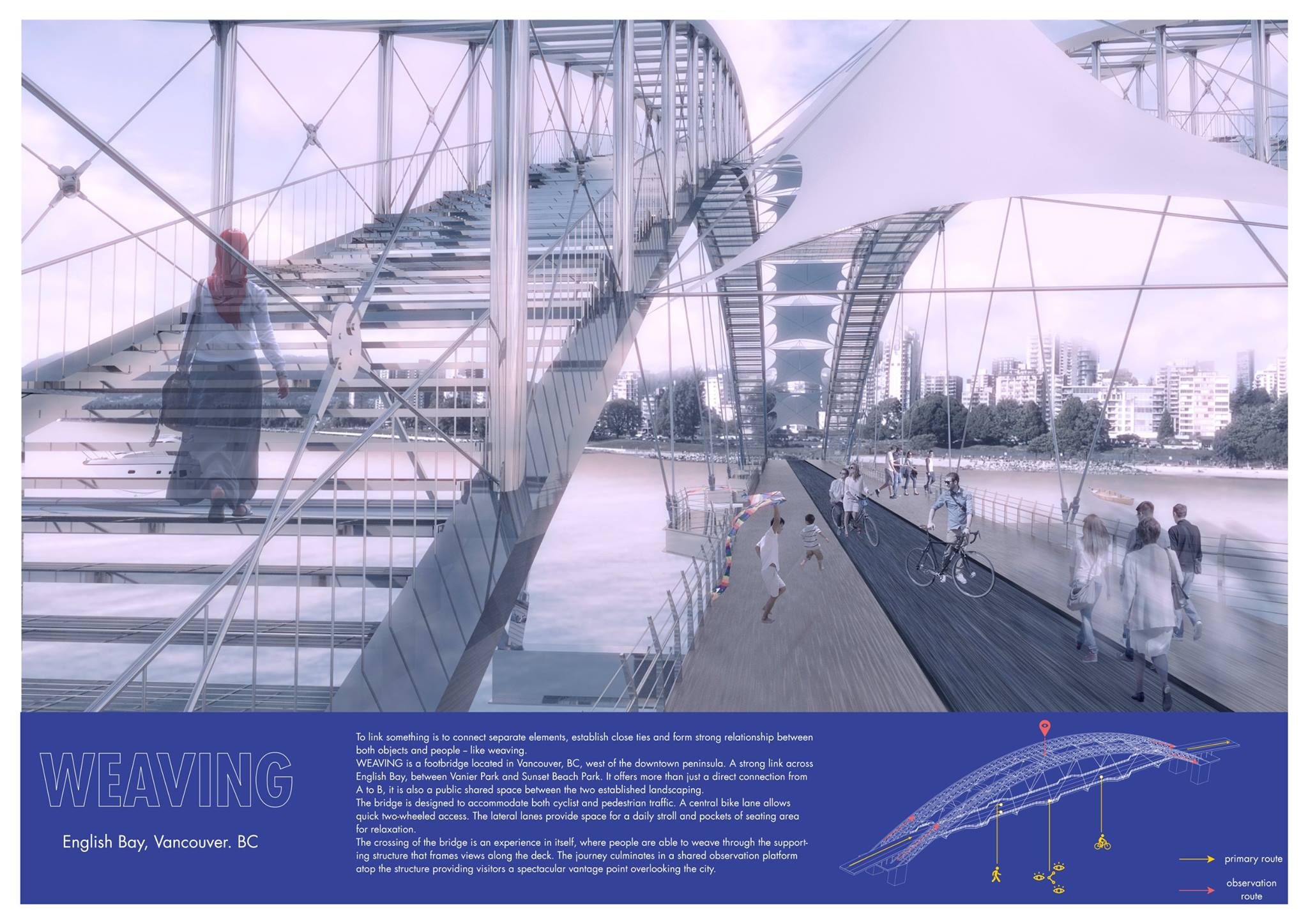
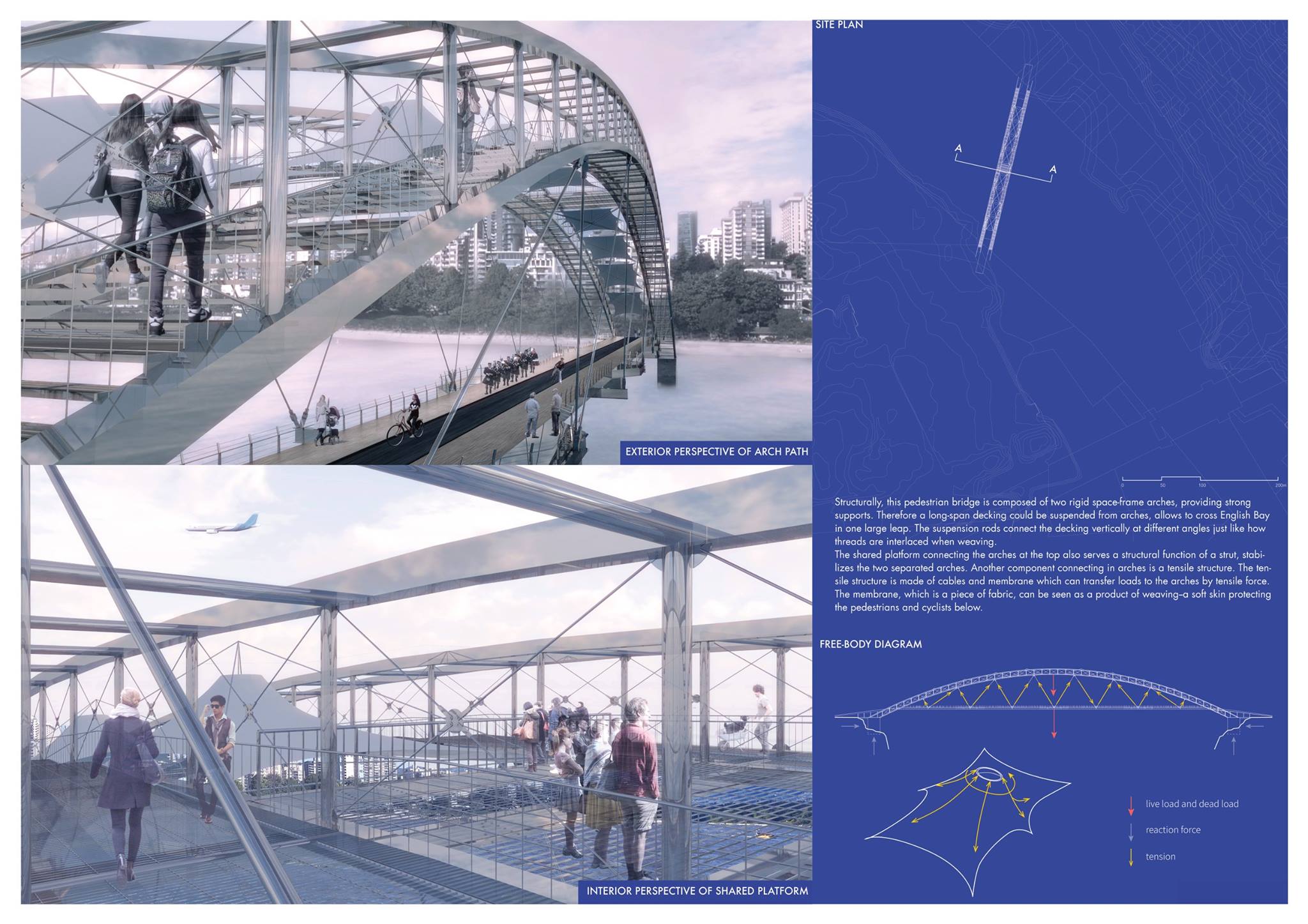
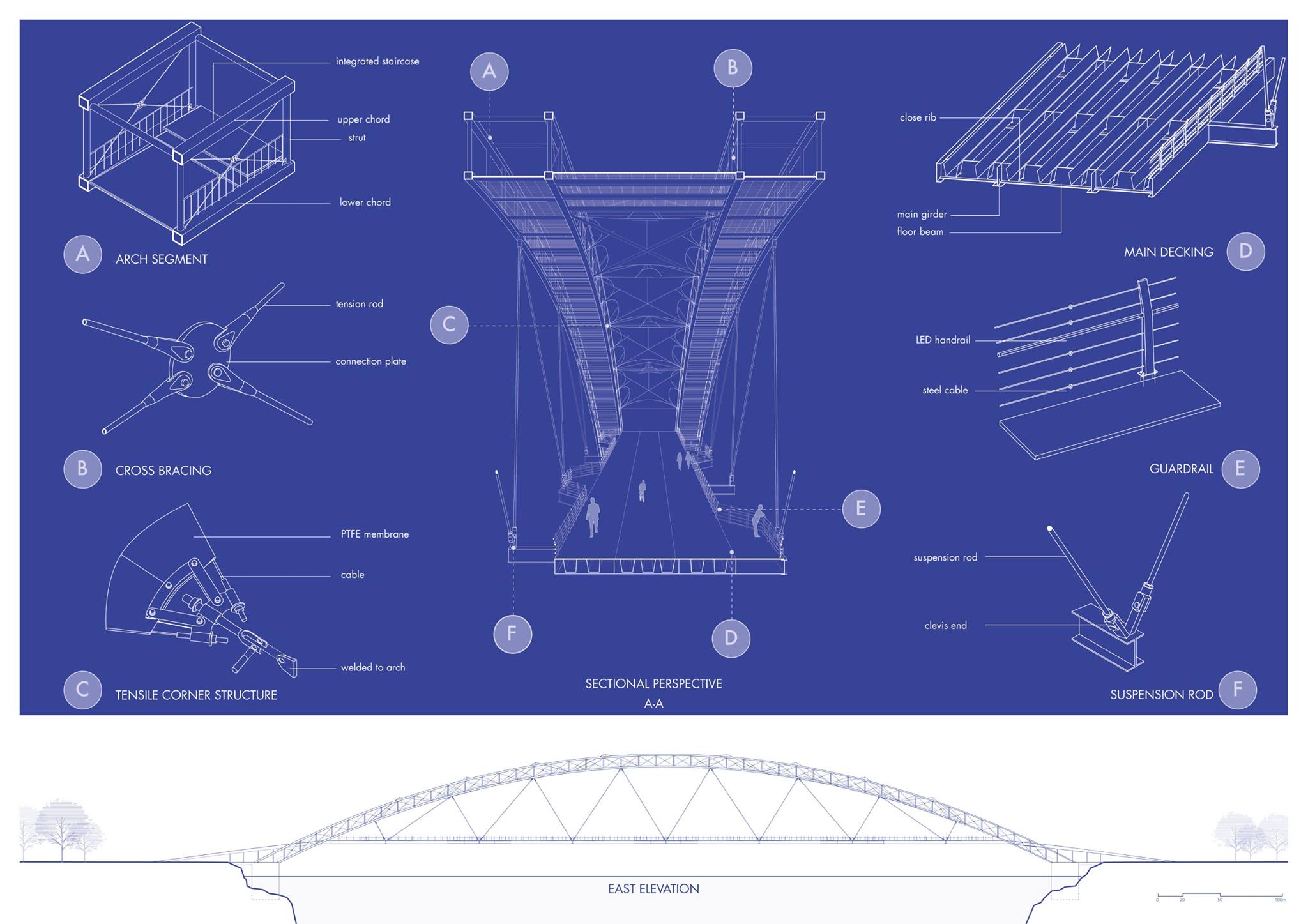
Undergraduate students Rita Wang and Shengyu Cai also won the 2018 Canadian Institute of Steel Construction Award of Merit (external link, opens in new window) : "Weaving", a design for a footbridge located in Vancouver, BC, west of the downtown peninsula.
The project responds to the theme link by designing a footbridge that forms a strong connection across English Bay in Vancouver, BC. It offers more than just a direct link from A to B, but also a public shared space between the two established landscapes.
The bridge is designed to accommodate both cyclist and pedestrian traffic. A central bike lane allows for quick two-wheeled access. The lateral lanes provide space for a daily stroll and pockets of seating area for relaxation. The crossing of the bridge is an experience in and of itself, where people are able to weave through the supporting structure that frames views along the deck. The journey culminates in a shared observation platform atop the structure, providing visitors with a spectacular vantage point overlooking the city.