Professor Idil Atak investigates what expanded border control policies mean for everyday life
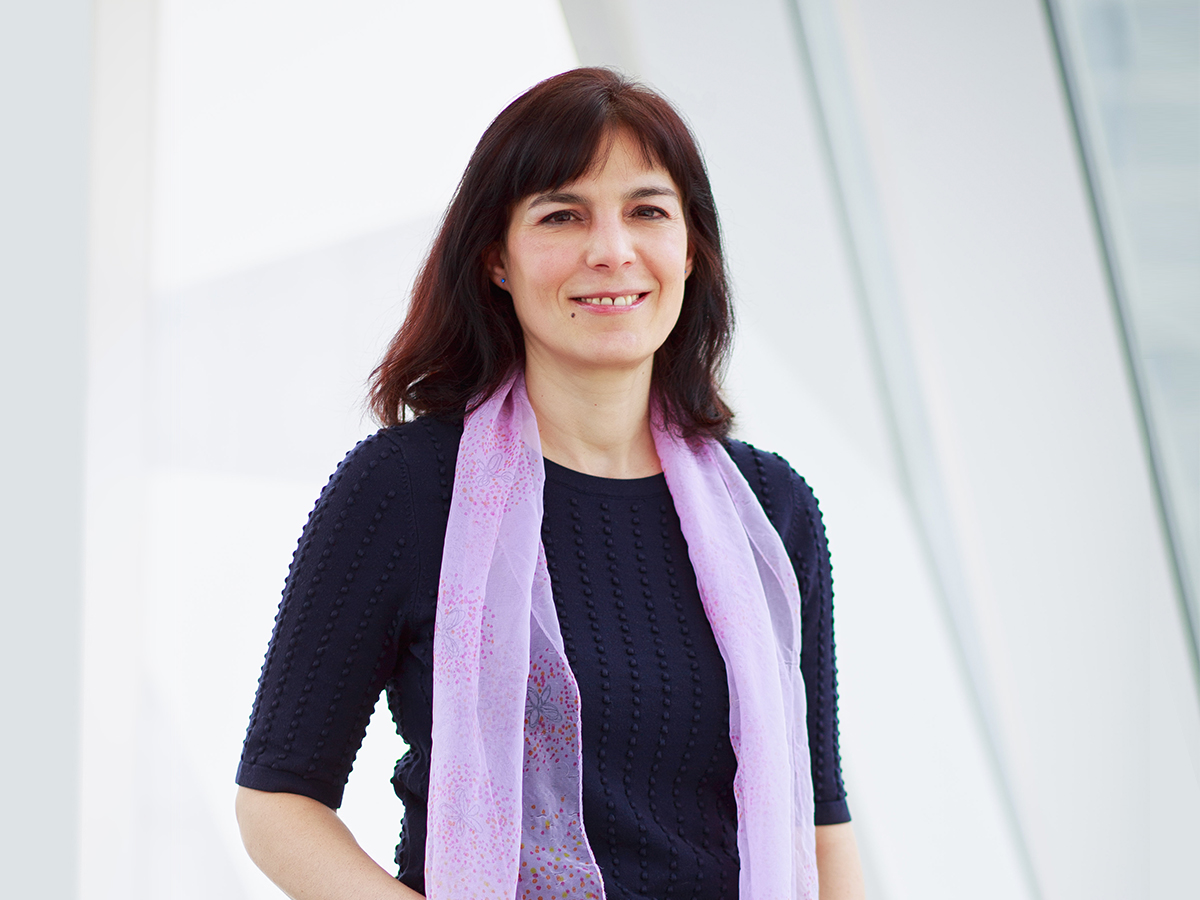
Lincoln Alexander Law's Prof. Idil Atak
As Canadians witness the violence and overreach of Immigration and Customs Enforcement (ICE) officers in the United States, less visible changes to immigration enforcement in Canada are making everyday life far more difficult for refugees and other migrants.
Through her research and teaching, Lincoln Alexander Law Professor Idil Atak is determined to improve our understanding of the structural barriers and systemic discrimination that migrants increasingly face, and the effects of hardening border control practices.
In July, Atak’s research project was among 14 projects at TMU to receive a Social Sciences and Humanities Research Council of Canada (SSHRC) Insight Grant supporting research into complex societal challenges and potential solutions.
Over the next five years, Atak will serve as the principal investigator on the project, called Bordering Canada: Examining the Impacts of Multi-Level Border Enforcement Policies At, Within, and Beyond the Canada-U.S. Border. Atak is collaborating with Julie Young, Canada Research Chair in Critical Border Studies at the University of Lethbridge, and David Moffette, a professor in Criminology at the University of Ottawa.
The research project examines systemic inequalities embedded in Canada’s current border and immigration processes across urban, national, and transnational contexts. It seeks to promote greater accountability and advance policies that protect the fundamental rights and freedoms of refugee claimants and migrants without legal status. These groups have been the primary targets of state measures designed to prevent and punish unauthorized entry and residence.
To investigate the ways immigration enforcement is becoming more active both within Canada and beyond its borders, the team is filing access to information and freedom of information requests and will conduct structured interviews with approximately 70 people, including federal, provincial and municipal officials as well as representatives from police services, international organizations, and advocacy organizations.
"Canada has been extending migration controls beyond its territorial borders to intercept migrants deemed undesirable before they reach Canada... This development threatens refugees' access to protection."
Data-sharing with other countries can put refugees at risk, Atak says
Atak’s research shows that through partnerships with other governments, international organizations and, increasingly, technological tools such as shared databases, Canada is monitoring migrants’ movements abroad and making it harder for them to seek refugee protection in Canada.
“Canada has been extending migration controls beyond its territorial borders to intercept migrants deemed undesirable before they reach Canada,” Atak explains. “This is happening in collaboration with ‘like-minded’ countries, especially the U.S., the U.K., and the other Five Eyes countries. This development threatens refugees’ access to protection.”
For example, if someone makes a refugee claim in the United Kingdom and later travels to Canada to seek protection, shared databases can reveal the earlier claim and make that person ineligible to make a refugee claim in Canada, even if no decision was ever made on the U.K. claim. There are multiple reasons refugees choose to make a claim in Canada after living in a third country, Atak explains, including changes in that country that make living there too risky (such as the targeting of migrants under the Trump Administration in the U.S.).
At the same time as Canada increasingly shares information to “immobilize” refugee claimants, federal and provincial governments have invested heavily in border security. This includes expanding the use of drones, helicopters and other technology along the U.S. border, as well as expanded cooperation among law enforcement agencies, Atak explains.
“Since the COVID-19 pandemic, we’ve seen an increased collaboration between the Canada Border Services Agency, and municipal police who check immigration status during routine interactions like traffic stops, especially in large cities such as Montreal and Toronto,” she says. Repressive immigration enforcement has resulted in rights violations, injury, and deaths among migrants.
A key challenge is understanding how these systems operate across local, national, and transnational scales, and how they interact with and reinforce one another. Atak explains that little public information is available about immigration enforcement collaborations between Canada and other states, and international organizations. Similarly, little is known about the deployment and effectiveness of surveillance technologies and capabilities or about the role of private companies in enhancing the state’s capacity to detect and contain migrants deemed undesirable. Another challenge is determining the effects of changing immigration enforcement practices on a vulnerable, difficult-to-reach population that includes people without legal status. The project aims to address these challenges.
"To understand where the barriers exist, you need to understand the larger structural systems..."
Atak’s previous research led to recommendations to improve services for refugees
Atak’s SSHRC project is a natural extension of work she has pursued for more than two decades on international human rights law, irregular migration and the growing securitization of migration. From 2019 to 2025, Atak led a project that explored the human rights impacts of Canadian and international immigration control laws, policies, and practices.
As part of that project, Atak recently partnered with Newcomer Women’s Services Toronto and conducted participant interviews and surveyed close to 1,000 migrants in the Greater Toronto Area about access to settlement programs, health care, housing, employment, and other services. The research revealed the vulnerability of refugee claimants and non-status migrants, many of whom are women, children, and elderly people, and how compounding barriers to housing, health care, employment and other services affect their everyday lives. For example, Atak spoke to a nurse who explained how fear prevents some pregnant women from seeking prenatal care that could improve health outcomes for themselves and their children.
Third-year law student Isabel Vilarino worked with Atak on the project, helping to organize and analyze the large survey dataset. “I learned a lot about the different intersections of vulnerability and about how to centre migrants’ perspectives,” Vilarino says, noting that the project incorporates recommendations offered by migrants themselves. “To understand where the barriers exist, you need to understand the larger structural systems. For example, to access housing you need a credit check, and for a credit check, you need immigration documentation. Idil has a very holistic understanding of how vulnerabilities interconnect with one another.”
Second-year student law Todd Westcott, who took a Legal Theory course taught by Atak last year, describes her as open, inquisitive and empathetic. Many asylum seekers coming to Canada “are dealing with a complex vector of racial and gender discrimination, and having traumatic experiences and sometimes the conditions in which these people are expected to exist in Canada is frightful,” he explains. “In her academic research and her teaching, Professor Atak highlights the extreme experiences that people go through.” He also sees the impact of research and advocacy from Atak and others, including the increased use of alternatives to immigration detention in Canada over the last two decades.
Despite the challenges of advocating for human rights amid increased surveillance and the criminalization of migrants worldwide, Atak remains hopeful. “Canada is a democratic country with strong democratic institutions. Courts, tribunals, and civil society organizations have played a vital role in advancing the rights of migrants. I also have the privilege of teaching at a law school committed to access to justice. My students will go on to become legal practitioners and leaders equipped with the knowledge and tools to drive positive change,” she says.