Selected Resources
These selected resources provide entry points to topics such as settler colonialism, decolonization and the institution, place-based methodologies, reconciliation, Indigenous feminisms, pedagogy and research. Use these resources as stepping stones to further your exploration of these important themes. Click the buttons below to view the theme of your choice.
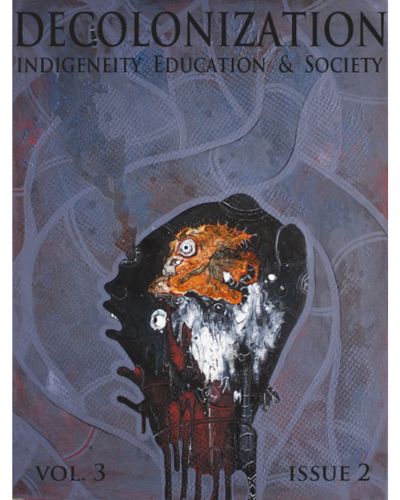
Settler colonialism and the elimination of the Native
Patrick Wolfe
A canonical text to the field of Indigenous studies that situates colonialism as a structure rather than an event, and provides a global analysis for understanding settler colonialism on Turtle Island and beyond.
Unsettling settler colonialism: The discourse and politics of settlers, and Indigenous solidarity (external link)
Snelgrove, Corntassel and Dhamoon
This article centers an analysis of power, land and body as integral to understanding settler colonialism and utilizes a methodology of solidarity that is exemplified in how the authors approach this work through their varied positionalities.
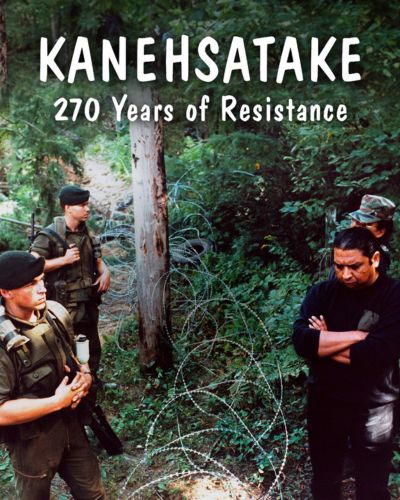
Kanehsatake: 270 Years of Resistance
Alanis Obamsawin
A foundational film that chronicles the Oka Crisis of 1990, a 78-day armed stand off between the Mohawk nation and the settler state. An essential watch and vital part of Canadian history that everyone should know about.
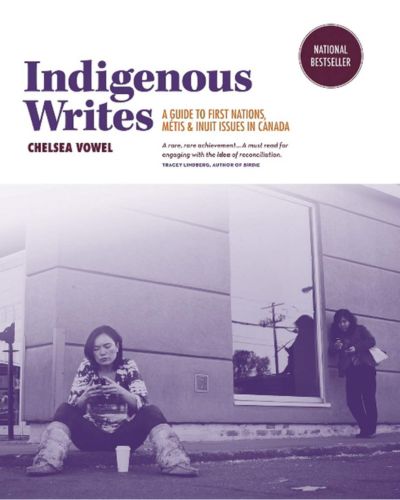
Indigenous Writes: A guide to First Nations, Metis and Inuit Issues in Canada
Chelsea Vowel
A great introductory book that answers a diversity of questions folks may have concerning Indigenous peoples and politics. From explaining the terminology related to Indigenous peoples, to understanding status, this work also busts the myths commonly associated with Indigenous peoples and outlines the major forms of violence Indigenous peoples endure.
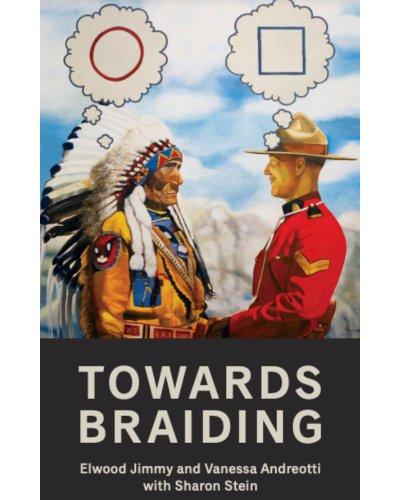
(PDF file) Towards Braiding (external link)
Elwood Jimmy and Vanessa Andreotti
This text explores interventions for the genuine transformation of institutions in alignment with Indigenous self-determination, sovereignty and decolonization through an engagement of Western vs. Indigenous ways of being and knowing.
Still stumbling towards Indigenization, reconciliation, and decolonization: We acknowledge the land, now what? (external link)
Patrick Lewis
This text talks about the prevalence of reconciliation that is decoupled from meaningful change within educational institutions. The author suggests that we all have a responsibility to participate in transgressive acts that are rooted in relational accountability in order to achieve genuine decolonization.
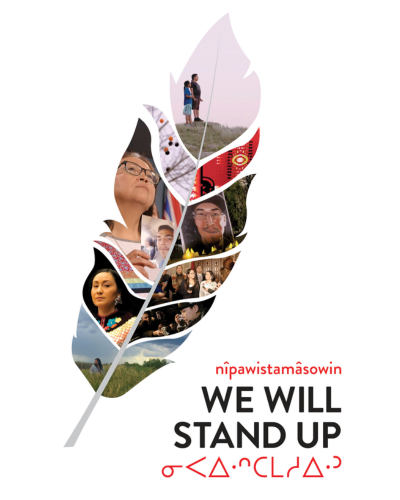
Nîpawistamâsowin: We Will Stand Up (external link)
Tasha Hubbard
A documentary film that is tenderly approached about the murder of Colten Boushie, a Cree man who was fatally shot at close range on a Saskatchewan farm. This film highlights the systemic injustice of the law institutions of Canada, while also providing the context of how settler colonialism has operated throughout the prairies.

(PDF file) Looking after Gdoo-naaganinaa: Precolonial Nishnaabeg Diplomatic and Treaty Relationships (external link)
Leanne Simpson
This article explores how Indigenous nations approach Treaty relationships beyond settler colonialism based on principles of renewal and relationality that could be applied to current day Treaty relationships between Indigenous peoples and the state.
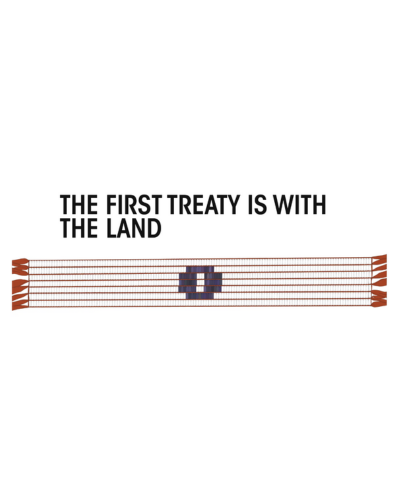
The treaty guide for Torontonians: The first treaty is with the land (external link)
Talking Treaties Collective
A comprehensive guide on understanding treaty relationships and responsibilities in Toronto specifically.
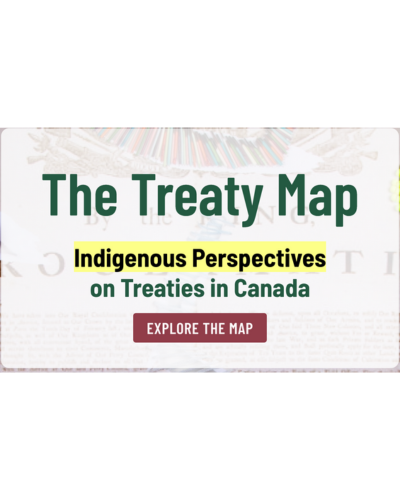
Yellowhead Treaty Map (external link)
Yellowhead Institute
A visual guide and valuable educational tool for understanding treaties across Canada premised on Indigenous ways of understanding treaties.
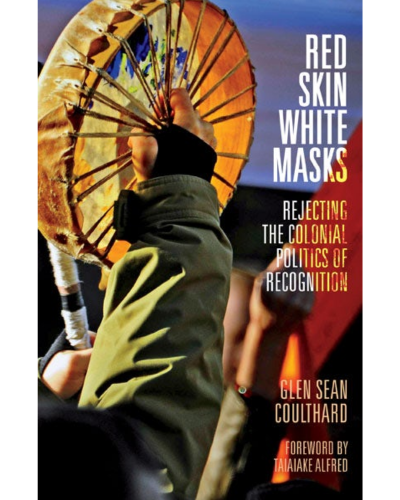
Red Skin, White Masks
Glen Sean Coulthard
This canonical text presents the framework of recognition as a new insidious strategy of settler colonialism used on Turtle Island to cement colonial power dynamics. From the manufactured apologies of the Canadian state, to the treatment of reconciliation as lip service, this text explores the politics of recognition in its fullness.
A decade of disappointment: Reconciliation and the system of a crown (external link)
Eva Jewell
This brief highlights the shortcomings of our collective ability to adequately respond to the Truth and Reconciliation’s Calls to Action. In this sobering report, the authors discuss how there is nothing for them to reflect on, no impacts to discuss, when no actions have been taken.
Refusal to forgive: Indigenous women's love and rage (external link)
Rachel Flowers
In this article, Rachel Flowers talks about Indigenous women’s righteous rage and refusal to forgive as generative responses to settler colonial violence. Flowers also urges settlers to engage in the politics of refusal- refusals of the privileges and powers that are at the heart of sustaining colonialism.
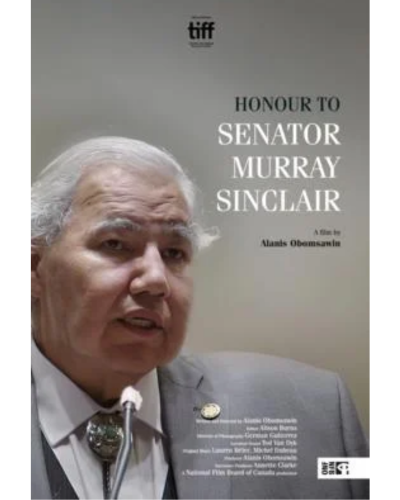
Honour to Senator Murray Sinclair (external link)
Alanis Obomsawin
As the Chair of the Truth and Reconciliation Commission, Senator Murray Sinclair was a key figure in raising global awareness of the atrocities of Canada’s residential school system. Alanis Obomsawin shares the powerful speech the Senator gave when he accepted the WFM-Canada World Peace Award, interspersing the heartbreaking testimonies of former students imprisoned at residential schools.
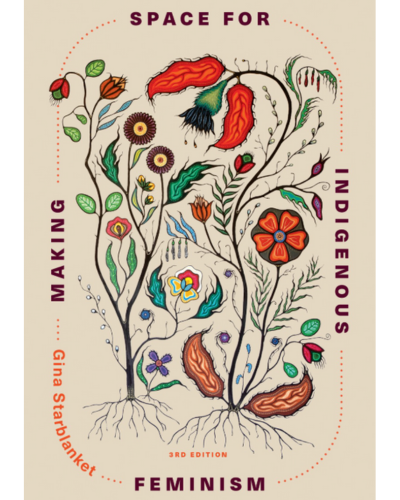
Making space for Indigenous feminism
Gina Starblanket
The third edition of a canonical collection foregrounding Indigenous feminist, queer and Two-spirit voices from across Turtle Island. This collection celebrates the intersections of feminist thought with Indigenous sovereignty, and includes works that touch upon Black and Indigenous relationalities, Two-spirit knowledge and gendered forms of colonial violence.
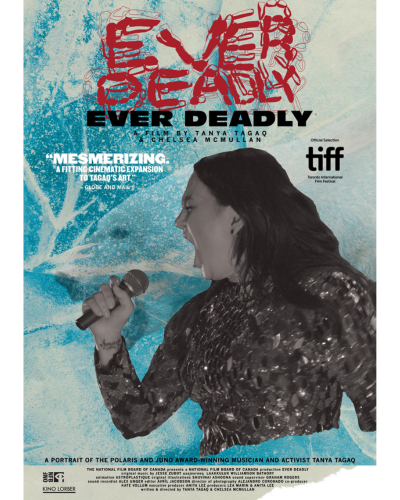
Ever Deadly
Tanya Tagaq
A visceral and moving film that chronicles the music, art and life of Inuk contemporary throat singer, Tanya Tagaq. This is a great film for anyone interested in Arctic experiences of colonialism, and what it means to embody resistance to settler colonialism through the body and art.
Everyday decolonization: Living a decolonizing queer politics
Sarah Hunt and Cindy Holmes
This article explores how an often overlooked site of decolonization is within intimate relationships. Using their friendship and professional working relationship as an example of living out their decolonial queer politics, the authors discuss what it means to decolonize through our relationships and how this supports larger efforts.
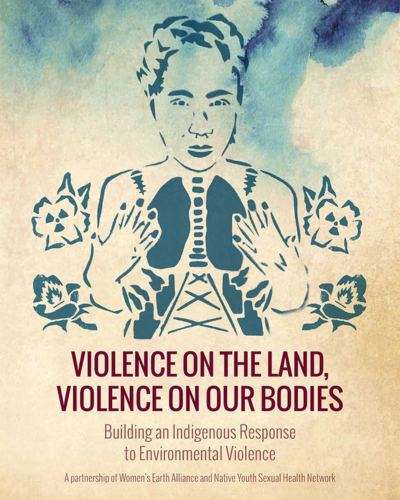
(PDF file) Violence on the land, violence on our bodies: Building an Indigenous response to environmental violence (external link)
Women’s Earth Alliance and Native Youth Sexual Health Network
An introduction to gendered forms of environmental racism, this grassroots toolkit is essential for anyone wanting to understand the intersections of bodily and land-based violences for Indigenous peoples on Turtle Island through the lens of centering Indigenous women, queer, two-spirit people and youth.
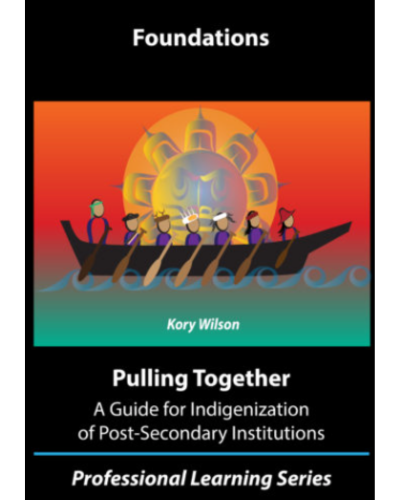
Pulling together: A guide for Indigenization (external link)
Asma-na-hi Antoine, Rachel Mason, Roberta Mason, Sophia Palahicky, and Carmen Rodriguez de France
A comprehensive learning resource for educators interested in deepening their understanding of indigenization, decolonization and reconciliation from within institutional contexts. This resource includes self-guided activities and reflections to take the learner from the journey of understanding relevant concepts, to placing themselves within a responsibility for systemic change.
Gii-kaapizigemin manoomin Neyaashing: A resurgence of Anishinaabeg nationhood (external link)
Jana-Rae Yerxa
This article explores embodied forms of Anishinaabe pedagogy, through an exploration of four communities coming together to roast manoomin at Neyaashing, a gathering place for Anishinaabeg contested through settler colonial occupation in Treaty 3 territory.
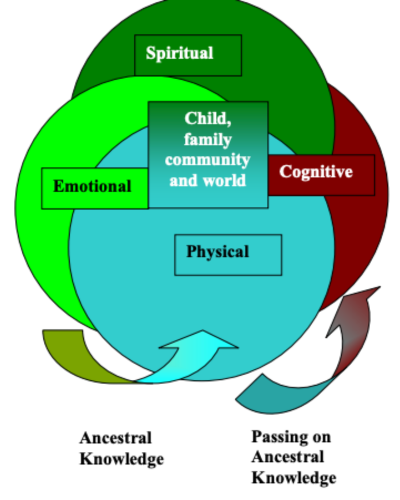
The breath of life versus the embodiment of life: indigenous knowledge and western research (external link)
Cindy Blackstock
This article explores the differences between Western and Indigenous epistemologies in the context of child welfare. Although specific to child welfare, this article does a great job of outlining important concepts of Indigenous pedagogies including collectivity, intergenerational knowledge transmission and relationality. The author concludes that the two knowledge systems may be so different that they can’t even be compared.
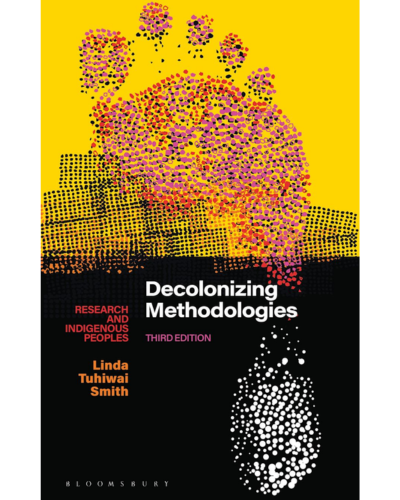
(PDF file) Decolonizing Methodologies (external link)
Linda Tuhiwai Smith
This essential volume explores intersections of imperialism and research - specifically, the ways in which imperialism is embedded in disciplines of knowledge and tradition as 'regimes of truth.' Concepts such as 'discovery' and 'claiming' are discussed and an argument presented that the decolonization of research methods will help to reclaim control over indigenous ways of knowing and being.
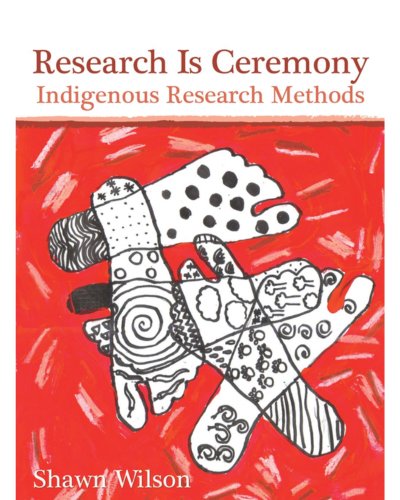
Research is ceremony
Shawn Wilson
This book describes a research paradigm shared by Indigenous scholars in Canada and Australia, and demonstrates how this paradigm can be put into practice. Relationships don't just shape Indigenous reality, they are our reality. Indigenous researchers develop relationships with ideas in order to achieve enlightenment in the ceremony that is Indigenous research.
Indigenous methodologies of care and movement (external link)
Michelle Daigle
This article explores how Indigenous peoples utilize their own methodologies of expansive care to inform their research and academic expertise in ways that extend beyond the academy. The author discusses her own lived experiences of care and movement, and charts how these shape her approaches to research as an Indigenous scholar.
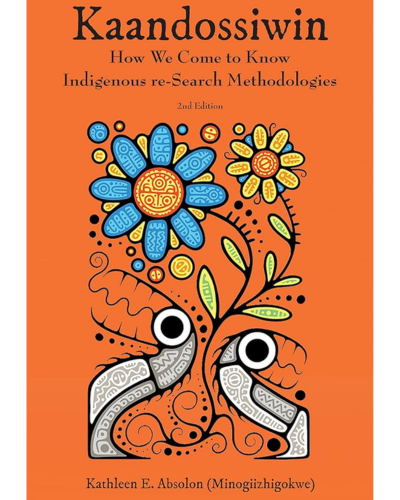
Kaandossiwin: How we come to know
Kathleen Absolon
This canonical text chronicles how Indigenous methodologies are inherently shaped through Indigenous worldviews, contexts and principles. Kathleen Absolon, an Anishinaabe researcher, discusses how Indigenous methodologies contend with the academy that often foregrounds colonial forms of knowledge production.