Investigating how cells take out the trash
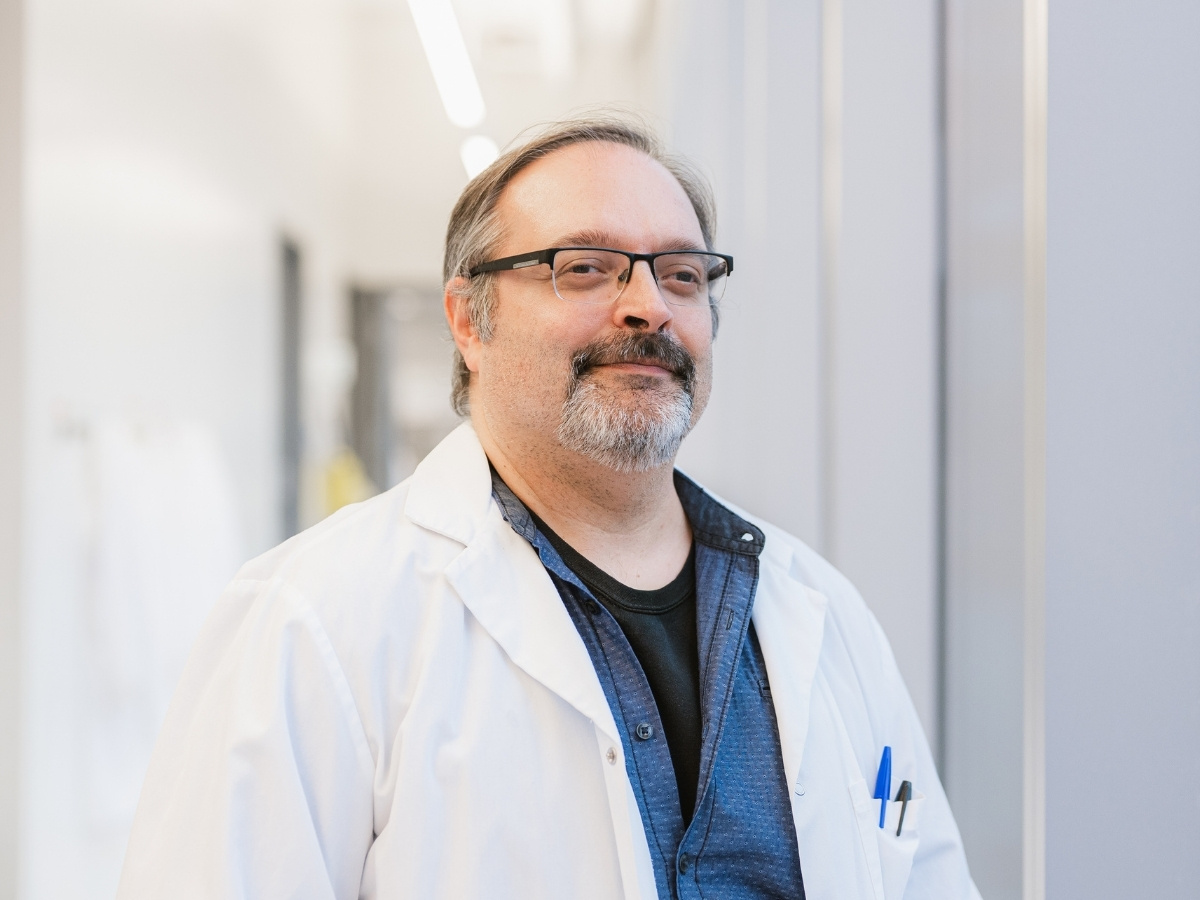
When people get Alzheimer's and other neurological diseases, one of the problems is that their cells become unable to clear the waste products inside themselves. Biology professor Roberto Botelho is trying to figure out why. He studies an enzyme called PIKfyve that produces a signalling lipid to coordinate cellular functions. Without this enzyme, organelles called lysosomes, which degrade and clear cellular waste, cannot function effectively.
“You can imagine what happens if you cannot dispose of your garbage,” says Botelho. “It will accumulate, and then it's not so nice. You have a buildup of aggregates and material that you can’t get rid of—something fails in that process.”
After sharing initial findings in a first paper (external link) showing how lysosomes swell and become unwieldy, Botelho has now set his sights on exploring the further effects that this disruption has on other organelles. Or, to continue the analogy, what happens to the neighbourhood when the garbage keeps piling up? He started by examining the endoplasmic reticulum, the largest organelle in the cell, which produces many molecules, including proteins and lipids.
Again, without PIKfyve, lysosomes are disrupted and behave abnormally. However, this research has now extended PIKfyve's sphere of influence to the endoplasmic reticulum, an organelle that functions as the protein and lipid factory of the cell. “We discovered that without working PIKfyve, the endoplasmic reticulum is severely distorted,” says Botelho, noting that these results were recently published in the Journal of Cell Biology (external link) . This research is funded by a Natural Sciences and Engineering Research Council of Canada (NSERC) grant, and his next plan is to examine distortions in another organelle, the mitochondria, which processes energy and makes amino acids. He adds that there’s been an explosion of interest in PIKfyve in the context of viral infection since the COVID-19 pandemic, as well as in its role in body inflammation and other diseases, including Ebola.
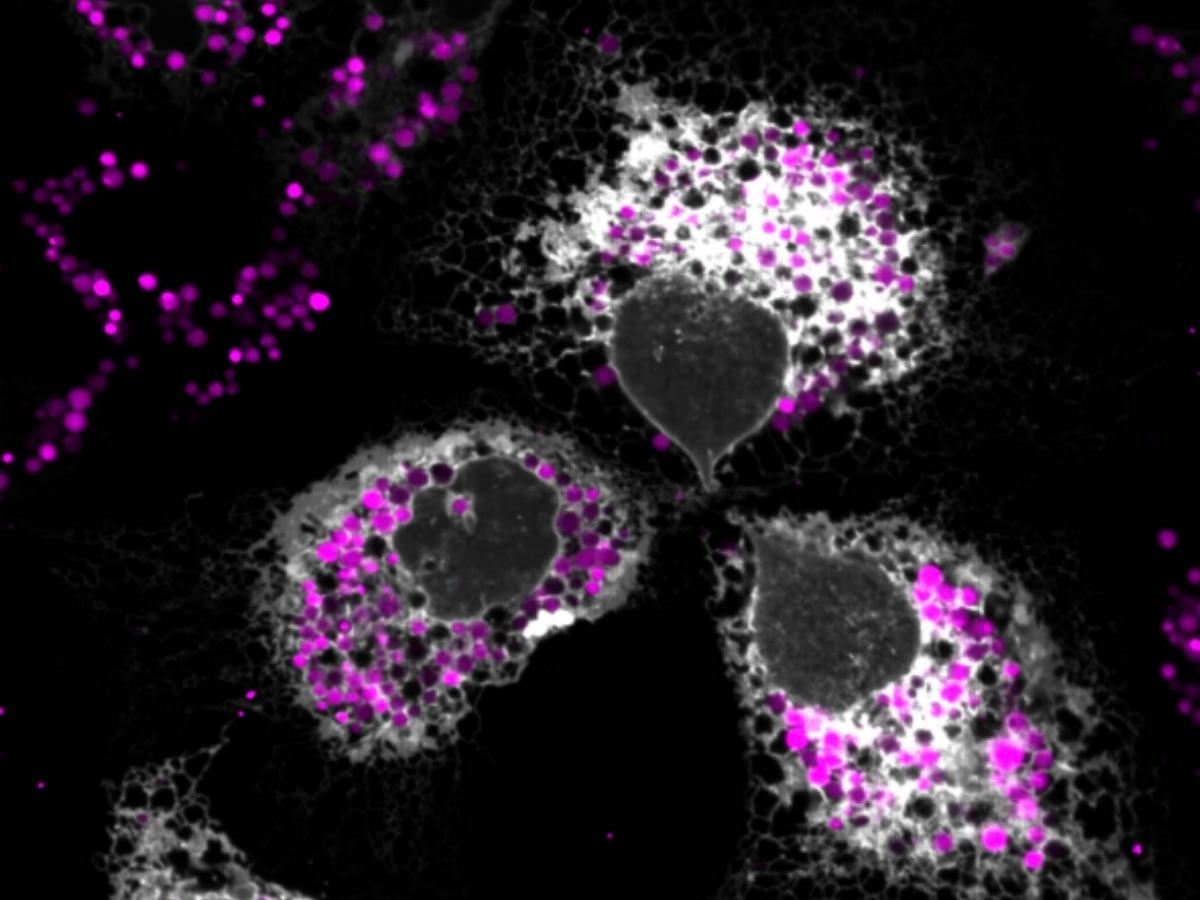
Microscope image showing mammalian cells treated with an inhibitor of PIKfyve as described in the paper “PIKfyve influences inter-organelle contacts with lysosomes to modulate the endoplasmic reticulum (external link) ”.
Another important project in Botelho's lab, this one funded by the Canadian Institutes of Health Research (CIHR), looks at phagocytosis, a process by which immune cells like macrophages move through tissue looking for problems such as bacteria or ruptured cells, which are then engulfed, giving rise to an internal compartment called the phagosome. In this research, he’s trying to answer two questions: what happens to the phagosome after it has digested the waste? And how does the macrophage know that it can’t eat any more particulate waste?
“These processes are very poorly understood, and so we're one of the few labs really working on this,” says Botelho. Again, this waste-clearing process has major implications for how cells dispose of dangerous waste. A related project examines monoclonal antibodies made to detect cancer cells by binding to specific cancer cell markers. The antibody acts as a tag, telling the immune cell which cells to eat in a process called antibody-dependent cell phagocytosis. Again, Botelho’s goal is to determine how many cells a phagocyte can engulf, given that its “appetite” can be a limiting factor in the cancer removal process. “These projects I'm studying now have implications for your immune system,” says Botelho, explaining that the research will apply equally to his pure-science interests in learning more about how organelles behave and to making these infection- and tumour-clearing processes more effective.
Today, Botelho runs the Botelho Lab (external link) , leading undergraduates, volunteers, graduate students, and post-doctoral researchers. However, he can still recall the origins of his early fascination with science and nature in childhood. Even more specifically, he can pinpoint his interest in cell biology to meeting and working as a summer student for retired SickKids scientist Dr. Sergio Grinstein. At the time, he was in his final year of undergrad, poised to go to graduate school. Learning about phagocytosis gave him that next turn. “That really piqued my interest, because you can actually see these cells eating bacteria under the microscope. It's a very visual process, so with a bit of patience, you can actually see these things happening, and it was really captivating,” he says.
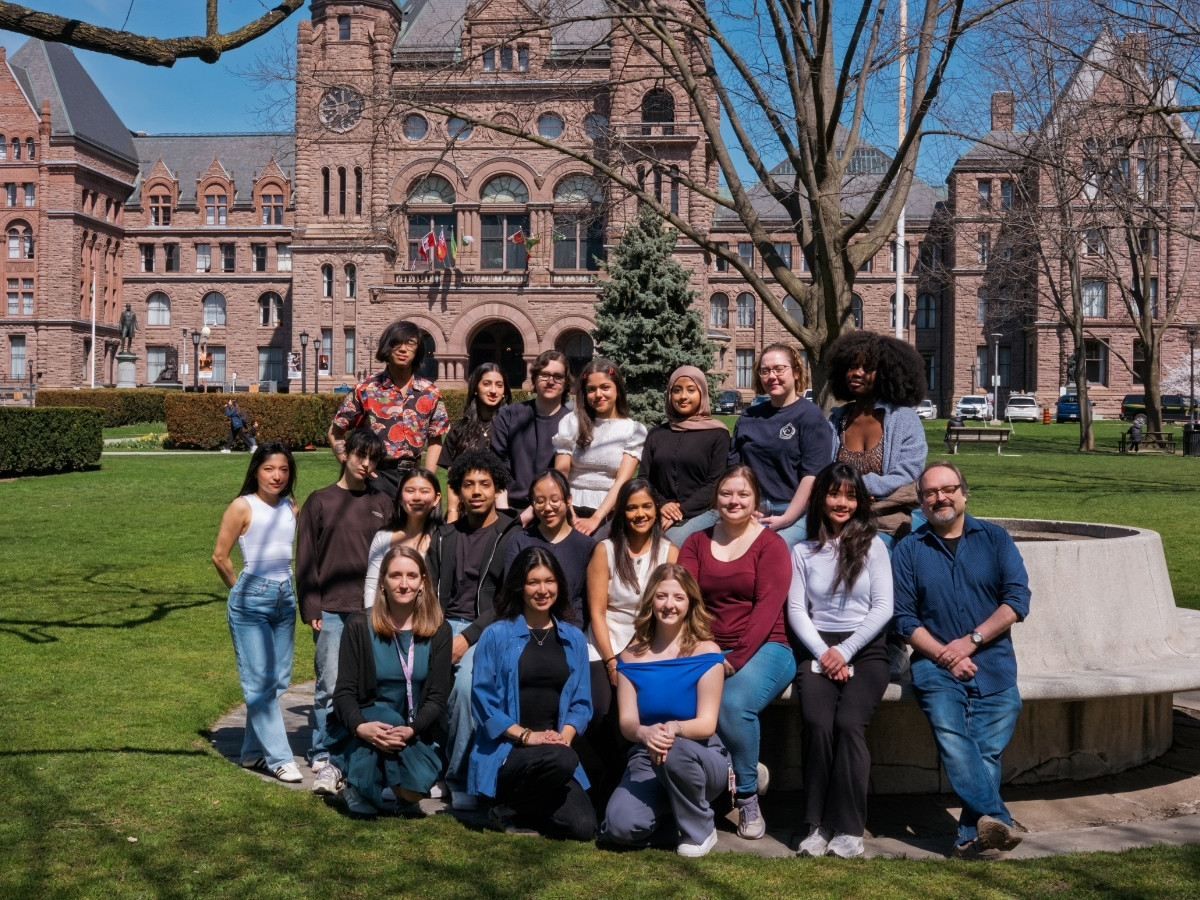
Group shot of the Botelho Lab members in 2026. From top row, left to right: Elijah Urdaneta, Rhea Gandhi, Nada Mayassi, Nazia Chowdhury, Khansa Sayyada, Nicala Jenkins, Grace Boakye. Middle row, left to right: Maria Narciso, Sara Hadi, Althea Pioquinto, Towfik Zekri, Jennifer Li, Tracy Lackraj, Ellie Cloves, Abigail Santos, Roberto Botelho. Bottom row, left to right: Melanie Mansat, Alacea Yerxa, Cristina Camardi.