Horizon Europe collaboration to support TMU research into active urban mobility
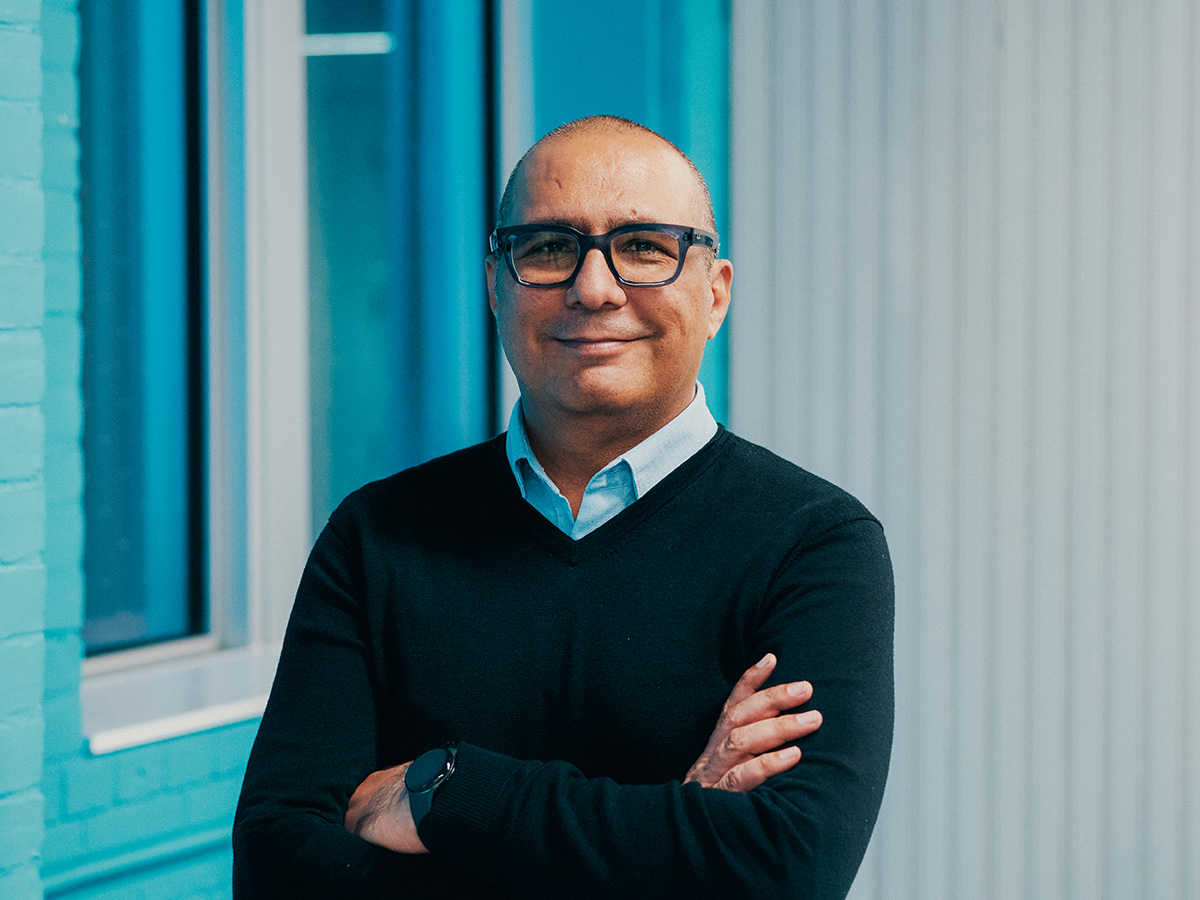
A professor at Toronto Metropolitan University (TMU) has received funding through the European Union’s (EU) competitive Horizon Europe program, the world’s largest multi-country research and innovation funding initiative.
Bilal Farooq, civil engineering professor and Canada Research Chair in Disruptive Transportation Technologies and Services, will lead a key research stream in an international, four-year project to improve actual and perceived safety for pedestrians, cyclists and micromobility users, including e-bikes, e-scooters and e-cargo bikes.
“Congratulations to professor Bilal Farooq on being a key partner in this successful EU Horizon Europe project,” said Steven N. Liss, TMU’s vice-president, research and innovation. “This research addresses a growing challenge for Canadian and European cities alike as e-bikes and other micro-vehicles become increasingly common. It stands to deliver meaningful impact for communities worldwide.”
The project, “SAFE-MOVE: Safe and accessible futures for everyone moving using active and micromobility,” combines traffic, infrastructure, vehicle and health data to better understand safety risks. Using immersive extended reality (XR) experiments and explainable artificial intelligence (AI), researchers aim to identify risks that are difficult to capture in real-world traffic conditions.
Working with his team at the Laboratory of Innovations in Transportation (LiTrans), professor Farooq will focus on how people behave and interact with other road users. Using behavioural modelling, the team will examine near-misses, interactions between different types of road users and how people perceive and respond to safety risks.
“This Horizon funding provides a unique international opportunity to advance proactive, human-centred approaches to safety for diverse road users, with a strong focus on understanding human behaviour,” said professor Farooq. “The invitation to lead the behavioural modelling stream in SAFE-MOVE is a powerful international endorsement of what our research group at TMU has been building over the past decade.”
Professor Farooq’s team will contribute Canadian expertise to inform emerging international standards, dynamic traffic management protocols and safer, more equitable urban designs. Their insights will also support standardized safety measures and predictive tools, which will be tested in four European cities. Outcomes will help policymakers and other stakeholders evaluate interventions and create safer, more inclusive active and micromobility systems.
Led by Delft University of Technology in the Netherlands, the project brings together 22 partners across Europe and Canada. The project’s funding was awarded under the HORIZON.2.5 — Climate, Energy and Mobility program, designed to fight climate change and improve the efficiency, safety and competitiveness of the energy and transport sectors.
Learn more about the “SAFE-MOVE: Safe and accessible futures for everyone moving using active and micromobility” project. (external link, opens in new window)
Visit the LiTrans website (external link, opens in new window) to learn more about the team’s research.