TMU announces Eddie Goldenberg Research Chair of Canada in Indoor Environmental Quality
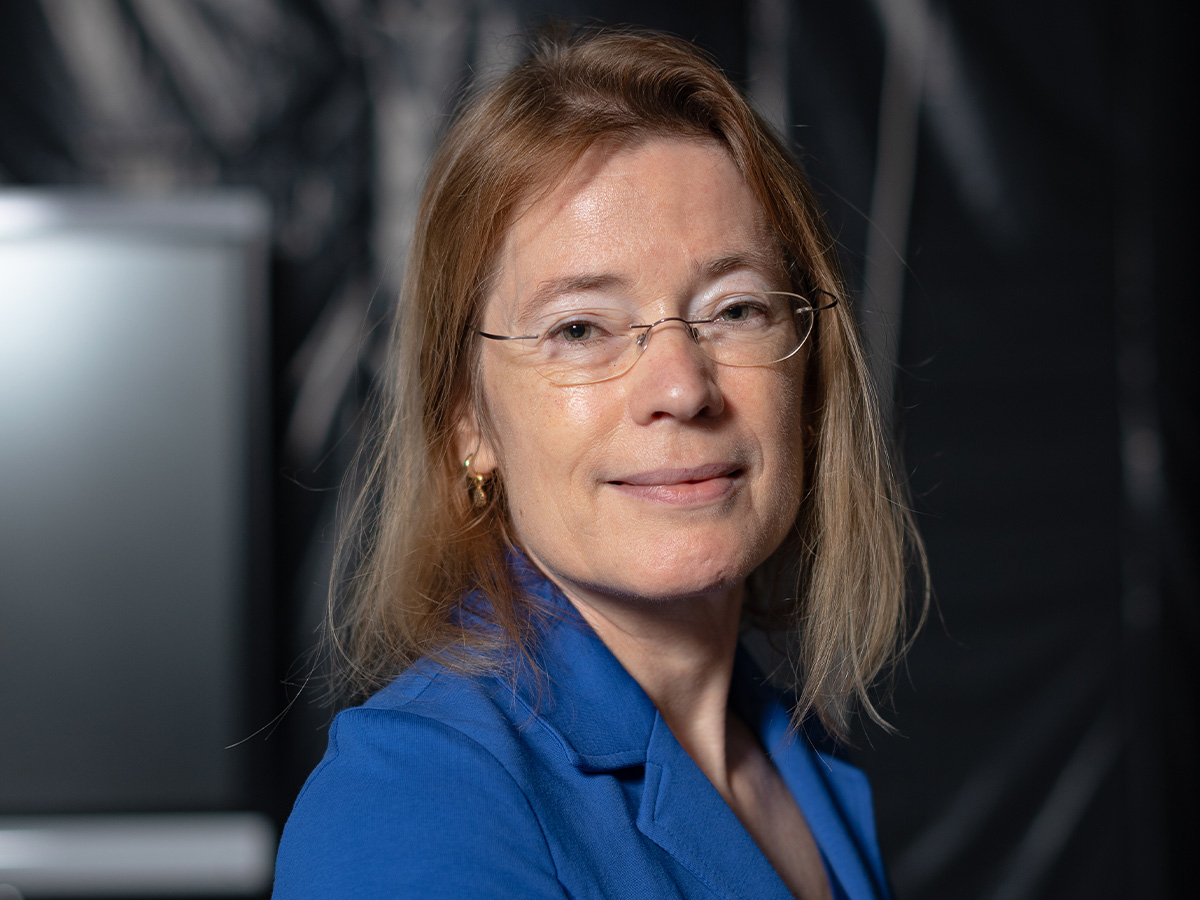
Toronto Metropolitan University has successfully nominated professor Philomena Bluyssen as its first recipient of an Eddie Goldenberg Research Chair of Canada, the Chair in Indoor Environmental Quality for Healthy Living.
An international scholar and currently a professor at Delft University of Technology in the Netherlands, professor Bluyssen will begin her role at TMU in June 2027.
With a focus on children and youth, professor Bluyssen’s research will seek to identify and pursue strategies to design healthier, more resilient buildings for accommodation and education. Her work at TMU will build on her prior research, which has shown that the significant amount of time most people spend indoors can lead to a range of potential health risks.
The Eddie Goldenberg Research Chairs of Canada is a new federal program that helps institutions attract world-leading researchers with the goal of building a stronger, more resilient Canada.
“We are thrilled to announce professor Bluyssen’s successful nomination for the new and important role of Chair in Indoor Environmental Quality for Healthy Living,” said Steven N. Liss, TMU’s vice-president, research and innovation. “Her extensive experience and network of global connections will facilitate meaningful research that examines how young people’s health is impacted, both positively and negatively, by their significant exposure to indoor environments.”
How indoor environment quality impacts human health
In Canada and elsewhere, many children and young adults spend between 80 and 90 per cent of their lives indoors. The bulk of this time is spent either asleep at home or at school during weekdays.
While the COVID-19 pandemic highlighted the negative health implications of poor indoor air, professor Bluyssen’s research takes a broader view of indoor environmental quality (IEQ). Beyond emphasizing the importance of proper ventilation and air quality, IEQ also incorporates the impacts of thermal quality, lighting quality and acoustic or sound quality.
“These are the four main factors, and they interact with each other,” professor Bluyssen explained. “For example, when you want to create better air quality by opening a window to get the fresh air indoors, you also get the noise that is created, or possibly exposure to wildfire smoke.”
Even if the windows are kept closed, our indoor environments are impacted by the materials we use to build or furnish them. Chemicals produced by these materials enter the air, and our bodies, often with harmful impacts.
“All the chemicals that we encounter indoors, a lot of them are produced indoors,” said professor Bluyssen.
Past research has demonstrated links between exposure to indoor stressors caused by air, noise, light and thermal conditions and health issues including cancer, mental illness, diabetes, obesity, myopia, as well as cardiovascular and chronic respiratory diseases.
Research chair at TMU provides opportunity for global impact
At TMU, professor Bluyssen will help establish and create an updated version of SenseLab, the globally recognized “living laboratory” for human–environment interaction research and knowledge transfer she founded at TU Delft.
This new TMU research hub will enable controlled experiments on the effects of environmental stressors in buildings, whether alone or in combination with one another. Researchers and industry partners will collaborate to rapidly test and evaluate new building technologies and environmental strategies, gaining insight into occupant health and comfort. This valuable knowledge and data will provide an immediate catalyst for building innovation.
The Eddie Goldenberg Research Chair of Canada position at TMU will give professor Bluyssen the opportunity to expand the research program she began in the Netherlands in collaboration with research partners in Taiwan, Hong Kong, Sweden and the United States.
“It’s an opportunity to make this work global,” professor Bluyssen said. “We have established a number of global stakeholders and supporters in our proposal. They are all willing to each work on this in their own country. Researchers at Delft will keep working on this in parallel, so it will be an international event.”
The eight-year position, supported by $8 million in funding, will add to TMU’s existing strengths in smart infrastructure, sustainable energy and resilient urban systems.
The Eddie Goldenberg Research Chairs of Canada program is a Tri-Agency initiative of the Social Sciences and Humanities Research Council (external link, opens in new window) (SSHRC), the Natural Sciences and Engineering Research Council (external link, opens in new window) (NSERC) and the Canadian Institutes of Health Research (external link, opens in new window) (CIHR).