Bold TMU research projects secure New Frontiers in Research Fund Exploration grants
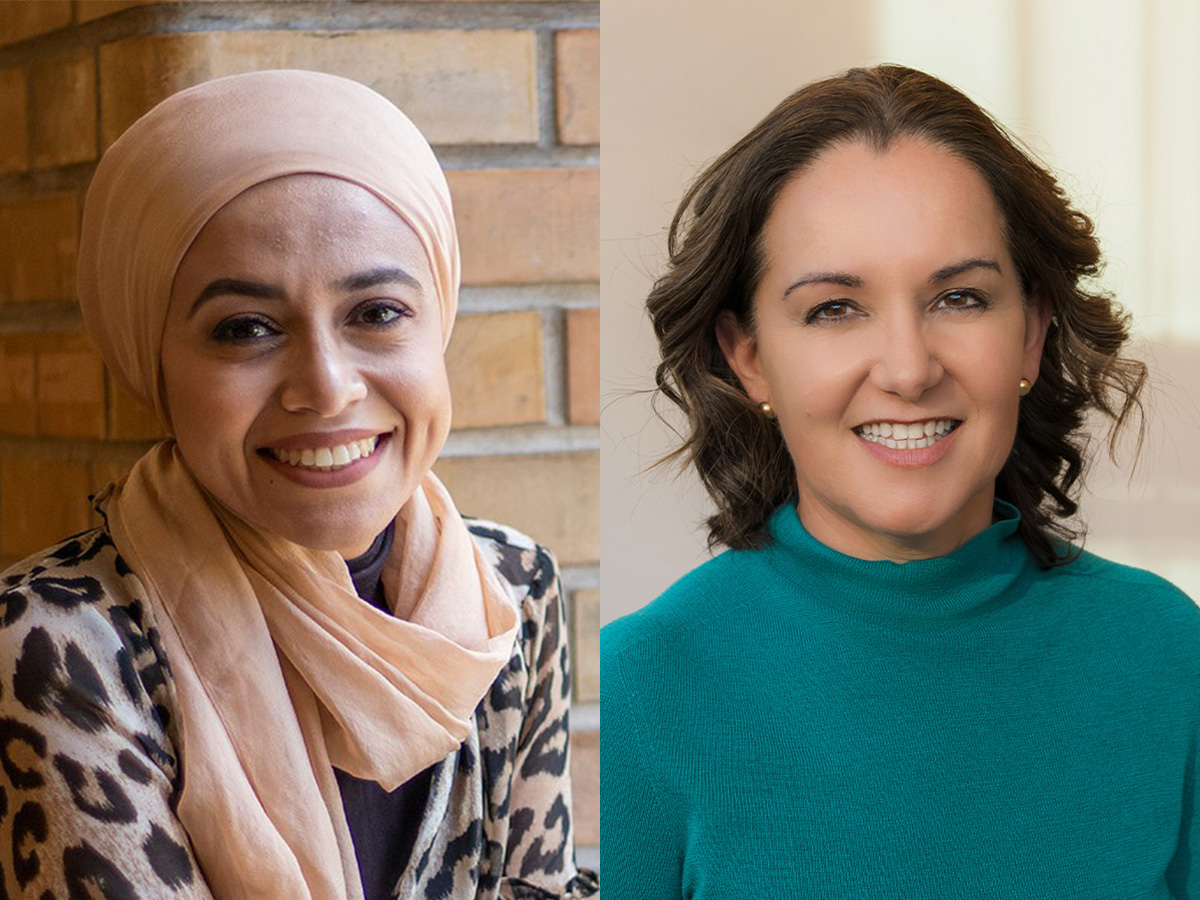
Spanning environmental protection and disability rights, two Toronto Metropolitan University (TMU) research projects highlight the diverse ways our researchers are tackling complex global challenges with support from the New Frontiers in Research Fund (NFRF) Exploration grants.
One project aims to develop an on-site wastewater treatment solution that prevents industrial chemical pollutants from entering the environment. The other will focus on creating national guidelines with global significance that integrate sexual rights, accessibility and inclusive AI design, with a focus on youth with disabilities.
Capturing and destroying persistent water pollutants
Faculty of Engineering and Architectural Science professor Rania Hamza will lead a project to create a more effective and sustainable method of managing human-made chemical pollution in water. The research team will include collaborators Bryan Koivisto and Steven N. Liss, professors in the Faculty of Science.
In 2025, the Government of Canada proposed stricter regulations on per- and polyfluoroalkyl substances (PFAS). These chemicals are found in products such as non-stick cookware, waterproof clothing and food packaging. Known as “forever chemicals” due to their persistence in the environment, PFAS can accumulate in water, soil, wildlife and the human body, raising environmental and health concerns.
Professor Hamza’s research team aims to develop new technology to capture and destroy PFAS in wastewater before they contaminate soil and groundwater. The research will combine advanced nanomaterials, light-activated treatment and biological processes to create a modular system that can be integrated into wastewater treatment plants.
Creating the first Disability Inclusive AI Sexuality Toolkit
Karen Soldatic, Canada Excellence Research Chair in Health Equity and Community Wellbeing and a professor in TMU’s School of Disability Studies, will co-lead a youth-focused project to develop the first Disability Inclusive AI Sexuality Toolkit. The toolkit will guide the creation of safer, more equitable AI resources for advancing sexual rights for disabled youth while helping shape accessibility and digital policy in Canada and beyond.
As AI becomes an increasingly common source of information for young people, disabled youth are often overlooked in conversations around online safety, accessibility and sexuality education. This project aims to address that gap by supporting the design of AI tools and resources that are more inclusive, responsive, and accessible to the needs and experiences of disabled youth. Professor Soldatic will collaborate with researchers from Holland Bloorview Kids Rehabilitation Hospital and TMU’s Faculty of Science, including computer science professor Glaucia Melo dos Santos.
NFRF Exploration grants support world-leading, innovative, high-risk, high-reward research that pushes disciplinary boundaries and encourages novel collaborations.
Related links:
TMU professors receive funding for transformative research projects (June 2024)
New Frontiers in Research Fund propels research projects at TMU (April 2023)