Faculty and Staff Resources
If you encounter a student in crisis with immediate safety risks, ask your student to go to the nearest emergency department of their closest hospital. If your student declines and you continue to be concerned about their safety, call 9-1-1, then call security (416-979-5040) to either notify them (i.e., if person is off campus) or let them know to do a police escort (i.e. if on campus).
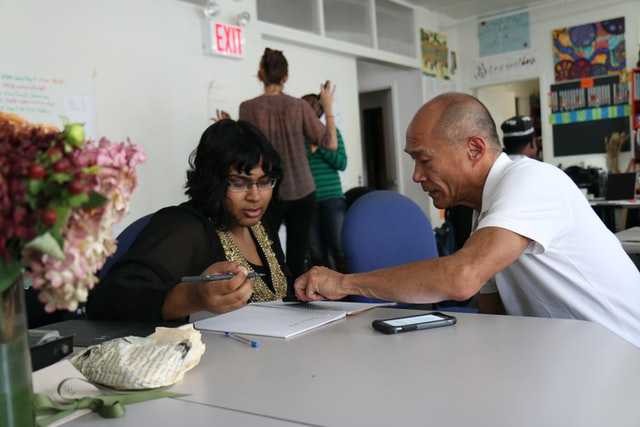
Often, faculty, teaching assistants and staff are the first to recognize that a student may be in distress and in need of support. It can help to know how best to be a support.
Please review the “Notice, Engage, Refer + Debrief Guideline”, a guide that outlines what kinds of distress you may notice, how to engage a student in distress, and detailed steps for referrals.
You are always welcome to call or email the CSDC if you have questions or wish to consult with one of our counsellors*. 416-979-5195, CSDC@TorontoMU.ca
*Please note: Counsellors cannot confirm whether a student is receiving services from the CSDC or share information about a student's contact with the CSDC. This information is protected by Ontario privacy legislation.
If your student requires urgent support but does not need hospital support (ie. is not in active crisis with safety risks), please encourage them to contact the CSDC as soon as possible, or walk them to our office (JOR-07c). Outside of office hours, please direct them to contact Good2Talk (external link) for 24/7 support.
If you are unsure about how to support a student in distress, please contact the CSDC between 9am-5pm or Good2Talk (external link) outside of office hours for consultative support.
CSDC: 416-979-5195 or csdc@torontomu.ca.
Monday - Friday, 9:00 AM - 5:00 PM

When to Refer
- You recognize the student is significantly impacted by their mental health
- You are feeling anxious or concerned for the student's wellbeing
- You recognize that the student's needs are outside your scope or capacity as a professor/staff
- You don't know what you can do for the student
- The student talks about suicide, self-harm, or death
What to Do
- Consult with others if possible (ex, colleagues, CSDC)
- Talk with the student in-person or over the phone if possible (rather than over email)
- Be patient and listen carefully
- Take the student seriously; try to set aside judgement or bias, and try not to minimize feelings or express disapproval
- Stay calm and express your concern for the student
- Refer the student (provide information about the CSDC including contact into. Students can book an appointment by calling, emailing, or stopping by our front desk).
What to Say
- Summarize what you heard, express care and concern, clarify what you can help with, and provide information about resources or services that can support the student with concerns beyond your role
- ex. “You seem to be pretty upset about this, and I feel worried about you. We can figure out these academic issues together later; your wellbeing and safety is more important. (Or: I can give you an extension on this paper, but I really want you to prioritize yourself right now, too.) Would you consider talking to one of the counsellors at the CSDC? I can give you their contact information; I think you deserve some support.”
- ex. “I’m glad you reached out. I can see you are upset and want to make sure you get the right help. I might not be the best person to support you with this, but there are people who are specifically here to help. Here are some resources that I believe will be helpful - I really encourage you to use them.”
If the student rejects your referral, please do not take it personally. You can listen to the student's concerns about seeking help. If relevant, consider making it clear that your wanting the student to see a counsellor does not mean that you think that there is something wrong with the student; it means that you care about them not having to deal with this alone. Emphasize that counselling support at the university is free and confidential; that their involvement with the CSDC is kept completely separate from their academic records. Encourage them to reach out in the future.
The Student Care Office works with the Toronto Metropolitan community to identify students in distress, address disruptive student behaviour and help students who are dealing with challenging personal, academic and/or financial issues. Support and consultation are available for students, staff, and faculty.
We also partner with the following offices on campus in building a safer community for all:
Consider Safety
- Any reference to ending one’s life or threat of violence must be taken seriously
- Call 911 if suicide/harm is already in progress or if there is imminent safety risks to the individual or community
- If you are unsure about the level of safety/risk, call security (416-979-5040) after hours and on weekends, or contact Good2Talk (external link) for 24/7 consultative support.
- Contact the Centre for Student Development and Counselling (csdc@torontomu.ca) weekdays between 9:00 AM-5:00 PM.
Refer when it’s FAIR
Refer out if/and when these 4 conditions apply. They are signals that more support is needed.
- FEAR… if you feel afraid of or for the community member
- ANGER… if you feel angry - take a step back
- IGNORANCE… if you don’t know what more you can do for the person
- RESPONSIBILITY and RESENTMENT… if you find that you begin to resent the responsibility you have assumed for the person
Emphasize key points:
- State what you notice
- State the concern/reason
- Offer a resource
- Always be empathic and non-judgmental.
- Provide the person with tools to develop their own network of support
Setting boundaries and referring in concerning situations
- Sometimes we get into situations that are outside of our expertise and we may feel the person needs more support than you can provide. It is ok to own that and recognize it. It is in the best interest of the individual involved.
- In this instance, it is important that we provide the individual the opportunity to get the appropriate support – either from a family member, GP, or it could be a counsellor or a support staff on campus.
- What to say if you are concerned: “What I hear you describing is outside of my scope/expertise and I want to ensure you get the support you are looking for. Here are some resources/phone numbers/I will stay on the call with you while you connect...”
- What to say to someone when you are worried for their safety: “I’m worried about your safety and I will be calling one of these resources to get you connected with support.”
Setting boundaries and referring in urgent situations
- What to say of when you think the situation is urgent or that the person needs immediate help: “You seem to be very upset and I am concerned about you and want to ensure you get some help. Can I make a call to one of the resources on your behalf or would you like to call?”
- Notice the difference in urgent situations is that someone is calling before the interaction is over.