Increasing accessibility to fundamental tools for molecular biology
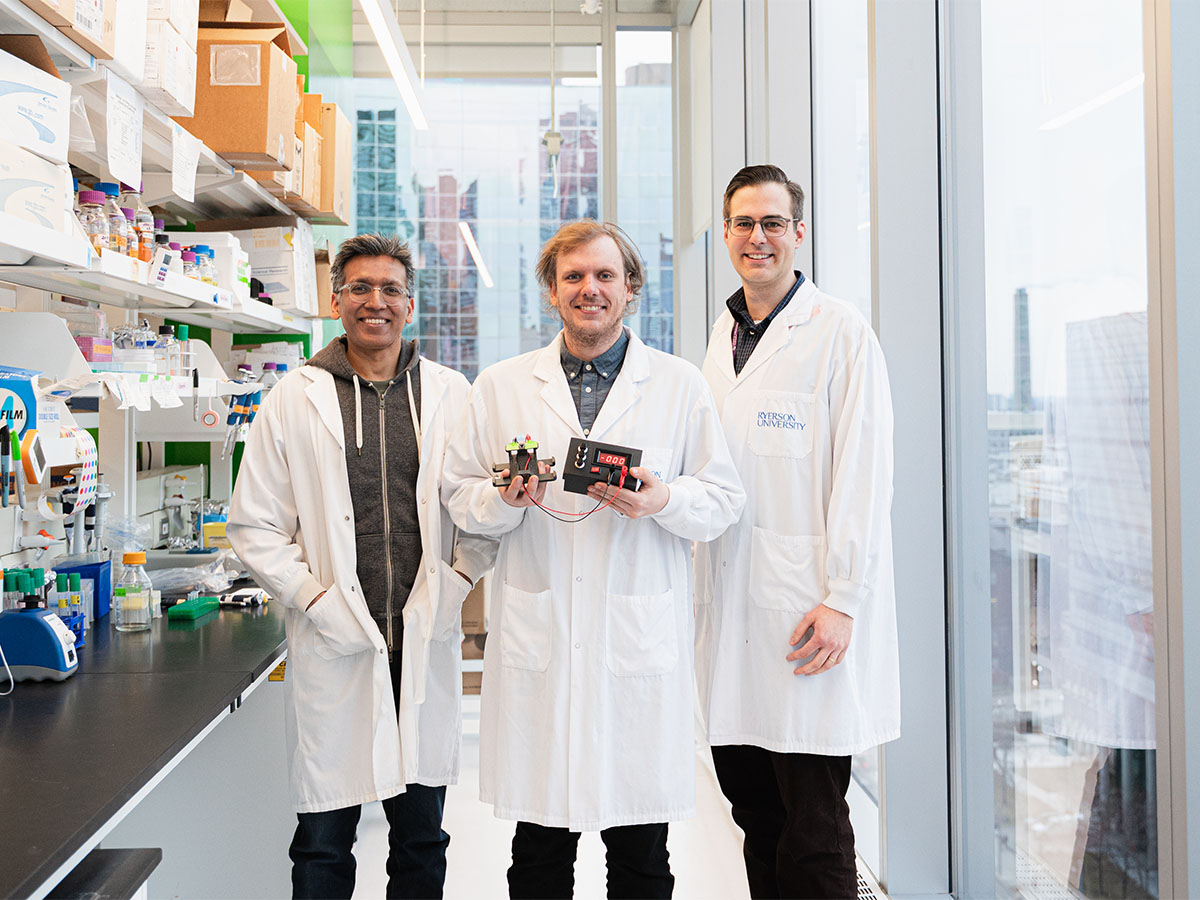
TMU molecular science PhD student Thomas Nesmith is on a quest to build a cheaper version of a common lab tool vital to researchers working on problems from cancer treatment to regenerative medicine. Made from 3D printable parts and batteries, his “OpenPore” is a new version of an exponential decay pulse generator, which sends a pulse of electricity to open up cells for drug delivery and other experiments (electroporation). Now he and research supervisors Darius Rackus and Gagan Gupta, professors in the Department of Chemistry and Biology, are celebrating the release of their design and documentation for OpenPore (external link) on HardwareX, an open access journal.
An early interest in gadgets
Not surprisingly, Nesmith has always been a tinkerer. He still has the crystal radio (a simple radio receiver that uses energy from radio waves to power itself) that his parents gave him as a kid. That was after he ripped apart his father’s stereo, along with many family remote controls. But he didn’t immediately go into the sciences, working first in archaeology before winding his way to TMU, where he completed an undergraduate degree in biomedical sciences.
At TMU, he first connected with Gupta, who invited him to work in his lab. Gupta introduced him to Rackus, whose lab (external link) mostly focuses on microfluidics. “We started playing around and seeing what we could do, and then this developed into Tom's undergrad thesis. Then he stayed on in graduate school and really started to develop and refine the OpenPore hardware,” Rackus explains.
With an energy in his voice that makes clear he’s found his vocation, Nesmith is grateful for the support from both Rackus and Gupta, who are now co-supervisors for his doctoral studies. “I was not a typical student. I was a bit older, but they gave me a chance. I can't thank them enough, because many students wouldn't get the chance that I got. I'm getting kind of choked up now, because for someone like me, I came in with no experience, and they let me just try a wild idea that turned into all this. It was quite a journey, and I've been very lucky,” says Nesmith.
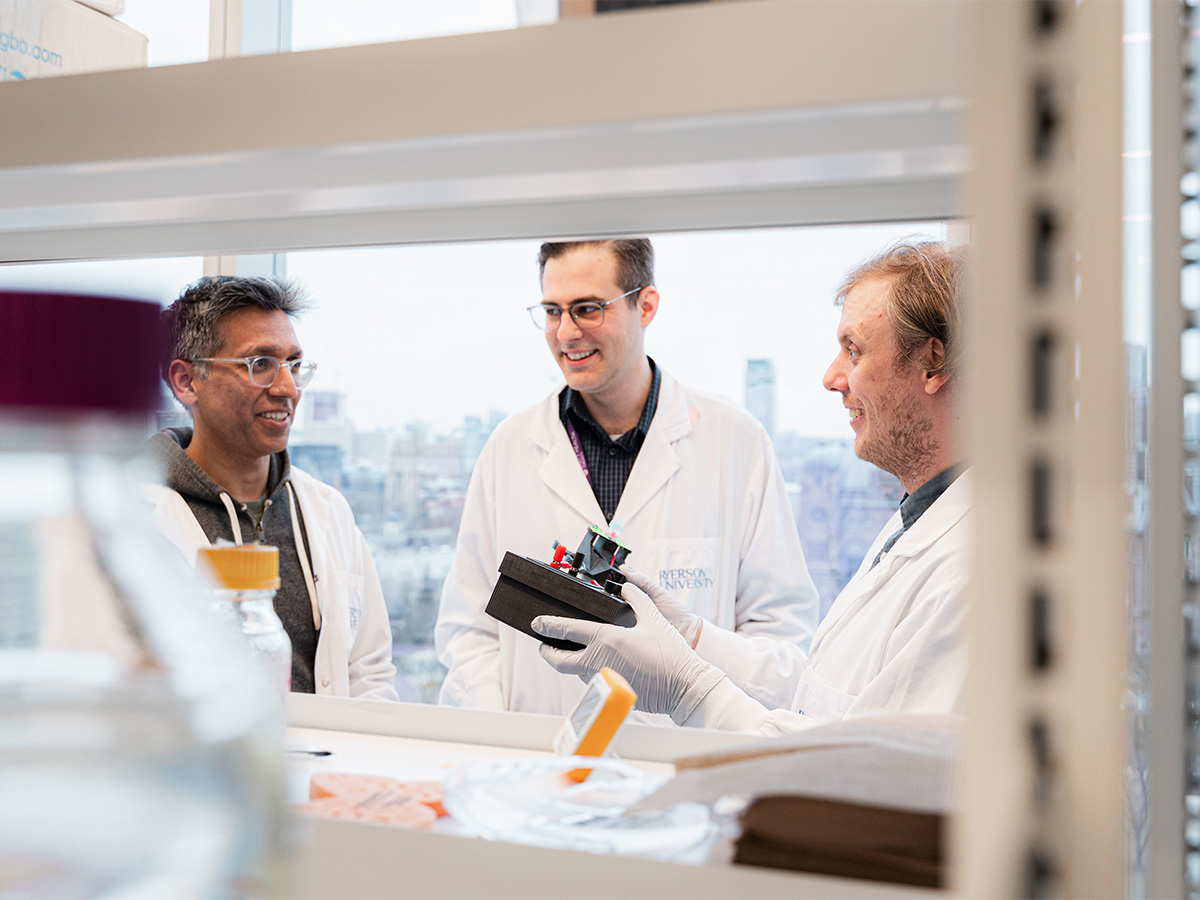
Nesmith credits his supervisors, Gupta and Rackus, for giving him a chance despite his non-linear academic journey in science.
A tool for all research budgets
Back to OpenPore’s potential to democratize research, Nesmith's aim was to develop an alternative tool that would “electroporate” cells, delivering a short, intense pulse of electricity to open the cell membrane and better enable the delivery of drugs or genetic material. This is essential for many researchers who wish to genetically manipulate cells for a variety of applications, including synthetic biology, cancer research and regenerative medicine. However, the standard technology is a machine with a $25,000+ price tag, making it inaccessible to many researchers, especially in settings with restricted budgets (e.g., undergraduate labs or developing countries).
Looking through the literature, Nesmith found a few ideas, but nothing that provided the control he wanted. He finally settled on the electric pulse of a Kodak Funsaver disposable camera flashbulb (after a brief detour into the ignition mechanism for BBQ lighters). Today, OpenPore is about the size of a tissue box, battery-powered, and costs only $100 to make via 3D printing.
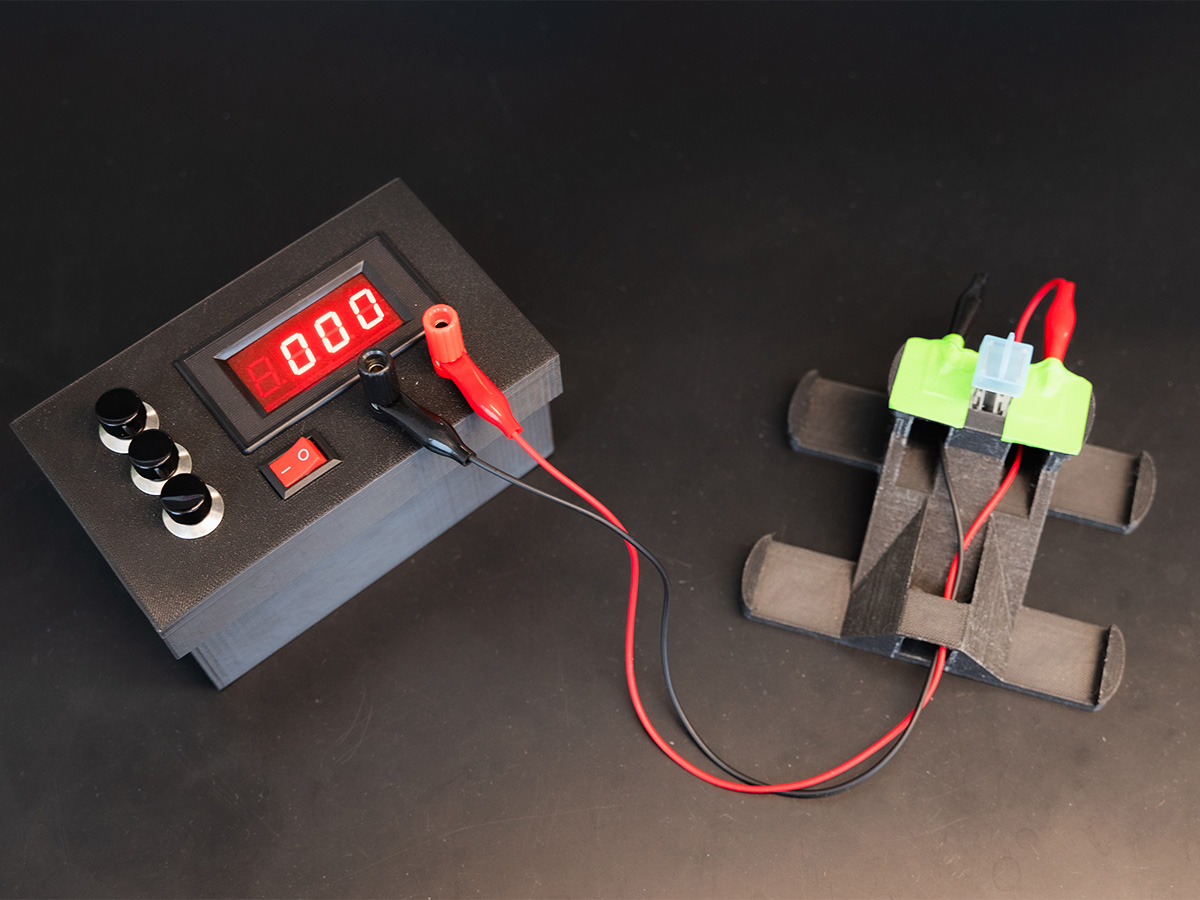
Costing only $100 to make, OpenPore is an affordable and accessible alternative to a regular exponential decay pulse generator on the market.
For both student and mentor, the decision to share the design on an open platform made sense too. “I think affordability in science is our biggest problem right now,” says Nesmith. “There are a lot of capable researchers all around the world who just don't have access, and when you have to choose between buying reagents and a new piece of equipment, it's difficult to justify. I don't think that's right.”
The growing contingent of citizen scientists or biohackers are further beneficiaries, says Rackus. “That's a class of scientists that maybe we don't consider when thinking about academic research. By making it accessible, they can add it to their own arsenal.”
While Rackus acknowledges that Nesmith’s focus on tool creation is different than most in his lab, he welcomes these ambitions. “Tom has been a very interesting student to work with, because he's very curious, just willing to try stuff and get it to work. He’s very independent, creative and willing to come at problems from very different angles, which is why we have this product now,” he says.
Having started his PhD in September, Nesmith will move on in his doctoral studies to develop another tool, a portable diagnostic system that builds on his current work. Perhaps his only regret is not having found his field sooner, due to a common concern. “There are a lot of people who don't know that they're really good at [science] until they try. I did archaeology because I was scared of this, scared of the math. I struggled with math in high school, and it made me think science wasn't for me. I took a huge detour. So to be here now, it's great. I hope my experience will help somebody else see this and think, ‘I can do that too.’”