2025LTCKeynote
Keynote | Eight Billion Geniuses: Life in a Post-Anthropocentric Intelligence Paradigm
Details
Time: 9:30 - 10:50 a.m.
Location: DCC 208 (Overflow seating in DCC 204)
ASL Interpreter
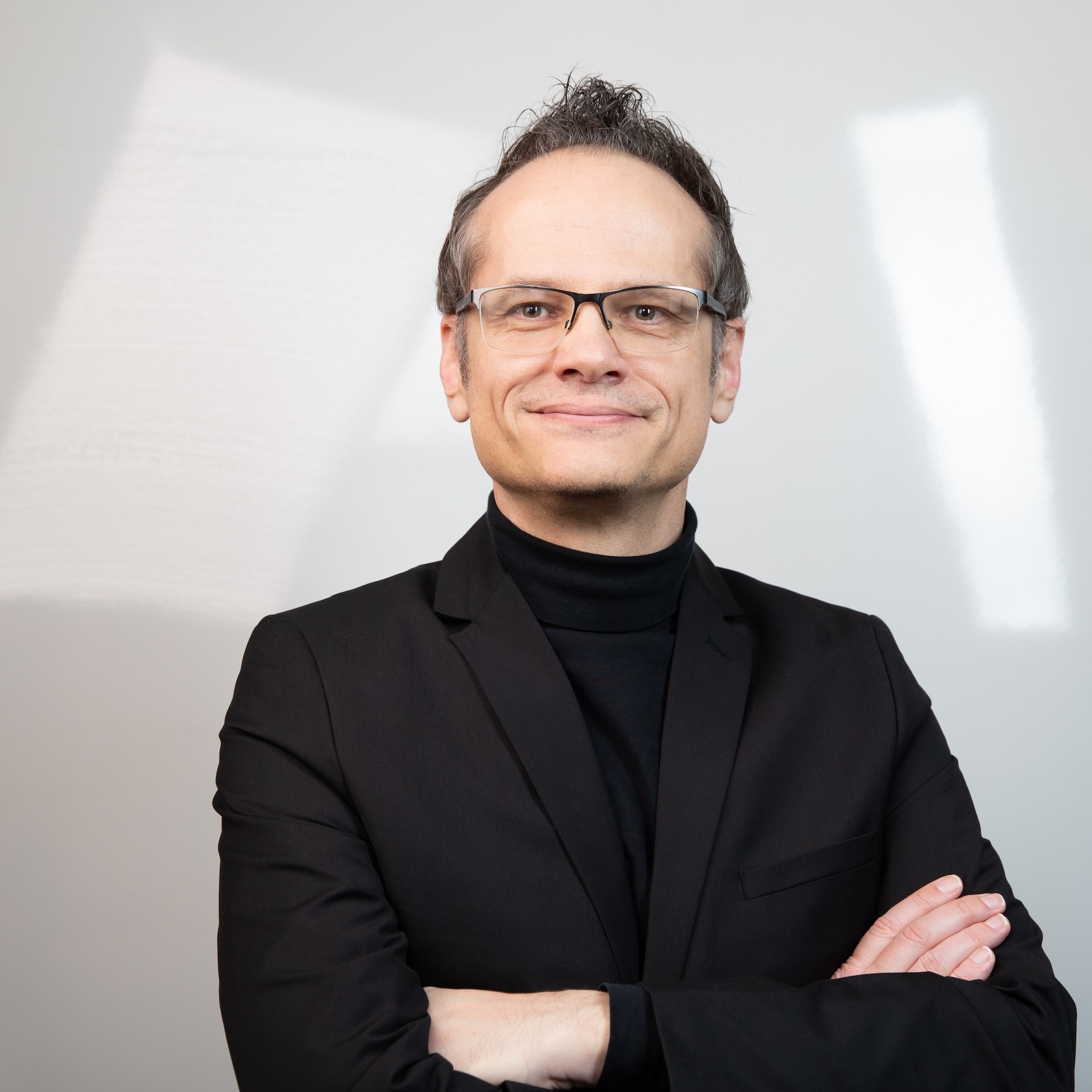
Mark Daley
Chief AI Officer at Western University and a Professor in the Department of Computer Science
Mark is the Chief AI Officer at Western University and a Professor in the Department of Computer Science with cross-appointments in five other departments, The Rotman Institute of Philosophy, and The Western Institute for Neuroscience. He is also a faculty affiliate of Toronto's Vector Institute for Artificial Intelligence.
Mark was named in the Maclean's magazine "Power List 2024" of the top 100 Canadians shaping the country and in Constellation Research's AI150, a list of top 150 top global executives leading AI transformation efforts.
In October 2024, Mark was appointed the Natural Sciences and Engineering Research Council of Canada (NSERC) Scholar in Residence in Artificial Intelligence.
Mark has previously served as the Vice-President (Research) at the Canadian Institute for Advanced Research (CIFAR), and Chief Digital Information Officer, Special Advisor to the President, and Associate Vice-President (Research) at Western.
Mark is the past chair of Compute Ontario and serves on a number of other boards.
Eight Billion Geniuses: Life in a Post-Anthropocentric Intelligence Paradigm
This keynote address examines the recent evolution of artificial intelligence and its profound implications for our lives. Through analysis of key benchmarks and milestones - from AlphaGo's victory over Lee Sedol to recent breakthroughs in mathematics, science, and creative domains - the talk explores how AI is increasingly matching or exceeding human-level performance across diverse cognitive tasks.
The presentation addresses the emergence of "commoditized intelligence" - a future where advanced AI capabilities are widely accessible - and poses a central question that invites reflection on both the opportunities and challenges ahead: "What would *you* do with an army of genius assistants?"
As AI systems demonstrate unprecedented capabilities in discovering new antibiotics, solving advanced mathematical problems, and generating creative works indistinguishable from human output, we examine what this paradigm shift means for individual and collective human adaptation in a world where genius-level cognitive assistance becomes universally available.