Solution-Focused Graduate Supervision

Effective research supervision is one of the strongest contributors to graduate student success, yet most faculty develop their supervisory style on-the-job, rather than through evidence-based professional development opportunities. Facing increasingly complex academic, personal, and professional landscapes, many supervisors are looking for approaches that help them better support students — without adding extra burden to their workload.
CELT now offers a Solution-Focused Graduate Supervision (SFGS) course, developed by CELT Teaching Fellow Dr. Yukari Seko and Prof. Asmaa Malik. Grounded in the principles of Solution-Focused Brief Therapy, this framework shifts the supervisory conversation from managing deficits to cultivating strengths. By mastering these practical communication techniques, supervisors can build equitable and empowering partnerships with graduate students. Indeed, the solution-focused approach is appreciable to a variety of work settings and family dynamics. The course will offer you a new toolbox that helps you continue feeling excited about research supervision.
The Winter 2026 course has been specifically designed for FEAS faculty, in consultation with Faculty Champions from FEAS.
As part of the course, we are conducting a research project titled Enhancing Supervisory Skills through Solution-Focused Graduate Supervision Training: A program evaluation (REB # 2024-472). Please review the information letter (external link) if you are interested in the research project. Your participation is entirely voluntary and you can still register for the course without participating in the study.
Course Curriculum
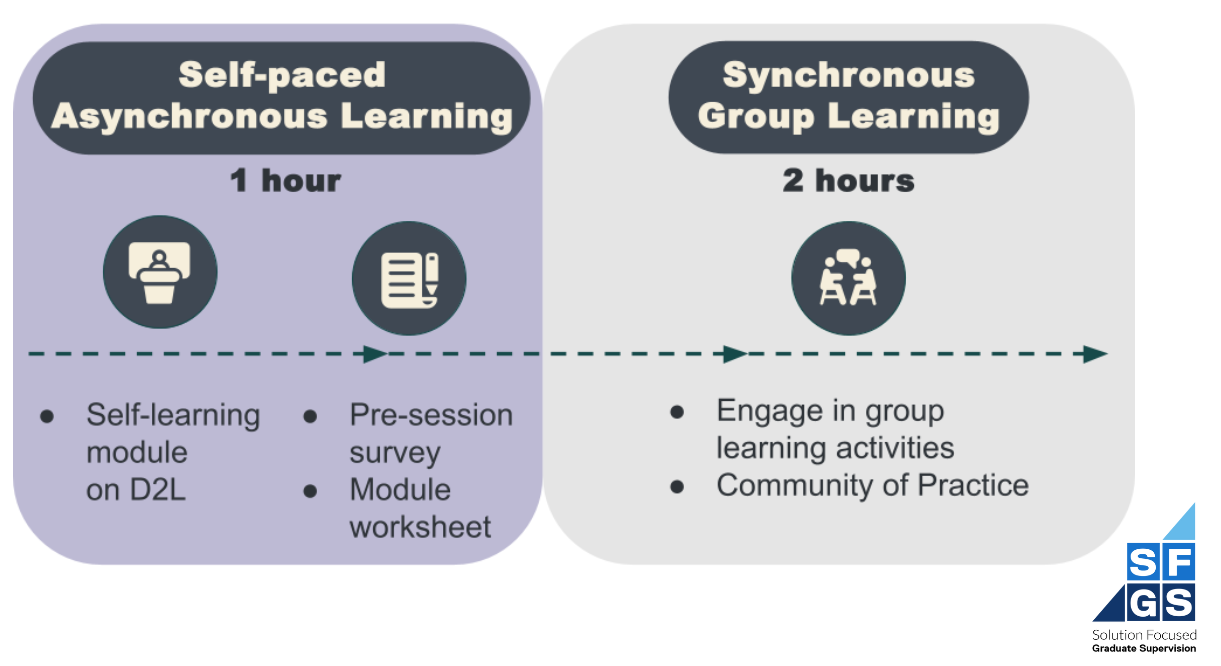
The SFGS course combines a flipped classroom method, Communities of Practice, and Live-Actor Simulations to foster reflective peer-learning. The course is divided into four modules, designed to take you from foundational principles to advanced techniques. Each module includes asynchronous learning on D2L and synchronous group learning sessions with other TMU faculty members.
In each module, you will first engage in asynchronous self-paced learning on D2L (about 1 hour), then join a synchronous peer learning session with other TMU graduate supervisors (about 2 hours).
Module Schedule
The peer learning sessions will take place on campus or over zoom per participants’ preferences as per the following schedule:
- Module 1: Thursday, Feb. 26, 2026, 1-3 p.m. (Zoom)
- Module 2: Thursday, Mar. 12, 2026, 1-3 p.m. (In-person on TMU campus)
- Module 3: Thursday Apr. 16, 2026, 1-3 p.m. (Zoom)
- Module 4: Thursday Apr. 30, 2026, 1-3 p.m. (Zoom)
Module Structure
Participants are expected to complete all four modules to receive a certificate of completion. Each module will follow the structure outlined below.
- Self-paced Asynchronous Learning (1 hour)
- Self-learning module on D2L
- Module worksheet
- Synchronous Group Learning (2 hours)
- Group learning activities
Date:
Thursday, February 26, 2026
1-3 p.m.
Virtual - over Zoom
Topics:
- SFGS key tenets and principles
- Role clarification
- Facilitative supervision
Suggested Learning Objectives:
- Explain the key tenets, principles and stance of SFGS.
- Reframe supervisory roles from being directive to being facilitative by integrating a coaching approach.
- Map out the scope of your supervisory practice and responsibilities pertinent to the role.
- Articulate what you wish to learn, improve, or develop through this professional development course.
Date:
Thursday, March 12, 2026
1-3 p.m.
In-person
Topics:
- Supervisory contract (foundational, working, mini-contracting)
- Solution-focused questions
- Practice with Live Actor in the role of a grad student
Suggested Learning Objectives:
- Set up a mutually agreeable contract about supervision with clear understanding of supervisory goals, process and relationship.
- Start using a series of SF questions in your supervisory meetings.
- Facilitate a successful initial meeting with your supervisees using the contracting approach.
Date:
Thursday, April 16, 2026
1-3 p.m.
Virtual - over Zoom
Topics:
- Solution-Focused vs. Problem-Focused Talk
- Intentional listening
- Hope activation
- Practice with Live Actor in the role of a grad student
Suggested Learning Objectives:
- Support your supervisees when they feel derailed in getting them back on track.
- Activate hope in your supervisees.
- Shift a conversation from a problem to solutions while expressing compassion.
- Strategize for a productive check-in meeting with your supervisees.
Date:
Thursday, April 30, 2026
1-3 p.m.
Virtual - over Zoom
Topics:
- Growth mindset
- Feed-forward
- Coaching approach to feedback conversations
- Solution-focused feedback
Suggested Learning Objectives:
- Identify the critical components of effective feedback in graduate supervision.
- Avoid factors that make feedback ineffective.
- Adapt solution-focused feedback strategies in written and oral communication with graduate students.
Meet Your Facilitators
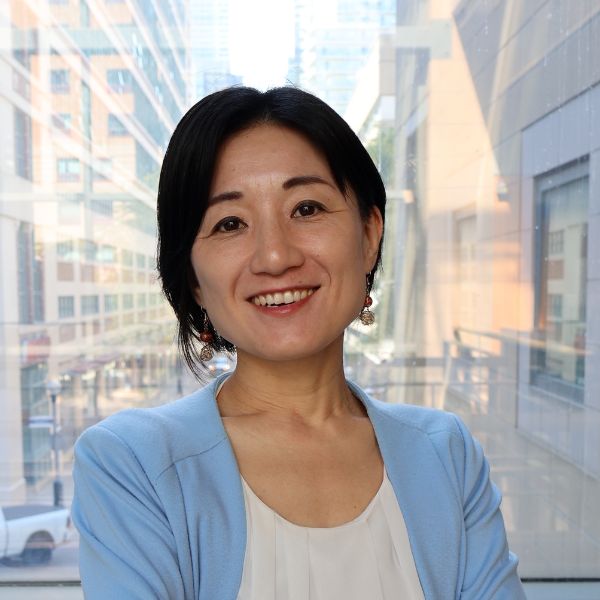
Lead Facilitator: Dr. Yukari Seko is an Associate Professor and Graduate Program Director in the School of Professional Communication at TMU. She’s also a Director of the Centre for Studies in Food Security. Since 2017, Dr. Seko has been researching the pedagogical utility of Solution-Focused communication in clinical and postsecondary educational settings. Her research has revealed that the SF approach is helpful for people in positions of power — including graduate supervisors — in developing a compassionate, growth-oriented mindset and shifting their problem-solving habits toward a solution-focused approach.

Co-Facilitator: Asmaa Malik is professor of journalism at Toronto Metropolitan University. Her research and teaching interests focus on equity and innovation in journalism and collaborative approaches to graduate supervision. She is the co-recipient of Google News Initiative funding to develop an AI-powered tool that assesses news sourcing and is working on a SSHRC-funded project to study the experiences of Muslim journalists in Canadian newsrooms. She has held several editorial leadership roles at the Montreal Gazette and Toronto Star and her work has also appeared in The Washington Post, The Walrus and The Conversation.
Champions:
Some SFGS offerings are discipline-specific (e.g., STEM, Arts). Each of these offerings is supported by Champions from different faculties who understand the specific context of your faculty.
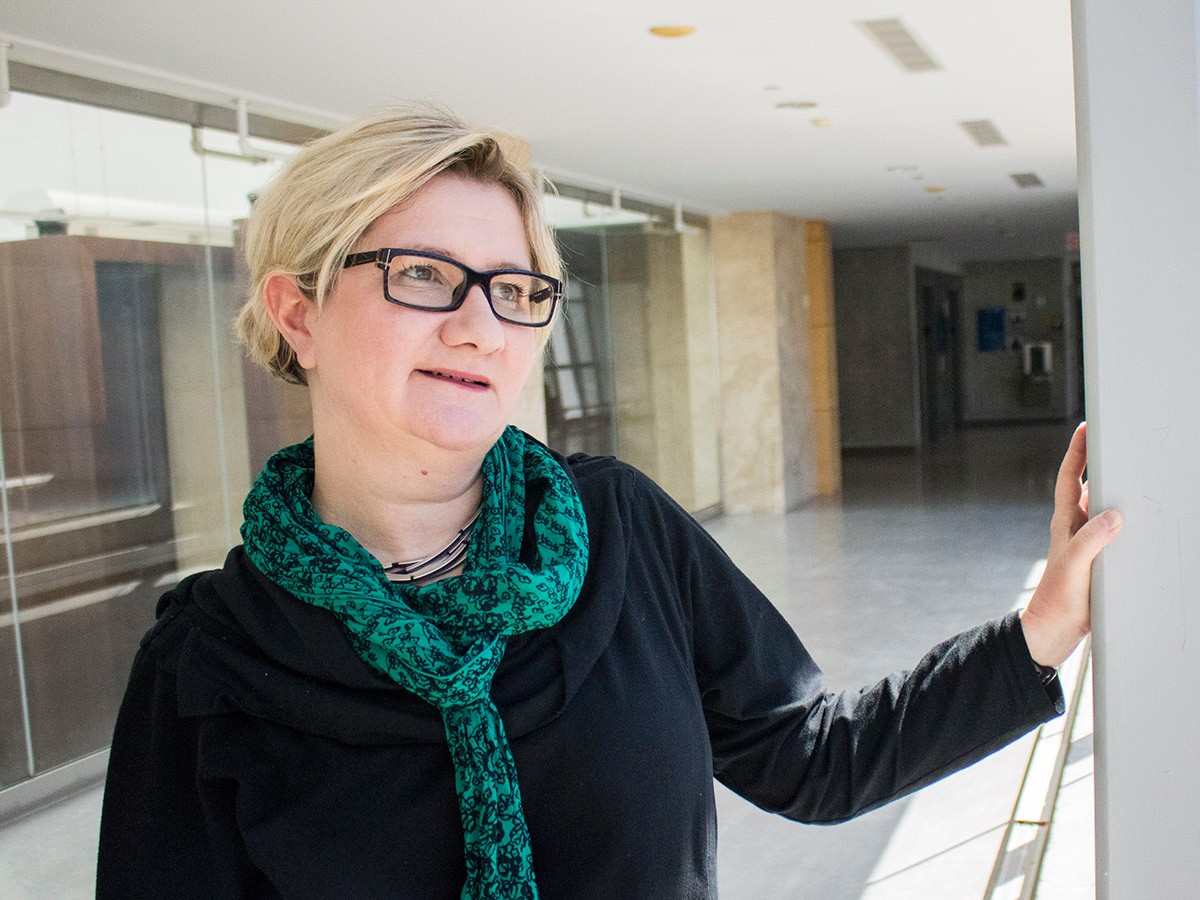
Dr. Miljana Horvat
Professor, Associate Dean, Graduate and Postdoctoral Studies
Faculty of Engineering and Architectural Science

Impact and Insights
The following quotes are from TMU faculty participants from past offerings of the SFGS course:
“I thought [the flipped/hybrid format] was a great model. I would like to model my future courses like this. Super organized, the way the videos were embedded.”
“Even after more than 15 years of graduate supervision, I still enjoyed learning about this important yet so sensitive part of our academic life.”
“I learned so much from speaking with other faculty members about their supervisory practices. I really hope that there can be a community of practice or way to keep in touch with folks or create a network of folks who can continue to learn from one another.”
Publications
Seko, Y., Deng, J.M., & Malik, A. (Submitted). Enhancing supervisory practice through a solution-focused graduate supervision course.
Seko, Y., Malik, A., Lau, P., Neri, D., & Courtnage, A. (2023). Towards solution-focused graduate supervision: Developing a research-based live simulation for graduate supervisors (external link) . Innovations in Education and Teaching International, 61(3), 570–582.
Seko, Y. & Lau, P. (2021). Solution-focused approach in education: A scoping review. (external link) Higher Education Research & Development, 41(5), 1710-1726.
Solution-Focused Graduate Supervision with Dr. Yukari Seko and Asmaa Malik (2021). Podagogies Episode 18 (external link) .
Contact Us
If you are interested in participating in a future SFGS offering, want to serve as a faculty champion, or have any questions, please contact yseko@torontomu.ca