Faculty of Science students represent their work at the Undergraduate Research Opportunities showcase
During the summer of 2021, students who participated in Ryerson University’s Undergraduate Research Opportunities (URO) program worked on their research projects with the support of their supervisors. The program offers students a paid summer opportunity to be paired with a faculty mentor and contribute to a scholarly, research or creative project.
This past September, eight undergraduate students at the Faculty of Science had the opportunity to showcase their research projects at a virtual showcase.
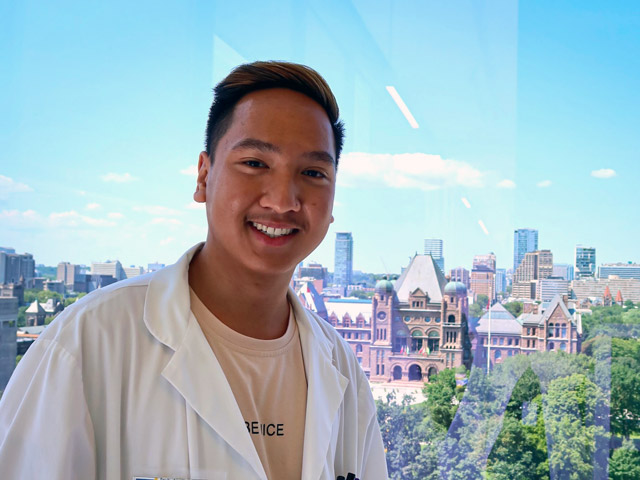
Title: Global analysis of the spatial and temporal dynamics of endocytosis
Supervisor: Mojca Mattiazzi Usaj
Endocytosis is a biological process with which outside materials are brought into the cell. This process is highly regulated and many factors can affect its dynamics. One of the projects in the Mattiazzi Usaj lab is investigating whether aging affects the dynamics of the early stages of this process. Understanding this relationship might help to define factors that could influence disease as cells age. Antenor's role in the project was to construct a yeast strain that would allow the team to observe endocytosis. This yeast strain has different fluorescent markers for components of endocytosis that can be observed under a specialized microscope. Accordingly, these components can be measured to determine if their dynamics is affected by aging.

Title: The Relationship Between Chronic Cough and CT Imaging Measurements
Supervisor: Miranda Kirby
For lung diseases such as chronic obstructive pulmonary disease (COPD), asthma and cystic fibrosis, medical imaging plays an extremely small part in clinical management and treatment. The team, led by Dr. Kirby, is exploring new ways to extract information from medical imaging technologies, such as computed tomography (CT or “CAT scan”) and magnetic resonance imaging (MRI), which can tell them something about the underlying disease in the lung, such as its type, location and severity.
During the summer, Blake performed image analysis on CT scans and conducted statistical tests to determine if there are differences in the airway structural changes measured by CT in people with or without chronic cough (a cough lasting eight weeks or longer), and assessed if males and females have significantly different CT airway structure.

Title: AMP-activated protein kinase spatially redistributes EEA1-positive early endosomes to match metabolic requirements of cancer cells
Supervisor: Costin Antonescu
Most cells and tissues experience some form of ongoing alterations of nutrient availability and metabolic demand, whereas tumors are often facing limited levels of oxygen and critical nutrients. Cancer cells rely on complex regulatory mechanisms to sense and respond to these nutrient deficiencies. Ivanova is studying the molecular mechanisms of how cells adapt to the conditions of nutrient limitation. The project, led by Dr. Costin Antonescu, has important applications to understanding the pathogenesis of many diseases with established metabolic contributions, such as cancer.
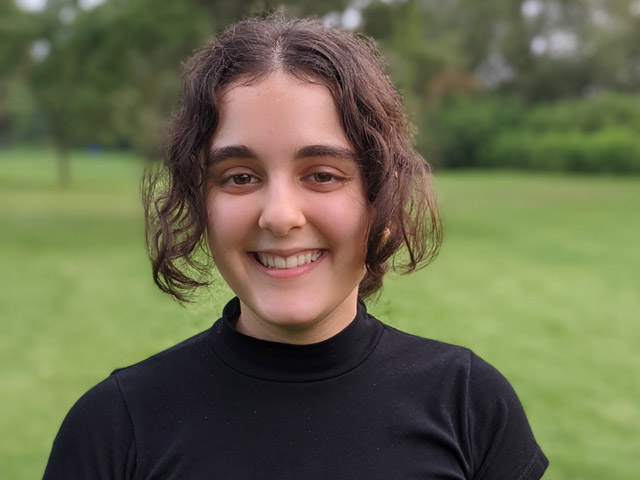
Title: Modeling a biological network of bursting neurons
Supervisor: Na Yu
Random fluctuations (also known as noise) are often considered to be a disturbance in everyday life. However, weak noise can benefit how brain cells, or neurons, communicate with one another in the brain. Morgovsky worked as part of Dr. Yu's team to investigate the effects of adding a weak noise input to a network of model neurons using a simulation. They performed mathematical analysis using Python and Matlab to measure the activity of the network. The team found that weak noise caused the coordinated firing of the neurons. This finding has implications in improving information processing within the brain. The hope is that future experimental studies will explore this effect within living organisms.
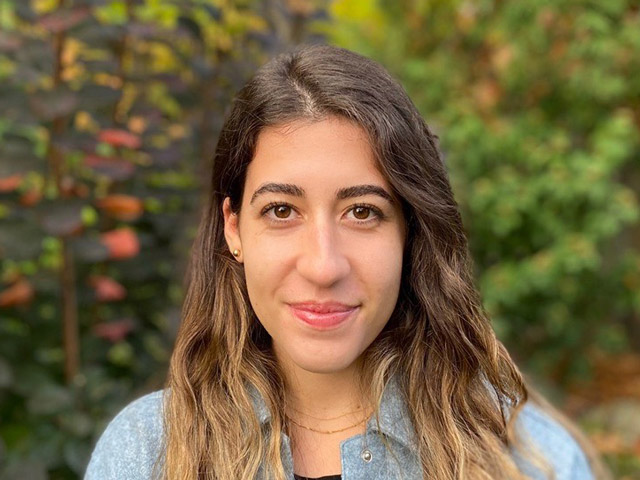
Title: Bacterial filamentation as a protective mechanism against innate immunity
Supervisors: Roberto Botelho and Joseph McPhee
Urinary Tract Infections (UTIs) are estimated to affect about 150 million people per year, with about 50-60% of women developing at least one UTI in her lifetime. Porco supported Dr. Botelho’s and Dr. McPhee’s research project, which focuses on how bacteria that cause UTIs respond to certain defenses by the immune system. During UTIs, some of the infection causing bacteria undergo a process called filamentation whereby they grow into long filaments while avoiding replicating into individual bacterium.
The research team has shown that this increase in length can protect the bacteria from molecules called antimicrobial peptides that the body makes during an immune response to kill them. The hope is to continue to understand how filamentation protects these bacteria against antimicrobial peptides to ultimately discover ways to undercut this bacterial defensive move. With such a high incidence of infection, understanding how bacteria cause UTIs by avoiding the immune system is important to develop new treatments. Porco’s role in the project was to grow the bacteria, expose them to host-derived molecules, prepare samples for microscopic imaging, collect images, analyse the images, and determine whether filamentous cells differ in their behaviour compared to non-filamentous cells.
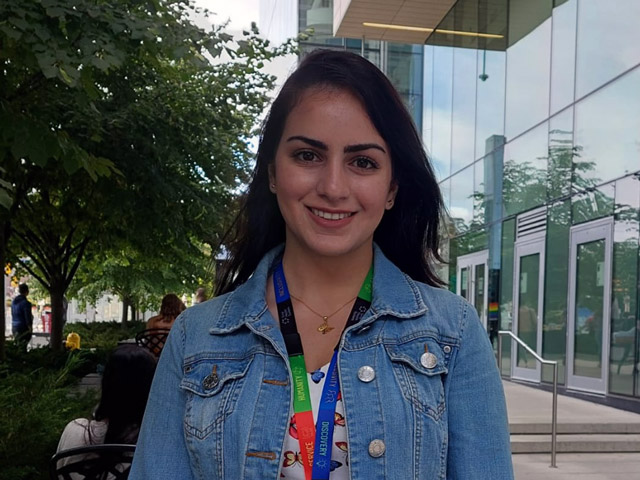
Title: C1orf198 Plasmid Transfection Using Electroporation to Study Protein Localization
Supervisor: Gagan Gupta
Sadeghi is working with a protein called C1orf198, about which very little is known. It is hypothesized that this protein localizes at the centrioles, and therefore plays a role in the cell cycle and during cell division. The goal of this project, led by Dr. Gupta, is to characterize the function of this protein using different techniques. One of these techniques is DNA electrotransfer, which involves inserting DNA into cells using electroporation. This DNA will then be used by the cells to make the C1orf198 protein either in the on conformation, in the off conformation, or in the wild type conformation depending on the DNA introduced. She will then view these cells using immunofluorescence microscopy to study where this protein will localize, as well as to see how its activity is regulated during the cell cycle. If this protein does in fact play an important role, it will be significant in research of various diseases such as cancer.

Title: Developing analogue-sensitive MRCK kinases for identification of novel substrates
Supervisor: Michael Olson
Many aggressive and recurring types of cancer are difficult to treat after all other conventional therapeutic options are exhausted. Novel cancer drugs that block specific proteins can expand the repertoire of treatment options available to cancer patients. Kinases are proteins in the cell that alter the activity of a target protein by transferring a phosphate group. Breast, liver, lung and ovarian cancer are found to have abnormally high levels of a kinase called MRCK alpha. However, many MRCK alpha target proteins have not been fully characterized and must be determined prior to the development of inhibitor drugs that can block MRCK alpha.
This project aimed to develop a mutated version of MRCK alpha that could bind to a molecule with a unique version of the transferrable phosphate group. Shakeel’s role in the project was to develop and confirm the mutations by executing protocols as efficiently as possible. The molecule bound to the mutated MRCK alpha could then be used to identify target proteins by searching for the unique phosphate group. With the results of this study, novel cancer drugs that block MRCK alpha activity can be developed in the future as viable treatment options for cancer patients.
Title: Delivery of SiRNA via cationic liposomes to hinder expression of NSP12 RNA in SARS-CoV-2
Supervisor: David Cramb
Given that no vaccine is 100% effective, there remains a portion of the population who will still contract COVID-19 despite being immunized. As a result, researchers have to find other potential treatments for COVID-19. To decrease the spread of viral infection, Dr. David Cramb’s team designed a genetic material that would target and degrade a part of the viral genetic material to hinder the production of the viral machinery. To deliver the interfering genetic material in the infected cells, they formulated spherical fat-based sacs with a size 500 times smaller than human hair. They are testing the stability in solution of these fat-based sacs loaded with the interfering genetic material using a laser microscope. The proposed project would serve as the first step towards a COVID-19 therapy.
Learn more about Ryerson University’s Undergraduate Research Opportunities program and how to get involved.