Engineers Without Borders: A Medical Physics Student’s Sub-Saharan Experience

When Ryerson’s Pursodman Ramachandran first learned of Engineers Without Borders’ Junior Fellowship, it sounded really different. Surprisingly, the application had no technical questions, but philosophical ones: How did he see the world? What might change look like? Intrigued, the Medical Physics undergrad sensed he was on the right track.
Before long, Ramachandran found himself flying to sub-Saharan Africa for a four-month internship. The experiences pushed him to his limits, and left an indelible mark. He’s now back on campus sharing his learnings with next-generation scientists. It’s a story of self reflection, personal growth, and leadership – and a vignette of Faculty of Science support for interdisciplinary enrichment and the development of well-rounded, 21st century graduates in STEM.
Redefining Third-World Sustainability
Engineers Without Borders (external link) (EWB) is a charitable, grass-roots organization focused on global development, policy creation and institutional change in some of the world’s poorest countries. Over 20 student-led chapters operate on Canadian university campuses, including the Ryerson chapter (external link) .
Junior Fellows have the chance to develop leadership skills and make meaningful contributions in their placement destination. Ramachandran explains the underlying philosophy: “It’s about building capacity for the future, rather than short-term fixes. Working alongside local colleagues to address root problems and empowering change – that leaves something to grow after we’re gone.”
Communicating Science to the Wider World
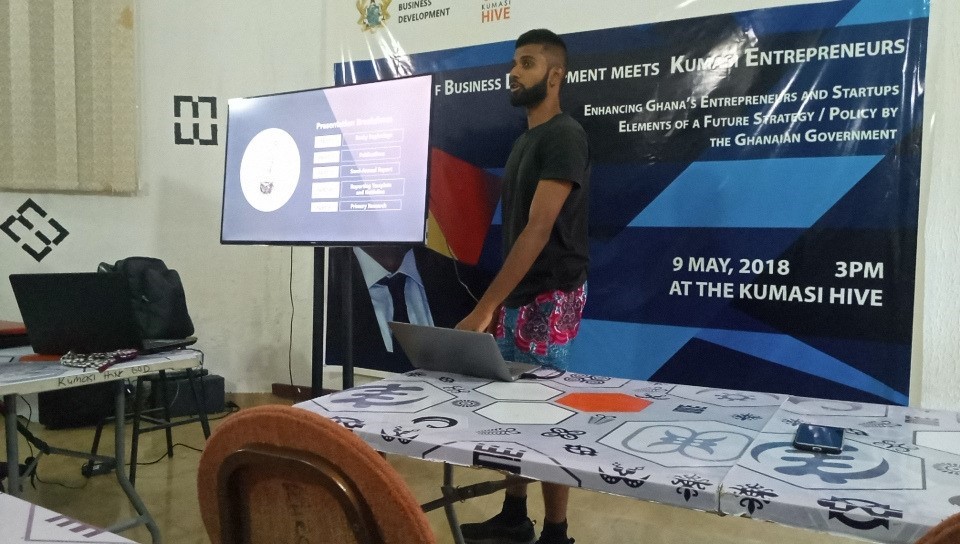
Ramachandran’s assignment was with Kumasi Hive (external link) in Ghana. The tech hub helps launch budding social-impact businesses. Resources run the gamut: funding, marketing, workshops, co-working spaces, and more.
Part of Ramachandran’s role was to provide research support for emerging innovations. “We had a donor who wanted to fund hydroponics,” he says. ”Our team rallied to find available projects, set out timelines and requirements, and gather resources. We did the same for another project for developing a new garbage collection process.”
Communications was another key component of his work. Ramachandran could recognize the importance of this valued – and often under-emphasized – skill in STEM fields. “We were the bridge between the scientific intelligence and the funding organizations. We had to think of ways to use Kumasi Hive as a platform for promoting the projects. Attracting attention and shaping our message to different audiences – that was challenging.”
“Unlearn What You Have Learned”
Before departing for Ghana, Ramachandran underwent EWB’s rigorous preparatory training. “There was a lot of unlearning to do,” he says. Recalling impressions from the Hive’s garbage collection project, Ramachandran speaks passionately: “Achieving systemic change means holding ourselves accountable for our actions and their impact. Embracing that level of ownership was the hardest part of the unlearning process.”
The internship also challenged Ramachandran’s approach to work culture and collaboration. “I made some huge mistakes interacting with others, and it showed up the type of person I was,” he admits candidly. “But by working through uncomfortable situations, I learned to show empathy and find ways to move forward together.”
Taking in the Local Culture
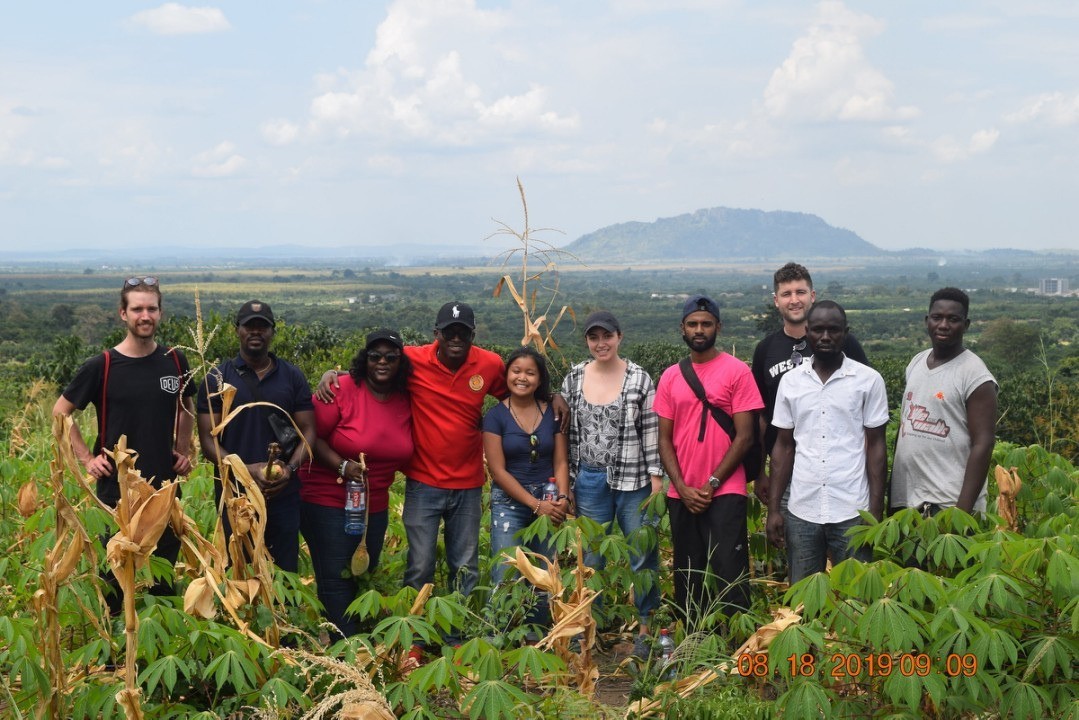
Work aside, Ramachandran also had fun taking in the culture. “I loved exploring their food, music and dance. It was very cool to wear the clothes they wear.”
Appreciating the local people and perspectives, he relates: “I got to talk with others my own age in another country and learn how they think. It was neat hanging out, playing soccer, and seeing my colleagues as humans outside of work. The camaraderie was awesome.”
Greatest Impact: Return to Canada
After returning to Canada, Ramachandran remained realistic about the challenges ahead: “Coming back, the most difficult thing was engaging people around me about the issues I saw in Ghana. I upsets me to see how people handle garbage now. We need to raise consciousness and avoid returning to old patterns.”
Continuing the work, Ramachandran is completing a year of leadership and mentorship with EWB. “We’re developing a brand for the Ryerson chapter, forming external partnerships, and trying to get students involved.”
Reflecting deeply on the program’s contribution to his growth in STEM, Ramachandran concludes: “The internship was a period of exponential growth. It contributed to the person I’ve decided to become, and it's part of the systemic change that will help future generations see the world as one community.”