Studying Bromodomain-Containing Proteins in Tetrahymena to Advance Drug Treatment for Diseases Linked to Parasitic Protozoa
Around the globe, malaria and sleeping sickness continue to cause immense human suffering and even death. Both diseases are initially transmitted via insect bites and linked to parasitic protozoa (Plasmodium with malaria and Trypanosoma with sleeping disease). With climate change threatening to encourage the spread of these diseases – and drug resistance an increasing problem – the development of new treatment methods is vital.
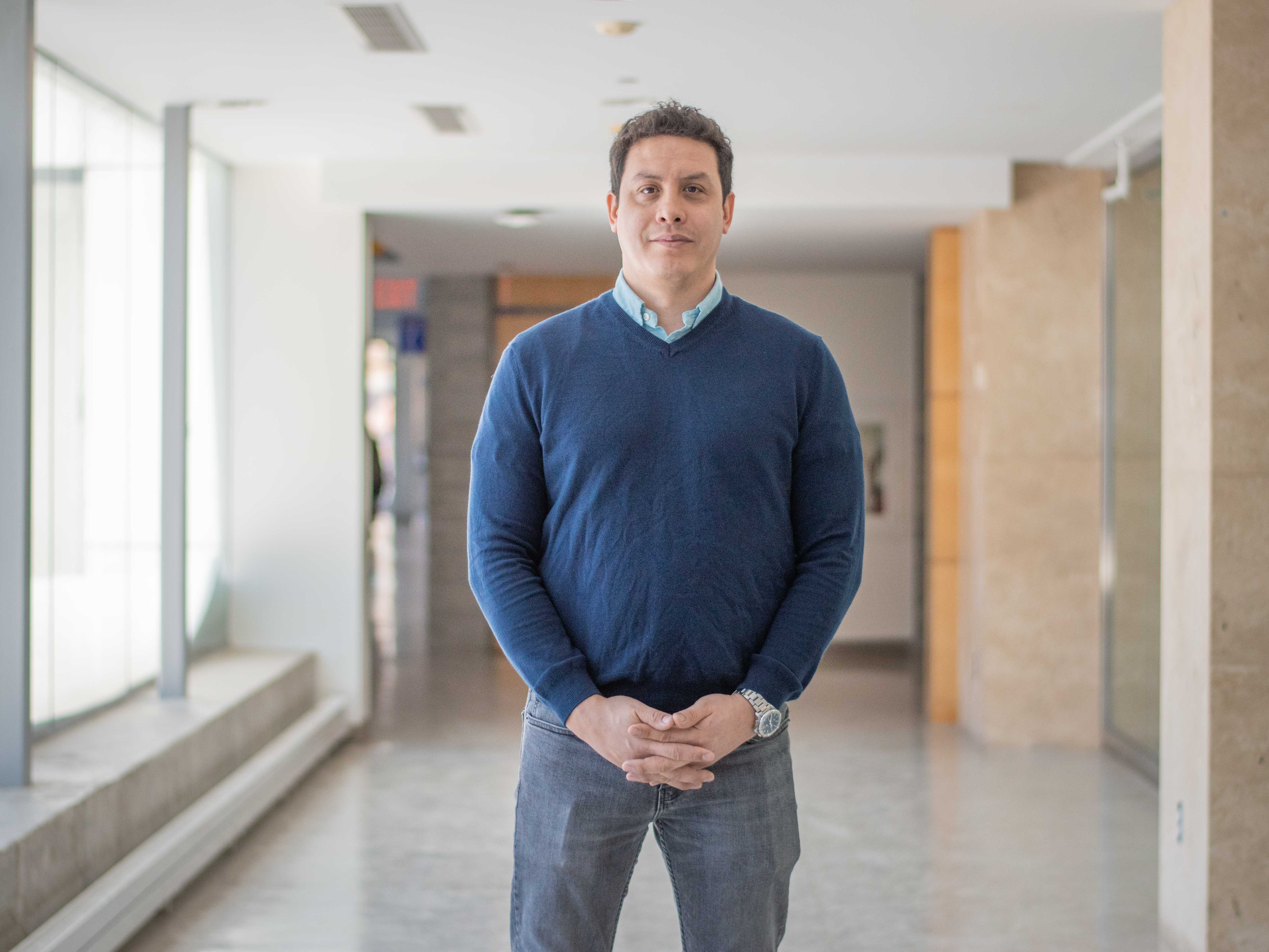
At Ryerson’s Department of Chemistry and Biology (opens in new window) , one of graduate student Alejandro Saettone’s research aims is to study and help advance drug treatment here. Saettone, who is supervised by Prof. Jeffrey Fillingham (opens in new window) , has been studying gene expression in Tetrahymena, a free-living model organism that is closely related to human parasitic protozoa that causes malaria and sleeping sickness.
Saettone says, “Although only a single cell, Tetrahymena has many proteins and pathways that are similar to those found in humans. Therefore, fundamental research into the basic biology of Tetrahymena can help understand the analogous pathways in human cells, and make it an excellent model to understand human disease.” Ultimately, Saettone’s research aims, via his experimentations involving Tetrahymena are to advance drug treatment for malaria/Trypanosoma. As he explains, “An objective of current research in the malaria/Trypanosoma field is to develop new drugs that target the bromodomain (BRD) of “readers” found in these protozoan parasites in order to kill the parasitic cell and stop infection in humans and animals.”
Saettone’s recent investigations are documented in a paper called, “The bromodomain-containing protein Ibd1 links multiple chromatin-related protein complexes to highly expressed genes in Tetrahymena thermophila” (external link, opens in new window) and published in the journal, BMC Epigenetics & Chromatin (external link, opens in new window) .
Saettone says, “In this paper, we identified that there are 14 genes encoding BRD ‘readers’ encoded by Tetrahymena. One of my current research aims is to determine if any of these 14 gene products are targets for the drugs targeting BRDs in malaria/Trypanosoma. If this is the case, functional characterization of the gene in the experimentally amenable Tetrahymena will help to understand the drug’s mode of action.”
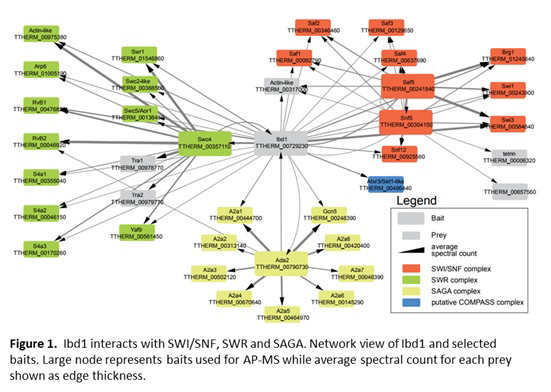
Summarizing his methods, Saettone says, he utilized “an experimental model, the single celled eukaryote Tetrahymena thermophila. We used a proteomic approach to identify a protein that we named Interactive Bromodomain Protein 1 (Ibd1), a small protein that possesses a single BRD. We confirmed that Ibd1 can read acetylation of histones through its bromodomain (BRD). Importantly we determined that Ibd1 is a member of four chromatin remodeling multi-protein complexes in Tetrahymena (Figure 1).
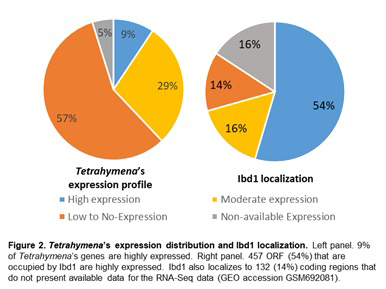
These four chromatin remodeling complexes are conserved in human cells and function in gene expression. We purified Ibd1 from Tetrahymena along with the DNA sequences with which it is associated in the cell and sequenced them using next generation DNA sequencing. Our bioinformatics analysis of these sequences led us to propose a model where Ibd1 is a central coordinator of gene expression in Tetrahymena specifically regulating genes that are expressed in large amounts (Figure 2).” Ultimately, Saettone concludes, “Ibd1 and its associated chromatin remodeling complexes are likely of paramount importance for the normal function of the cell.”
For Saettone, studying at Ryerson have included several high points, including travel opportunities (he’s attended ciliate conferences in Italy and Orlando, Fla.), state-of-the-art facilities at MaRS, an invaluable collaboration with Marcelo Ponce of SciNet, plus a supportive academic community. “My peers and supervisor are great, and I feel like I built a second family here. I am in deep gratitude for the opportunity of working, learning science and receiving professional advice.”
Funding for Saettone’s research in the Fillingham laboratory was supported by Natural Sciences and Engineering Research Council of Canada (NSERC) Discovery Grant.