From engineering to AI ethics
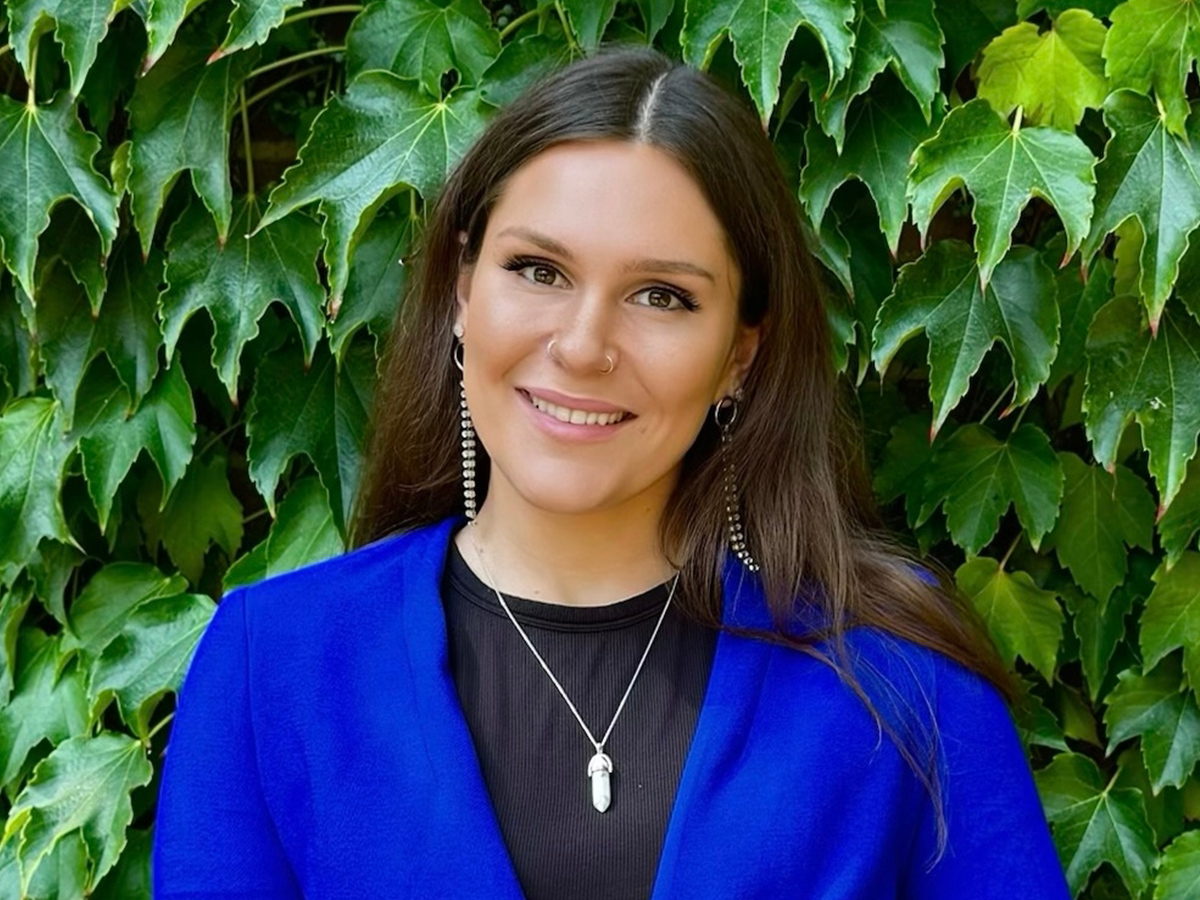
Erin Peterson, a 1L student at the Lincoln Alexander School of Law, hopes to pursue AI law upon graduation.
At the age of ten, Erin Peterson knew that she wanted to become an engineer. What she didn’t know was that her interest in engineering would lead her to the forefront of AI ethics and regulation in Canada.
While growing up in Kingston, Peterson was fortunate to attend WiSE (Women in Science and Engineering) camps at Queen’s University, where she was exposed to science, technology and engineering programs at an early age. The experience was a formative one and cemented her chosen career path. But it wasn’t until after she began her undergraduate engineering degree at Queen’s that Peterson decided to focus on computer engineering and artificial intelligence (AI).
Early days in engineering
“I had no interest in tech or coding when I first started my engineering degree,” said Peterson. “After doing a coding course in my first year, however, I had completely changed my mind. I loved it and I caught on pretty quickly.”
During her second year of engineering, Peterson joined Queen’s Machine Intelligence and Neuroevolution Design (QMIND). Being part of Canada’s largest undergraduate AI club took her love of coding to another level and helped her learn about AI. “We don’t learn AI until the fourth year of engineering because there are a number of prerequisites, so this gave me the opportunity to learn it on my own and get a head start.”
When it came time for Peterson to complete a 16-month accredited internship as part of her engineering program, she chose to zero in on AI. But securing a position wasn’t as easy as she’d hoped. “There were no AI internships for third-year students so I went to a job fair and started chatting with some folks at Bell. They were interested enough to create a position in AI for me.”
Through her internship at Bell, Peterson quickly gained an understanding of how AI operates in industry. She began to investigate the potential harms of AI along with the regulatory landscape, and saw that there was a lack of regulations around AI in the tech industry as a whole. “I started researching about AI bias and its detrimental effects, which led me to becoming more and more interested in the legal and ethical sides of AI.”
Pursuing a legal education
During her final year of university, Peterson began to nurture her burgeoning interest in law while balancing her engineering course load. She completed a certificate in law, which included introductory courses in Corporate Law, Intellectual Property Law, and Indigenous Law. Soon after graduation, she was scouted by Distributive, a Kingston-based tech startup.
Since joining the company in 2022, Peterson has enjoyed fulfilling roles at Distributive, most recently serving in a dual capacity as a Team Lead for an Artificial Intelligence Task Force and as an AI Ethicist. But the idea of attending law school remained on Peterson’s radar.
“I’m really fortunate to have an incredible CEO, Dan Desjardins, who has guided me along my AI journey, and was very supportive when I told him I wanted to pursue a Juris Doctor degree.”
After Peterson began researching law schools and learned about the Lincoln Alexander School of Law, it became her first choice on a very short list. “I accepted my offer as soon as I received it. From the pillars that represent the school, and especially from the tech and social justice aspects, I knew it was where I was meant to be.”
One might think that beginning a JD program would mean focusing solely on that pursuit, but not for Peterson. She continues to work at Distributive during her first year of law school and doesn’t plan on slowing down any time soon. “They’re very supportive and flexible about my hours, so I’m able to work around my class schedule.”
While balancing law school and her career, Peterson also serves on the Canadian Chamber of Commerce’s The Future of Artificial Intelligence (AI) Council - a 30-member forum representing a diverse cross-section of organizations from across the country. Along with fellow Council members, she is currently working with Innovation, Science and Economic Development Canada (ISED) on developing AI regulations at the national level. In this capacity, Peterson’s passion for ethics and drive to foster the development of AI regulation intersect perfectly.
Honoured as one of Kingston’s 40 Under 40
This past September, Peterson was recognized with a Kingston Young Professionals 40 Under 40 award, which celebrates the exceptional achievements and contributions of individuals under the age of 40 to their career and their community.
The award means a lot to Peterson who feels “very blessed” to work for a CEO and a company that is trying to push the boundaries in the tech industry. “They are really supportive of my endeavors. I’m very grateful for the opportunities I’ve been afforded, and to have others recognize my achievements.”
As for what’s next, it’s not surprising that Peterson hopes to use her legal education to further her work on the development of ethical AI frameworks and conduct research on the best ways to approach AI regulation to meet current and evolving societal needs.
“I never pictured myself practicing law in a courtroom; I knew exactly what I wanted to do when I began law school and that’s still my goal. I love coding, but I think there are more important things to be addressed at the moment with AI regulation and how there is very little research into how AI is impacting society - both in Canada and internationally. I would like to be part of building that.”