Using clinical insight to improve patient quality of life
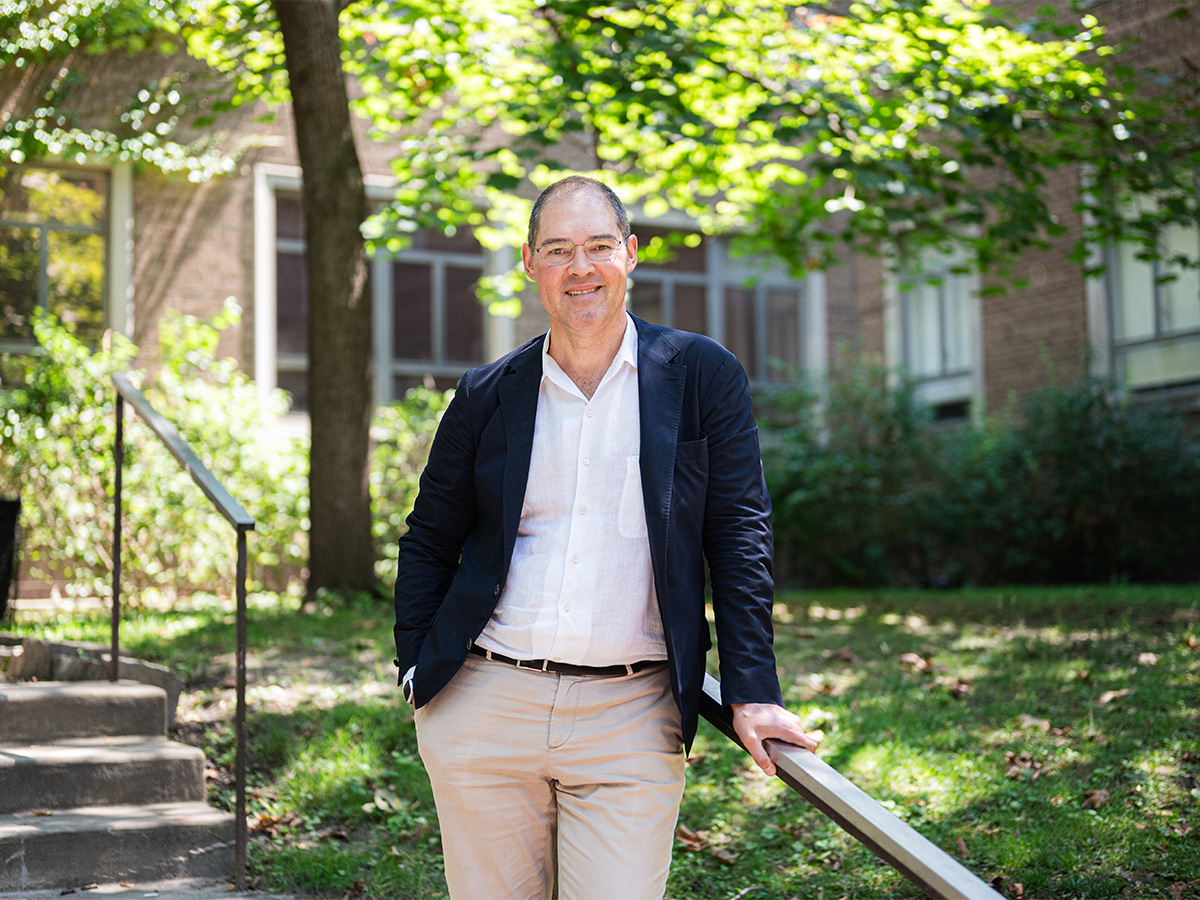
The Faculty of Science is pleased to welcome our newest addition, professor Edward Taylor, to the Department of Physics. Before joining TMU, he was a medical physicist at the Princess Margaret Cancer Centre, part of the University Health Network (UHN).
At UHN, Taylor made significant advancements in radiotherapy workflows to treat cancer, contributing to improvements in the quality of life for patients. At TMU, he looks forward to continuing his research in cancer imaging and treatment, exploring tumour behaviour and mentoring students to become strong leaders in medical physics.
How would you describe your research?
Primarily, I’m interested in understanding why physical systems behave the way they do. In a previous academic life, these systems included “superconductors” and “superfluids”, states of matter that unexpectedly arise at ultra-low temperatures due to nontrivial quantum effects and interactions between particles. Currently, I’m trying to understand why tumours behave the way they do: why and how they grow, how they respond to treatments like radiation and chemo therapies, and why they metastasize. While these questions are usually thought of as being biological ones, I believe a lot can be gained by viewing tumours as physical systems comprising many interacting degrees of freedom, which compete for resources and for which movement and growth are constrained by physical laws.
In addition, I’m interested in developing new ways to treat and image cancers. As with understanding tumours, the basic mechanisms of cancer detection and treatment involve modelling and understanding physical interactions between radiation, molecules, and biological tissues.
How has your clinical experience shaped your current work?
Although I’m interested in almost any problem where the answer is unknown, my time in a clinical oncological radiotherapy department led me to pivot towards problems that can potentially impact patients’ quality of life. If you can predict (within some uncertainty range) how a tumour will respond to therapy, then you can optimize that patient’s treatment to maximize tumour control while minimizing the enormously painful and possibly lethal side-effects of common cancer therapies.
What clinical advancements have you led that you are significantly proud of?
Together with radiation therapy and oncology colleagues at the Princess Margaret Cancer Centre, I helped develop a process to treat palliative bone metastases using diagnostic computed tomography (CT) scans instead of the “simulator” CT scans typically required by radiotherapy departments to generate optimized radiation distributions. This allowed us to deliver pain-relieving radiation quickly to patients for whom the acquisition of a simulation CT was an excessive burden.
What do you look forward to accomplishing at TMU?
In addition to making progress on answering key research problems, I look forward to training and mentoring students to make productive contributions to society, whether in academia, industry, or clinical medical physics.
What do you enjoy outside of work?
Spending time with my family (boring them with explanations of how cool the natural world is) and tending my overly large “flock” of fountain pens.