EngSpotlight Perspective Series: Industrial Engineering
Explore what it’s like to study Industrial Engineering at TMU
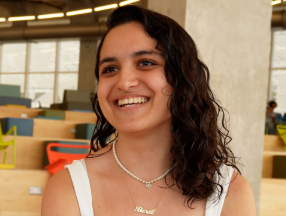
Beril Er
1st-Year Industrial Engineering
First-Year Ambassador
I like to think of industrial engineers as behind the scene problem solvers. Imagine you are at an amusement park. You don't build roller coasters like the mechanical engineers do. The industrial engineers are the ones who are figuring out how to make lines shorter.
 How has your first year shaped your understanding of industrial engineering?
Through my first-year courses, I realized that industrial engineering is not just about managing systems or doing business. It also requires many hands-on activities and practical experiences. During my first year I did not have many courses that were specifically focused on industrial engineering. From what I understand, most of the specialized Industrial Engineering courses begin in the third year of the program. However, my MEC 222 class was pretty exciting because we did so many technical drawing, and it gave me the chance to work with SolidWorks, which I really loved. I also loved my materials science class, especially the lab sessions which were pretty interactive. It gave me the chance to see how the things we learn in class apply in real life. Those classes really made me feel like an engineer.
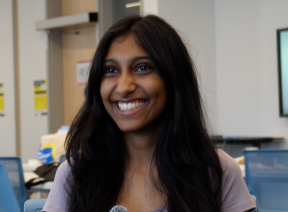
Harbani Wadhwa
2nd-Year Industrial Engineering
First-Year Ambassador
I went to a lot of networking events where you just go to talk to a representative of different companies. It feels useless at the moment, but I think it's about just getting your face out there and trying to meet new people. I even connected with a lot of people in my own year and discipline that I didn't know!
Have you gotten involved in any extracurriculars or design teams?
I am a First-Year Ambassador with the First-Year Engineering Office (FYEO), and I also work with the Metropolitan Undergraduate Engineering Society (MUES). The FYEO helps first-years, and MUES helps all the undergraduate engineering students. I didn't do too much in my first year, and I do sort of regret that, but one of the events I did go to was called Better than a GPS. I had so much fun at that event and I loved one of the FYAs that was there. I told myself, you know, maybe it would be fun to help guide incoming first-years. I remember being really anxious about going to the event, so I wanted to one day be a positive memory in someone's story. And then with MUES, I'm going to help plan events and hopefully bring up our engineering spirit!
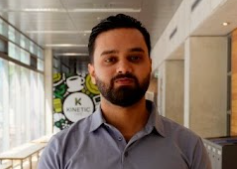
Khaled Ghanam
3rd-Year Industrial Engineering
Continuous Improvement Analyst, IESO
I was always interested in solving problems and the bigger picture rather than just knowing how a machine works. Industrial engineering focuses on how workers, machines, and consumers all connect with each other. It’s the perfect mix between technical tools and human focused solutions!
What's a misconception about Industrial Engineering people have?
So many people label Industrial Engineering as a business degree, which I think is wrong. Industrial engineers need to study some specific business concepts, but with a mix of engineering logic. For example, we study data analysis and also dive into quality assurance using our engineering logic. Industrial engineering is how you apply engineering logic to business concepts. For example, when we look at quality assurance and deal with big data, we apply linear algebra and statistical equations to understand the data and find ways to optimize it, something other people who are not engineers might find difficult to do.

Vanessa Mazzola
3rd-Year Industrial Engineering
Industrial Engineering Intern, IESO
My co-op made me realize that I like consulting and talking to people, pulling on threads and figuring out where the actual errors are in the process. It really opened my eyes for what my life after graduation holds and the job possibilities I would enjoy doing.
How did your co-op experience shape your understanding of what industrial engineers actually do in the industry?
My co-op definitely shaped my understanding of industrial engineering because you don't think a product or process needs improvements until you actually look into the process and realize that there are a lot of savings that could be made if this process or product was improved. A lot of times, different departments will come to my department, called Continuous Improvement Solution, and they won't even realize how much they're wasting doing something that is redundant or irrelevant or not really giving any value to the company or to their department. Because I know and my team knows the continuous improvement methodologies, we're able to analyze and see those opportunities for improvement in the company. I didn't expect to be almost like a consultant within the company, but a lot of industrial engineers work as consultants where they go from project to project solving things that people need help with. So it just goes to show that industrial engineers are very important for companies!

Cleon Draper
4th-Year Industrial Engineering
Graduate
Something that was really cool for me was being a part of IISE, which is a student chapter at TMU. You get opportunities to sign up for conferences and panel events alongside professionals in the field. It’s really beneficial, and honestly something I would have only discovered by coming to TMU!
How was your Capstone Project Experience in your fourth year?
Capstone was one of the most defining experiences for me. The first step was finding a dependable team to work with for an entire year, people whose goals aligned with mine. We wanted to finish our capstone knowing we had done one of the best projects in our program and that our work would be recognized. We were one of the first teams to secure a company to work alongside. Interestingly, the team we worked with happened to be TMU Industrial Engineering alumni who had graduated two years before us. It was great to connect with them professionally and as peers who once did what we were doing. Another big takeaway was learning to interact with professionals at a high level, including CEOs and executive management. We had to be clear, concise and make technical aspects understandable to a general audience. The best part was seeing the positive impact we made. The company appreciated our results, and because they were TMU alumni, they also guided us on how to present a strong capstone that professors would value. It was a moving and rewarding experience! Our capstone project pulled together skills from different courses into one tailored approach to project management.