EngSpotlight Perspective Series: Biomedical Engineering
Explore what it’s like to study Biomedical Engineering at TMU
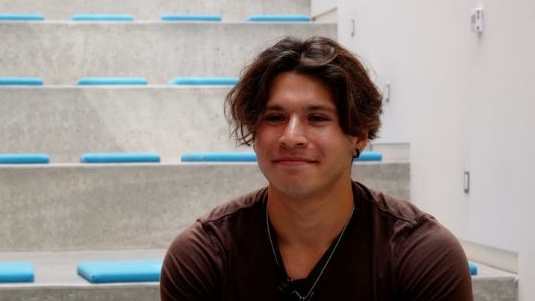
Leo Lopez-Papic
1st-Year Biomedical Engineering
First-Year Ambassador
Biomedical Engineering is the perfect fusion of both the engineering and medical fields. It takes engineering concepts and applies them to biology in order for you to be able to create tools for medical purposes. What concepts did you learn in your first-year which excited you most about Biomedical Engineering?
In BME 100, we were exposed to various types of biomedical technologies. The four main areas include tissue engineering, biomechanics, biomaterials and prosthetics, all of which have their own separate areas people can go into. We got to look at technologies that are in all four and got an idea of how technology is progressing. Our professor was a biomedical engineer who has a company, and he gave us the opportunity to see some of the new technologies they have, see how they work and learn how they are effectively helping people. BME 100 really cemented everything I dreamed biomedical engineering would be and showed me a real path to the future for what this field could be. At the end of the course, we had the chance to do a project where we were able to design our own biomedical technology using CAD, circuits and programming, to build a model. It was really fun, and it gave me an idea of what's to come!
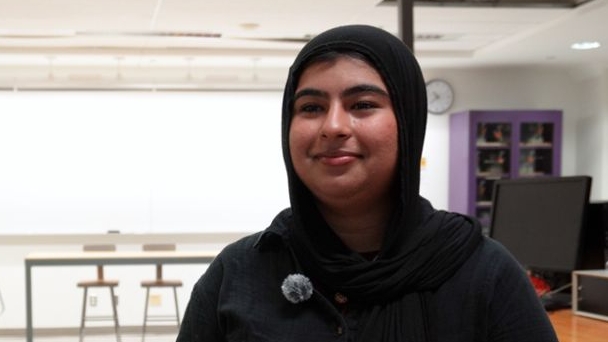
Fatima Choudary
2nd-Year Biomedical Engineering
Women in Engineering
Being a part of a design team gives you a lot of qualities like teamwork, collaboration and leadership. It shows you how to implement your course concepts within the prototype that you're making.
What are some Biomedical Engineering student groups and what's your personal experience with them?
I'm part of Women in Engineering. I was the Social and Professional Development Director in my first year. The group invites all women-identifying engineering students to attend events. I'm also a part of TMU Bionics, a biomedical design team. Within that, our team's goal is to create a bionic arm and go to a competition in Switzerland. In TMU Bionics, I am in the research subteam and in this subteam, it's my task to research the competition: the rules, regulations, alongside the safety and health guidelines for the bionic arm itself. We’re using websites such as the Government of Canada, so that we're creating something that is actually implementable within the biomedical field. So essentially as a research subteam member, it is my responsibility to find out the guidelines related to the competition and the bionic arm itself, as well as find current applications of bionic arms on the market.
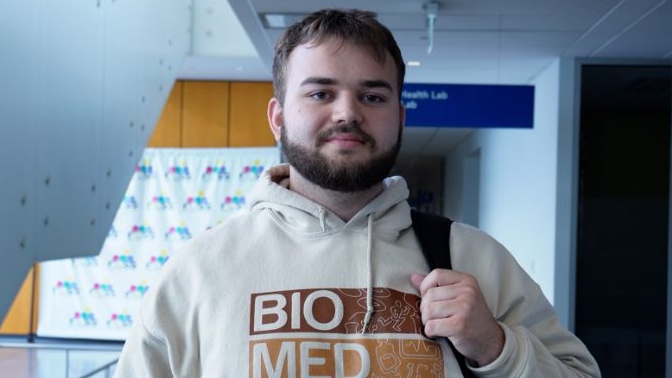
Justin Allen
3rd-Year Biomedical Engineering
Engineering Intern, Sanofi
Biomedical engineering is very multifaceted. You're taught a lot about how to communicate from a mechanical perspective to an electrical perspective and so on. With Sanofi, I definitely do a lot of cross-departmental communication.
How well do you think courses prepared you for your co-op position?
In terms of courses, the electrical, mechanical and computer courses are definitely required to break into these fields. You need to come in with a solid understanding of the fundamentals and how they work together. Maybe people don't think of this course as the thing that helps you the best, but one of the courses that prepared me for my co-op was Engineering Communications. It teaches you a lot about how to interact professionally in the engineering environment. At some point, you will have this background knowledge, you're confident in the technical part, but how well do you communicate that with your co-workers? During my co-op, I had to juggle multiple projects. That meant I needed to get really good at multitasking as well as communicating how much I can get done in a certain timeframe. Those skill sets definitely come through with some of the labs because you need to work with a lab partner, maybe multiple lab partners. You have to make sure that the experiment is executed correctly and you've communicated it well in order to get the grade you want. Now, this is for getting grades. In the workplace, you don't really know if you did a good job or a bad job unless someone directly tells you you've done a bad job. So it kind of then falls on you to make sure you're up to your own standards.
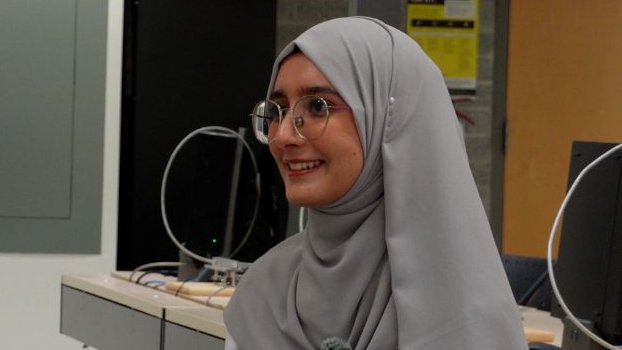
Areeba Amjad
4th-Year Biomedical Engineering
Graduate
TMU and my co-op position helped me develop people skills, project management, teamwork and leadership abilities. Those will be just as valuable, if not more, than the technical knowledge when I enter the industry.
What is something you’ve done during your undergrad that sets you apart as a job candidate?
I was very involved in extracurriculars and had about 8 to 10 positions across four student groups. For the First-Year Engineering Office, I was a part of the First-Year Committee and then became a part of the First-Year Ambassador program in which I helped first-year students transition into university. For the Biomedical Engineering Course Union, I was their First-Year Representative in my first year and then became VP of Operations and later Vice President for the group. I was also a part of Tetra TMU, which creates customized assistive devices for individuals with disabilities. I started as a First-Year Representative, worked up to Director of Communications, then Co-President and now advise the group. I also did some mentoring and was a part of IEEE EMBS in my second year. These experiences gave me leadership and event-planning skills. In fact, during my co-op interview, I explained how event planning is similar to process engineering. The manager was impressed by that connection, and it helped me get the job. The skills I gained by joining so many extra-curriculars really set me apart as a job candidate.