Undergraduate Chanise Austin receives Bhayana Family Foundation Award
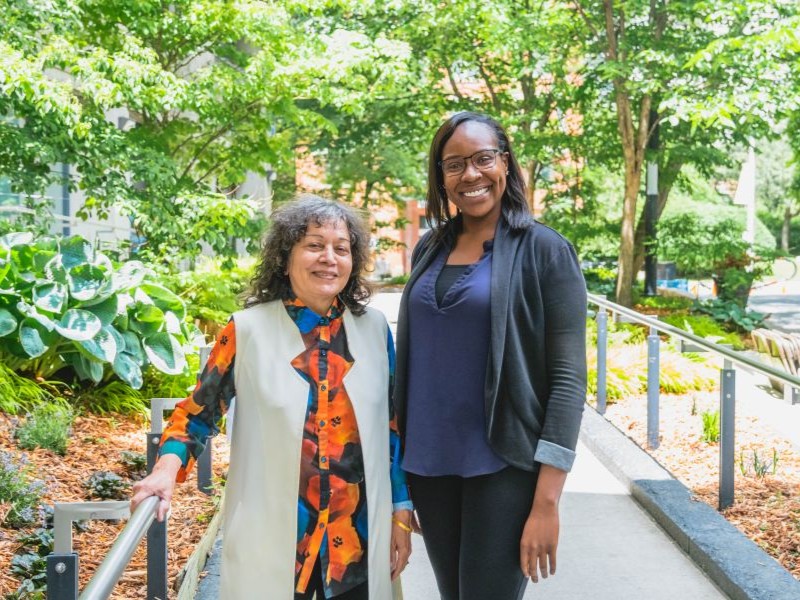
Congratulations to fourth-year social work student Chanise Austin on being selected for a Bhayana Family Foundation Award in June 2026. The undergraduate’s final year paper was selected for the $3000 award as “the next big idea in social work”.
Despite making immense contributions to society’s well-being, dedicated professionals in the non-profit sector are often overlooked and undervalued. The Bhayana Family Foundation (external link) , a premier national awards program in Canada, is working to close that recognition gap.
Austin's paper focuses on crisis intervention in mental health care — and how systemic oppression impacts Black youth during moments of crisis. The paper reviews literature arguing that for Black youth, calling 911 is often unsafe due to racial bias and risk of police violence.
The paper concludes that to reduce harm and promote equitable mental health support for Black youth, crisis intervention must shift away from police-based responses — and move toward community-led models rooted in safety, dignity and trust.
“I want to see that all youth are met with dignity and care during their most vulnerable moments. This award gives me confidence that this path is meaningful and that I have a responsibility to continue advocating for change.”
How would you explain your paper to a five-year old?
“Sometimes kids have really big feelings and hard moments. Right now, when they call for help, the people who answer are not always the best ones to help — sometimes they even make things even more scary.
My paper’s idea about making sure the right helpers show up — people who know how to listen, stay calm, and help kids feel safe and cared for. It’s about changing how help works so that kids are treated with kindness and understanding when they need it most.”
What makes you passionate about the subject you chose for your paper?
“Working in the field, I’ve witnessed firsthand how systems can not only fall short for youth in crisis but even sometimes escalate situations — particularly for Black youth, who are more likely to be impacted by systemic biases within both mental health and emergency response systems.
I believe that crisis response should be rooted in understanding. Support should be tailored to the cultural and emotional needs of the individual. I believe that meaningful change is possible when we center lived experience and commit to building systems that truly serve those they are meant to help.”
Reactions on being selected for the award?
“I immediately felt a strong sense of validation and recognition. My work feels meaningful, my voice and perspective important. It validates that there’s worth in critically examining support systems that are often taken for granted and rethinking how they’re designed.
The award reinforces my confidence to continue this path in social work. I feel motivated to keep developing my ideas and to think more deeply about how to apply them in real-world settings. It has strengthened my commitment to pursue this work at a higher level through further education and professional practice.”

Explore more about TMU's School of Social Work.