Indigenous-inspired journal wins Faculty of Community Services’ 2026 Social Innovation Award

For many years growing up part Ojibwe, his family from the Tootinaowaziibeeng Treaty Reserve, James Selinger coped with racism by pushing the Indigenous part of himself away.
Now as a social work undergrad, he’s rediscovering himself, reconnecting with his culture, and creating the kind of healing resource he wishes he’d had back then.
Through Zone Learning — a TMU network where students develop innovation skills and mindsets — Selinger is developing Roots of Resilience, a printed beginner’s journal for individuals navigating heavy workloads or systemic stress. Grounded in Indigenous ways of knowing, the product supports healing, self-reflection and personal growth.
The project was selected as this year’s top pick for the Faculty of Community Services’ Social Innovation Project Award. Selinger is now developing a test copy before bringing it to market. He plans to publish and then continue evolving the product with guidance from Indigenous communities and Knowledge Keepers.
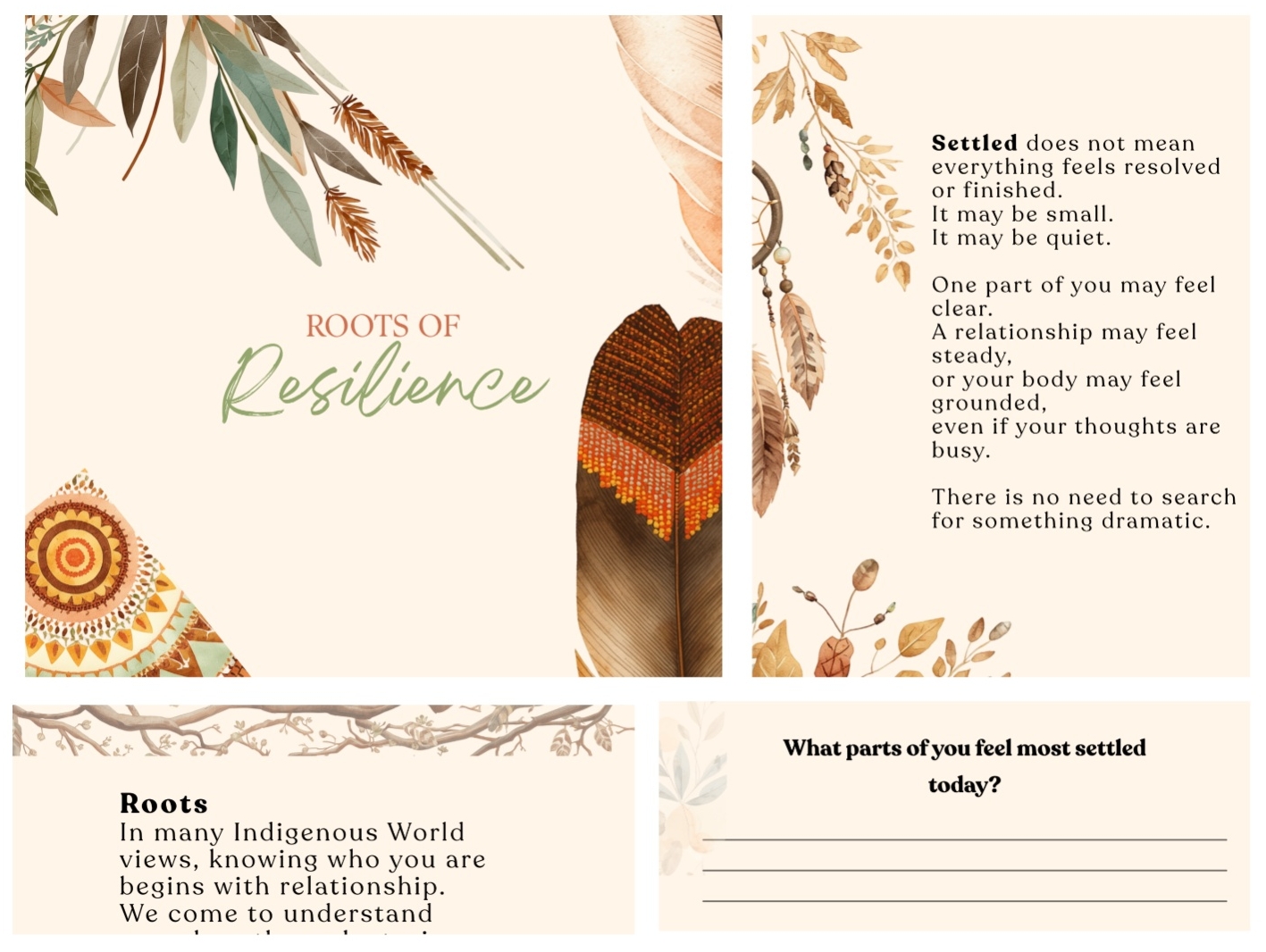
Roots of Resilience combines original teachings, open-ended reflection prompts, and grounding rituals to support balance across the physical, emotional, spiritual and relational aspects of a user’s life.
How did you come up with the product idea?
“During third year of my social work degree, I reviewed over 20 dense academic and clinical sources. I realized that heavy theoretical language would alienate the very people I hoped to support. To bridge this gap, I pivoted focus.
I envisioned a beginner’s resource that’s highly accessible and non-clinical. I experimented extensively with layout and structure, and intentionally rewrote complex frameworks into plain language. Zone Learning gave me the chance to finally bring it all to life.”
How is Roots of Resilience different from other journals?
“Unlike traditional, productivity-focused wellness planners, Roots of Resilience is not about trying to ‘fix’ yourself. The journal’s design explicitly rejects rigid, linear tracking in favor of fluid and flexible engagement. You can move through it in whatever way feels right for you.
It combines Indigenous teachings, gentle reflection prompts, grounding activities, and creative space to help people reconnect with themselves. My hope is that users will feel a little lighter, know themselves a little better, and sense they’ve taken important steps in their own healing journey.”
“Healing isn’t about having all the answers. It’s about making space to slow down, reflect, reconnect and keep learning.”
Where do you see the journal being used?
“I’d love to see it available through schools, Indigenous organizations, counsellors and community agencies. I hope the journal grows alongside me as the first of many resources I’d like to create and use in my own social work practice to support and promote healing, reflection and connection with Indigenous and 2SLGBTQ+ communities.”
Your biggest takeaway from Zone Learning?
“Confidence. Seeing people genuinely connect with the journal prototype and being open to hearing their feedback made my product stronger. ZON100 helped me be more comfortable with uncertainty and to refine my work as I go. Ideas and projects evolve through experimentation rather than perfect planning. No need to have everything figured out. Take the first step, trust the process, and begin before you think you are completely ready.”
Has the experience of social innovation shifted your future plans?
“Absolutely. Before getting involved with Zone Learning, I imagined myself following a more traditional social work path. I still plan to become a social worker and earn a Master of Social Work. But I now also see myself creating new resources as another meaningful way to support people and communities.”
Explore innovation programs & activities through TMU’s Zone Learning and the ZON 100 course.