From Ideas to Impact: How the 2025 Clean Energy Expo is Energizing the Net-Zero Future
On May 22, 2025, the Centre for Urban Energy (CUE) hosted its annual Clean Energy Expo at Toronto Metropolitan University, bringing together over 70 guests from the energy industry, research, and startup communities. With electrification momentum increasing and infrastructure pressures mounting, this year's Clean Energy Expo focused on building a smarter, more resilient energy future through cooperation, innovation, and practical solutions.
 9.55.10 AM.jpg)
OPENING REMARKS
The event began with opening remarks from Roberta Iannacito-Provenzano, Provost and Vice-President, Academic at Toronto Metropolitan University. She welcomed attendees to the gathering and underscored the importance of continued collaboration, innovation, and dialogue in shaping the future of energy. Her remarks helped set the tone for the day, highlighting the significance of the conversations to follow and the collective efforts driving change in the energy space.
.jpg)
KEYNOTE TAKEAWAY
.jpg)
Sheikh Nahyaan, EVP and COO of Toronto Hydro spoke about the urgent need to modernize the grid as we deal with climate change, more data centres, and the rise of electric vehicles. He laid out another $6 billion investment plan focused on making the grid more resilient, supporting electrification, and ensuring access to reliable, affordable energy across the city.
Some of the key points addressed:
- Moving from old-school planning to real-time grid optimization
- How Distribution System Operators (DSOs) are helping clean tech grow
- Working with governments and universities to help shape the future of energy
PROJECTS
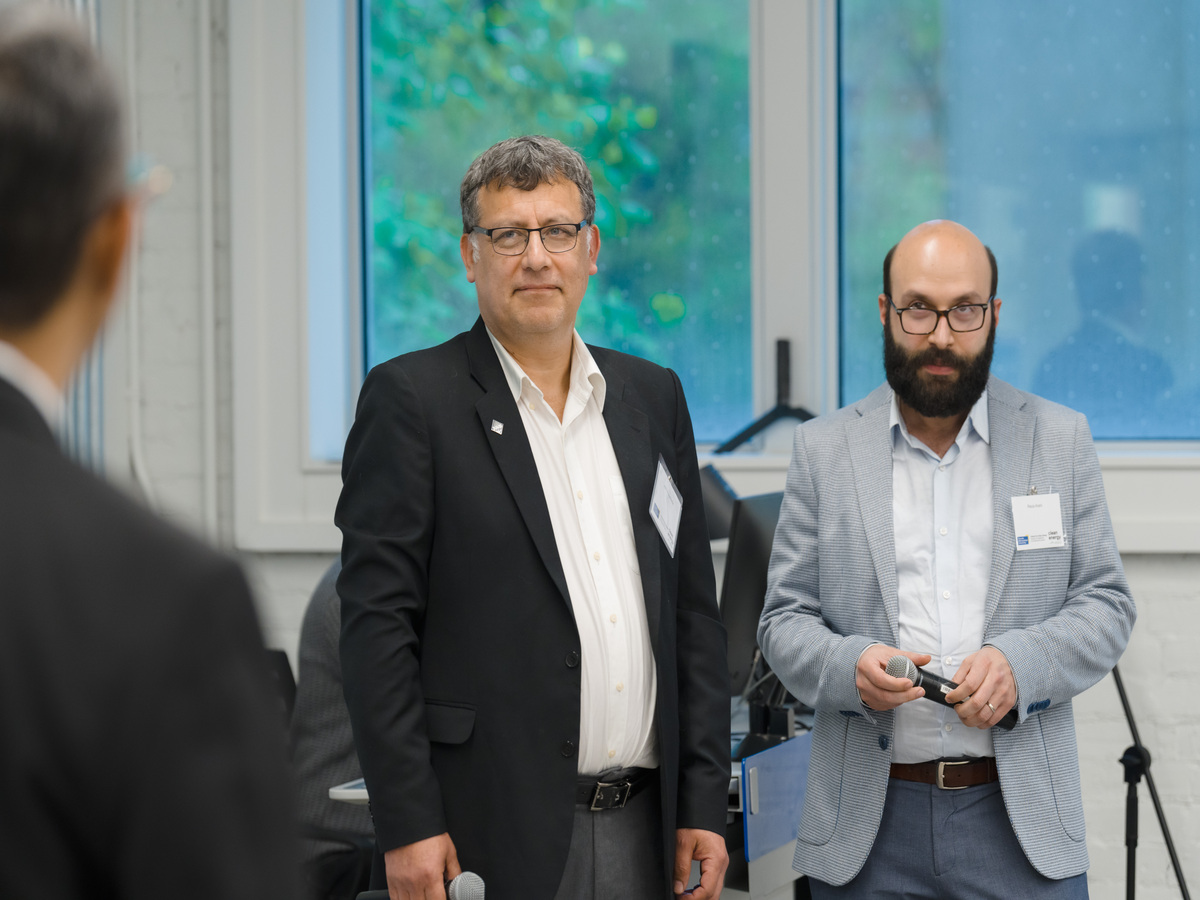
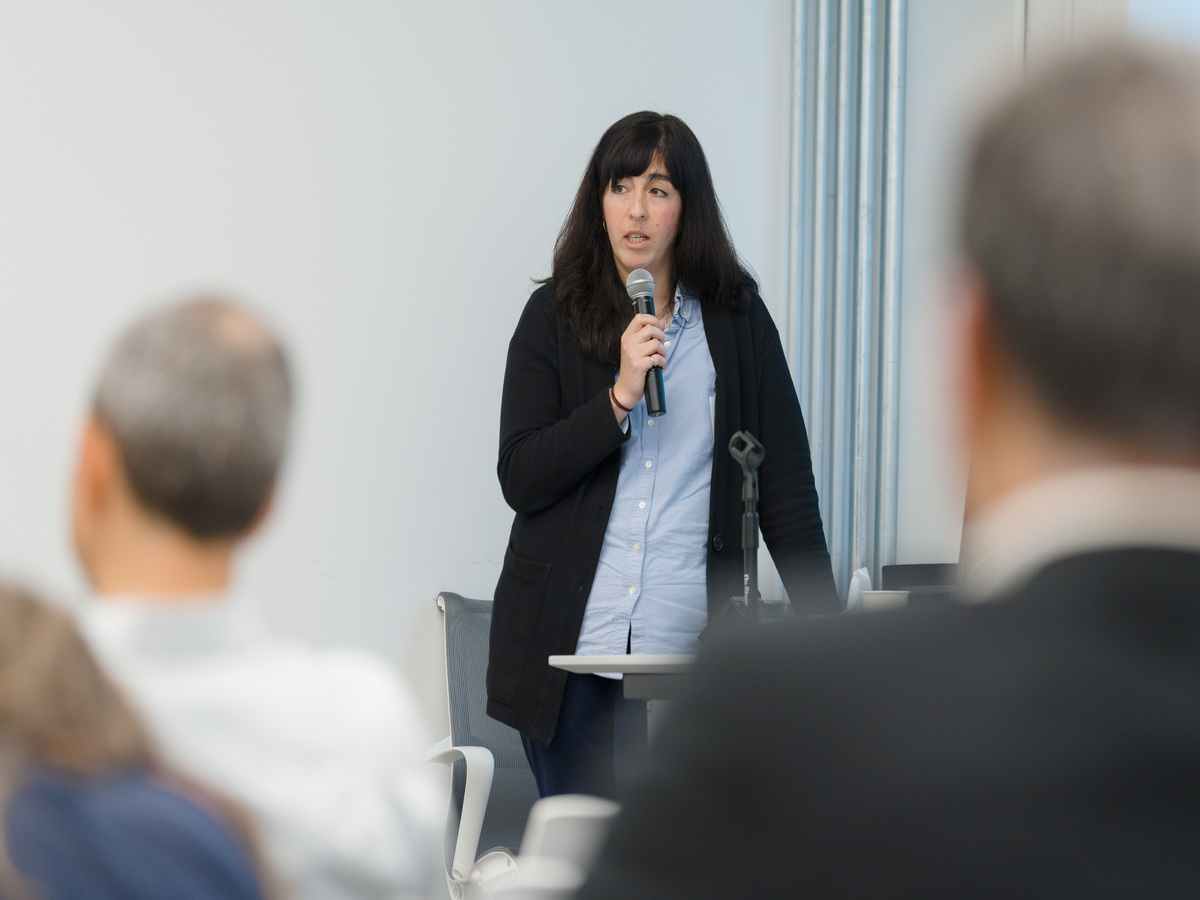
Two special collaborations demonstrated how CUE researchers are helping utilities solve real challenges on the grid. John Penaranda, Grid Operations Manager at Hydro One and Dr. Reza Arani, Assistant Professor at TMU presented their joint project on DER Modelling, which uses AI to predict what’s happening across the distribution system, especially in places where there’s limited data. It’s a step towards smarter, more reliable grid planning.
Rei Marzoughi, Manager of Non-Wires Alternatives at Toronto Hydro, showcased their "Benefit Stacking" pilot, which explores how local demand response such as reducing electricity consumption during peak times—can relieve stress on the grid, defer costly infrastructure investments, and support both local distribution needs and the broader provincial system.
Both projects illustrate how CUE is taking an active role in building the future of clean energy.
START-UPS FEATURED: CLEAN ENERGY ZONE PRESENTATIONS
Presentation #1: Innovia GEO
Andrew Lee, President of Innovia GEO, introduced scalable geothermal solutions for mid-rise buildings, emphasizing their potential to reduce grid stress during winter peaks. With successful pilot projects across Ontario and expansion into New York, Innovia GEO is redefining what is possible with effective building electrification.


Presentation #2: Peak Power
Matthew Sachs, former CSO and co-founder of Peak Power gave us a rundown on the company’s growth from a CEZ startup to a clean tech leader, while also reflecting on the roadblocks, pivots, and lessons learned along the way. Their work in energy storage, vehicle-to-grid tech, and virtual power plants continues to shape how we think about smart, flexible grids.
GLIMPSE INTO THE PANEL
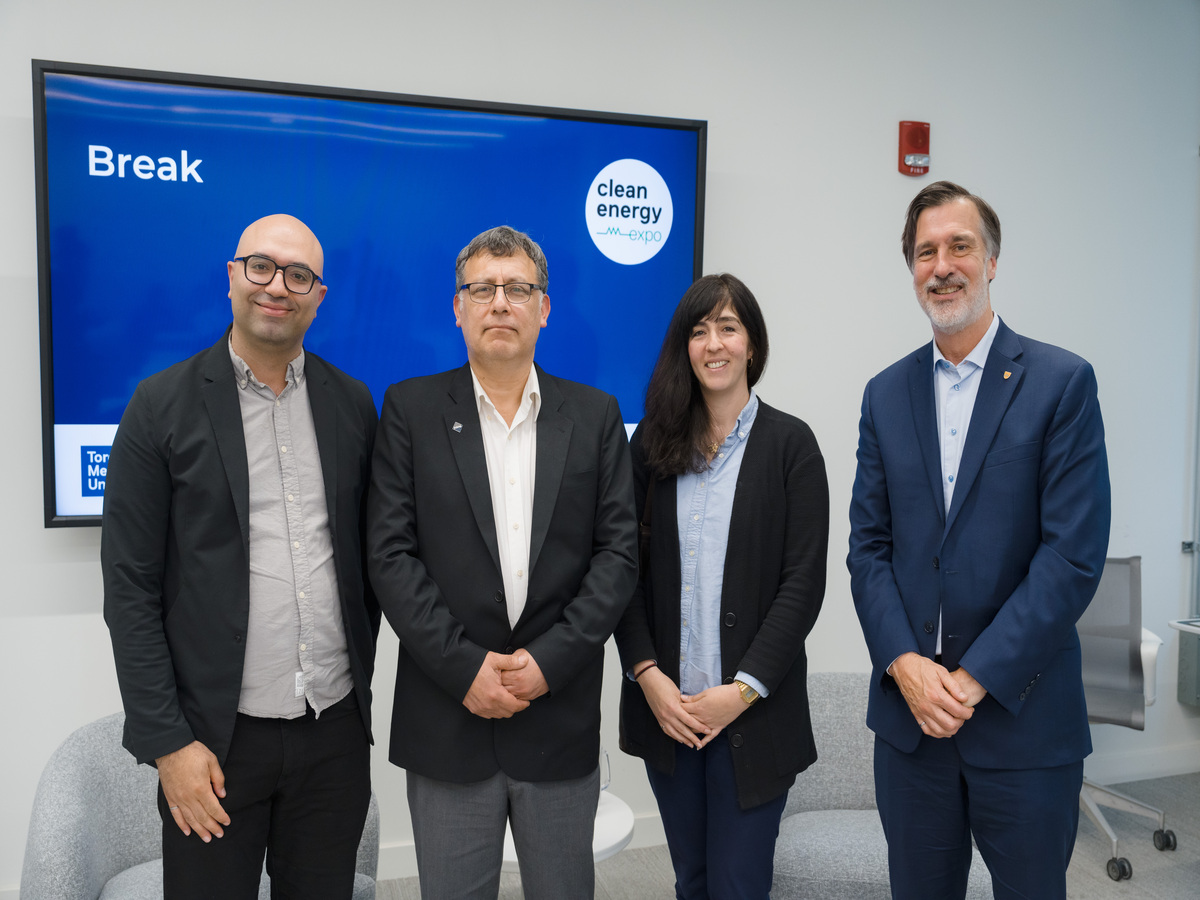
Moderated by Professor Ian Rowlands of the University of Waterloo, the panel brought together John Penaranda (Grid Operations Manager, Hydro One), Rei Marzoughi (Manager, Non-Wires Alternatives, Toronto Hydro), and Ali Golriz (Lead, Market and System Evolution, IESO) for a thought-provoking conversation on the future of Ontario’s energy landscape. The discussion on electric vehicles was particularly engaging. Golriz shared that by 2050, the IESO anticipates 11.5 million EVs on Ontario’s roads, describing them as “the most significant source of system flexibility.” Marzoughi addressed the growing strain of data centres on urban grids and outlined the role of flexible connections to accommodate future demand. Penaranda, on the other hand, underlined the need for equity and customer-focused approaches to grid planning. The panel wrapped up by calling for more partnership with universities, with all three of the panelists advocating for better problem solving, real-world data, and cross-sector innovation as ways of accelerating the energy transition.
AWARD WINNERS
Big congrats to this year’s Toronto Hydro Student Award winners! Their research is pushing the boundaries of what’s possible in clean energy, and we’re excited to see where their work goes next.
2025 Toronto Hydro Student Award Recipients:
- Amira Mohamed
- Fazele Karimian Bahnamiri
- Samaneh Yazdani Pour
- Shirin Hosseini
- Tharmini Mathan Thavaratnam

.jpg)
Thanks to all of you who participated in this year’s Clean Energy Expo—speakers, panelists, students, startups, and industry guests. It was your enthusiasm, insights, and presence that made the day so successful. We can't wait to see what next year holds. |