Celebrating Black Scholars
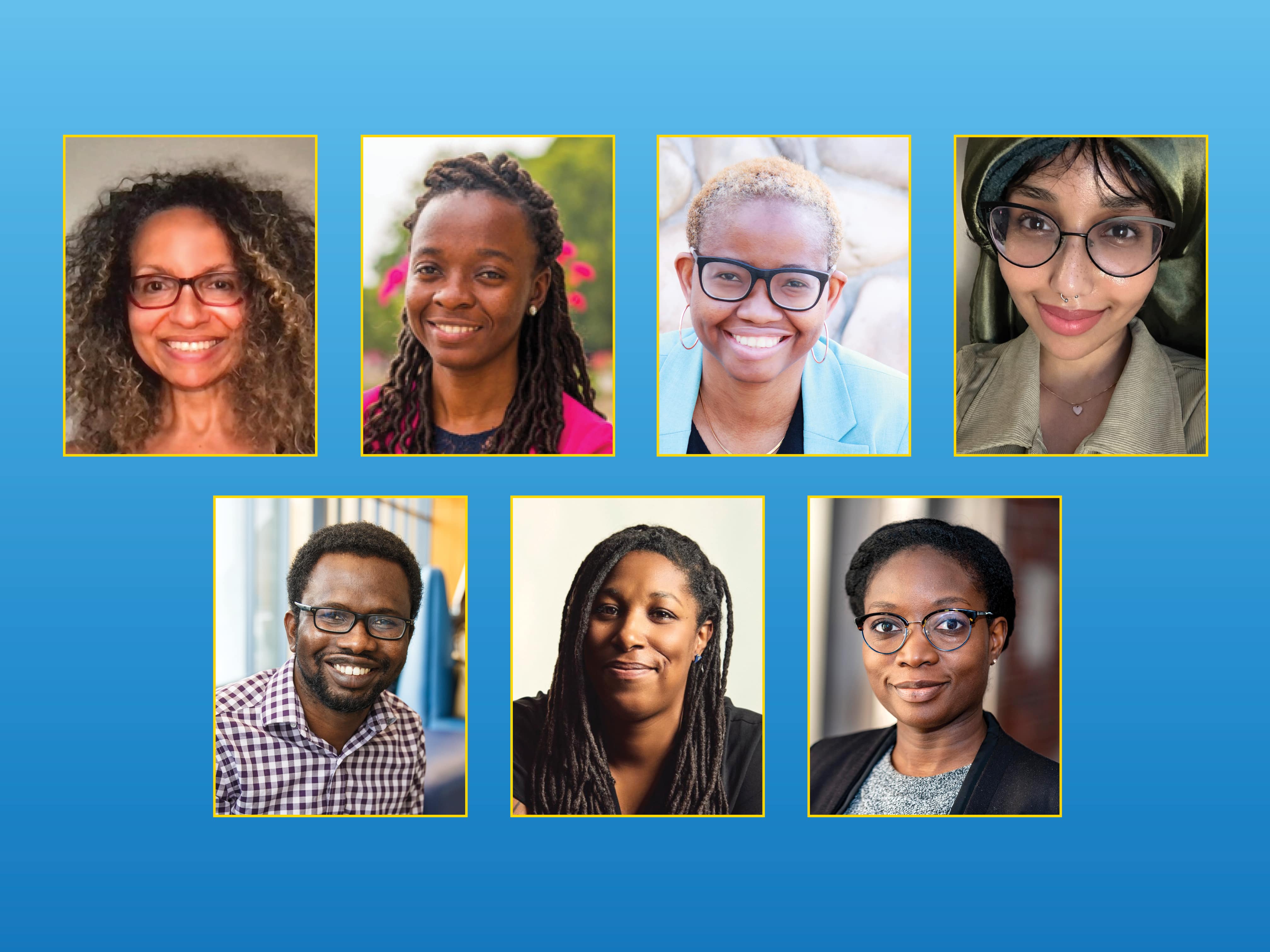
This year’s theme is 30 Years of Black History Month: Honouring Black Brilliance Across Generations — From Nation Builders to Tomorrow’s Visionaries. It celebrates 30 years of recognizing Black Canadian leaders, their innovations and resilience.
Meet some of the outstanding Black faculty in Arts, and learn about the impact they are making in scholarly, research and creative activities on campus:
Dr. Angela Doku
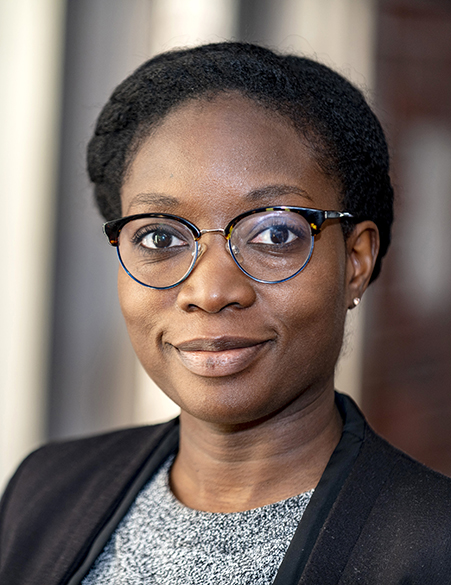
Dr. Angela Doku is an applied microeconomist specializing in environmental, development, and behavioural economics. Her research addresses policy-relevant questions at the intersection of beliefs, environmental attitudes and actions, climate and development, and adolescent well-being.
Much of her work focuses on the African context. She has examined the diffusion of climate adaptation strategies among small-scale farmers, with particular attention to the role of peer effects in shaping adoption decisions.
Her research also explores how exposure to environmental shocks and access to natural resources influence patterns of conflict. In related work, she studies how unexpected income shocks affect the development of adolescents’ noncognitive skills. One of her current projects analyzes the relationship between exposure to large natural disasters and political polarization in the United States.
Prior to joining TMU, Angela was a Postdoc at the University of Chicago and ANU, and worked for various development agencies and international organizations.
SRC spotlight
- Di Falco, Salvatore, and Angela Doku. "The impact of economic adversity on adolescent self-esteem: Evidence from Ethiopia." Journal of Economic Behavior & Organization 239 (2025): 107199.
- Di Falco, Salvatore, Angela Doku, and Avichal Mahajan. "Peer effects and the choice of adaptation strategies." Agricultural Economics 51, no. 1 (2020): 17-30.
Dr. Darcy Ballantyne
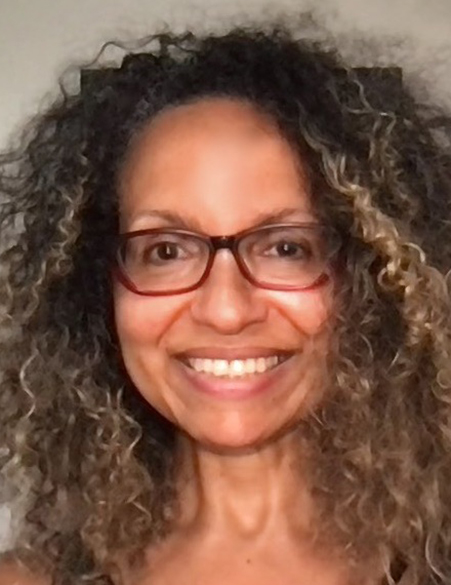
Dr. Darcy Ballantyne is an Assistant Professor in the Department of English. She teaches and researches in the areas of Black studies, Black Canadian literatures and cultures, city writing, Black memoir and critical mixed race theory.
Darcy holds a PhD in English Literature from York University, an MA in English Literature from Concordia University and a BA in English Language and Literature from the University of Waterloo.
SRC spotlight
- Co-organized a reading by Christina Sharpe on Ordinary Notes, Nov. 2023
- Published “Writing Toronto” chapter in Routledge Handbook of Black Canadian Literature (external link) , 2024 Co-organized a two-day conference on Austin Clarke, Black Studies, and Black Diasporic Memory, Sept. 2024
- Published my Clarke conference paper, “‘With Love, Dad’: Imagining Austin Clarke,” in Brick (external link) , Iss. 115, 2025
- Contributed to One Love and Venceremos (external link) reading selected Clarke and Salkey letters
- Received inaugural CELT/BFPG grant for A Letter to My...The Black Epistolary Project Open Access book on student literary letters (underway)
- Forthcoming:
- “I Spent Last Summer Trying to Find Myself in the Classified Ads” in Toronto Star, Feb. 28, 2026
- “Everything Changed,” in Relative Strangers anthology, ELJ Editions, Summer 2026
- Participating in Family Secrets podcast with Dani Shapiro (date TBD)
- Working on co-edited anthology, “Wrestling Over the Bones”: Austin Clarke and Black
- Diaspora Memory (proposal in progress)
Dr. Emmanuel Kyeremeh
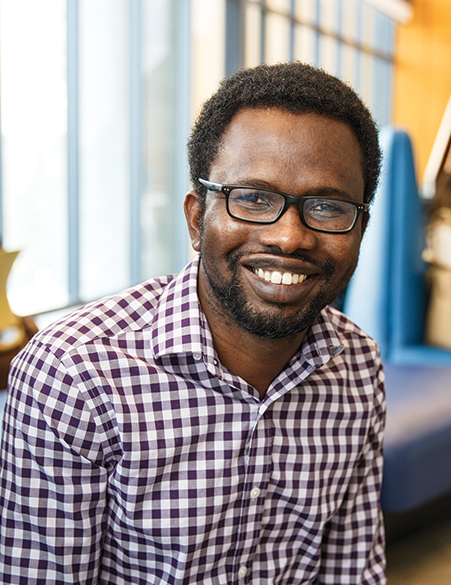
Dr. Emmanuel Kyeremeh is an Assistant Professor in the Department of Geography and Environmental Studies, specializing in social and urban geography with expertise in mixed methods research. His program of research focuses on three important dimensions - well-being, integration, and networks (WIN) as it pertains to both immigrants and non-immigrants.
His ongoing research examines food sovereignty within Black communities in Toronto, integrating a social prescribing dimension aimed at improving the health outcomes of individuals experiencing food insecurity. He is also investigating how immigrants conceptualize wisdom and how their migration experiences over time contribute to personal growth and the development of wisdom. Furthermore, he is part of a team of researchers investigating complex migration flows (MEMO) under the Canada Excellence Research Chair (CERC) in Migration and Integration.
SRC spotlight
- Immigrants’ Network in Canada, The Case of Ghanaian Immigrants’ Personal Network in the Toronto Census Metropolitan Area
- Complex Migration Flows and Multiple Drivers in Comparative Perspective (MEMO) under the Canada Excellence Research Chair (CERC) in Migration and Integration
- Advancing Black food sovereignty and sustainable food systems (external link)
Dr. Ismahan Yusuf
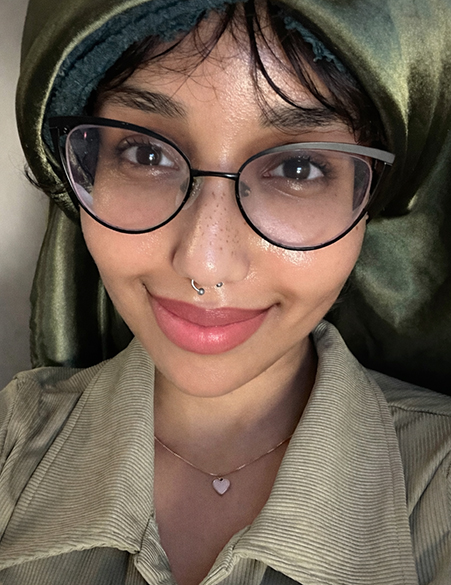
Dr. Ismahan Yusuf is a critical geographer with an intersectional research programme that carefully examines the relationship between power, positionality, politics, and place. An assistant professor in the Dept. of Geography and Environment, Dr. Yusuf is dedicated to meaningfully exploring political geographies across multiple scales (local, national, global), as well as across marginalities (race, class, gender, religion, status, age and generations).
Her current research project — funded by TMU’s Black Studies Grant — is entitled “Mapping The Crescent and the Crossroads: An Intersectional Analysis of Black Muslim Canadians' Patterns, Practices, and Perceptions of Public Space in the Greater Toronto Area.” This exciting project, which centres the population at the heart of all of her research efforts, is underway and thriving.
SRC spotlight
- Yusuf, I. (2023). How They Learned to Stop Worrying and Love (the) Restrictions? Reimagining COVID-19 Lockdowns-as-Liberative and Restorative. Canadian Ethnic Studies, 54(3), 109-128.
- Yusuf, I., Oklikah, D. O., Kutor, S., & Arku, G. (2023). There's no place like [your] home: Exploring Somali hospitality as a care-full choreography enhancing Somali Canadian diasporic wellbeing. Wellbeing, Space and Society, 4, 100145.
Dr. Jumoke Verissimo
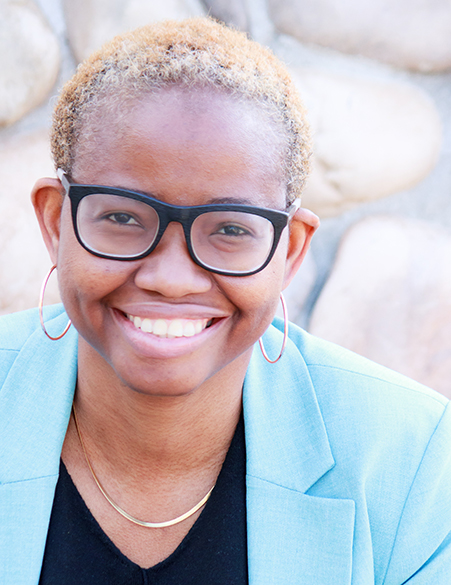
Dr. Jumoke Verissimo is an acclaimed scholar-practitioner and an Assistant Professor in the Department of English at TMU, specializing in Global, African, and Afro-Canadian Literatures. Her research explores African Literature, Black Diasporic studies, memory, and traumatic affect. Recently she has been employing decolonial methodologies to uncover obscured histories.
Dr. Verissimo is the author of several works, including the poetry collection Circumtrauma and the novel A Small Silence, which won the Aidoo-Snyder Book Prize and was shortlisted for the RSL Ondaatje Prize. She also co-edited Sòròsókè, a critical record of Nigerian activism against police brutality. Her current scholarship examines “archival invisibility” through her project Home Relations, which investigates the 19th-century Afro-Brazilian return movement.
Her broader scholarship continues to contribute significantly to contemporary African literary criticism and the development of restorative research practices within the humanities.
SRC spotlight
- Current Research Project: Home Relations (Investigating the 19th-century Afro-Brazilian return movement and archival invisibility).
- Recent Publication: Circumtrauma (Coach House Books), utilizing research-creation to address the silences of the Nigeria-Biafra War.
- Editorial Leadership: Co-editor of Sòròsókè, a critical anthology documenting activism against police brutality in Nigeria.
- Award-Winning Creative Scholarship: A Small Silence (Winner of the Aidoo-Snyder Book Prize; Shortlisted for the RSL Ondaatje Prize and Edinburgh Festival First Book Award).
- Methodological Focus: Creative-Writing, Decolonial methodologies and restorative research practices in the humanities.
Dr. Marie Christelle Mabeu
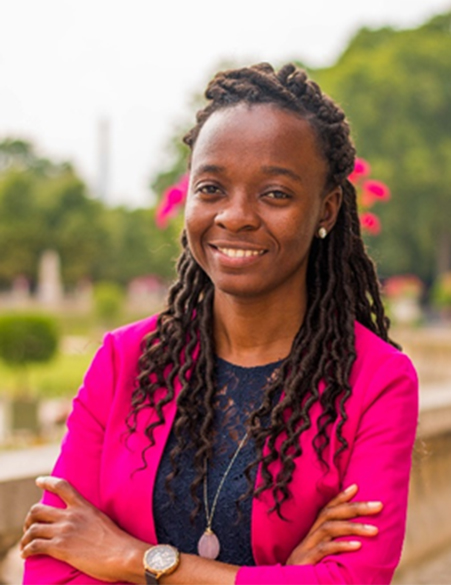
Dr. Marie Christelle Mabeu (external link) is an Assistant Professor in the Department of Economics at TMU, and an invited researcher at the Abdul Latif Jameel Poverty Action Lab (J-PAL). Her research asks a central question: how do institutions and political systems shape inequality across generations?
Working at the intersection of development, political economy, and family economics, she studies how policy environments influence fertility, marriage timing, and women’s reproductive choices. Her recent projects examine how forced labor migration shaped fertility behavior in West Africa (external link) , and how institutional differences across former British–French colonial borders in Africa continue to affect demographic outcomes and contraceptive use (external link) .
She also investigates whether democracy reduces inequality in life chances (external link) . Using data on 3.8 million African births, she finds that democratization narrowed infant mortality gaps by expanding access to basic goods and disproportionately benefiting disadvantaged groups.
Her work combines rigorous empirical methods with policy-relevant questions to better understand how institutions influence inequality and human development.
SRC spotlight
- Dupas, P., Falezan, C., Mabeu, M. C., & Rossi, P. (2023). Long-run impacts of forced labor migration on fertility behaviors: Evidence from colonial West Africa (external link) (No. w31993). National Bureau of Economic Research.
- Ho, C. J., Mabeu, M. C., & Pongou, R. (2025). Democracy reduces inequality: Evidence using individual-level data on infant mortality in Africa (external link) , 1960-2016, Forthcoming at Journal of Politics
- Canning, D., Mabeu, M. C., & Pongou, R. (2022). Colonial origins and fertility: Can the market overcome history? (external link) Stanford Working Paper
Dr. Stephanie Latty
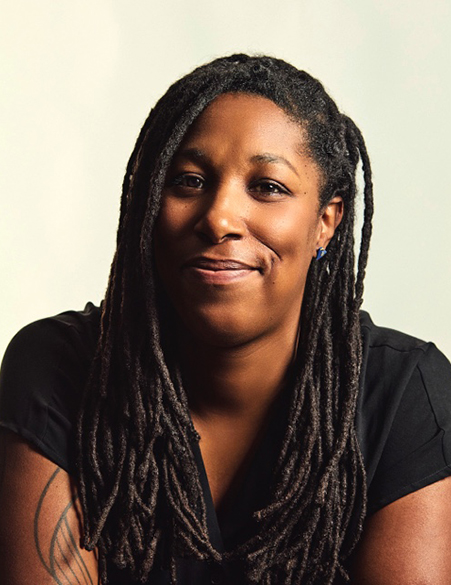
Dr. Stephanie Latty is an Assistant Professor in the Department of Criminology. She received her Ph.D from the University of Toronto in the Collaborative Women and Gender Studies Program in the Department of Social Justice Education.
Stephanie’s areas of expertise include Black feminisms, critical race theory, anti-Blackness, carcerality, gendered violence, and abolition. Her current research examines the media and legal discourses surrounding Black women and girls who have experienced strip-searching and other forms of state violence in Canada. Prior to higher education, Stephanie worked in the mental health field in front line, community education and policy capacities.
SRC spotlight
- Latty, S. (2023). Violent Exposures, Exposing Violence: Gender, Anti-Blackness and the Strip-Searching of Black Women and Girls in Canada. Somatechnics, 13(1), 23–41. (external link)
- Latty, S. (2023). There Are New Suns: The Shoal as Abolitionist and Decolonial DreamSpace. Jaffri, B. (Ed.) The Black Shoals Dossier [Special Issue]. Lateral: Journal of the Cultural Studies Association, 12(1). (external link)
- Latty, S., Habtom, S., Tuck, E. (2019). “Practice Extending Across the Atlas: Black Girls’ Geographies in Settler Colonial Societies”. In The Lauryn Hill Reader.
- Latty, S., Scribe, M., Peters, A., Morgan, A. (2016) Not Enough Human: At the Scenes of Black and Indigenous Dispossession. Critical Ethnic Studies Journal, Vol. 2.