Industrial Engineering Students Optimizing a Production Line!
Meet our Industrial Engineering Capstone Group: Alexa, Mathusiga, and Seba
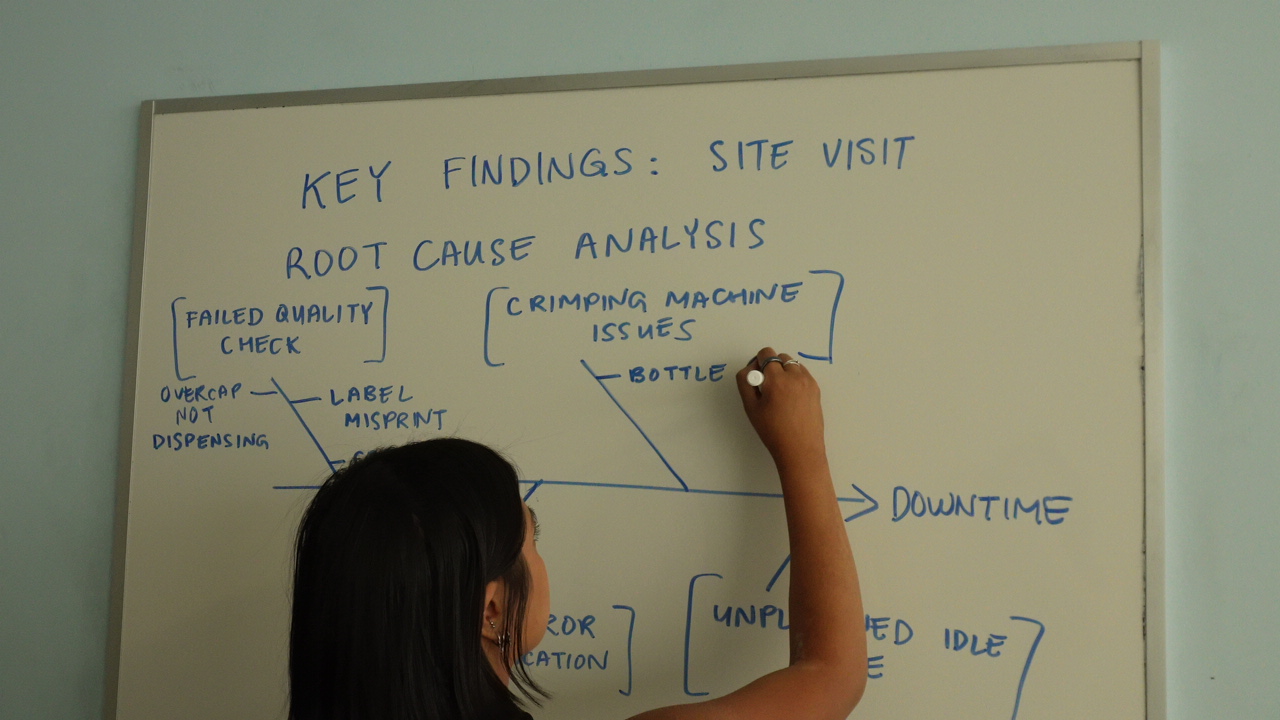
Why is your capstone project named "Streamlining staffing and improving equipment reliability for the production line"?
Our industrial engineering capstone project title is streamlining the staffing and improving equipment reliability. When we checked with the stakeholders, the most improvement was needed for, one, staff in terms of their staffing and secondly, machine utilization, which just means that they suspect that the line is currently overstaffed, which is a wastage of resources.
If there is a machine that is not used to the full capacity, especially if it produces the popular item in the production plant, we look to identify the key areas of improvement. This type of work is in the scope of industrial engineering to identify forward process improvements.
What was the project process?
The first pieces of data that were given to us were a giant log of all of the issues that every machine in the manufacturing might face. From there, we had to condense all of the data, and we found that a few machines made up for about 80% of all of the downtime, so those machines were our focus. We would look at what repairs were needed, whether or not the machine should be replaced, and how we can make sure that downtime is prevented in the future.
Next, we followed around all the workers, during the work day. We watched them do every task, and followed their foot path and tracked it throughout the whole manufacturing line. This type of data is to understand where we can reduce the amount of movement they have to make within the facility as well as understand which tasks took up the most time of their shift and which tasks took the least amount of time.
What barriers did you face completing your capstone project?
When it comes to barriers that we face, I think the most interesting issue that comes with manufacturing is there isn't a lot of research behind different manufacturing lines. Every manufacturing is kind of custom to the product that you're making. So a lot of the machines that we were studying, we had to figure out a solution on our own.
The goal is to find really feasible suggestions that wouldn’t take too much money away from the manufacturing process while also being something that would really speed up the process. All of those were really hard things to navigate when it came to finding solutions.
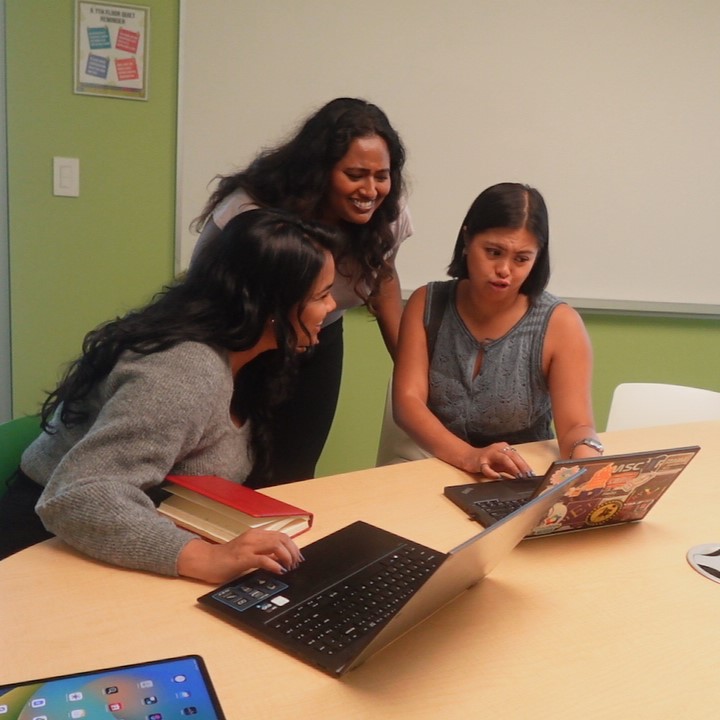
Is industrial engineering always the physical aspects of a business?
No, industrial engineering spans the physical and the digital. There's the physical where humans are working and so you can study management or even areas like ergonomics, which is the study of body placement and movements when you're doing physical labor. In addition to physical dynamics there is also team dynamics and operations.
Then there's also the digital part of it. We study digital systems, like how technology can be placed in a business setting to help make their jobs easier such as automation that involves organizational systems.
For more examples, we can look at waiting in line in a bank, and how industrial engineers try to figure out how to reduce wait times, or at hospitals making sure there's enough staff or resources.There's so many normal day things that we encounter and industrial engineers look into how to make interacting with them easier.
Wherever there's a process, wherever there's a problem, you can fit industrial engineering into it!
What courses throughout your undergrad helped you prepare for this project?
One that helped us a lot. It was called Facilities Design (IND 400). So that course taught you how to plan different spaces, for work or for a manufacturing from start to finish, it helped you do calculations in terms of figuring out how many machines you need to get, your desired output, how many workers you need in order to make sure you stay within budget and make sure everything is being created in a timely manner. So being able to understand how a layout of a manufacturing plant works, you're able to understand how those drawings are made up. was really helpful when it came to us trying to study this manufacturing plant, as a whole system.
Another course that helped was called Work Measurement, Analysis and Design (IND 303). So that course studied how the processes and work processes can be successful from start to finish. There's a lot of planning and diagrams that take place when it comes to getting tasks done, so it really helps you analyze any system. Thus we were able to study the start and finish of how our product gets made, and we were able to identify from there different points that we needed to look at in order to make the line more efficient.
What advice would you give to first-year engineering students?
One thing I noticed that is very important is always asking for help. Whether it's going to office hours, joining study groups, talking to people in your classes, just talk to people because you can't do engineering alone. The person that's sitting beside you, talk to them, be friends with them. You never know what doors are going to open from that.
It's really important to be open to learning new things and not being afraid of change. Obviously you can come in with an engineering degree that you chose and you declare, but if you ever feel like there's something else calling for you, feel free to explore it.
I feel like transitioning to university life can be very intimidating and daunting. It doesn't have to be that way. There's more resources available to you, and it’s something that helped me to remind myself was that, if you're able to get into the program, you’re very well capable to navigate the program through.
Congratulations on your graduation from TMU Engineering!