Chemical Engineering Students Designed a Revolutionary Furniture Recycling Plant!
Meet our Chemical Engineering Capstone Group: Austin, Julia, Michael, and Elif (Not Imaged)
Why is your capstone project name "Design a 150,000 metric tonnes per year waste management and polyurethane recycling plant of your choice, rigid or flexible PU”?
Instead of creating something, we wanted to see if we could recycle something. So that project title stood up to us, and we specifically chose that one. The main purpose of our plan is to recycle flexible polyurethane, and basically we try to make renewables and, using advanced technology, recycle material to ensure the environmental aspects as well as the productivity of the plant.
What was the inspiration behind the particular material and issues on using polyurethane?
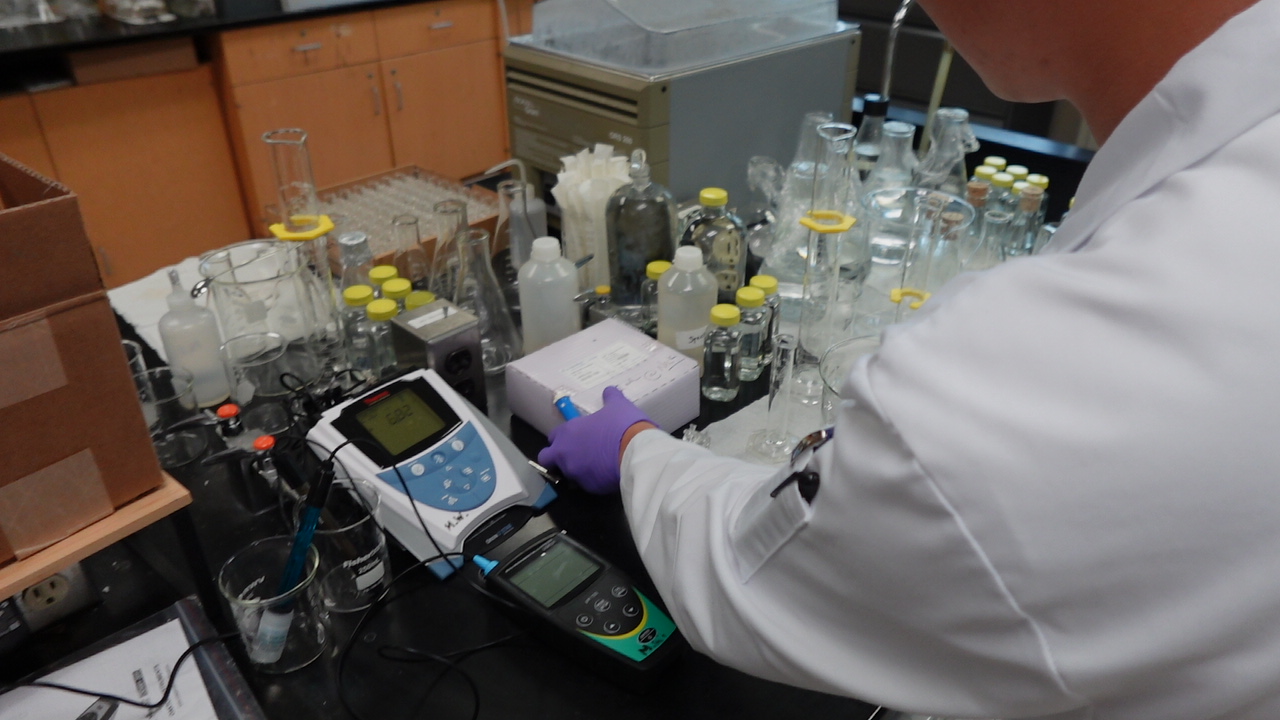
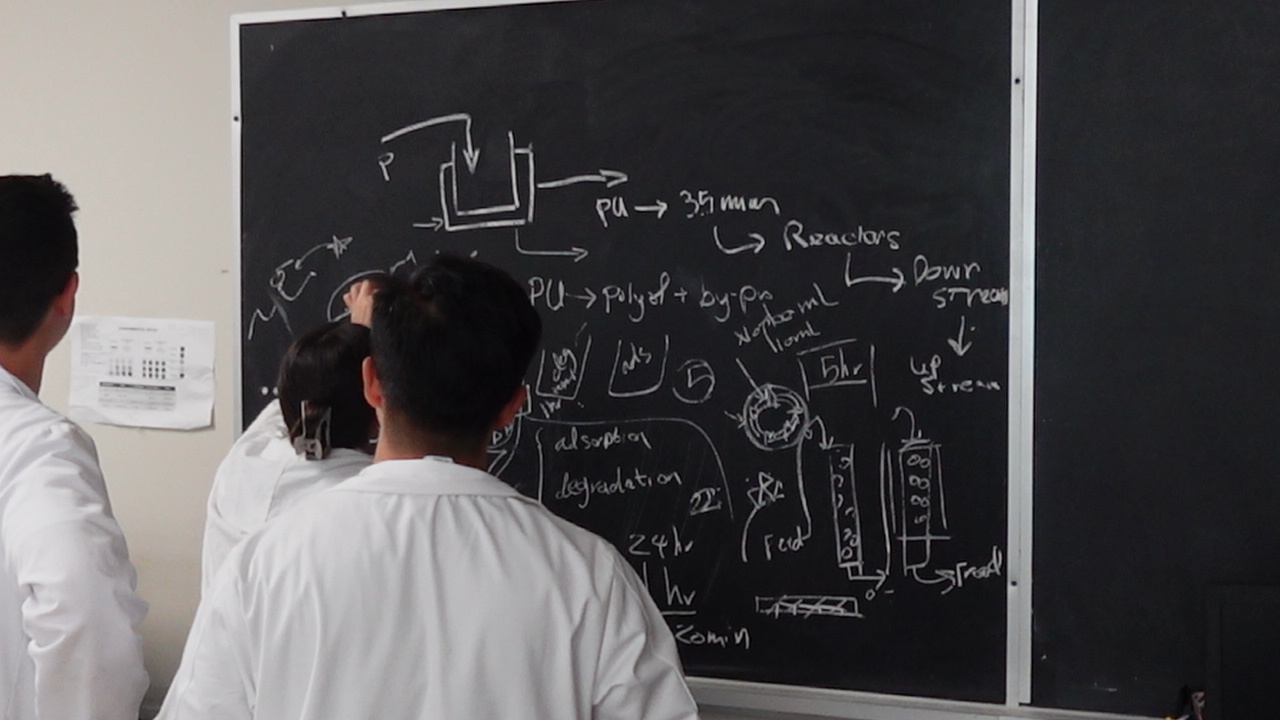
Polyurethane is a material you might not know its meaning by a scientific name, but you use it every day in the world that you live in. So, for example, like the mattress you sleep on, it's made of polyurethane. Your car seat, even the dishwashing sponge that you have on your countertop, that's all polyurethane. So it's such a pressing issue because we have so much of it and we don't know what to do with it at the end. There's a statistic that we had out there that said, 'If you were to stack all your end-of-life mattresses, it would be approximately 900 times the size of Mount Everest.' The current method used right now is manual labor removal. So you have people in factories removing your mattress piece by piece, and after that they'll feed it into a furnace and burn off the residual materials, which at the moment is horrible. It is polluting the environment and making things a lot worse for the climate change.
So for our project, we wanted to focus on mattresses itself. The topic was broad; it was polyurethane. However, we decided because of the previously mentioned statistic, we wanted to take the mattresses and figure out where we could get them from, how they can be broken down, and then do the process for just the mattresses. We wanted to find a way to have a closed loop cycle. Start with polyurethane, break it down and then find out how to create polyurethane again.
What makes this project chemical engineering?
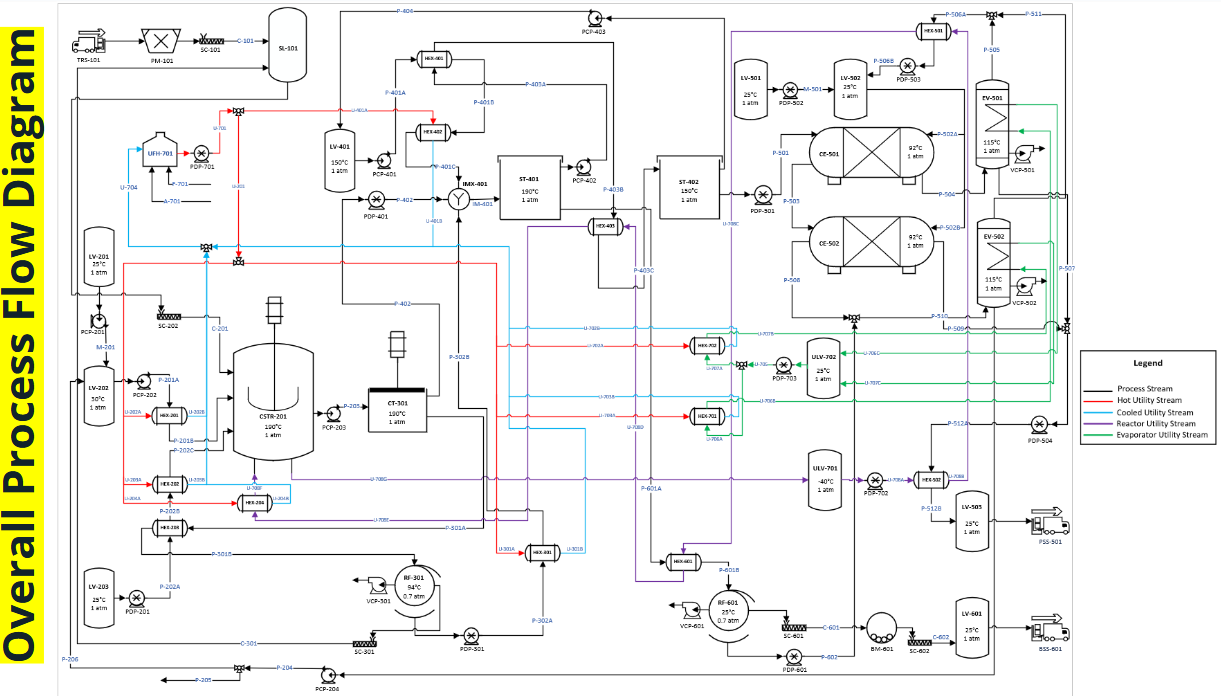
What separates us from chemists is that chemists are able to determine something at a very lab scale setting so, very small with beakers and smaller scale equipments. Whereas we, chemical engineers, take the information that the chemist determines and we elaborate and design something that transforms that small process and into a giant factory. So essentially, this makes a chemical engineering process due to the multiple processes going on; a lot of automation, a lot of controls and so on. We are able to design different methods for the plant.
Which courses through your undergrad help you prepare for this project?
The main courses were the third and fourth year courses such as CHE 413 Equipment Design and CHE 318 Separation Processes. We used a lot of our early second year courses as well, like CHE 204 and CHE 214 Thermodynamics, CHE 220 Heat transfer, and CHE 308 Mass Transfer.
Also, the second year courses. It's pretty much the root of all the courses. So we need to learn those courses very carefully, too. And usually, when we do the plant design we also look back to the textbook in order to solve our problems as well.
What advice do you have for first-year engineering students?
- I think the most important characteristic that is necessary for first year students as you enter a new environment freshly from high school and go into university, is time management. Try to distribute your time throughout the week in order to ensure a good grade on all of the courses.
- Get involved. I definitely got involved with some student groups and then even doing research. This is where I met all of them [group members], and created our capstone group. So, it's important to make those connections because it will definitely help you in your last year. You want to make sure that you're working with a group that you can bounce off of each other and have a good relationship to create a good project.
Congratulations on your graduation from TMU Engineering!
.jpg)