EngSpotlight Interview: Civil Engineering
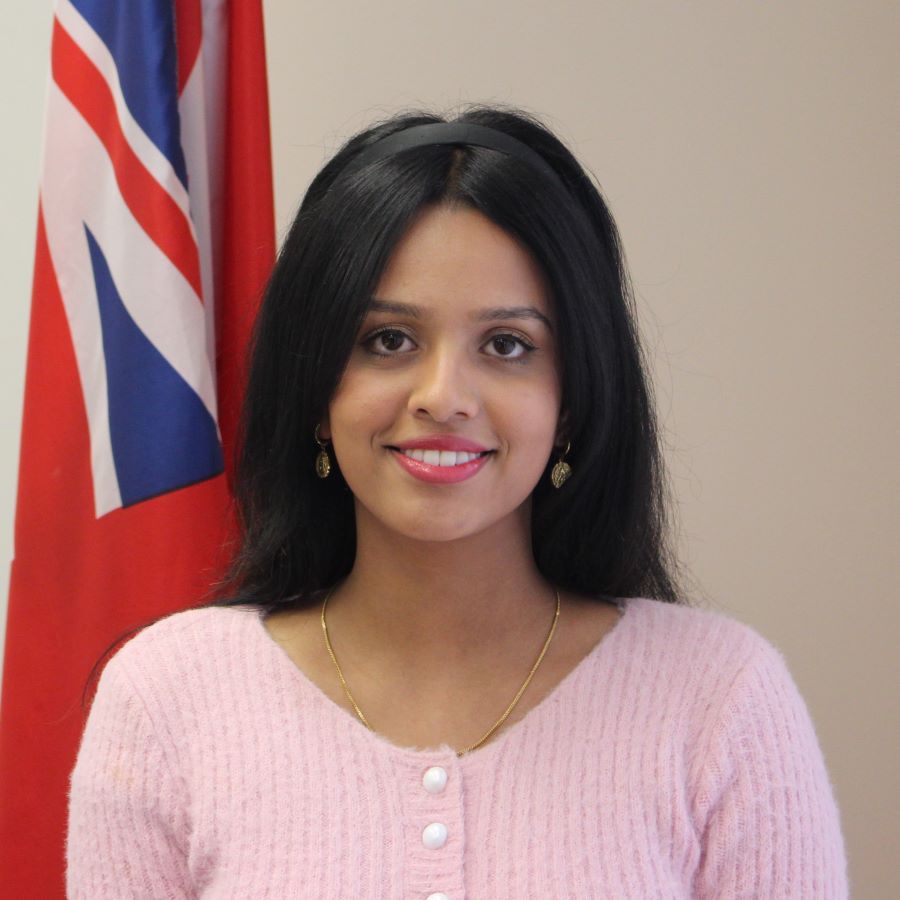
My name is Mevandie and I’m currently working at the Ministry of Transportation as an Engineering Associate. I’m part of their Engineering Development program specializing in transportation. And an interesting fact about myself is that I like to collect postcards from all the places I travel to just to have it as a memory to look back at.
What made you decide to go into Civil Engineering?
I liked that civil engineering has the theoretical and the design aspect. For example, we got to use a lot of softwares including Autocad, SYNCHRO, Civil3D, so that has the design aspect. And then I was able to use the theoretical components that I learned during the different courses and apply it to the design softwares. I liked working with both theoretical and design aspects of the work. That's what made me choose civil engineering.
What is your current role?
My current role is being an Engineering Associate as part of the Engineering Development program at Ontario Ministry of Transportation (MTO). It is a 4-year rotational program where I get to rotate between different departments within the MTO. Right now, I am in the traffic office. I just completed my rotation in the construction office. Some of the skills that are very useful for this job is having critical thinking skills because right now being in the traffic office, I'm assigned as the traffic rep for a couple of the highway projects. So being able to have critical thinking; whenever the consultant would send in proposals, you have to make sure to check them and make sure that everything is good to go prior to construction.
I think that the program having the 4-year rotation is very helpful and beneficial to a lot of newly graduated students because you're able to kind of experience different aspects of civil engineering whether it’s transportation, structural or environmental. So having that vast background is very good and that's why I joined this program.
Watch the full interview!
What is your current project as an Engineer in Training at the MTO?
In this rotation, ss a traffic rep in the traffic office, what I'm responsible to do is oversee any traffic related issues or anything that comes out within a project. For example, right now they are doing a covert inspection, so my role is basically to prepare traffic closure timing whenever the contractors want to go on-site, you have to provide lane closure timings for them. Some of the other tasks I was assigned is going through a traffic signal priority list, seeing which intersections require signals and basically prioritize them, that's another one I worked on, as well as seeing whatever the consultants would submit in terms of traffic whether if they submit any detours or lane closures, anything like that I have to check those, make sure they are within the expected timings throughout the MTO manuals. So checking that and making sure that is correct.

What are the different fields that Civil Engineers can specialize in?
What's good about TMU is that in your final year of civil engineering, you can decide which stream you want to go to. So by 3rd year you can pick either structural or continue with the civil engineering stream. By the time you go to 4th year, you pick either transportation or environment or continue with structural. So those are the 3 main ones that you can specialize in. I specialized in transportation, and that was very good. I got to have a lot of courses within transportation, and learn a lot of softwares that I use on a day-to-day at MTO. So, those are the 3 main ones that I know of.
Why did you choose the transportation stream?
I chose transportation because I wanted to work with roads and highways. A lot of the softwares I really enjoyed when I did them during university, such as SYNCHRO, Civil3D, Autocad. I learn more new softwares during my job, so I wanted to kind of deal with roads and- Debating between structural or transportation, I think structural is a lot of physics heavy which I didn't enjoy as much and that's why I wanted to go into transportation.
What is the hardest part of working in an engineering field?
Going into the Ministry of Transportation, there's so many people that are way more experienced than you that have worked longer than you. So you do have that imposter syndrome, and you kind of have to work a lot more to fit in. But the good thing is that there are so many people that you can get guidance from and they're all here to help you learn. You can use that to your advantage and talk to people and build connections. It was difficult at first coming in not knowing anyone but building those connections was very good.
Career advice: For our future engineers who want to enter companies such as yours, what is looked for in a candidate? What skill sets should they have or what do you view as “most needed” skills?
The mandatory ones are having your undergraduate degree as the number one, and having your G-License. Those 2 are the minimum requirements. But in terms of skills, I think having critical thinking skills, any softwares is a very good asset, because a lot of the software they use during university, especially in your last year, you use that within the civil engineering industry at any company you go to. So, that's very important. Software such as SYNCHRO, like I mentioned, Highway Capacity Software, and also the manuals that you use during your courses, like the Highway Capacity Manual is very important. I use that on a day-to-day basis at MTO. So just having that software knowledge- although it is not mandatory, it is an asset that they look at, and having theoretical knowledge of- like if you go into transportation, having theoretical knowledge of the transportation industries is also an asset for this job.
Career advice: Knowing what you know now, is there anything different you would have done in your engineering career pathway?
I think one of the things that I would have done differently is joining more external clubs or attending conferences. I was part of a couple of clubs in university which helped me build connections, but being part of clubs in and outside of university and attending conferences so that you can meet more industry professionals. It is a little difficult within university to meet industry professionals, but if you expand your horizons and kind of go out of your comfort zone and attend any- like ITE conferences. I was part of a Toronto Youth Transportation Club which I found very useful because I got to meet a lot of young professionals in the transportation industry and build connections there. So, I think that’s one of the advice I would give to students that are planning to go into transportation.
What was the most challenging learning curve for you when you were an engineering student?
I think transitioning from high school to university that first year was pretty tough because you have an intense amount of workload to do and in high school you have your teacher telling you, “This is the due date, it’s due next week,” but in university, it’s all on your own. If you miss your deadline then you lose that mark. So just having to remind yourself, “Oh, you have to work, you can't procrastinate, no ones looking out for you except yourself.” So, that was a bit of a learning curve.
What advice would you give for first-year engineering students?
I think one of the advice I would give is, having a good group of people that you can rely on to work is very important. I think that's what made my four years worth it, it’s just having a group of friends that are in the same program that are going through the same things as you.
And also getting more involved during university whether it’s design teams or clubs, that's also very important because, yeah, you're learning a lot of theory in class, but having that practical knowledge is also really good. Joining design teams such as Concrete Canoe, that was a really good experience when I did it in my second year, having that practical knowledge.