New book spotlights 32 women architects shaping Canada’s field

Leading Canadian architects, professors and students gathered at Toronto’s Swipe Design to celebrate the launch of Women Changing Architecture. The new book documents the work and contributions of 32 leading women architects from Ontario and Québec, highlighting their collective influence on the architecture field over four decades. Written by Louise Pelletier with co-authors Lisa Landrum, Jennifer Esposito, and Jonathan Tourangeau, and graphic design by Stéphane Huot, the book highlights the diversity of approaches, scales, and issues addressed by these prominent architects.

The women behind the book: the authors reunited with some of the featured architects at Swipe Design.
The inspiration behind the book
The book was inspired by a 2024 exhibition hosted by Toronto Metropolitan University's (TMU) Department of Architectural Science, Buone Nuove/Good News - Women In Architecture from MAXXI to MET. The exhibition showcased work of Toronto women architects, organized by professors Landrum and Esposito, alongside the internationally acclaimed traveling exhibition from the MAXXI in Rome.
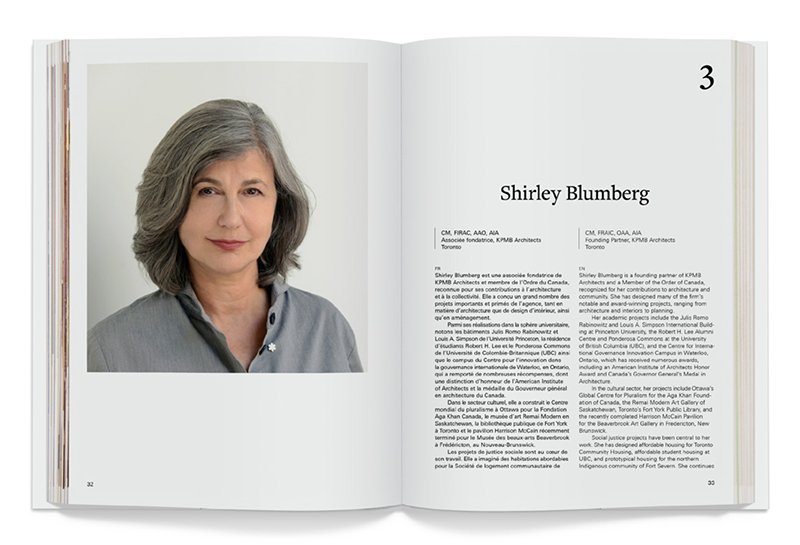
An except from Women Changing Architecture featuring Shirley Blumberg, founding partner of KPMB Architects and a Member of the Order of Canada.
32 leading architects, one collective force
For architecture professionals and enthusiasts alike, Women Changing Architecture offers an exciting and critical look at the philosophies, practices and projects that have made an impact on Canada’s architecture field. The publication profiles 32 contemporary and diverse women architects, including TMU alumni Tania Bortolotto (’88), Valerie Gow (’90) and Farida Abu-Bakare (’12). By highlighting these individual and collective trajectories, Women Changing Architecture invites readers to recognize the fundamental contribution of women to the recent history of architecture and to reflect on the future of a discipline in constant transformation, shaped by practices that are attentive, critical, and deeply rooted in their environment.