Indigenous students visit Aotearoa to explore Māori culture
In the Spring 2024 term, as part of the Global Justice and Change Program (GJC), offered by the Department of Languages, Literatures and Culture, HAU 400, provided students with an experiential two-week learning trip to the homeland of an international Indigenous culture: Aotearoa (New Zealand). Fifteen students across disciplines learned directly from Māori community members in their traditional spaces. HAU 400 fulfills an Upper-Level Liberal Studies Requirement and is available as part of the Indigenous Thought minor, along with courses such as HAU 100, MHK 101 and MHK 201.
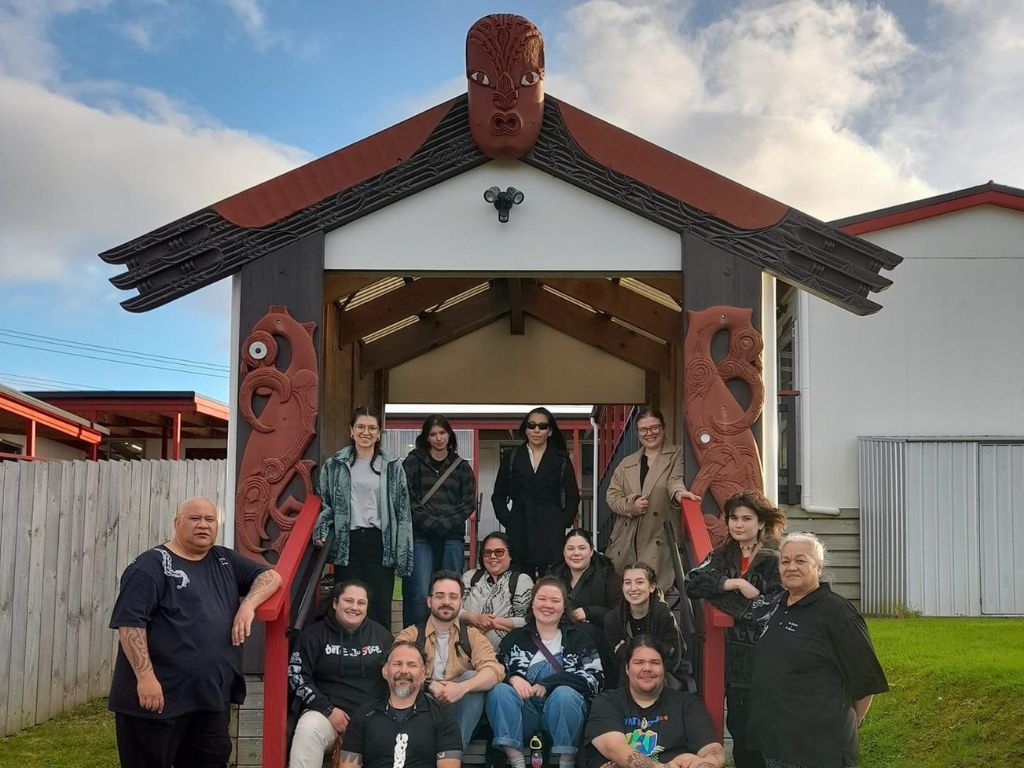
Students from HAU 400 in Aotearoa. Photo by Emma Yerxa.
Upon their return to Canada, students were asked to complete an essay focused on reflection on their time and experience in Aotearoa. Excerpts from three students, Felicia Morin, Sarah Morrisette and Katia Wells-Green, amplify the importance of Indigenous education, experiential learning and the profound impact of cultural immersion on their personal and academic journeys.
Felicia Morin
“As a mixed Indigenous woman, I have often felt that I have the privilege to be able to walk between both worlds. The trip to Aotearoa was a once-in-a-lifetime opportunity to see the world from the perspective of the Māori and being on their land in their spaces, was impactful to the future work that I will be doing here in my community,” said Felicia Morin, a second-year student in the Social Work program.
In her final essay, Morin wrote, “While the trip to Aotearoa was an amazing opportunity, the course material focused on Haudenosaunee writers and their work was just as rich.” HAU 400 examines the works of authors with Haudenosaunee (Mohawk, Oneida, Onondaga, Cayuga, Seneca and Tuscarora, also collectively known as Iroquois) ancestry across the many genres of writing where their work is present.
Reflecting on her experience in Aotearoa, Morin notes, “I learned from this experience that we are all on our own journeys, either individually or collectively as different nations.” Morin views this trip as an opportunity to think more critically about Indigenous revitalization. “As Indigenous people, we are often seeking help from the same institutions that worked to assimilate and erase us from this land.” Morin continues, “I feel strongly for the self-determination in learning and unlearning what has been taught to us to be able to reclaim our culture and language.”
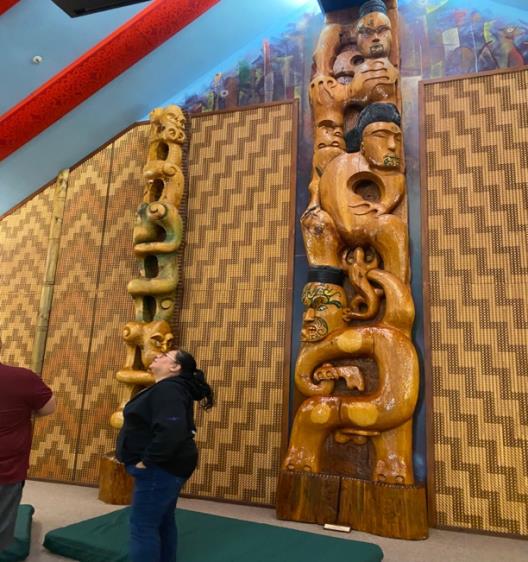
Ladder-like carving promoted a knowledge-sharing story Morin refers to in her final essay. Photo by Felicia Morin.
“Culture, tradition and language are all important parts of creating an individual’s sense of identity and when one or multiple of those pieces are missing, that has our people searching in a world that was not built for them.”
A key takeaway for Morin was from the University of Auckland Marae which encouraged students to bring back knowledge with the intention of sharing it with the people and the community. Morin emphasized that this claim encompassed the trip’s mission: to glimpse into the methodologies, way of being and knowing to bring back into our country and communities.
“Seeing how they are working in their communities has inspired me to continue my career path and to lead with humility,” shares Morin, “The seven grandparent teachings of love, respect, humility, bravery, honesty, wisdom and truth, guide how I will continue my work.”
Sarah Morrisette
“My time in Aotearoa can be summed up as enriching, and for me, the work has just begun.” Sarah Morrisette, a first-year Health Administration student, reflects on her experience.
Morrisette’s final essay explains that participation in this trip was key to understanding her own experiences. “I understand the need to continue exploring my own people’s history,” wrote Morrissette, “I used to think that exploring my culture and identity was a vanity project, something I’d do if I ever had the time. I’m realizing now that it’s not just a gift to me but to the ones who came before me and those who will come after me.”
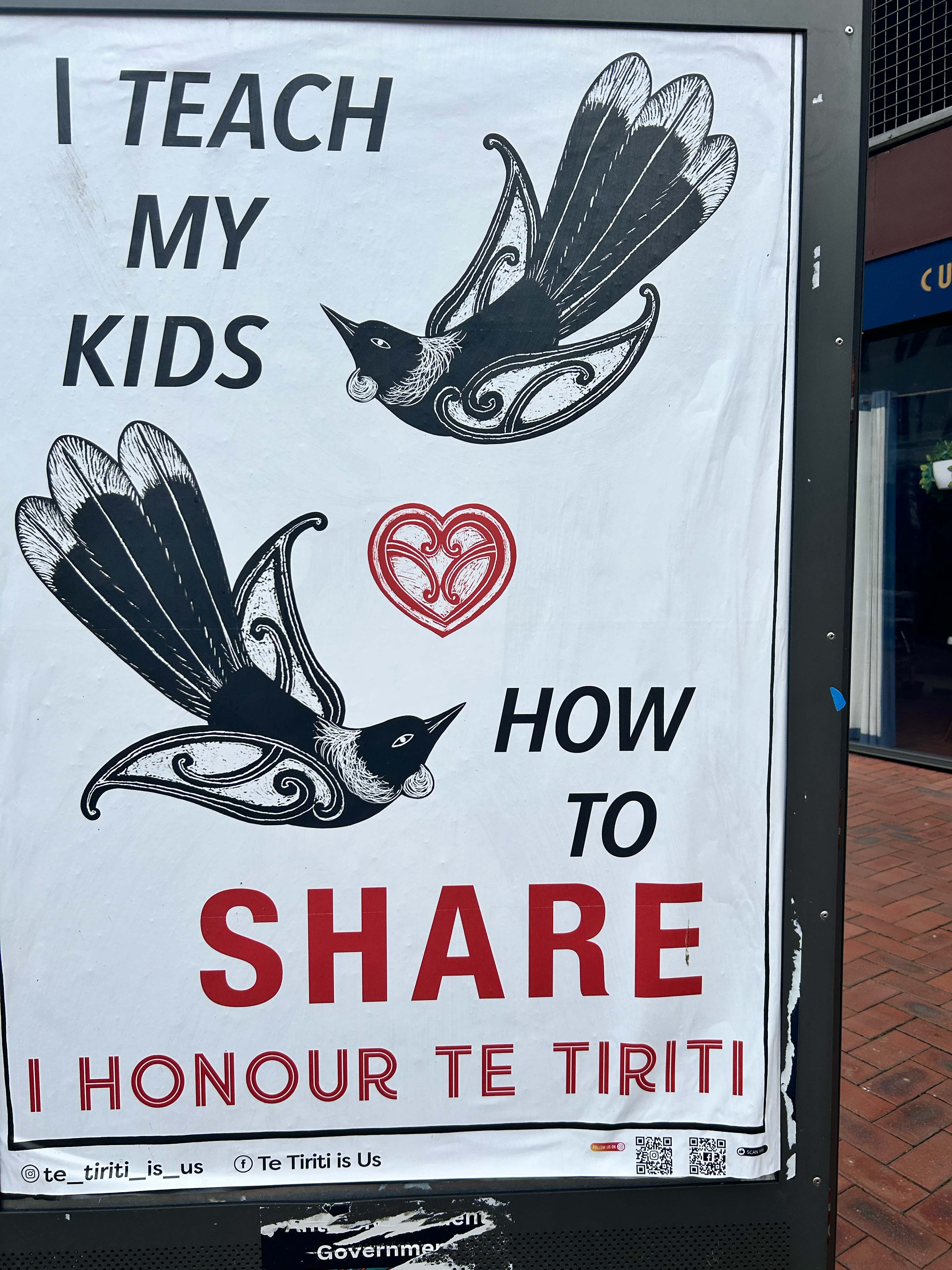
Photo by Sarah Morisette.
“My main takeaway is: I don't really know as much about my people and the Māori people as I thought. I am beginning to make connections which are empowering, and exciting, but I have a lot to learn. I've realized people are dynamic and complex, and I have resolved to get a greater understanding of what happened in Aotearoa, and to my people in Canada. I think this knowledge and subsequent connections will be my legacy and will help me make a difference in the lives of Canadian Indigenous people.”
“Hearing Lavinia speaking was motivating and inspirational. I had never explored the idea of acculturation and deculturation previous to this lecture,” said Morrisette. Lavinia, a member of the Te Herenga Waka o Orewa Marae, is a judge who spoke to the students in Orewa about her perspective on decolonization. This lecture encouraged Morrisette to understand the positions and worldviews of the Māori and apply the concepts, traditions and connections to her experiences.
Morrisette’s experience in Aotearoa has also influenced her to continue her education by applying for a master's degree after graduation with hopes of modelling strength, integrity and consistency for the Indigenous students who follow in her footsteps.
Katia Wells-Green
Katia Wells-Green is a second-year Professional Music Program student. Reflecting upon their predetermined assumptions, Wells-Green said, “I embarked on the journey with a set of preconceived notions, envisioning the breathtaking natural beauty of the landscapes, the rich cultural tapestry of Māoridom, and an opportunity to deepen my understanding of Indigenous practices and their contemporary applications. While some of these expectations were confirmed, others were challenged and expanded in ways that I definitely did not anticipate in any way.”
Wells-Green explains that traditional practices and discussions in the Māori communities that were visited seemed to be largely rooted in conventional gender norms and heterosexuality. “As a non-binary queer person, this felt a little daunting as my own identity and communities were not represented within the spaces that we were welcomed into.” In contrast, Wells-Green explains that Indigenous culture in Canada is generally more accepting of queerness and gender diversity, including the two-spirit identity, while these aspects are seemingly not as widely explored in Māori communities.
Like Morin, Wells-Green echoes the importance of language and the revitalization of Māori culture, stating, “Through language, individuals gain a deeper understanding of their cultures, ceremonies, medicine and overall beliefs. Without te reo, the depth of the culture remains elusive, as Indigenous culture cannot be fully comprehended through the colonizer’s language.” Te reo is the Indigenous language of the Māori people.
Wells-Green emphasizes that for children to grasp the nuances of their culture fully, it is essential to teach them the language both at home and in school.
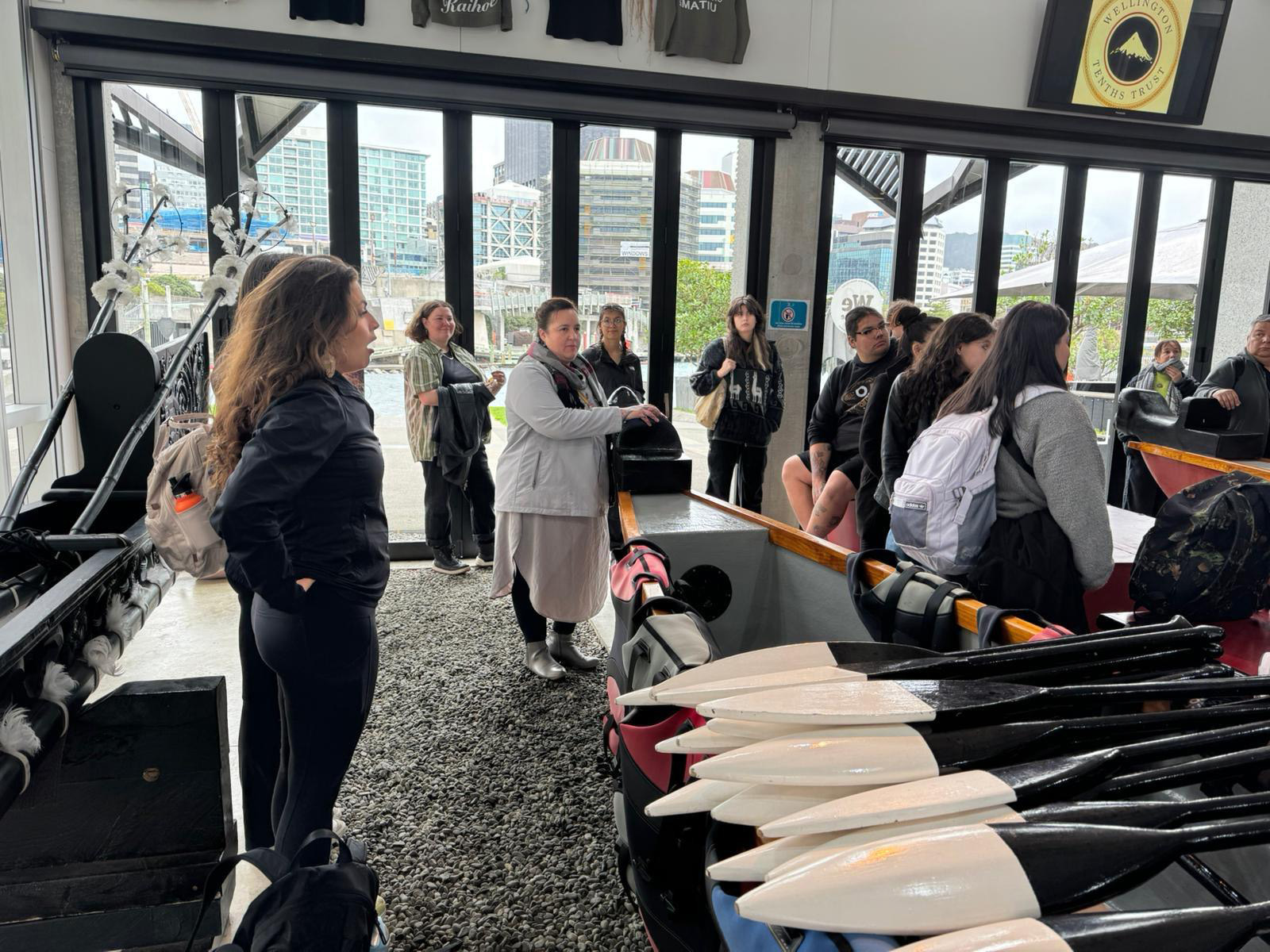
Photo by Gabe Pidcock.
“The lessons learned and the connections made during the short two-week trip have not only left a lasting impression on my outlook in life but have also inspired a renewed sense of purpose in my work.”
Looking forward, Wells-Green is driven to consume more Indigenous art and continue their work as an Indigenous musician, learning their ancestral languages of Nehiyaw and Danezaa to reconnect with their culture, family and identity as an Indigenous person.
Enrol for the Winter 2025 HAU 400 cohort.