Resistance and Reinvention: Showcasing Undergraduate Research at Kaleidoscope Conference
On November 21, 2025 students gathered for the third annual Kaleidoscope Undergraduate Research Conference. Hosted by the Society of Arts, Social Sciences and Humanities (SASSH), the event brought together undergraduate students to present their work on the theme Resistance & Reinvention: Relating, Identity, Power, and Belonging.
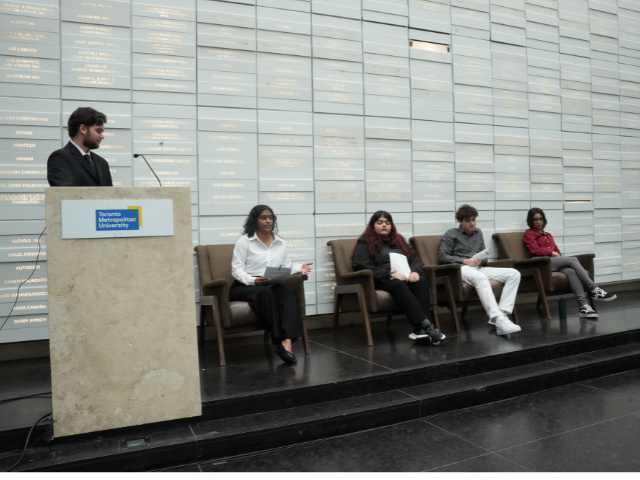
Examining War, Violence, and Freedom
The conference started with the topic of Narratives of Power: War, Violence, and Freedom, and returning panelist Johanna Lewis shared her research titled, The Clinical Case for Targeting Insomnia in PTSD Recovery. Her work challenged a widespread assumption in mental health treatment: showcasing insomnia and trauma-related nightmares as secondary symptoms that will naturally resolve once the underlying trauma is addressed.
Lewis presented evidence suggesting that sleep disturbances are actually core symptoms that actively maintain PTSD. Her research demonstrated that cognitive behavioural therapy for insomnia (CBT-I) and imagery rehearsal therapy (IRT) show positive results both as independent treatments and when combined with traditional trauma therapy. She emphasized that these approaches are not only clinically effective but are also more cost-effective, making them an urgently needed component of PTSD care in Canada.
As a returning presenter, Lewis reflected on her experience, noting the value of Kaleidoscope:
“My overall experience with Kaleidoscope was amazing! It's such a good opportunity to present my work and be able to connect with other individuals about their work. It's an opportunity that allows me to practice speaking, presenting, and answering questions about my work! Kaleidoscope has given me the opportunity to grow in my abilities to present and articulate my work well!”
The panel continued with different perspectives on power and conflict. Toni Tassoni analyzed themes of war and freedom in the anime Attack on Titan through her research titled, Tatake! Tatake!: An Exploration in War and Freedom in Shingeki no Kyojin. Reda Swidinsky offered An Analysis of the 2024 Israel-Lebanon War from the Hezbollah Perspective providing an alternative perspective on recent geopolitical events. Shilan Nozari presented Who Gets Left Behind?: Equity in Ontario Health Teams, examining the persistent healthcare inequalities and evaluating how recent reform initiatives have fallen short of addressing systemic inequities.
Historical Patterns and Contemporary Struggles
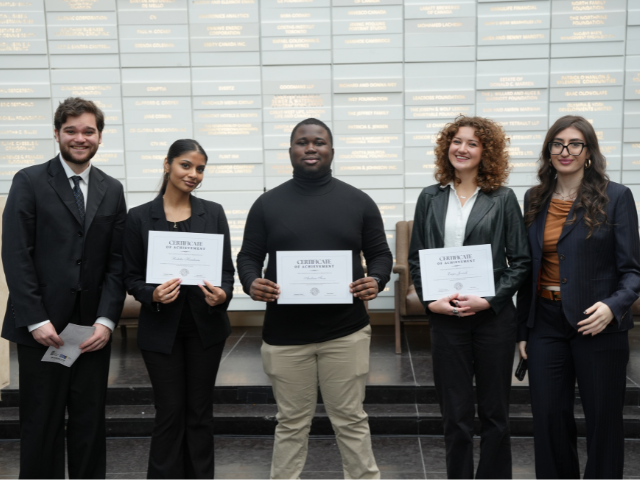
The second panel focused on the topic of Silenced Voices: Censorship, Resistance, and Representation. Enya Jovicik, a student panelist, presented her research, Bury Your Gays: The Active Censorship of Queer Media in Toronto in the 1970s & 1980s, drawing compelling connections between the past and now. Her research examined censorship and obscenity laws targeting queer establishments like the Glad Day Bookshop, demonstrating how legal frameworks reinforced the characterization of queerness as immoral and mixed the queer community with sexual deviancy.
The contemporary relevance of this historical research became clear when Jovicik connected these patterns to current events. She pointed out that the Albertan government’s November 2025 invocation of the notwithstanding clause to limit trans rights, particularly of those trans youths, as evidence that the censorship plans of previous decades continue now. Her conclusion was direct: this cycle of repression will only end when the current generation actively works to break it.
Jovicik shared her experience with Kaleidoscope: “Kaleidoscope gave me such a good platform to present work I’m very proud of and share topics that are very dear to me with others.”
The panel also featured presentations addressing systemic inequalities across different sectors.
Mya Israel’s presentation, Education of Conformity: Racialized Discipline and the Exclusion of Black Youth in Toronto District School Board, examined how Black students still face disproportionate disciplinary measures within the education system. Rishika Kundaria explored the lasting effects of 9/11 on South Asian immigrant communities in the United States through Living in Exile: Navigating Fear, Identity, and Belonging Under Crimmigration. Andrew Fosu’s presentation uncovered the development and significance of disability rights advocacy in Canada.
Creating Spaces for Intellectual Exchange
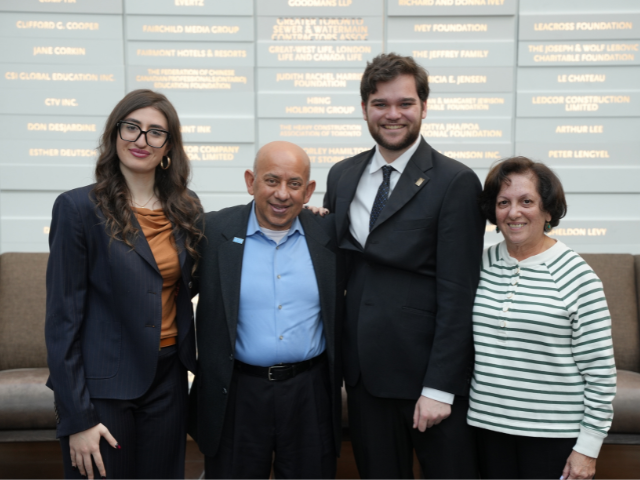
The conference was made possible through the generosity of the Saleh family, whose establishment of the Jehangir Saleh Fund continues to support undergraduate research and the academic community at the university.
Mrs. Saleh, speaking on behalf of the Saleh family, expressed her appreciation for both the student presenters and the engaged audience members whose thoughtful questions reflected genuine intellectual curiosity. She noticed that this environment of collaborative learning and peer interaction embodied the values her son, Jehangir, held dear. The success of the third annual conference, she noted, demonstrated that his legacy will continue to flourish within the Toronto Metropolitan University community.
The diversity of presentations highlighted something fundamental about the conference’s mission. Students from across disciplines came together to demonstrate how the Arts program encourages experiential learning and interdisciplinary thinking. The range of topics showed how students can apply critical thinking skills across different subjects while maintaining challenging academic standards.
This event would not have been possible without the support of graduate advisors, faculty members, and the students who presented and attended. Special thanks go to Hala Sukhon, Alexander Zaleski, and the Kaleidoscope committee members, whose dedication and hard work brought the conference together.