Part 2: Arts students spotlight diverse research at URO Showcase
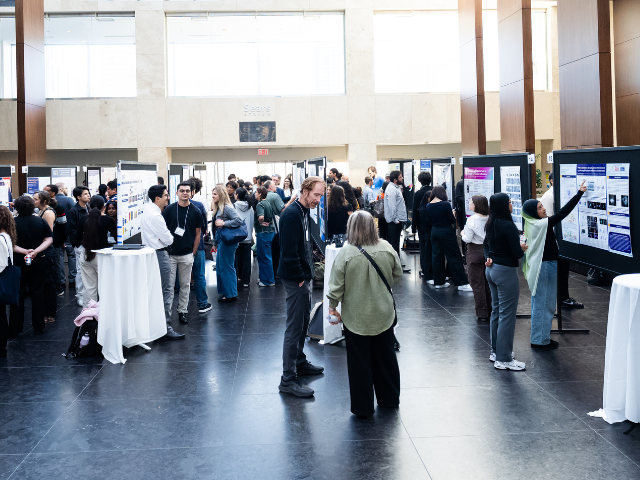
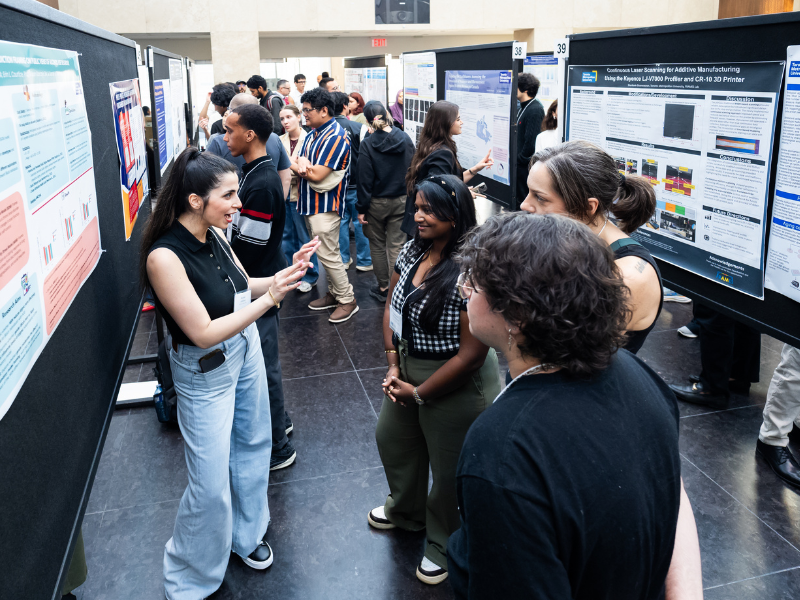
On September 29, 2025, 11 Arts students took part in the Undergraduate Research Opportunities (URO) Showcase in the Sears Atrium. Over the summer, students worked on research projects. Some of the topics included digital health care, analysis of the impact of knowledge about Indigenous People, the concept of a person, and more. Students worked directly with a faculty member and attended workshops hosted by TMU Libraries and the Office of the Vice-President, Research & Innovation. The URO Showcase is the final event of the summer URO program. In this two-part series, we explore the research that Arts students conducted over the summer program.
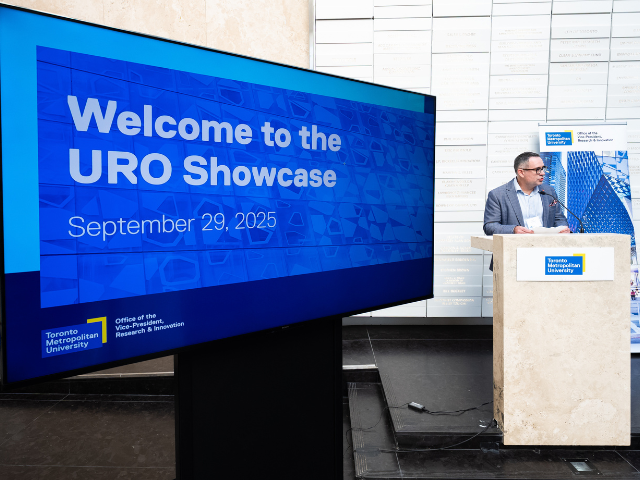
Dean of Libraries, Mark Robertson, during opening remarks at the URO showcase.
While research opportunities are scarce for undergraduates, the URO Showcase not only highlighted the breadth and depth of research happening within the Faculty of Arts but also celebrated the dedication and growth of its undergraduate researchers. This program allows undergraduate students to have paid summer employment while building their research skills and working closely with a professor supervisor. With the support of faculty mentors and campus partners, these students are leaving the program with enhanced skills, valuable experience, and a deeper understanding of the impact of research. Their work stands as a testament to the value of investing in undergraduate research.
Max Obadia - Codifying Intolerance: The Global Emergence of Hate Laws after World War II
Supervisor: Jennifer Tunnicliffe
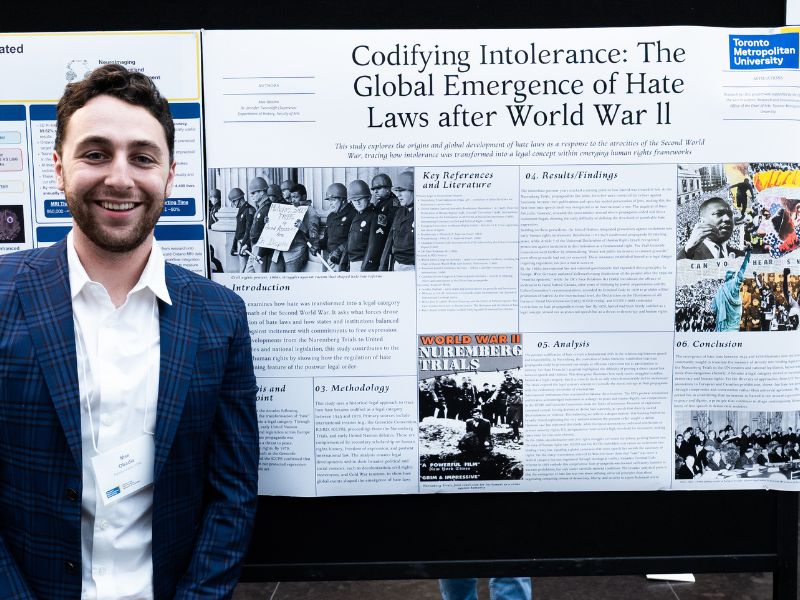
“Without this funding, I wouldn’t have access to key archival sources, and there are certain materials I wouldn’t be able to explore, which are essential for conducting in-depth research. I’m planning to attend law school, and tracing the roots back to where it started and where it is today is extremely important to me, both from an educational perspective and a personal passion standpoint, so this experience was great.”
Fourth-year History student Max’s research looks at how the idea of “hate” changed after World War II – from being seen as a moral problem to a legal and human rights issue. It starts with the Nuremberg Trials, where Nazi leaders were punished for spreading hateful propaganda that led to genocide. The project then follows how international agreements, like the Universal Declaration of Human Rights and the 1965 Convention on Racial Discrimination, recognized hate speech as a serious threat to peace and equality. It also shows how Jewish organizations, such as the World Jewish Congress and the Canadian Jewish Congress, helped shape early efforts to fight hate, which later influenced Canada’s first hate-speech laws in 1970. Overall, the research shows how standing up to hate became an important part of the modern human rights movement.
Daniel Dabir - AI Tool For Brain Tumour Detection
Supervisor: Dr. Moriah Sokolowski
“Funding projects like this is crucial because it opens up new opportunities for us. Without the necessary funding to acquire the right equipment, like high-spec computers, we wouldn't have been able to create what we needed.”
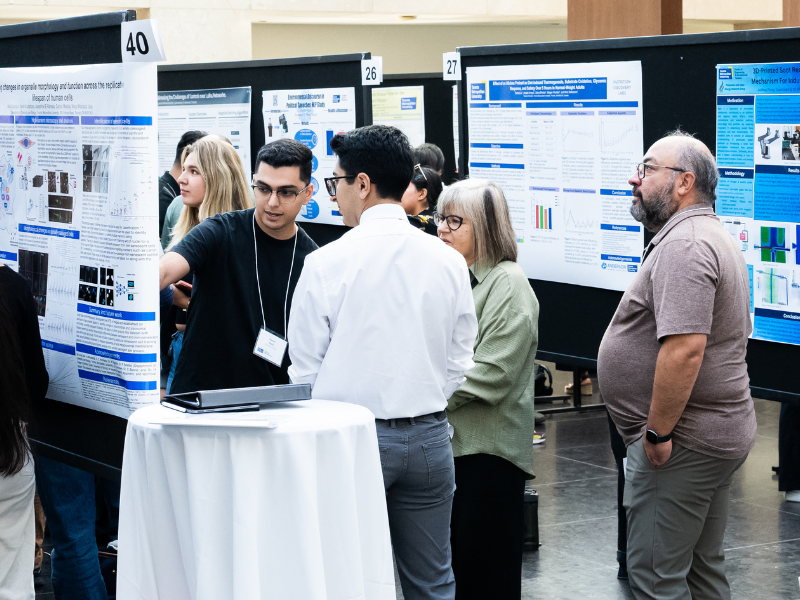
After coming across a report from the Canadian Association of Radiologists recommending the integration of AI into healthcare networks—particularly in radiology—Psychology student Daniel and his research partner, Kamyar Saeedabadi, an industrial engineering student, studied how artificial intelligence (AI) can help reduce long MRI wait times in Ontario. Current data shows that lower-priority patients wait an average of 107 days for an MRI – far longer than the 28-day target. The main reason is a shortage of radiologists to review scans. Through their research, Daniel’s team found that AI can make a big difference in two main ways: speeding up the review of abnormal MRIs and automatically flagging urgent cases so high-risk patients get help sooner. These tools can cut reporting times by about half and ease pressure on hospital staff. Their findings suggest that AI could improve how quickly patients are diagnosed and help healthcare systems run more efficiently.
Parmida Khanchi - Targeting the Trailblazers: Assessing the Prevalence of Violence and Harassment Against Women Mayors in Canada
Supervisor: Dr. Tracey Raney
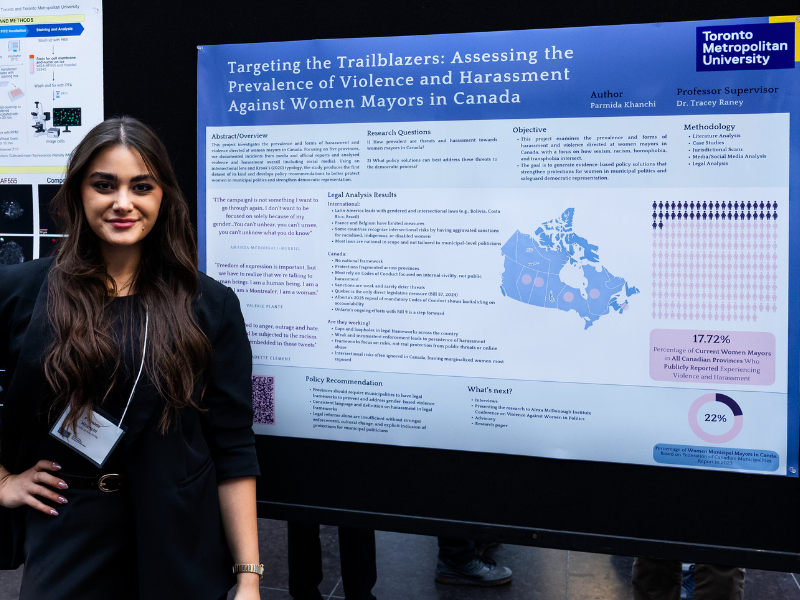
“This opportunity is something that most students wouldn't typically have access to, and my research covers an area that’s never been explored before. After taking a course on women in politics, I realized it’s a significant issue that hasn’t been addressed. The research has been incredibly insightful—not only was the topic itself fascinating, but expanding the scope of my research has also taught me a great deal.”
Parmida’s research looks at how often and in what ways women mayors in Canada experience harassment and violence. Using media reports and legal and policy reviews from across the country, her study created the first dataset focused on gender-based political violence at the local level. The research found that nearly 18 per cent of current women mayors have reported being harassed or threatened, though the real number is likely much higher. Parmida’s work also shows that many municipalities still don’t have strong systems to protect their leaders. She recommends that provinces require municipalities to adopt clear rules, stronger codes of conduct, and better training to prevent gender-based harassment and promote safer, more respectful workplaces and an inclusive democratic system.
Parmida will present this research at the Alexa McDonough Institute Conference on Violence Against Women in Politics in May 2025 in Halifax, aiming to advance evidence-based policies that make local politics safer and more inclusive.
David Guangyu Diao - South Asian Client Experiences in the Ontario Structured Psychotherapy Program in the Brampton-Halton-Mississauga Regions: Preliminary Results
Supervisor: Dr. Fiona Thomas
“The URO program allowed me to gain in-depth qualitative research methods, deepened my understanding of psychological research on health and culture, and gave me the opportunity to further my academic development.”
David’s research looked at how South Asian patients engage with the Ontario Structured Psychotherapy program in the Brampton, Halton, and Mississauga regions (OSP-BHM). OSP-BHM is a publicly funded program that offers cognitive-behavioural therapy (CBT) to adults in Ontario. The research aimed to find out what factors help or prevent South Asian clients from accessing these services. Four South Asian–born current or former clients took part in interviews, and the responses were analyzed to identify common patterns.
The study found several barriers to participation, including busy personal schedules, limited awareness of OSP services, unfamiliarity with the Canadian mental health system, lack of follow-up care, perceived inflexible therapy options, stigma from family and community, and families’ limited understanding of mental health. On the other hand, factors that encouraged engagement included strong awareness of OSP-BHM among family doctors, easy access to the program (no cost and short wait times), effective therapy methods, supportive clinicians, helpful resources, and positive views of the program overall.
These results will help guide a larger study to better understand engagement among OSP-BHM clients, including those from historically marginalized communities.
Mojdeh Jankouk - The Impact of Addiction Framing on Public Views of Alcohol Use Disorder
Supervisor: Dr. Sarah Dermody
“Programs like the URO are crucial because research goes beyond just gathering research; it’s about giving back to our communities. Through research like mine, we can develop a more compassionate and empathetic understanding of the challenges these historically marginalized communities went through. As a student, this experience has helped me build skills and knowledge that will shape my future career as a clinical psychologist, where I aspire to give back to my community as a racialized and immigrant woman.”
Stigma is a major barrier that prevents many people with substance use disorders (SUDs) from seeking help. For Black individuals, this barrier is often intensified by racism and stereotypes that portray addiction as a personal or moral failing. Mojdeh’s study, a recent psychology graduate, examines whether different explanations of addiction influence public attitudes toward Black individuals with alcohol use disorder (AUD). Specifically, it compares the effects of two models: the Brain Disease Model (BDM), which describes addiction as a chronic brain disorder, and the Minority Stress Model (MSM), which frames addiction as a response to chronic identity-based stressors such as discrimination and marginalization. The findings showed that the Minority Stress Model led to less stigma: people who read this version were more likely to feel empathy, less likely to judge, and more willing to offer support and highlights the importance of using culturally sensitive and structurally aware explanations of addiction to reduce stigma and improve access to care in Black communities.