Two Arts professors receive 2025 Learning and Teaching Grant
The Learning and Teaching Grants Program (LTG), funded by the Office of the Provost and Vice-President, Academic, encourages novel explorations and methodologies to modify university curriculum, improve learning experiences, and address Equity, Diversity, Inclusion, Accessibility and Decolonization (EDIA + D) within and beyond the classroom.
The program seeks to promote projects aimed at implementing evidence-informed pedagogical methods that will have lasting impacts on undergraduate and graduate students. This grant program encourages scholars to innovate strategies or course materials to address priorities in the 2020-2025 Academic Plan.
The 2025-2026 Learning and Teaching Grants Program focuses on new and emerging pedagogical practices that create engaging student-centred learning opportunities.
Recipients of the 2025-2026 grants are professors Julián Zapata from the Department of Languages, Literatures and Cultures and Becky Choma from the Department of Psychology.
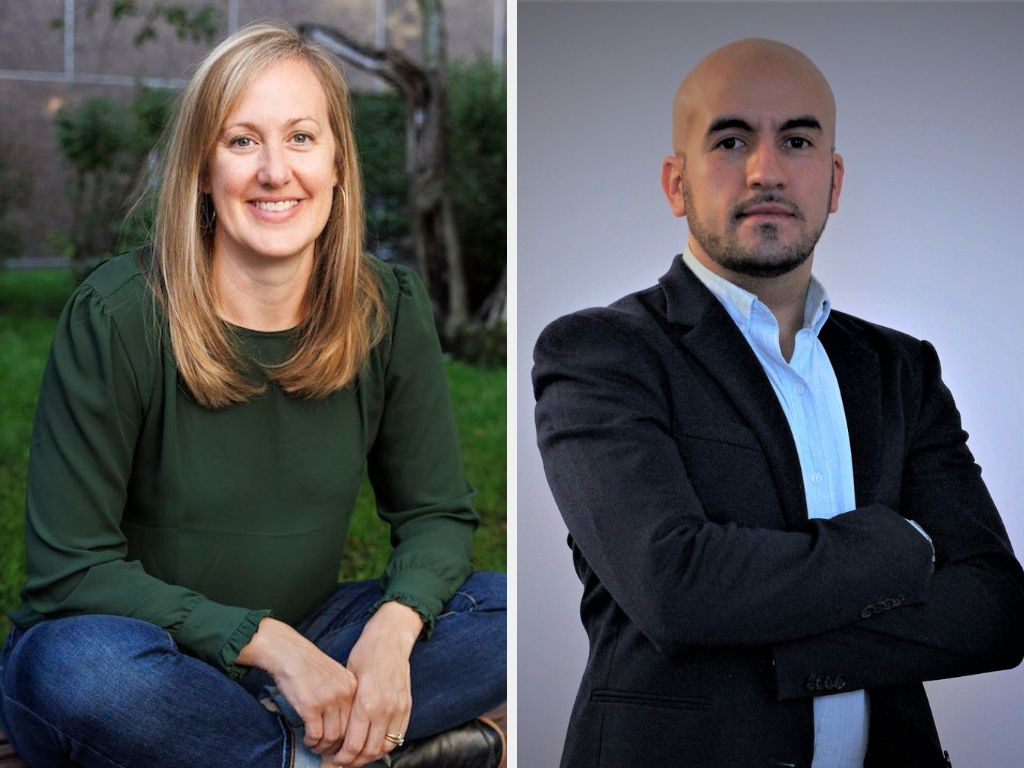
Becky Choma and Julián Zapata.
Embedding Indigenous Content into Psychology Courses: Designing and Distributing Micro-Modules
Psychology professors Becky Choma (European settler), Iloradanon Efimoff (Haida and European settler) and students Jaiden Herkimer (Anishinaabe and European-Canadian, and member of the Mississaugas of the Credit First Nation) and Anik Obomsawin (Abenaki and European-Canadian).
Professors Becky Choma and Iloradanon Efimoff, alongside Psychological Science PhD students Jaiden Herkimer and Anik Obomsawin, are co-collaborators on the project and members of the Decolonizing and Indigenizing Psychology Committee (DIPC) in the Department of Psychology at TMU. Choma and Efimoff are Co-Investigators of the Project. Choma’s research concerns intergroup relations, prejudice and discrimination, with a focus on the role of social norms, ideologies, and intergroup emotions. Efimoff’s research focuses on using critical historical education to reduce prejudice toward Indigenous people. Jaiden Herkimer is researching reconciliation, political ideologies, and Indigenous relations. Anik Obomsawin is researching the area of Indigenous community health.
Psychology has caused great harm to Indigenous Peoples in Canada. In response to the Truth and Reconciliation Commission (TRC) of Canada, the Canadian Psychological Association (CPA) published a (PDF file) Response to the TRC Report in 2018. This document provides concrete, action-oriented recommendations. Our Centre for Excellence in Learning and Teaching (CELT) LTG-funded project will focus on the recommendations to improve what the CPA terms “Indigenous cultural literacy” in psychology undergraduate training. In the current proposal, our goal is to build upon the past work of the DIPC to create two outputs: 1) a series of micro-modules designed for instructors to integrate into existing courses and 2) a database of Indigenous-specific resources.
Non-Indigenous instructors who strive to be allies typically want to include Indigenous content in their courses but are often concerned with doing something wrong or causing harm. To our knowledge, a repository of micro-modules and resources specific to Indigenous content in psychology does not yet exist. This means that instructors are often unsupported and ill-equipped in their attempts to embed Indigenous content. This grant will begin to address this gap and support instructors to do this work in a good way, thus providing an opportunity to advance Indigenous initiatives at TMU.
To do so, the team will carry out three activities: Conduct a needs assessment survey with psychology faculty members, create micro-modules for undergraduate psychology courses, and collate Indigenous content resources such as readings, videos, and websites. Acknowledging the role of Indigenous pedagogies in disseminating Indigenous content, we plan to create a brief Indigenous pedagogy primer for psychology instructors. We intend to share these resources beyond TMU and to invite others to contribute in the future.
“Indigenous content is fundamental to changing negative cultural narratives about Indigenous peoples. We believe our project will help to foster positive changes in education and beyond. Obtaining funding from the CELT and the Indigenous Education Council (IEC) means that this work is possible because of financial and institutional support.”
Speak Your Essay: Dictation and Speech Technologies in Academia
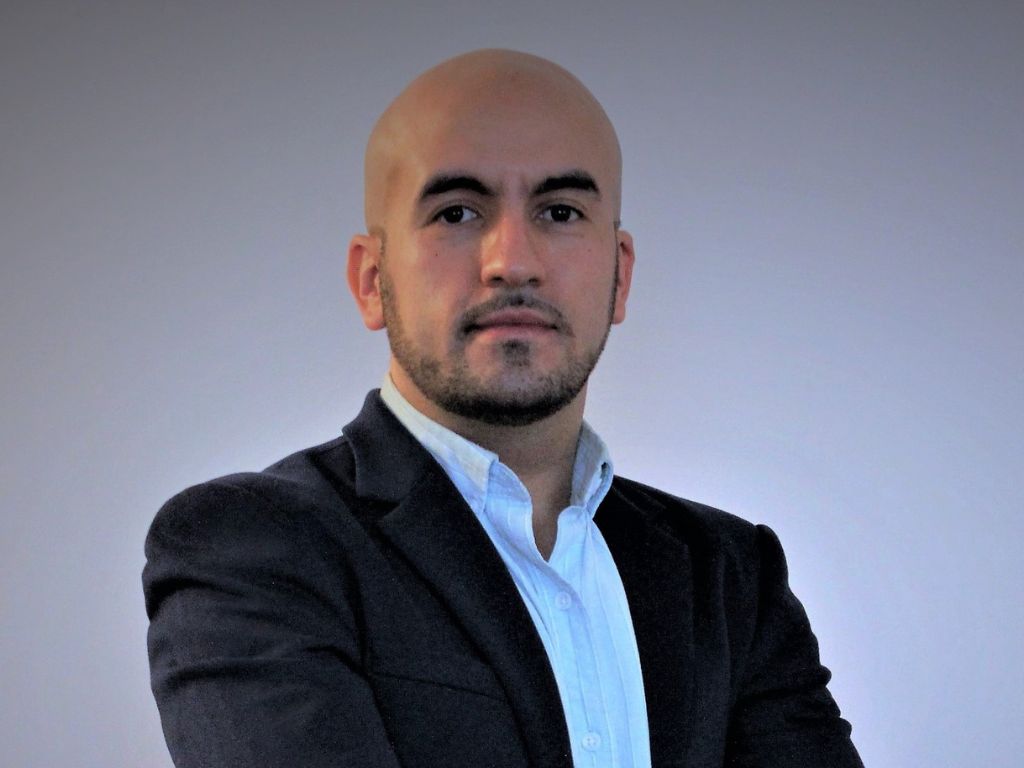
Julián Zapata is a professor in the Department of Languages, Literatures and Cultures. He has taught various courses including English, Spanish and French translation; terminology and terminotics; translation technology and professional aspects of translation, both at the undergraduate and graduate levels.
Zapata has worked internationally on several projects related to the translation process research, language and translation technologies, as well as translator training. His research has been funded, notably, by the Social Sciences and Humanities Research Council of Canada, the Fonds de recherche du Québec – société et culture, and Enterprise Ireland. His work on languages and translation, and his travels to 47 countries in five continents, have given him a unique perspective of how different people around the world use different languages, interact with technologies and communicate.
This project addresses the growing need for alternative text entry methods in higher education while promoting accessibility, efficiency, and student well-being. It aims at creating an e-learning introductory course on using dictation and speech technologies for academic writing. From typing on physical keyboards to swiping on touchscreen devices, people of diverse linguistic backgrounds rely on text entry methods to express thoughts and ideas in writing and interact with textual information. A growing body of research has indicated that humans have typed only for a few decades, yet written in multiple other ways for millennia. Not everyone can type, and certain languages pose challenges for traditional keyboard-based input due to character complexity or phonetic structures.
The project proposes to reimagine how we produce texts in teaching and learning environments, and develop proper training that enables students to make the most out of dictation and speech-based technologies in the mobile-and-ubiquitous computing era. Speech-based technologies can transform the student experience by fundamentally changing how they engage with academic writing. By removing the physical and cognitive barriers associated with typing, students can focus more on their ideas and critical thinking rather than the mechanical aspects of writing.
The potential benefits are multifaceted: students can compose texts more naturally and fluidly, potentially at a pace closer to their thinking speed; they can reduce the physical strain and fatigue associated with long writing sessions; and they can more easily capture their thoughts while moving or multitasking. Overall, the learning experience becomes more accessible and less stressful, particularly for students with physical disabilities, learning differences, or those who find traditional writing methods challenging.
“I am thrilled to receive the LTG: it’s a confirmation that a research idea that I had when I was an undergraduate translation student is still relevant today. Back then, it didn’t take me long to realize that, if I was destined to be a translator, I was also doomed to be sitting down in front of a computer typing and clicking all day long. The phrase ‘There’s gotta be a better way!’ is often what triggers innovation. I soon discovered that there actually is a better way that is within everyone’s reach. With the robustness of speech technologies today, we have most pieces of the puzzle. What we lack is the proper training. That’s the mission I embarked on at grad school and the journey that continues today thanks to the LTG!”