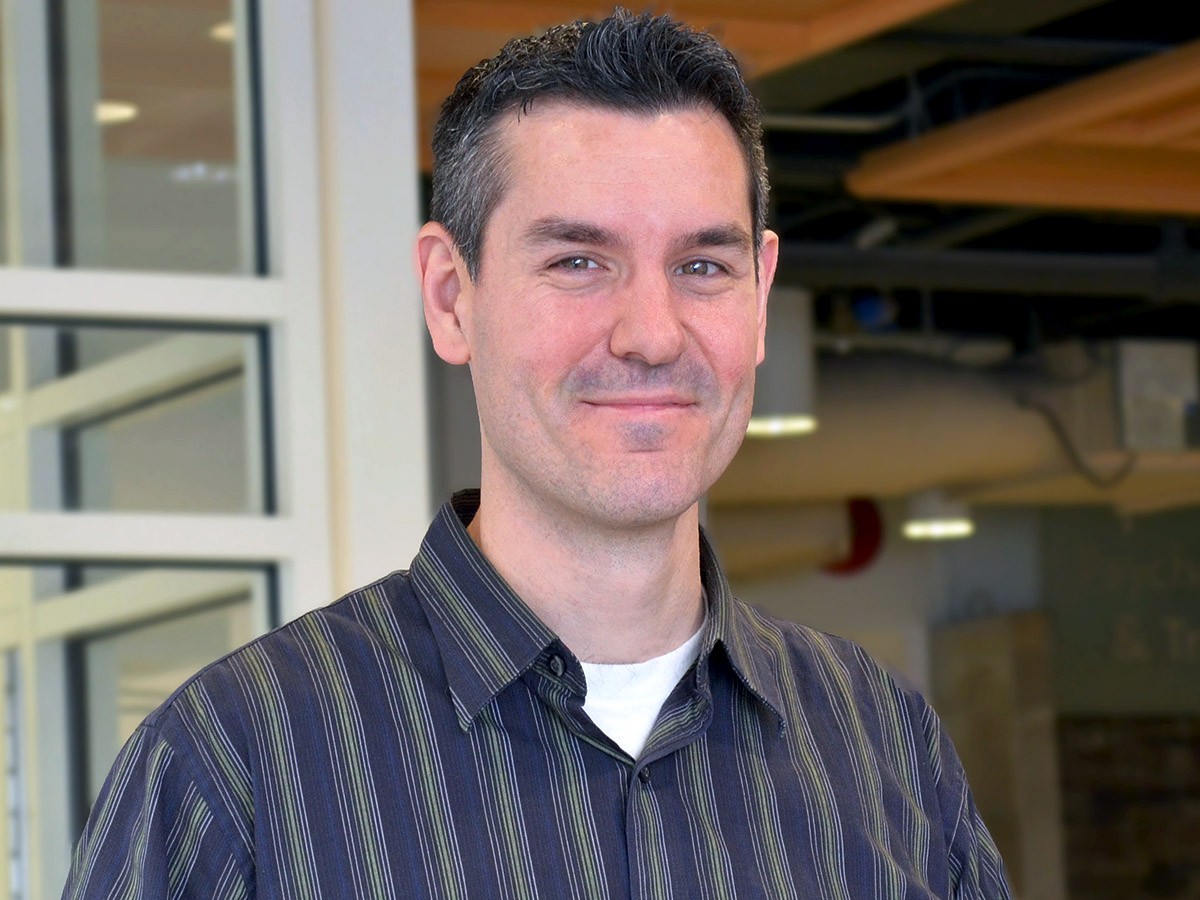
Dr. Todd Girard
Biography
Dr. Girard’s research interests span domains of clinical neuroscience, cognitive psychopathology, and cognitive pharmacology, particularly regarding memory, psychosis, fMRI, and sleep-paralysis hallucinations. For instance, his research aims to understand functional consequences of medial-temporal abnormalities in clinical conditions including psychosis, depression, and post-traumatic stress disorder (PTSD), as well as to inform and test cognitive theories. In this vein, Dr. Girard moved from being primarily a behavioural neuroscientist (Graduate studies, U Waterloo) to that of a cognitive neuroscientist studying human conditions via neuropsychological, cognitive-science, and neuroimaging methods (Post-doctoral studies, Center for Addiction & Mental Health/ U Toronto). Dr. Girard and lab members have also been exploring relations among recreational drug use and cognition, intelligence assessment, and the spatial and temporal nature of multimodal hallucinations accompanying sleep paralysis. The combination of these perspectives has made valuable contributions to current research approaches in the lab at Toronto Metropolitan University. Some current research questions include:
- How do individual differences in the medial-temporal lobe, brain networks, and strategy use relate to spatial memory performance in in people with psychosis?
- How do forms of memory and mnemonic processes differ across clinical spectra (psychosis, depression, traumatic stress)?
- How do emotional and self-referential thought processes relate to memory of one’s past, future thoughts, and symptoms of psychopathology (psychosis, PTSD, depression)?
- What are the relations among forms of recreational substance use, psychosis-like experiences, and cognitive performance?
Dr. Girard teaches undergraduate courses on Human Memory, Psychopharmacology, Brain and Behaviour, Research Methods in Psychology, and The Psychology of Thinking. He also teaches graduate-level courses in and Clinical Psychopharmacology, Anatomy of the Human Brain, and Functional Magnetic Resonance Imaging. Through these courses he aims to enhance students’ appreciation of the brain and cognition, the role that neurochemicals play in normal daily life, as well as in addiction and mental illness, from the neural level to thought and behaviour, as well as statistical and research methods in psychology.