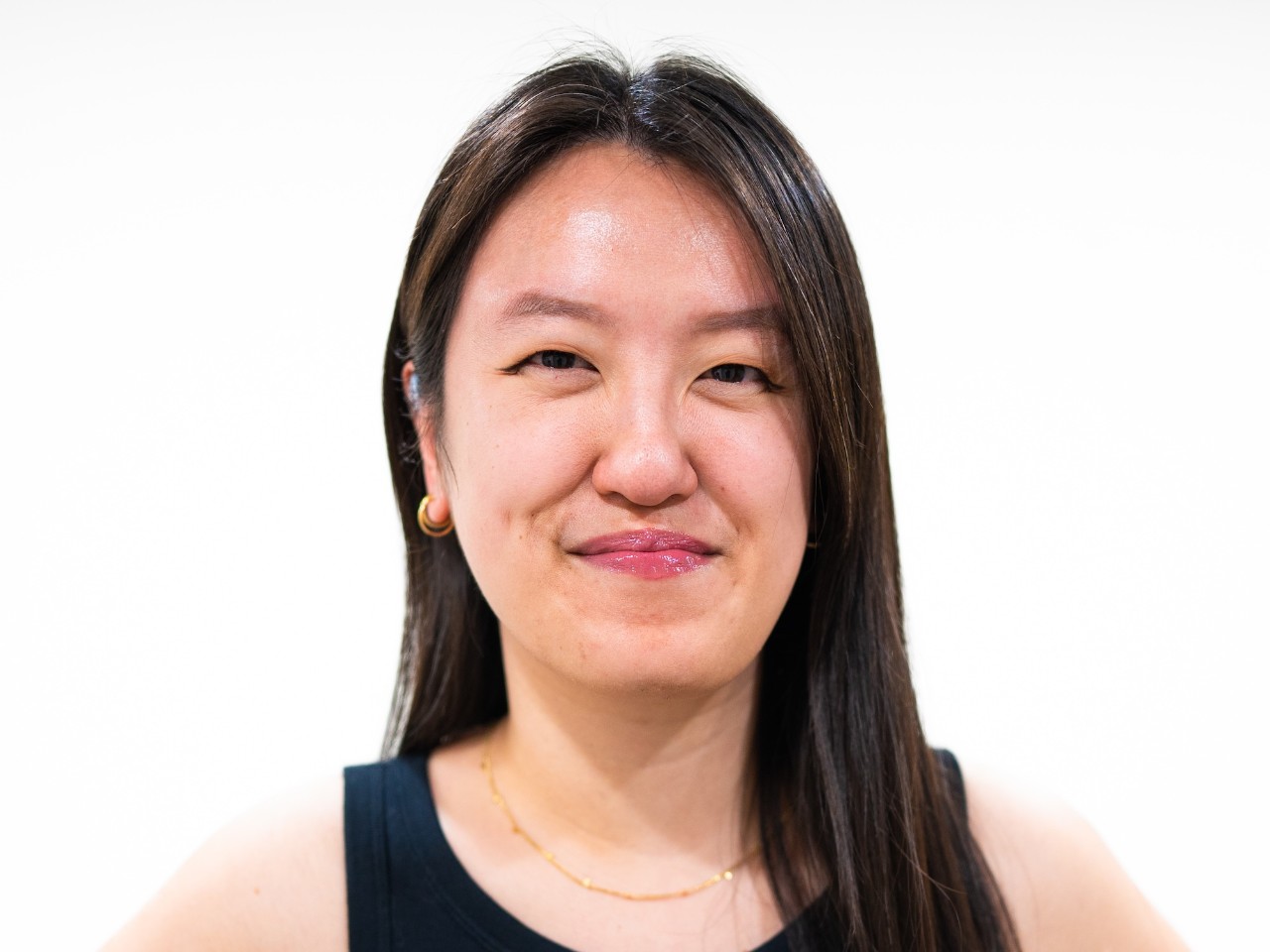
Dr. Ronda Lo
Note
Dr. Lo will be reviewing applications for Fall 2026 admission into TMU's Psychological Science MA/PhD program.
Biography:
Dr. Ronda Lo is an Assistant Professor at Toronto Metropolitan University. Before arriving at Toronto Metropolitan University, she was a SPARQ Media Fellow (Postdoctoral Scholar) at Stanford SPARQ, in the Department of Psychology at Stanford University. She completed her doctoral training at York University, earning a PhD in Psychology (area: Social-Personality) and Quantitative Methods Diploma. During this time, she also worked as a statistician at SickKids Research Institute. She completed her undergraduate education at the University of Toronto, Mississauga.
As a cultural psychologist, Dr. Lo has a broad interest in people as "culturally-shaped shapers"; how are people shaped by their cultures, and how do people think about and shape the cultures around them? To this end, her program of research employs a wide variety of theoretical and methodological approaches across different disciplines (both within and outside of psychology; e.g., culture-gene coevolution) to test these two broad questions. Her current streams of research fall loosely under three different themes: (1) the extent to which culture and diversity shape social, cognitive, and biological mechanisms that underlie social interactions; (2) culturally minoritized individuals' experiences navigating cultural clashes in their everyday worlds (e.g., healthcare, education, workplace, criminal justice system); (3) the role of media in shaping and intervening on people's ideas and attitudes towards culture, race, and diversity.
As a statistician and teacher, Dr. Lo is passionate about training the next generation of statisticians, scholars, and data-minded individuals. Her courses are built around experiential learning, influenced by her own hands-on experiences from working as a statistician within academia and industry. Her laboratory training focuses on building not just strong statistical and programming skills, but also greater perceived independence, confidence, and self-efficacy.
Selected Publications
Lo, R. F., Pearson, H. I., Sasaki, J. Y., & Chen, J. M. (2025). Colorism in East and Southeast Asia. In R. Hall, & N. Mishra (Eds.), The Routledge International handbook of colorism (pp. 297- 317). Routledge Press.
Lo, R. F., & Sasaki, J. Y. (2023). Lay misinterpretations about culture as "biological" and suggestions for reducing them. Perspectives on Psychological Science, 19(1), 295–311. https://doi.org/10.1177/17456916231181139
Chung-Fat-Yim, A., Lo, R. F. & Mar, R. A. (2023). Multilingualism and mentalizing in young adults. Bilingualism: Language and Cognition, 26(2), 456-467. https://www.doi.org/10.1017/S1366728922000669
Lo, R. F., Pearson, H. I., & Sasaki, J. Y. (2023). How do culture and religion interact worldwide? A cultural match approach to understanding religiosity and well-being in the Many Analysts Religion Project. Religion, Brain, & Behavior, 13(3), 329-336. https://doi.org/10.1080/2153599X.2022.2070265
Lo, R. F., Padgett, J. K., Cila, J., Sasaki, J. Y., & Lalonde, R. N. (2022). The re-emergence of Yellow Peril: Beliefs in the Asian health hazard stereotype predict lower psychological well-being. Asian American Journal of Psychology, 13(4), 339-350. https://doi.org/10.1037/aap0000291
Lo, R. F., & Mar, R. A. (2022). Having siblings is associated with better mentalizing abilities in adults. Cognitive Development, 63, 101193. https://doi.org/10.1016/j.cogdev.2022.101193
Lo, R. F., Ng, A. H., Cohen, A. S., & Sasaki, J. Y. (2021). Does self-construal shape automatic social attention? PLoS One, 16(2), e0246577. https://doi.org/10.1371/journal.pone.0246577