Ontario Universities Program in Field Biology (OUPFB)
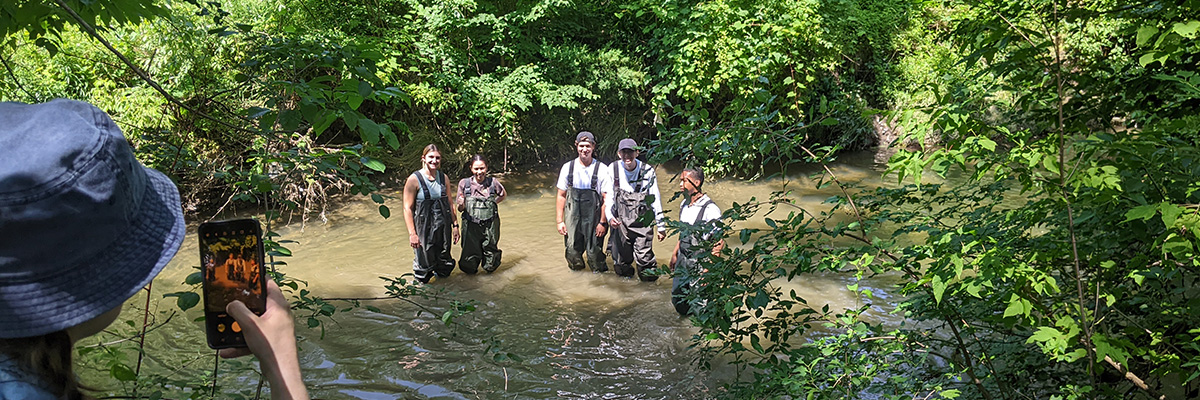
Are you an Ontario biology or environmental science student looking for hands-on experience in rivers, wetlands and other aquatic systems? The Ontario Universities Program in Field Biology (OUPFB) course in Urban Field Biology - Water Ecosystems (BLG720) at TMU might be right for you.
This two-week biology course will take you around Toronto to study urban water systems. You will be taken on excursions to conduct field-based observations and collect samples, gaining real-world experience in aquatic ecology for the same credit as a full single-semester course.
What is the Ontario Universities Program in Field Biology (OUPFB)?
TMU offers an inter-university field course through the Ontario Universities Program in Field Biology (external link) (OUPFB). This program allows students from participating universities (external link) to take field courses at other schools without needing to transfer credits.
These courses give you hands-on experience to study biology directly in the field. They typically run in the summer for 2 weeks and have small class sizes (20 students or less). You will share housing, meals, and work closely with your classmates and instructors throughout the course.
TMU offers Urban Field Biology - Water Ecosystems (BLG 720) as part of this program. TMU students taking a field course at another participating university will enrol in Inter-University Field Course (BLG 721). Both courses require students to fill out a registration form and departmental consent.
Dates for the coming Summer Program will be released in early January of every year.
Urban Field Biology - Water Ecosystems (BLG 720)
Urban Field Biology - Water Ecosystems (BLG 720) will provide you with a foundation in urban water ecology. You will have opportunities to improve your field biology skills including: water sampling and species identification; characterization of field observations; as well as learning about the design and collection of data for your own scientific experiment. Course goals will be achieved through field-based observations, sampling, and through the application of practical skills during excursions to urban water sites in and around the City of Toronto. You will also complete a small group research project (in pairs), which you will propose as a presentation in-class, collect data during the second week of the course, and write up independently.
Course length
This course will take place over two weeks. Final projects are handed in one month after the course ends.
Where you’ll stay
Students will be housed at the Daphne Cockwell Complex (DCC) at 288 Church Street, Toronto.
Excursion locations (locations may vary from year to year)
- Don River watershed
- Rouge River National Urban Park
- Tommy Thompson Park
- Highland Creek Park
- Lake Wilcox Park
- Other excursions to wetlands, wastewater treatment plants, sewage lagoons, storm water ponds, and water treatment plants may occur (e.g., Ashbridges Bay Treatment Plant, Stevenson Swamp, RC Harris Water Treatment Plant)
Cost
$1,900 total cost ($350 non-refundable deposit to home university; $1,550 balance). This cost includes travel to field locations, dormitory accommodations for 13 nights, lunch and dinners. *Fees are subject to change depending on annual variations in course planning.
Requirements
This course is open to second-year (or higher) undergraduate students at TMU and participating universities (external link) who are studying Biology, Environmental Science, or a related program. Students must have completed at least one ecology course (or equivalent) beyond the introductory level by the spring term.
Course outline
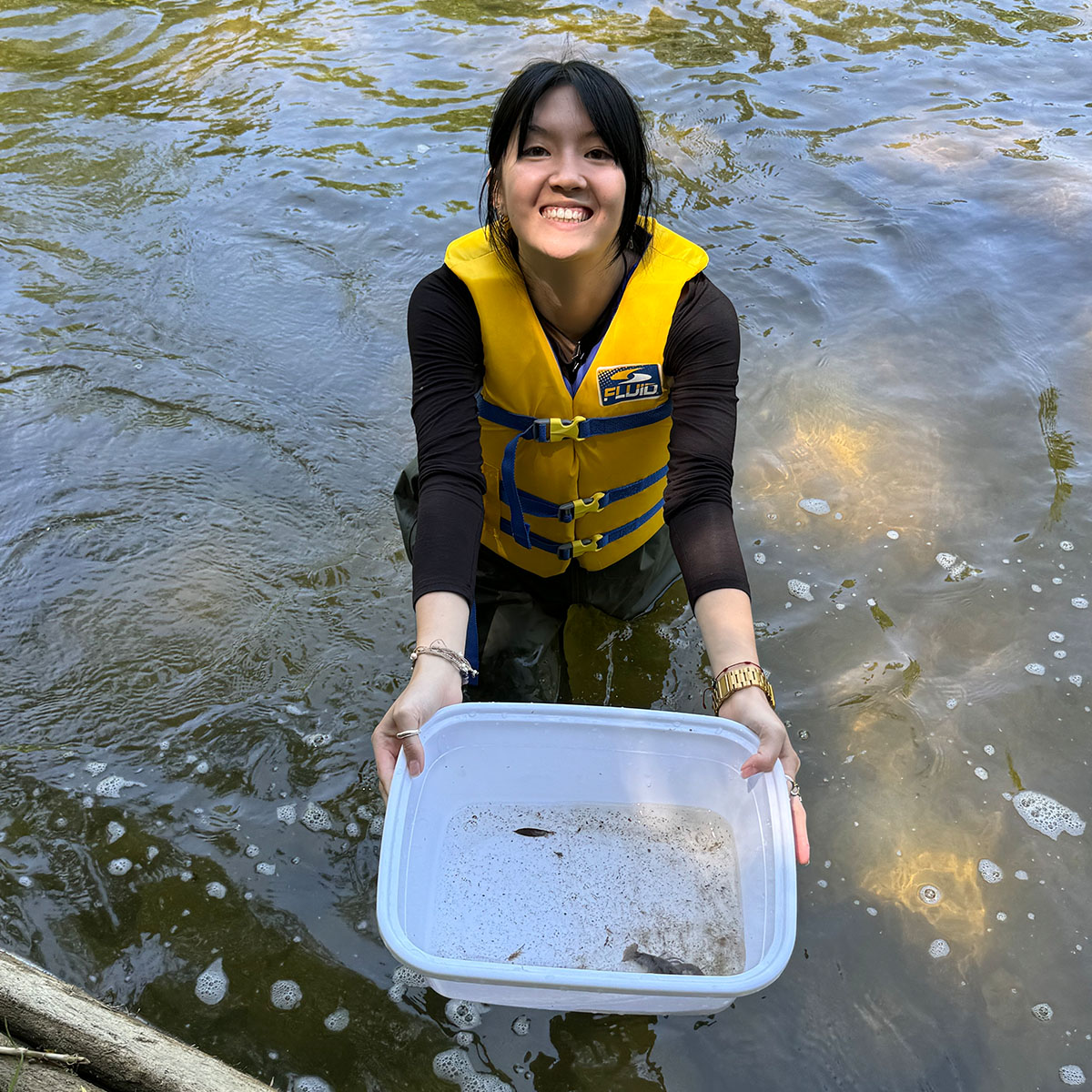
“The experience of working closely with other students and building professional relationships with my instructors throughout the course provided me with hands-on skills that have been invaluable as I now pursue graduate level research. Not only is it a blast to walk through rivers and learn about Toronto’s diverse ecosystems, but the freedom to develop your own research project is extremely gratifying. With thorough support from my instructors and peers, I developed strong foundational research skills and personal relationships!” - Zoë Kang, Evolutionary Biology, Earth Sciences, University of Toronto
Frequently asked questions
Course module descriptions will be available on the OUPFB website (external link) by the third week of December every year.
If you are a TMU student that would like to enroll in an OUPFB course, please fill out (PDF file) this application form (external link) and email it to Caltha Rimmer (crimmer@torontomu.ca) or hand it in to her in person at Kerr Hall North 210 along with your deposit (submitted online (external link) or through a cheque/bank draft payable to Caltha Rimmer, Toronto Metropolitan University). Use the letter box slot on the door if you miss her.
Applications and a $350 deposit are due by the first Friday of February. Be sure to list your 1st, 2nd, and 3rd choices to ensure that you get a placement. You will be notified by the end of February if you have been accepted into a course that you are waitlisted for.
This course will take place in person over two weeks. Final projects are handed in one month after the course ends.
Sample daily schedule (will change day-to-day):
- 9:00am Meet at Kerr Hall North
- Go over the plan for the day & equipment prep
- 10:00am Excursion to Tommy Thompson Park
- Tour the park and wetlands / embayment area; perform OBBA Atlas
- Point count and use Wildlife Acoustic recorder at same time
- Sample Zooplankton from bridge
- 12:00pm Lunch at Tommy Thompson Park
- Wraps, fruit, and snacks provided at DCC the night before
- 3:00pm Return to campus, presentations
- 6:00pm Dinner at Salad King
- 8:00pm-10:00pm Pick up lunch for following day’s excursion at DCC
Students are generally graded on participation, field notetaking, seminar presentation, and an independent research project with report. Students are often expected to prepare for the course by reading assigned scientific literature and preparing a presentation on a selected topic related to the course.
You will receive a full semester credit for the course, and the billable unit through my.torontomu is the same as for other courses. Both BLG 720 and BLG 721 are listed with 3 Weekly Contact Lecture hours, GPA Weight: 1.00, Course Count: 1.00, Billing Units: 1, and Departmental Consent. Courses have limited space and the registration form is required for departmental consent. First come first served if requirements are met.
Contact
Dr. Stephanie Melles (stephanie.melles@torontomu.ca), Caltha Rimmer (crimmer@torontomu.ca) or Sarah Morrish (sarah.morrish@torontomu.ca).
Student Testimonials
“Counting bugs in the middle of the Don River in Toronto on a hot summer day was an experience I will never forget! I appreciated how this course lets you produce your own field research project, with support available when needed. This experience helped me secure two laboratory research positions and made me an expert at taking field measurements. If you have the time, it's a great experience!”
“This course was a unique and exciting experience that changed my perspective on how important Water Ecology is to our ecosystems. One memorable experience that stood out to me was the site visit to the R.C Harris Water Treatment Plant, where myself and other members of the field course explored how one of Toronto's oldest water treatment plants evolved over time to treat the water that we drink.”