Arts student Giada Amenta shares her Chinese-language journey that led her to China
Giada Amenta, a second-year Language and Intercultural Relations (LIR) student, reflects on her unforgettable experience representing Canada in the 24th Chinese Bridge Competition world finals. From language learning to cultural immersion, she shares what made the journey so impactful.
My story begins when I chose the LIR program at Toronto Metropolitan University (TMU). I've always had a passion for learning languages, so it was a great fit. In September 2023, having already studied French, Spanish and Portuguese, I wanted to try something different, and Chinese stood out as an exciting challenge offered at TMU. I enrolled in CHN 101, then continued through CHN 201 and CHN 301. I enjoyed learning the language so much that after I completed my courses, I decided to self-study.
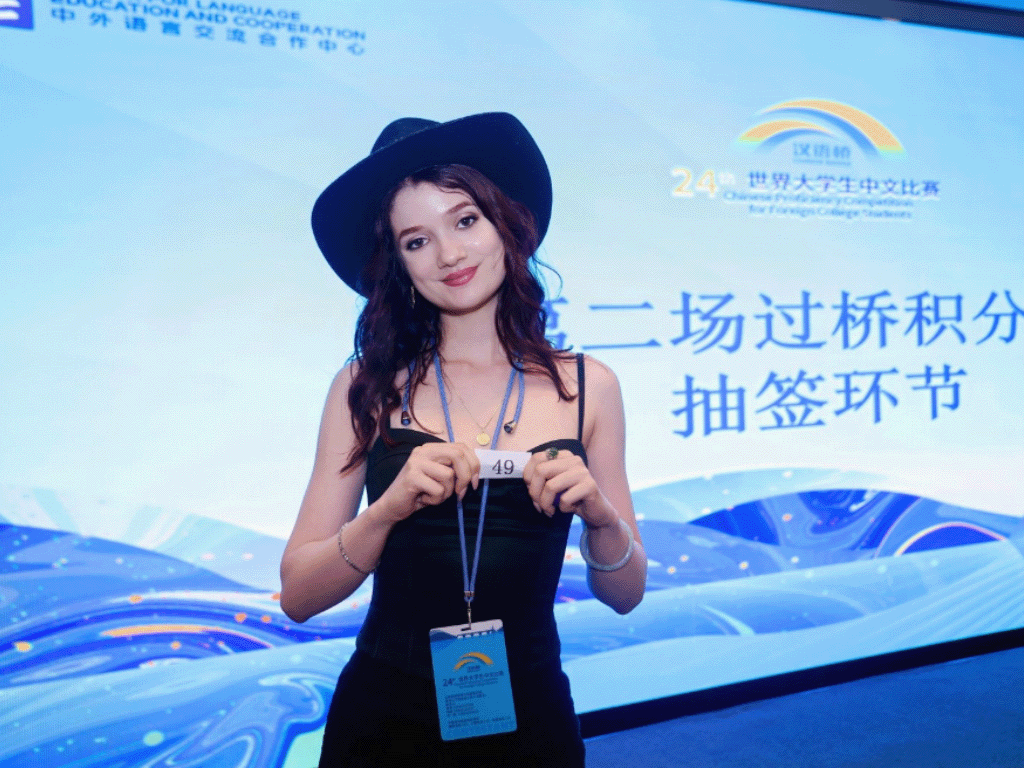
My Chinese professors notified me of an opportunity to participate in the 24th Chinese Bridge Competition for Foreign University Students, which would be held at Waterloo University on April 27, 2025. Having only been learning Chinese for two years, I decided that it would be a good opportunity for me to practice what I had learned.
The competition consisted of a three-minute speech and a three-minute talent. I recited a poem attributed to Qu Yuan called Xiang Jun that I was introduced to in a class called Chinese literary traditions taught by Professor John Stowe.
The competition went better than I expected, and I placed third. While the chance to participate in the world finals in China was reserved for the first- and second-place winners, I was proud of myself for placing at all. To my surprise, a month later, I got an email asking if I would like to participate in the world competition. I could not turn down that opportunity, so I packed my bags and got ready to depart for Beijing!
In August 2025, I arrived in Beijing, where the organization had planned many activities for the contestants during our two-week stay. Our first stop was the Forbidden City in Beijing. We also visited the Great Wall, the Summer Palace, the Olympic Stadium, and Beijing University. At the Olympic Stadium, we had a surprise visit from Li Fabin, a two-time Olympic gold medalist in weightlifting. We also attended the World Robot Conference and saw some cutting-edge technology.
After Beijing, we flew to Wuyishan, a mountainous area in Fujian province. This was the highlight of the trip, offering a calm contrast to the busy streets of Beijing. We rafted down the Nine Bend River, a scenic 9.5 km stretch through the Wuyishan mountains, and visited lotus and rice fields to take part in the harvest. Next, we took the bullet train to Quanzhou, where we toured a Shaolin temple and listened to monks deliver sermons. We visited JOMOO, a black light toilet factory, where we saw robots manufacturing toilets in the dark.
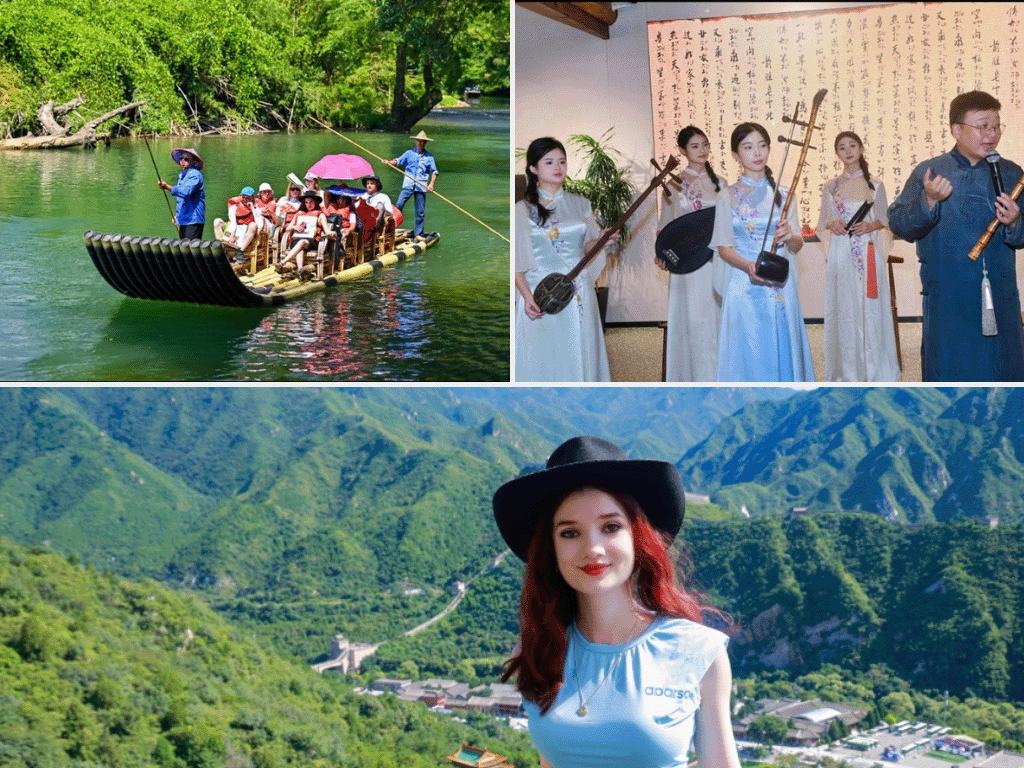
From Quanzhou, we travelled by bus to Fuzhou to visit Fujian University and learn about their tech innovations. The most memorable moment was a night river cruise on the Min River, where buildings were lit up with the Chinese Bridge Competition logo in LED lights. The activities planned for us showcased a mixture of Chinese culture and innovation.
While the trip was an incredible opportunity to experience different aspects of China, the main focus was to compete in the national competition. The level of Chinese spoken by contestants was very diverse; some contestants have been learning Chinese for over 15 years, while others have been learning for as little as two months.
The competition consisted of three parts. The first was a written exam, which included multiple-choice questions and a written section requiring at least 200 Chinese characters. The second was an oral expression portion, where participants gave a one-minute self-introduction in Chinese, followed by a two-minute description of a tourist attraction. Finally, there was a talent show, in which contestants demonstrated a talent of their choice. After all three components of the competition were completed, the top 30 contestants were chosen to continue to the finals. The groups were split into five continents: Oceania, the Americas, Europe, Africa and Asia.
The top three contestants from each region were selected to advance to the top 30, then went through another round of tests to determine the final 15. Those contestants competed in a live television broadcast like a game show. Contestants were asked difficult questions about Chinese history and culture, eventually filtering contestants out until the winners of the five continents were announced. The last five contestants competed against each other until the overall winner was announced. This year’s overall winner was the contestant from Germany.
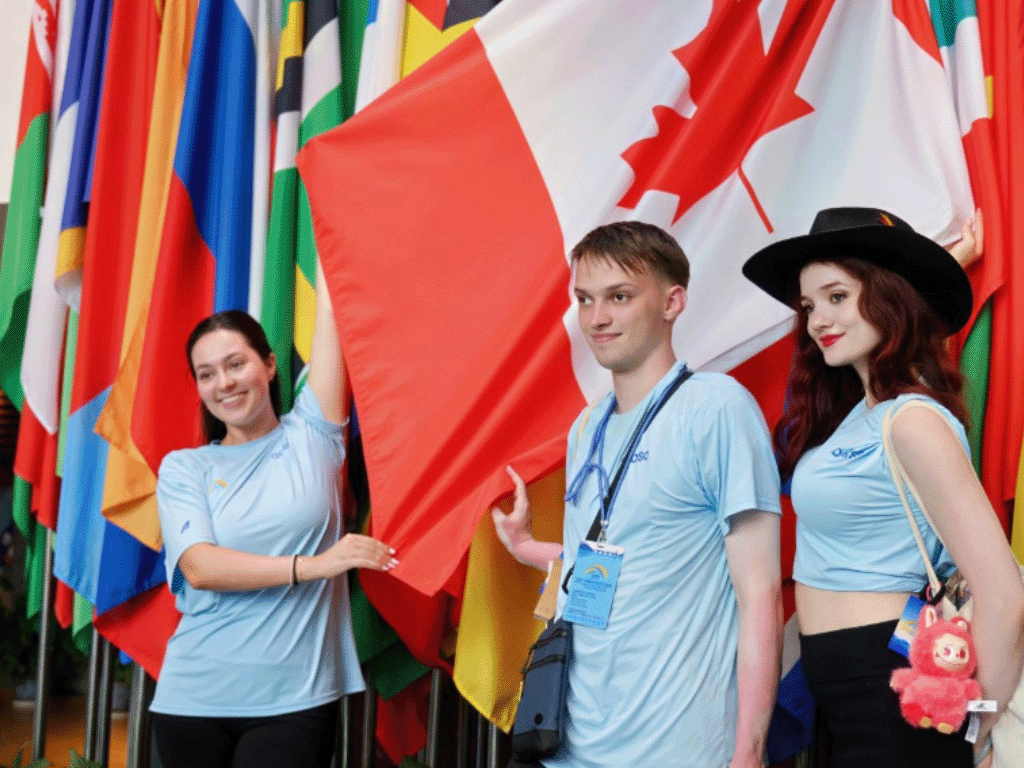
Attending the Chinese Bridge Competition has been an unforgettable experience that has enriched my life and given me a new perspective. It was interesting to see so many people from different backgrounds and cultures come together with a shared interest: Chinese language and culture.
One of the prizes for attending and participating in the Chinese Bridge Competition in China is a scholarship to attend a Chinese Language program in China in any city of your choice - I’m considering going to Fudan University in Shanghai since several participants I met during the experience are also applying. I am so grateful for this opportunity, especially to my two Chinese professors, Professor Elham Mirzania and Professor John Stowe, for inspiring me and leading me through my Chinese learning journey. I hope to be able to live the experience to its fullest next year.