Indigenous studies courses to look out for this upcoming school year
June is National Indigenous History Month (external link) , an opportunity to learn about the unique cultures, traditions and experiences of First Nations, Inuit and Métis. While the month encourages people to educate themselves about the stories, achievements, and histories of Indigenous peoples, learning about the diversity of Indigenous cultures, philosophies, and the complex relationship between Indigenous peoples, settlers, institutions, and the land should be an ongoing endeavour.
The Indigenous Thought Minor at Toronto Metropolitan University (TMU) provides students with the opportunity to engage with and learn about diverse philosophies, literatures, land-based practices, political systems, cultural practices, and languages across Turtle Island. These Arts-based courses offer foundational knowledge and exposure to decolonial thought and practice, both inside and outside the classroom. Professors from across the Faculty of Arts share a glimpse into what their courses examine and what you can look forward to learning this upcoming year.
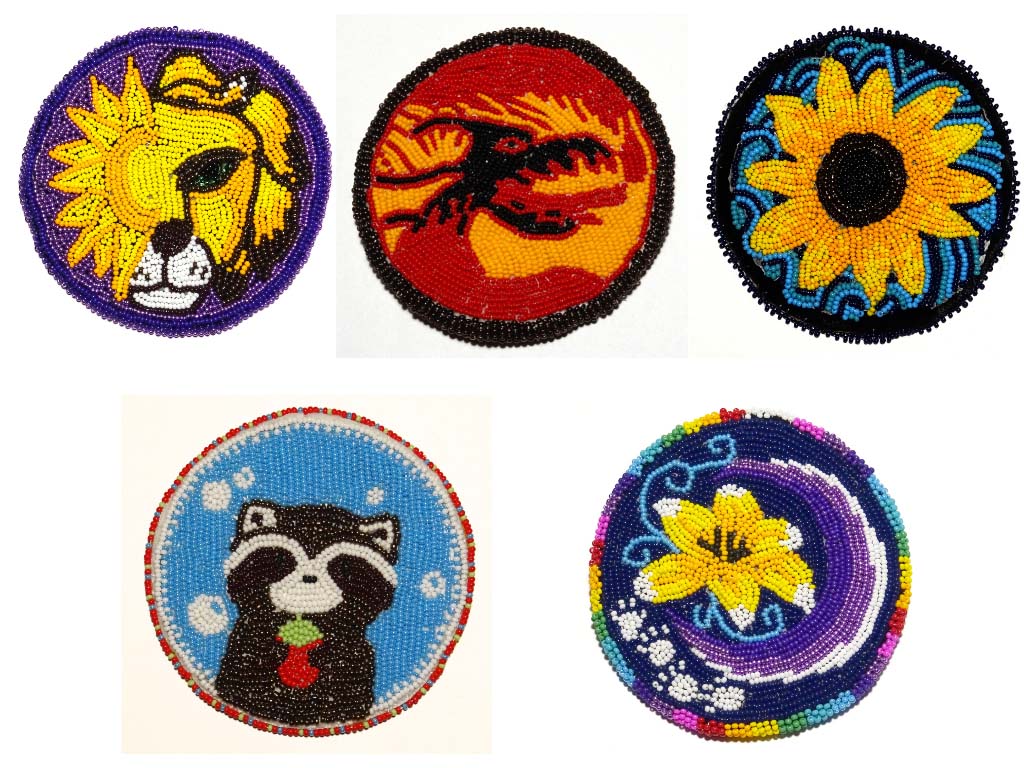
Bead work projects completed by students in ENG 650: Indigenous World Views.
ENG 650: Indigenous World Views - Jennifer Meness
ENG 650: Indigenous World Views features Anishinaabe philosophy, culture, and worldview as held in the language (Anishinaabemowin). Students learn that the colours in the Medicine Wheel at Nathan Phillips Square should be in a different position, as revealed by worldview and philosophy in the language. Through learning the meaning of words in Anishinaabemowin, students gain an understanding of traditional spirituality, ceremony, and culture. The course explores contemporary issues such as the Missing and Murdered Indigenous Women (MMIW) crisis, Indian Act politics, the Land Back movement, and reservation life. The class also tries to incorporate Elders and Knowledge Keepers as guest speakers, as well as singers and dancers. Students also read Anishinaabe cultural literature transcribed from Elders or written by Knowledge Keepers.
In previous classes, the students had a hands-on, decolonial, experiential learning opportunity through designing and creating beadwork. The students design a medallion with colours and symbolism that is meaningful to them. Professor Meness teaches students traditional beadwork techniques to create their beaded piece. The students are expected to bead in class while discussing the weekly readings and topics, and they are encouraged to connect course content to their personal experiences and observations. By beading, the students make a tangible piece that records their thoughts throughout the semester.
“I am always impressed with how deeply the students engage with content. They ask insightful questions and share their experiences, observations, and similarities to their own cultures. We work hard to establish a community in the course that is supportive, nurturing, and inclusive.” – Jennifer Meness
GEO 711 An Indigenous Guide to the Apocalypse - Madeline Whetung
GEO 711 An Indigenous Guide to the Apocalypse will include a combination of community-facing publications, such as The Red Deal and Land Body Defense, alongside Indigenous science fiction such as Louise Erdrich's Future Home of the Living God. Course topics will consider climate change and world building, as well as collective versus individualistic interests and action. The course will be especially focused on the social and cultural elements of addressing climate change and community transformation, and the ways Indigenous communities have continued to engage these practices while facing many apocalyptic realities throughout colonial history. Students will engage with many questions, such as: What relational practices increase community sustainability and resilience?
Syllabus subject to change.
HAU 100 Haudenosaunee Cultural Perspective - Brandon Martin
In HAU 100 Haudenosaunee Cultural Perspective, students learn about the Peacemaker who helped to develop the Haudenosaunee Confederacy, which is the original United Nations and democratic government on Turtle Island (North America), if not the world. An interactive activity in the course takes place when the wampum belts from TMU Archives visit to the class. Information is presented on the belts, and students are able to physically interact with the belts.
“My experience teaching this course has been awesome. Helping students to learn about Haudenosaunee language, culture, and history has been an amazing experience, especially when students are engaged with the material.” – Brandon Tehanyatarí:ya’ks Martin
MHK 101 Introductory Kanyen’kéha I - Brandon Martin
In MHK 101 Introductory Kanyen’kéha I, students learn about Owennatekha (Brian MARACLE) and his work with the Root Word Method of learning Haudenosaunee languages, which is the methodology utilized to teach Mohawk in the course. One of the focuses of the course is for students to be able to introduce themselves in Kanyen’kéha (Mohawk language). Students develop their introductions and can accomplish the task within the first month of the course.
“I am always impressed by the effectiveness of the Root Word Method for learning Kanyen’kéha. The progress that students who are dedicated and diligent in their study of the material are able to make remarkable progress with the language within a relatively short amount of time.” – Brandon Tehanyatarí:ya’ks Martin
SOC 508 Indigenous Feminisms - Eva Jewell
In SOC580: Indigenous Feminisms, delivered by Dr. Eva Jewell (Anishinaabe), students learn critical Indigenous feminist contributions to theory and practice using learning approaches informed by diverse Indigenous material cultures. Students engage foundational feminist works by premiere scholars like Lee Maracle and Dian Million, as well as a diverse assemblage of current Indigenous feminist thinkers from across Turtle Island. The class collectively explores scholarly material through a creative journaling process, in-class creative technique tutorials, guest lectures from local Indigenous feminists, and student-led discussions.
"Past students of SOC580 have enjoyed the deeper engagement with peers, text, concepts, and creative skills that they learn in this class." — Eva Jewell