Faculty of Arts professors awarded SSHRC Explore competition funding
The Social Sciences and Humanities Research Council (SSHRC) Explore competition supports researchers in pursuing innovative and experimental projects. Three scholars in the Faculty of Arts at Toronto Metropolitan University (TMU) were recently awarded funding for their forthcoming projects; this funding will enable professors Alexandra Fiocco, Elizabeth Podnieks, and Jumoke Verissimo to contribute new insights into their fields and continue in knowledge mobilization efforts.

Professors Alexandra Fiocco, Elizabeth Podnieks, and Jumoke Verissimo

Alexandra Fiocco, Department of Psychology
Alexandra J. Fiocco is a professor in the Department of Psychology at TMU and is director of the Stress and Healthy Aging Research (StAR) Lab. Her research is multidisciplinary, which stems from her training in psychology, neuroscience, and epidemiological research methods. Fiocco’s program of study is two-pronged, one of which examines predictors of cognitive health and well-being in later adulthood, and the other which examines intervention strategies that foster healthy and meaningful aging, including mindfulness-based strategies. Her research is supported across the three Canadian tri-council agencies.
Fiocco’s study is a community-based participatory action research (PAR) project led by the Stress and Healthy Aging Research (StAR) Lab in partnership with Houselink and Mainstay Community Housing (external link) , a non-profit organization supporting individuals with mental health and addiction issues in Toronto. With a growing proportion of aging tenants, the project aims to better understand and support wellbeing and aging in place among older adults living in low-income supportive housing.
“This funding provides my lab with the resources needed to bridge science and community and to meaningfully engage with community partners like Mainstay, to amplify lived experiences, and to pursue equity in aging.” – Alexandra Fiocco

Elizabeth Podnieks, Department of English
Elizabeth Podnieks is a professor of English at TMU, where she teaches and conducts research in the fields of life writing, motherhood studies, modernism, and popular culture. Her book publications include, among others, the monographs Maternal Modernism: Narrating New Mothers and Daily Modernism: The Literary Diaries of Virginia Woolf, Antonia White, Elizabeth Smart, and Anaïs Nin; the critical edition Rough Draft: The Modernist Diaries of Emily Holmes Coleman, 1929-1937; and the edited collections Textual Mothers/Maternal Texts: Motherhood in Contemporary Women’s Literatures; Mediating Moms: Mothers in Popular Culture; and Pops in Pop Culture: Fatherhood, Masculinity, and the New Man. Her co-edited book The Palgrave Handbook of Parenthood in Popular Culture, is forthcoming in Fall 2025.
Born in Bailey’s Brook in rural Nova Scotia, Margaret Clothilde Macdonald (external link) RRC (1873-1948) left home to embark on an international career in military nursing. She served in the Spanish-American War, the South African War, and, as a member of Canada’s Permanent Army Medical Corps, she sailed to the UK with the first contingent of troops at the outbreak World War I. In November 1914, she was appointed Matron-in-Chief of the overseas Canadian Nursing Service, and became the first woman to hold the rank of major in the British Empire. Along the way, Macdonald developed long-term, close personal relationships with some of the most impressive figures of the period, like Lady Nancy Astor (who would become the first female MP in Britain) and the poet Lieutenant-Colonel John McCrae (author of “In Flanders Fields”). Macdonald’s extensive archives, including diaries, scrapbooks, correspondence, essays, photographs, and memorabilia, are housed at Saint Francis Xavier University (external link) in Antigonish, Nova Scotia. Additional papers constitute the Margaret Clothilde Macdonald Fonds at the Library and Archives Canada (external link) in Ottawa.
Podnieks’ research goals include creating a website exhibition of Macdonald’s unpublished archives and writing a scholarly book where she will put Macdonald’s papers in dialogue with life writings by military nurses who served on the Western Front. Podnieks’ book will chart a network of Canada’s WWI nurses at the nexus of feminism, imperialism, and autobiography studies. Podnieks aims to bring this military history, which is overwhelmingly about white nurses, into dialogue with Indigenous and Black nurses in Canada (and the US), whose stories remain sidelined in mainstream histories of WWI.
“I am deeply grateful to receive a SSHRC Explore Grant, which will facilitate the development of my project. Macdonald’s archives have medical, military, and artistic value, but they are also familial artifacts, for I know Major Macdonald as my great-aunt Margaret. Margaret inspired her niece—my mother, Elizabeth Podnieks—to become a nurse. My late mother went on to work as a professor of nursing at TMU for over twenty years. SSHRC funding is therefore especially meaningful on a personal level, as it affords opportunities to reflect on my family’s archives, memories, and intergenerational bonds.” – Elizabeth Podnieks
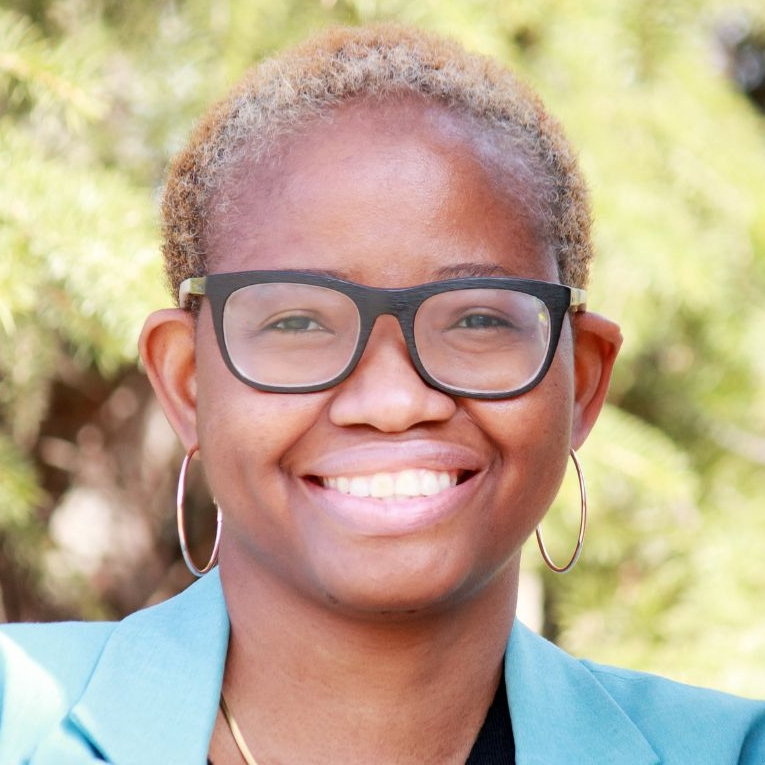
Jumoke Verissimo, Department of English
Jumoke Verissimo is a poet, novelist, children’s writer and an Assistant Professor in the Department of English at Toronto Metropolitan University. Her research interests include creative writing, African and diasporic literature, memory studies, traumatic affect, and research creation. Verissimo’s creative writing has received honours from the Edinburgh Festival First Book Award (shortlist), RSL Ondaatje Prize (shortlist), and the Aidoo-Snyder Book Prize (winner), among several others. Verissimo’s current research project, Ancestral Mist, is the first phase of a larger four-part project titled “Home Relations.” This project investigates and reflects on how severed ancestral ties translate into silence and absence across generations, ultimately triggering a search for home and belonging. Her latest poetry collection, Circumtrauma (Coach House Books), will be published in Fall 2025.
“Ancestral Mist (external link) ” is a research-creation project recovering the under-explored lived experiences of non-elite Afro-Brazilian returnees in 18th-century West Africa. As a descendant, the researcher bridges personal history with rigorous historical inquiry to illuminate the intertwined legacies of slavery and return migration. This interdisciplinary project uniquely combines archival research, speculative narratives, and artistic interpretation to reconstruct fragmented memories and address silences surrounding these returnees' lives.
The initial SSHRC-funded phase of “Ancestral Mist” will launch a “Digital Imaginarium”—an accessible online ancestral memory space with interactive maps, archival materials, and artistic expressions. This phase pilots the broader "Home Relations" project, specifically investigating the principal investigator’s ancestor as a non-elite Afro-Brazilian returnee in late 18th and early 19th-century coastal West Africa, a demographic largely overlooked in scholarship that often emphasizes elite figures. By centring on her own ancestor's individual experience, the project will develop an ancestor-focused research methodology and explore the profound impact of forced migration and displacement on identity, family, and belonging.
Archival research, using digital resources and missionary archives, employs a narrative lens to glean insights into social status, cultural practices, and daily life from seemingly mundane details. These fragments will inform speculative narratives and artistic expressions, addressing archival silences and offering novel insights into the lived experiences and identity reconstruction of non-elite returnees. The "Ancestral Mist" Digital Imaginarium will engage the public with interactive maps, archival materials, and artistic interpretations of this crucial diasporic history. Ultimately, this project will generate new knowledge, challenge existing narratives, and significantly contribute to diaspora studies, Afro-Brazilian history, and the digital humanities by centering marginalized voices through innovative methods.
“I am very grateful and humbled by the support of the SSHRC Explore Grant for ‘Ancestral Mist.’ This funding represents more than just resources, it’s an affirmation of the importance of exploring marginalized histories and developing innovative approaches to research. The opportunity to research the experiences of my ancestors and share their stories through the Digital Imaginarium is a profound one, and I am deeply appreciative of this chance to contribute to a more inclusive understanding of the diasporic past.” – Jumoke Verissimo