Archiving queer joy, politics and collective memory: Liberation on the Dance Floor
In 2020, Craig Jennex, a professor in the Department of English, along with other notable researchers and research assistants (external link) , initiated a project titled Liberation on the Dance Floor (external link) . The project analyzes LGBTQ2+ dance histories in Canada, including the Gay Community Dance Committee (GCDC), a Toronto-based community organization active in the 1980s.
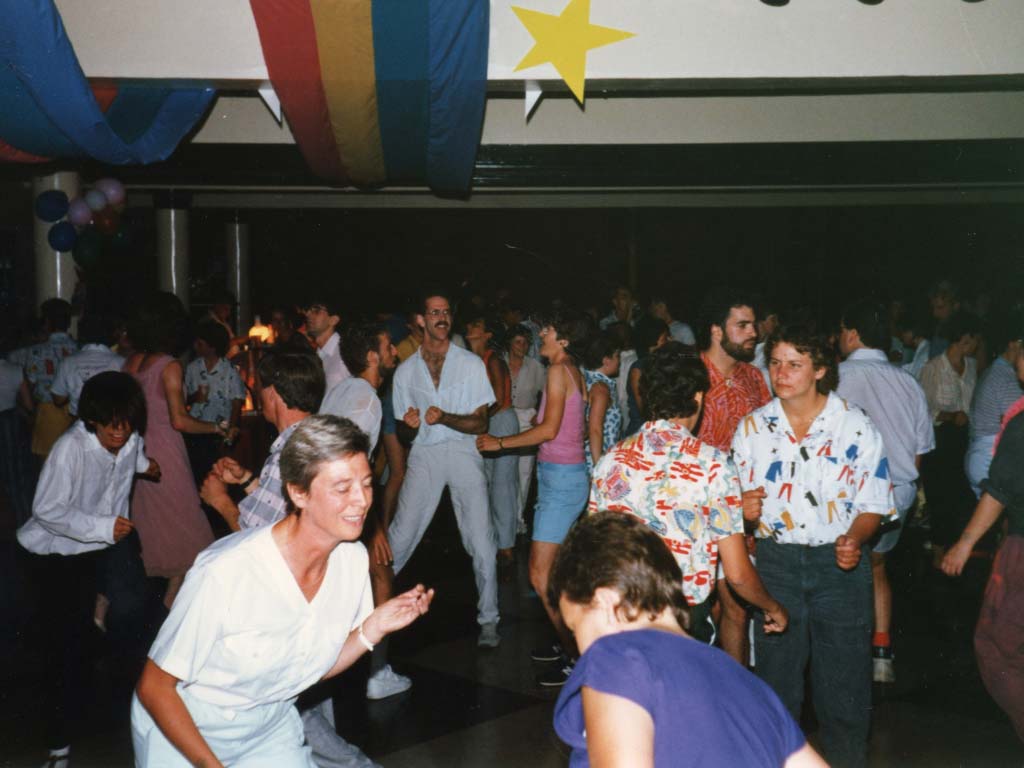
GDCD Dance c. 1985. Photo by Philip Share.
Having danced in gay bars in Halifax and Toronto since he was 16, the spark for the Liberation on the Dance Floor project ignited when Jennex realized that dance floor experiences politicized and radicalized him. “Coming into my queerness through dance floor experiences,” Jennex notes, “meant that my understanding of queerness is informed by collectivity, embodied pleasures and rhythms, sensuality, and bliss.”
“This project began as a way of asking if this sequence—finding joy on the dance floor and subsequently craving a life similarly filled with embodied, passionate, collective bliss—is common for others as well.” – Craig Jennex
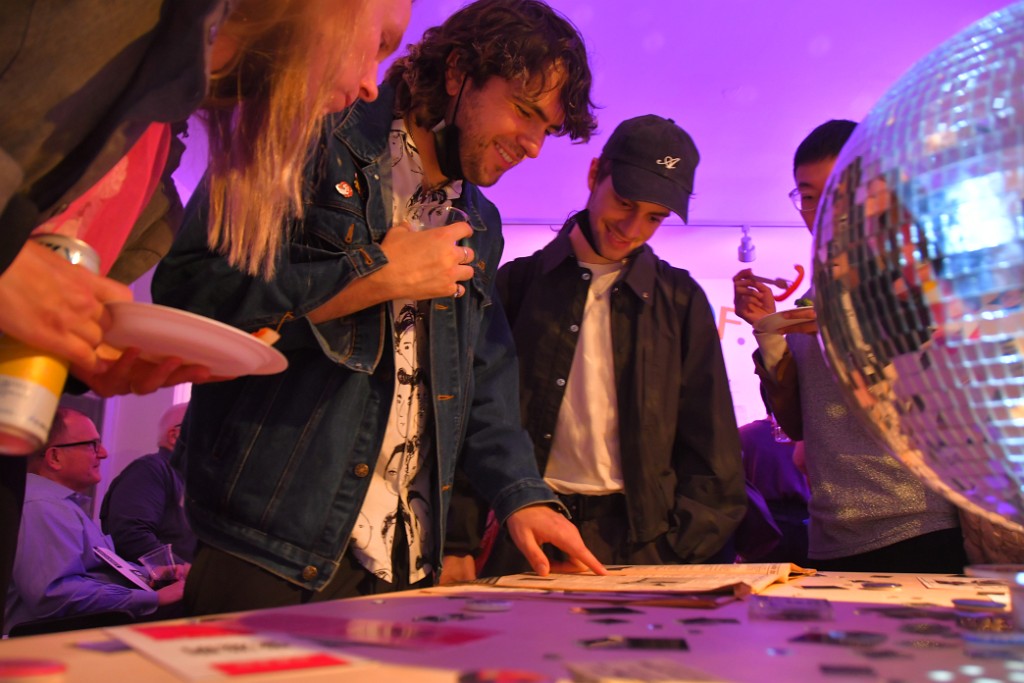
Liberation on the Dance Floor exhibition at The ArQuives. Photo by Gilbert Prioste.
Jennex’s interest challenges traditional or “popular” views of political action as something confined to streets, courts, or legislatures. Dance floors, often more accessible than protests or meetings, have frequently served as entry points into collective politics. Accounts from activist elders highlight that queer dance floors are not peripheral to political action, they are often its foundation. This perspective invites a rethinking of both historical records and future political strategies. Jennex adds, “As queer and trans people are, once again, used as scapegoats by moral entrepreneurs fanning the flames of moral panics, we ask: what can a reinvestment in the queer dance floor make possible in this moment? How can experiences of collective joy and bliss—to the four-on-the-floor beat of dance music—enliven queer collective formation in the present?”
The Liberation on the Dance Floor project focused on archiving this history in a multimedia digital format on a website which includes the GCDC handbills that advertised over 50 dances in Toronto between 1981 and 1992, playlists, maps, and more. One example of this is from Deb Parent, a lesbian activist and DJ since the late 1970s. Parent created a playlist for the project that features songs she remembers spinning at the dances explored in the project from the 1980s.
Another aspect of the project is sharing the research in person at academic conferences, public exhibitions and other avenues. Jennex and project research assistant Afrah Idrees gave a keynote presentation at the National Queer and Trans+ Community History Conference in Edmonton, Alberta in 2024, sharing the project with academics, activists, and community historians from across Canada. During its first exhibition at Hart House at the University of Toronto, the team displayed archival material, reproductions, and gave a presentation with Mayor Olivia Chow, who was herself a regular at GCDC dances in the 1980s. The second public exhibition was held at The ArQuives: Canada’s LGBTQ2+ Archives (external link) , where archival materials and photographs were shared alongside an exhibition-specific playlist of “Philly soul,” a precursor to disco music that is orchestral, lush, and an often-overlooked foundation of the music that sustained lesbian and gay liberation movements of the 1970s and 1980s. This exhibition also recreated a wall of classified ads from dances in the mid-1980s and invited attendees to add their own classifieds under the heading “In Search Of…”. Jennex shared. “This exceeded our expectations: by the end of the exhibition’s run, we had hundreds of index cards written by attendees that beautifully capture queer desires in the present.”
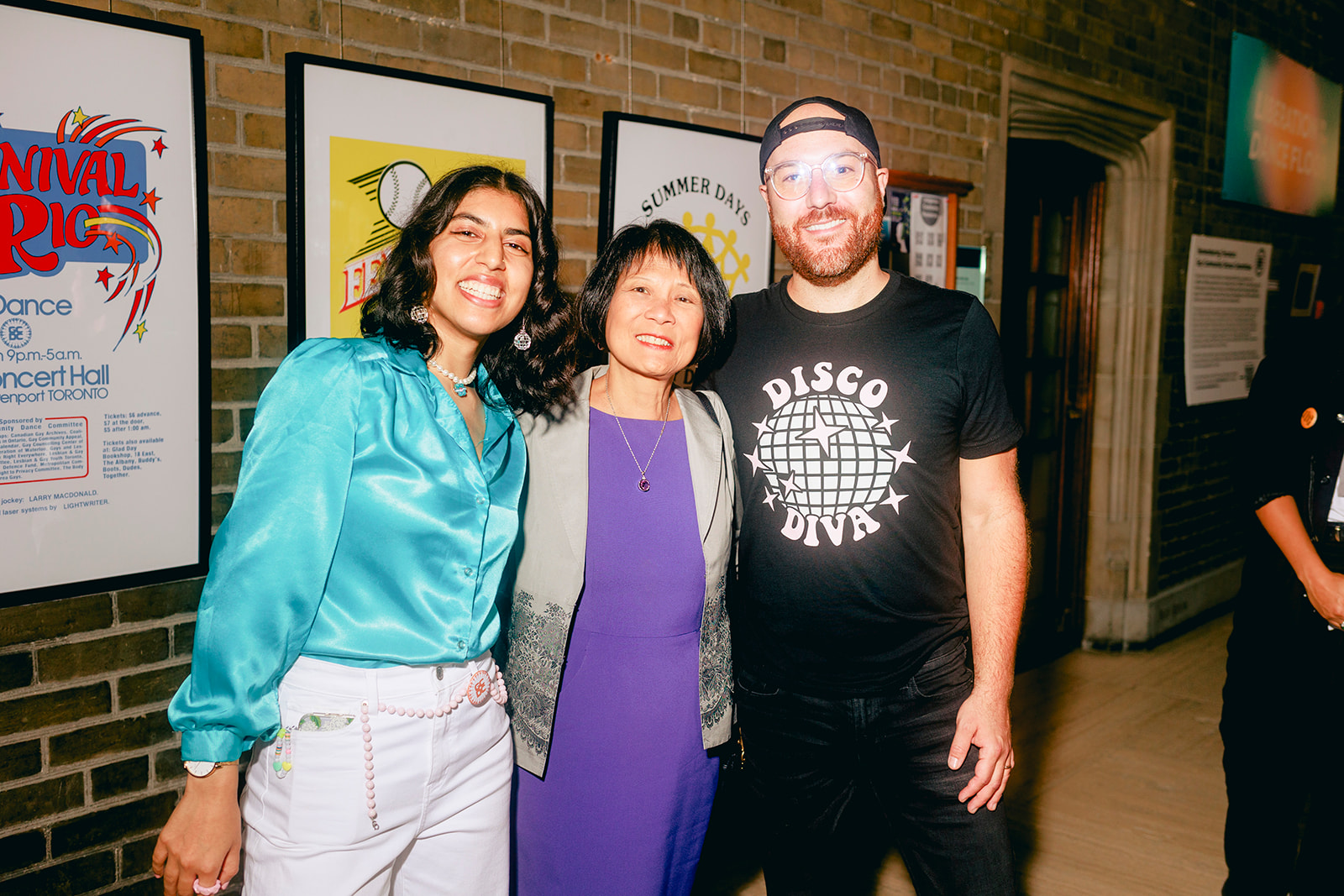
Afrah Idrees, Mayor Olivia Chow and Craig Jennex at the Hart House exhibition. Photo by Albert Hoang.
The project encouraged community participation by collecting memories of the GCDC dances. Jennex and his team interviewed organizers, DJs, and dancers for first-person accounts of queer dance floor experiences in 1980s Toronto. Stories continue to emerge through the website’s “share your memories” prompt.
With the project’s focus now expanding to “better understand the politics of popular music and collective dance in lesbian and gay liberation movements across Canada,” this summer, the Liberation on the Dance Floor team is also analyzing the public response, from the classifieds, as a collective manifesto. Jennex also has a book coming out from the Cambridge University Press this summer entitled Liberation on the Dance Floor: Popular Music and the Politics of Plurality, which will be available for free as an academic Gold Open Access text.
“This project doesn’t just seek to archive the past, but also to archive the present, so all of this material is being stored and curated for future researchers.” – Craig Jennex
Jennex, in partnership with UK-based educational programming company Futurum (external link) , has produced a document that was distributed among high schools in the UK. Download the resources and others on the Liberation on the Dance Floor - publications (external link) website.