Sarah Dermody participates in Science Meets Parliament Ontario program
From May 12 -14, 2025, Psychology researcher, Sarah Dermody (she/her), participated in the inaugural launch of the Canadian Science Policy Centre’s (external link) (CSPC) Science Meets Parliament Ontario (external link) program (SMP-ON). This program helps familiarize scientists with the political decision-making process at the provincial level and encourages lawmakers to incorporate scientific evidence into their policy decisions.
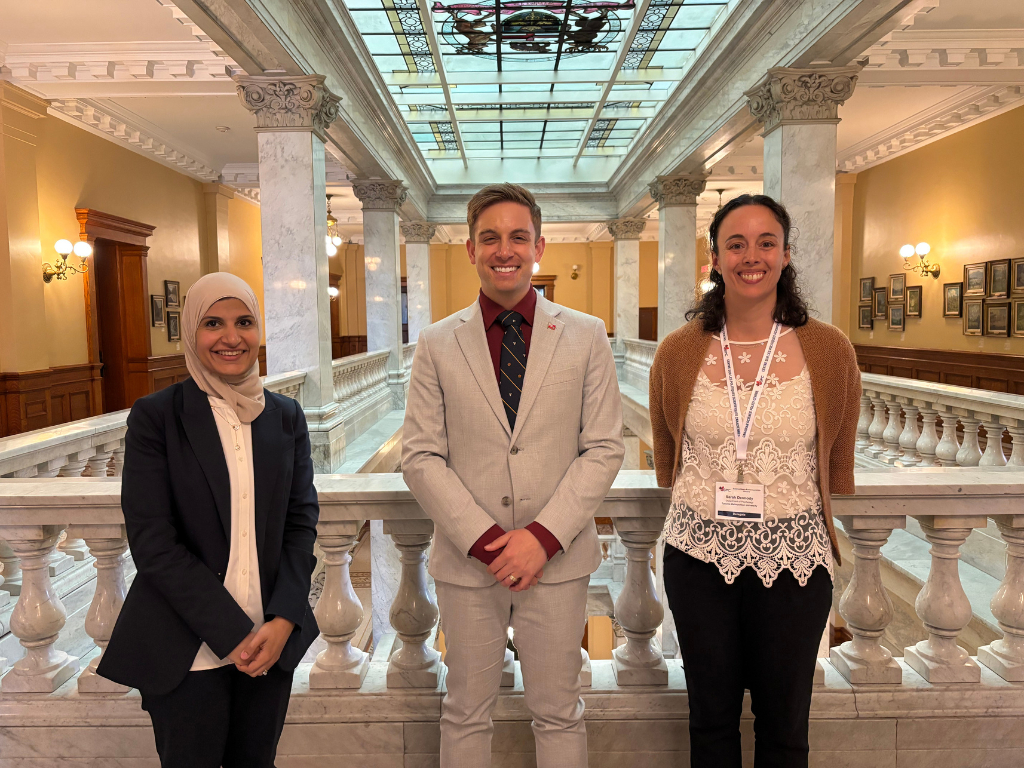
Researcher Mai Ahmed, MPP Tyler Watt and Sarah Dermody at Queen’s Park.
Connecting research with Provincial Leaders
SMP-ON offers Members of Provincial Parliament (MPPs) a chance to connect with emerging Ontario researchers, explore Canadian research infrastructure, and discuss science’s role in innovation and economic growth. In turn, researchers gain insight into the legislative process, improve their policy communication skills, and build lasting ties with elected officials. Through this program, Dermody was introduced to provincial policymaking, participating in workshops on science communication and a two-day event at Queen’s Park. There, she shadowed MPPs, deepened her understanding of policy processes, and established connections to help translate her research into policy.
As a participant, Dermody was able to connect with MPP Mary-Margaret McMahon. During a meeting with firefighter chiefs and representatives from an environmental group, Dermody was able to discuss her research on substance use and addiction, and its relevance to the community. Dermody also spoke with MPP and former nurse Tyler Watt about improving access to mental health care and addressing barriers.
“By making these initial connections with some MPPs, I hope to continue dialogues about addiction and mental health services in Toronto, and more broadly in Ontario. I am excited that through this experience, I will be better equipped to translate my research to inform policies that could have a widespread impact on the wellness of the community.”
Dermody’s research at Toronto Metropolitan University is strengthening connections in Ontario
Dermody is dedicated to advancing treatment approaches and improving outcomes for individuals struggling with addiction, particularly those affected by alcohol and nicotine use. Her research emphasizes the critical role that provincial policy plays in shaping access to evidence-based addiction treatments and harm reduction measures. By building stronger ties with policymakers in Ontario, Dermody aims to ensure her findings have a direct impact on public policy. To maximize reach and influence, she plans to share her research through concise, accessible formats rather than relying solely on traditional academic publications, making it easier for decision-makers to integrate the findings into effective policy solutions.
Looking ahead, Dermody intends to stay in communication with MPP McMahon and Watt while also expanding her network by building new partnerships. She plans to start drafting policy briefs that distill the core findings of her research, aiming to support evidence-based policymaking in the field of mental health.
Dermody’s participation in the Science Meets Parliament Ontario program marks a significant step toward bridging the gap between scientific research and provincial policymaking. By fostering meaningful dialogue with elected officials and sharing her expertise on addiction and mental health, Dermody is helping to lay the groundwork for evidence-based policies that benefit Ontarians.
Sarah Dermody (she/her) is a professor in the Department of Psychology and the director of the Clinical Addictions Research and Equity (CARE) Lab at TMU. The CARE Lab takes an integrated approach to health, examining psychological, behavioural, interpersonal, and biological influences. This multidisciplinary perspective enhances understanding of addiction by exploring its underlying causes, risk factors, and related harmful health behaviours. Dermody has received grants from the National Institutes of Health and the Canadian Institute of Health Research. She is also a member of the Society for Research in Nicotine and Tobacco and the Research Society on Alcoholism.