Faculty of Arts new and emerging research explores the richness and depth of Black Studies
Black Studies in the Faculty of Arts at Toronto Metropolitan University (TMU) is distinctive for its multidisciplinary and theoretically rich curricula, robust connections to industry partners, extensive community-engaged research with local and global organizations, and diverse research specializations among its faculty members.
Faculty research specializations and expertise in the Arts include abolition, criminalization, Caribbean literature and theory, Black popular culture, Afrofuturism, global justice and more. Researchers have received numerous prestigious awards and grants for their research, contributed publications to notable academic journals, and remained committed to community well-being and enhancement through their organizational involvement. We’re featuring a few examples here!
Creative Works
.jpg)
ancestralmist.com
Jumoke Verissimo, Department of English
Verissimo’s creative writing has received honours from the Edinburgh Festival First Book Award (shortlist), RSL Ondaatje Prize (shortlist), and the Aidoo-Snyder Book Prize (winner) among several others.
Verissimo’s current research project, Ancestral Mist (external link) , is part of a four-pronged project titled “Home Relations Project,” which investigates and reflects on how severed ancestral ties translate into silence and absence across generations, ultimately triggering a search for home and belonging. This ongoing research-creation project aims to explore the gaps in the history of a non-elite family of returnee slaves through the lens of a Brazilian returnee’s journey from Brazil to West Africa. As a descendant of this returnee, Verissimo seeks to rethink the idea of identity and belonging through her grandfather, Fortuna Anastasia Verissimo (1886-1976), one of the returnee’s sons. The project hopes to expand our understanding of what constitutes meaningful kinship, mobility, and continuity within Black ancestry and narratives by rediscovering, revising, and revisiting untold stories.
Darcy Ballantyne, Department of English
“With love, Dad”: Imaging and Imagining Austin Clarke (external link)
Over the course of Ballantyne’s brief relationship with Austin Clarke, he gave her a number of small things that, from the point of view of a daughter trying to make a connection with a newly-discovered father, Ballantyne initially considered trivial; they did not fit the image of the father that she had created for herself. Most of his offerings ended up in boxes stored at the back of closets and under beds in her home. Since his death in June 2016, Ballantyne has been working her way through the Clarke ephemera she held onto and realize that, taken together, this small personal archive forms an intimate and tender narrative that offers a context for the history that connects them and their shared past.
 (1).jpg)
Cover of conference program. Photo by Abdi Osman.
Social Justice Research

El gringo; RDNE; Sadock Kaisi; Craig Adderley / Pexels
Sam Tecle, Department of Sociology
Since the 1970s, Jane and Finch, a community tucked in the corner of northwest Toronto, has been marked pejoratively as poor and working-class. Also known as a site of notoriety, danger and criminality, Tecle begins with the contentious assertion that in an ostensibly white country that touts its history of multicultural benevolence Jane and Finch is also known as a Black community. Rather than dispute this assertion, Tecle’s project begins from there, thinking and working from that Blackness asserting that Jane and Finch – this Black community in white Canada – teaches us much about Canadian urban development, resident-led community mobilization and the right not only to the city but to life. Thinking Black is core and integral to that understanding.
Sam Tecle - Recipient of a research grant evaluating the effectiveness of Success Beyond Limits in partnership with the Higher Education Quality Control of Ontario; co-investigator on a SSHRC grant researching Black Community Sites of Education.
Grace-Edward Galabuzi, Department of Politics and Public Administration
Grace-Edward Galabuzi’s research interests include the experiences of recent immigrants and racialized groups in the Canadian labour market, the racialization of poverty, race, racialization and social exclusion/inclusion and the impact of global economic restructuring on local communities.
In (PDF file) Colour-coded Retirement: An intersectional analysis of retirement income and savings in Canada, a 2021 report in the Canadian Centre for Policy Alternatives, Galabuzi and co-authors Sheila Block and Hayden King explore the documented income gap between white, racialized and Indigenous seniors.
Galabuzi has also worked in the Ontario government as a senior policy analyst on justice issues, and he is a former provincial coordinator of the Ontario Alliance for Employment Equity and has been involved in many community campaigns around social justice issues such as anti-racism, anti-poverty, community development, human rights.
.jpg)
policyalternatives.ca
Globality
.jpg)
Getty Images
Emmanuel Kyeremeh, Department of Geography and Environmental Studies
In his work entitled Immigrants’ Network in Canada, The Case of Ghanaian Immigrants’ Personal Network in the Toronto Census Metropolitan Area, Kyeremeh interrogates the construction, composition, and rationale behind the personal networks of recent immigrants to Canada. Drawing on egocentric-network analysis and interviews with 172 Ghanaian immigrants in Toronto, Kyeremeh reveals their networking strategies during their integration. The nature of this network is explained by examining the migration project of immigrants together with the context of reception in Canada, which suggests a desire by immigrants to stay in Canada and make Canada their second home. These findings have implications for their successful integration in Canada.
Emmanuel Kyeremeh - 2024 recipient of SSHRC Insight Development Grant: "Are immigrants distressed? Exploring African immigrants vulnerability to Food Insecurity in the Greater Toronto Area and Stakeholder Collaborations"
Angela Doku, Department of Economics
Angela Doku was a leading contributor to (PDF file) “The Case for Farmer Managed Natural Regeneration (FMNR) in the Upper West Region of Ghana” project (external link) . This research assesses the impact of peer choices on the decision to adapt to climate change in rural Ethiopia. Through the use of a 3-year panel of farmers in the Nile Basin region, researcher found that peer choices positively affect the uptake of different adaptation strategies. This emphasizes the importance of social networks to achieve adaptation to climate change in sub-Saharan Africa.
Marie Christelle Mabeu, Department of Economics
Marie Christelle Mabeu’s primary research agenda explores the long-run impact of historical and contemporary institutions on reproductive behaviour, early-age human capital accumulation and female empowerment, with a regional focus on sub-Saharan Africa (external link) . In her interview with the International Economic Association, Mabeu discusses her research and the importance of racial diversity and inclusion in economics research.
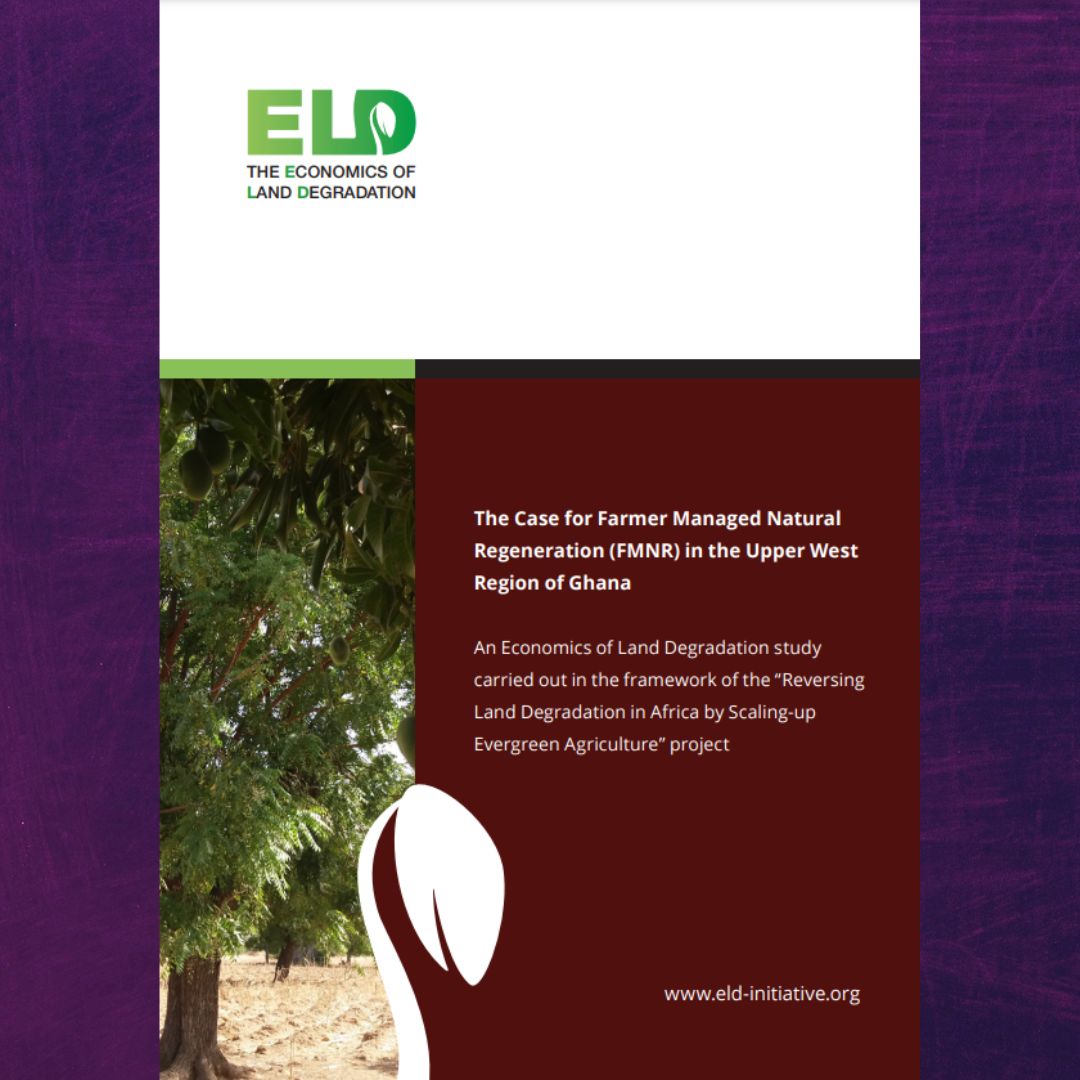
eld-initiave.org Photo by Vanja Westerberg & Daniel Banuoko.
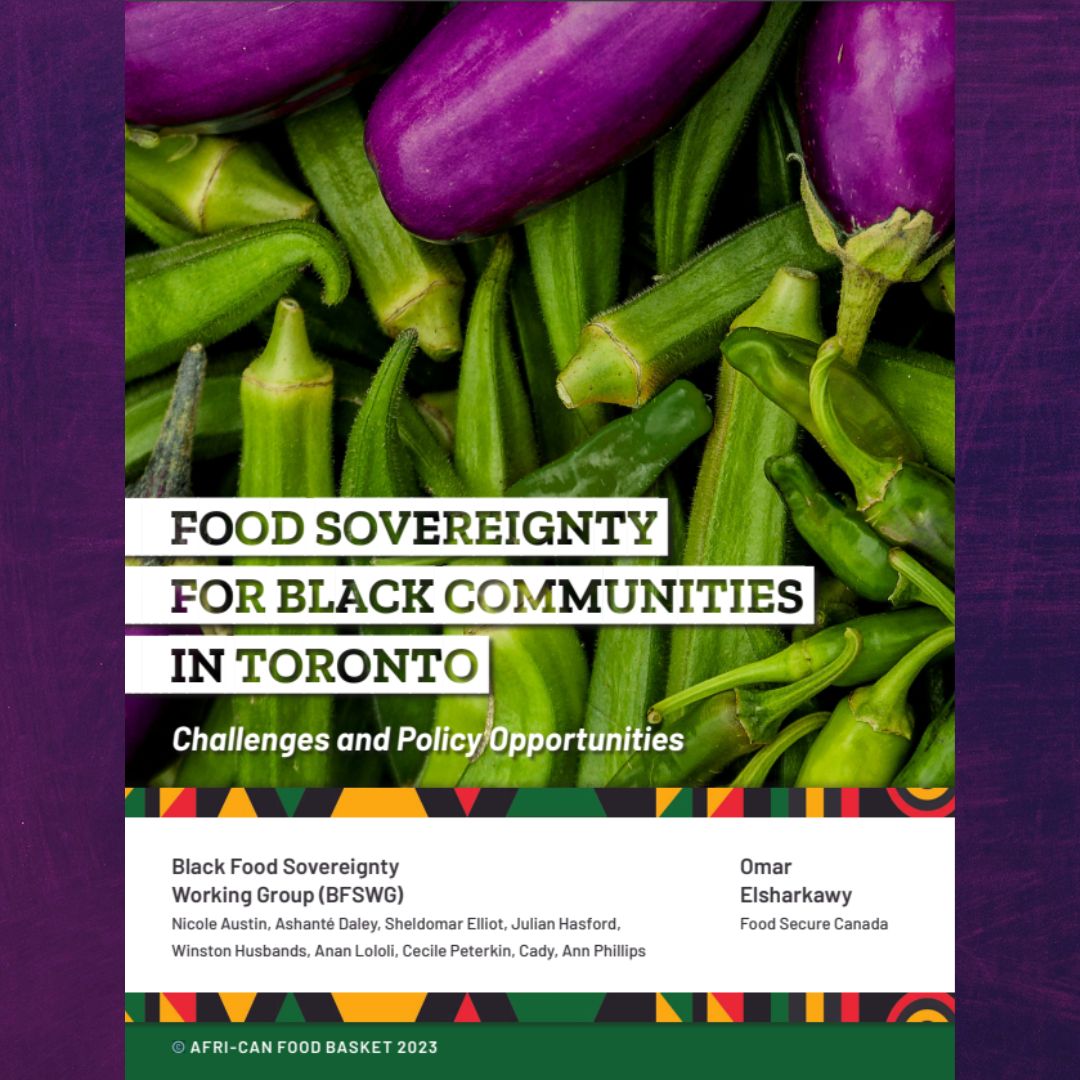
Policy paper created by the Black Food Sovereignty Alliance. Photo by Laura Berman
Anan Xola Lololi, School of Public Policy and Democratic Innovation
(PDF file) Policy Paper on Black Food Sovereignty (external link)
Anan Xola Lololi is a Food Policy Fellow for the School of Public Policy and Democratic Innovation, a food justice advocate and a policy leader.
Black food sovereignty challenges global systems of exploitation that have historically denied Black communities control over their land, labor, and food production. As a response to industrial agriculture and food apartheid, Black farmers and activists worldwide advocate for sustainable, community-based food systems rooted in ancestral knowledge and self-determination. This movement spans the African diaspora, linking struggles from the U.S. to the Caribbean, Latin America, and Africa, where food justice efforts resist corporate dominance and promote cultural and economic sovereignty.

Anan Lololi is a Canadian Food Systems Analyst, SPPDI fellow, and the
Interim Executive Director of the Black Food Sovereignty Alliance (BFSA). He a founding member and former Executive Director of the Afri-Can FoodBasket (AFB) for 26 years (1995-2021).
Black Canadian History
Hyacinth Simpson, Department of English
From 2005 to 2014, Simpson was the Editor of MaComère, the peer-reviewed scholarly journal of the Association of Caribbean Women Writers & Scholars. Under her editorship, MaComère won the Horizon Award (Council of Editors of Learned Journals) Simpson formerly organized a SSHRC-funded international conference Caribbean Migrations: Negotiating Borders.
Simpson was the principal investigator on the multitiered SRC social history project Black Canada and the Great War, which includes the eponymously titled SSHRC-funded Symposium (2021).
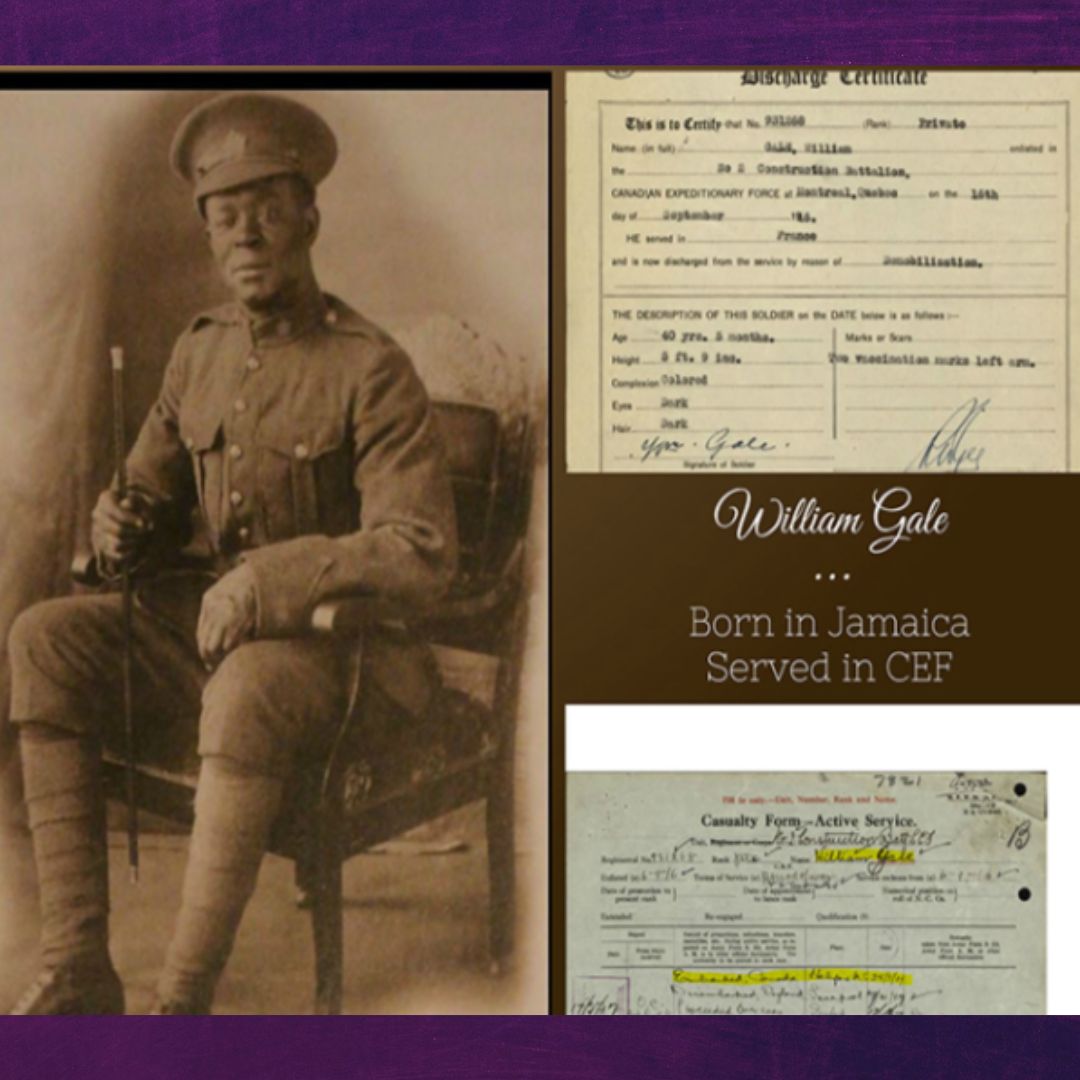
Photos from Black Canada and the Great War webpage. “William Gale” courtesy of Kathy Grant.
.jpg)
El gringo / Pexels
Ismahan Yusuf, Department of Geography and Environmental Science
Since the 1990s, feminist and critical space scholarship has become increasingly attentive to how racialized and gendered as well as religious and gendered groups negotiate marginalization in urban space. Despite this growth in research, few studies have ventured to critically examine the geographies of women at the axis of these social locations: Black Muslim women. In the absence of research focused on Black Muslim women’s public geographies in the Canadian canon, Yusuf's research portfolio—comprised of her dissertation and current ongoing project—are an effort to craft the inaugural frames for understanding the implications of, as well as the collective experiences that arise from, existing at this hyper-invisible intersection. In her talk, Yusuf explores the introduction of the term "musogynoir" to name the specific marginalization Black Muslim women negotiate when anti-Blackness, misogyny, and gendered Islamophobia interact(s) in everyday place.
Melanie Knight, Department of Sociology
Black communities have consistently mobilized through activism and organizations to fight for social change. While well-documented groups like the UNIA and Brotherhood of Sleeping Car Porters are recognized, this project explores lesser-known Black-led organizations in Canada, analyzing their creation, initiatives, tactics, challenges, and impact. Using a critical race and resource mobilization framework, it examines how financial insecurity, bureaucratic surveillance, and state interference have hindered Black movements. Despite systemic barriers, these organizations exemplify Black Canadians’ enduring struggle for equity and self-determination.
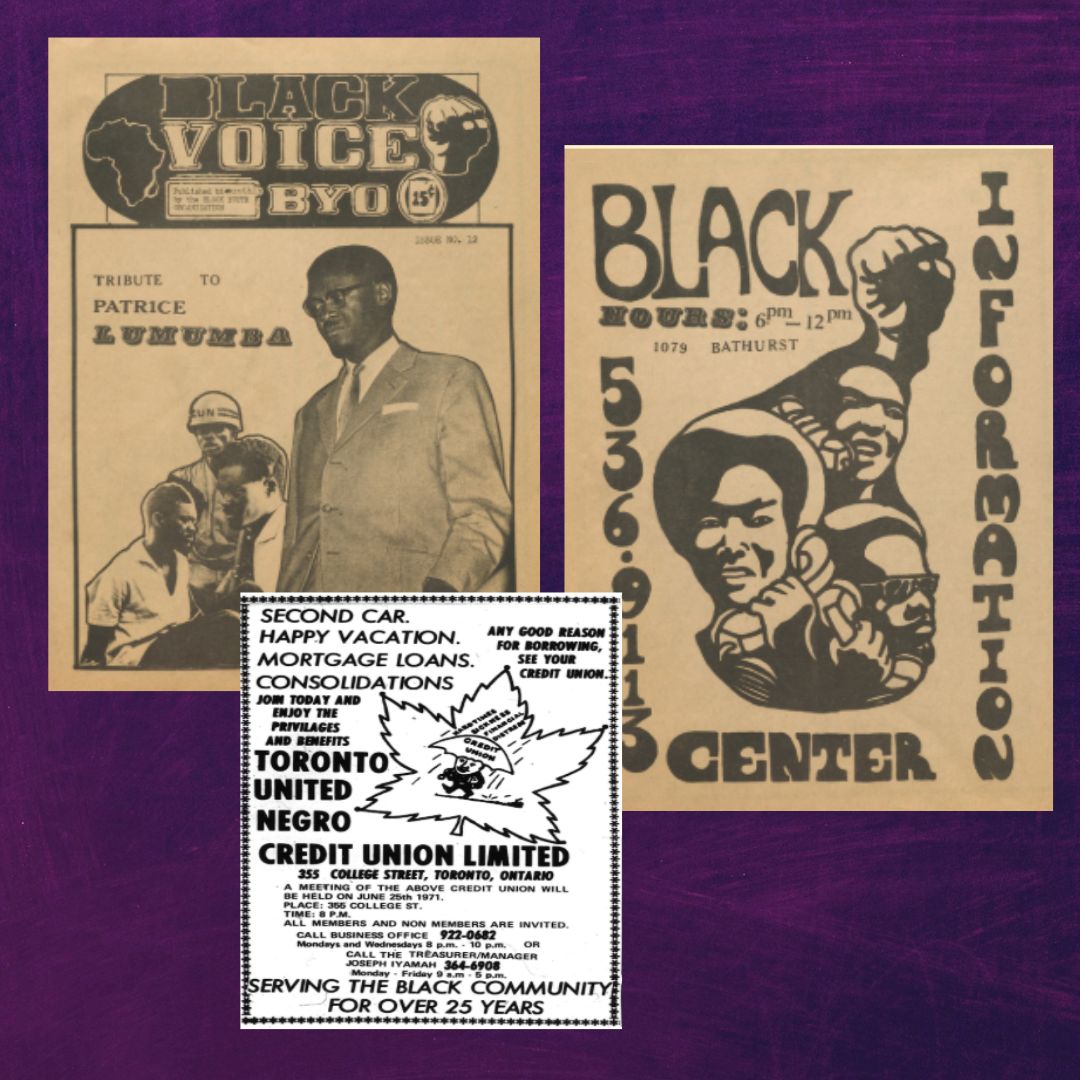
Photos from The University of Toronto Libraries Media Commons Archives.
Melanie Knight - Recipient of numerous grants, including SSHRC Insight Grant "Forgotten histories: Black community organizations in Toronto and the rise of the Black movement in Canada (1890-1990)," and Foundation for Black Communities grant.
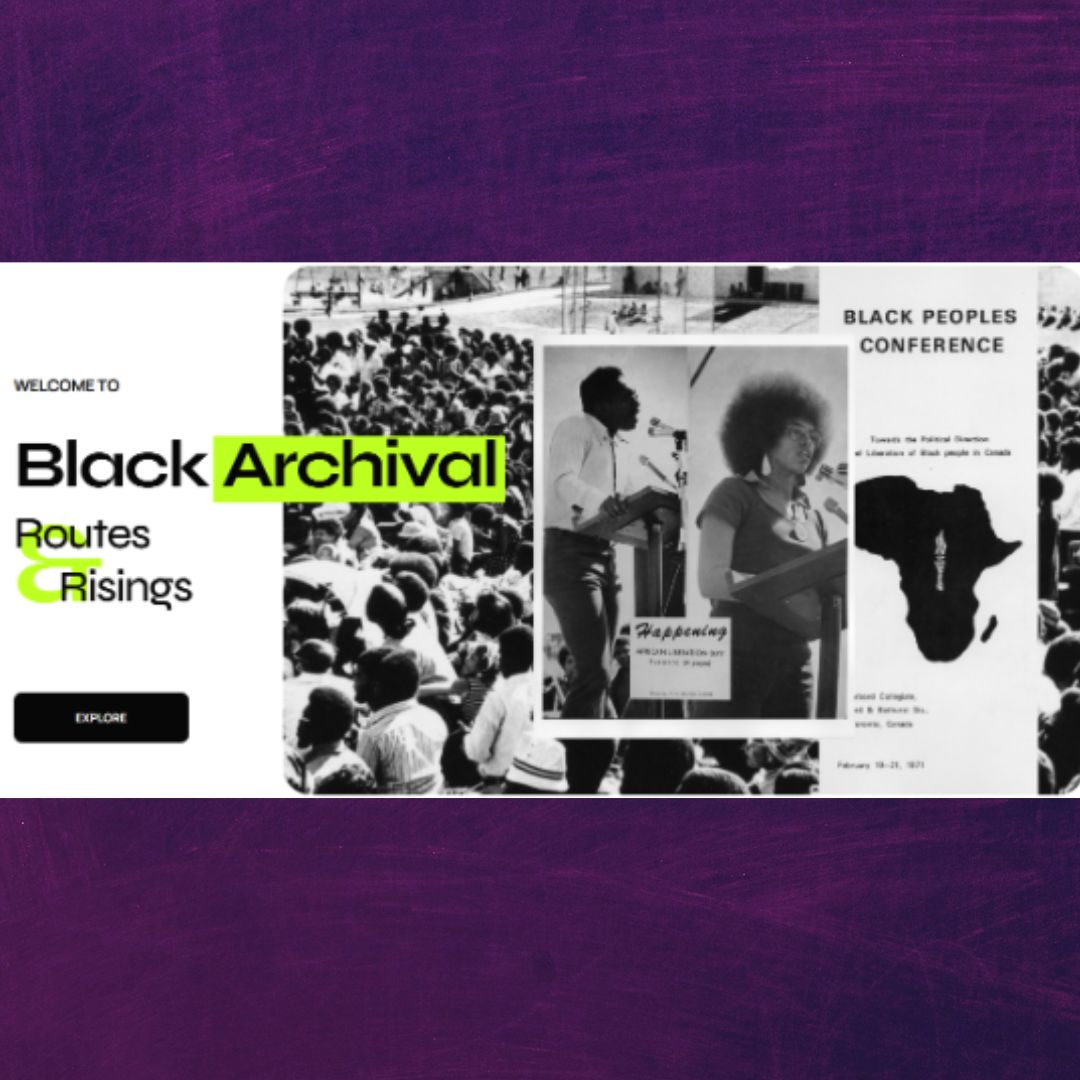
blackarchives.ca
Melanie Knight, Department of Sociology
Anne-Marie Lee-Loy, Department of English
The Black Archival: Routes & Risings (external link) project, spearheaded by Melanie Knight and Anne-Marie Lee-Loy aims to collect, preserve and steward archival materials important to the history of Black people in Canada and globally. The genesis of the project is rooted in the unacknowledged richness of archival materials encapsulating Black histories dispersed among various Black communities and organizations nationwide.

100+ influential books
30+ hours of recording with foundry workers, nurses and elders
20+ Black Canadian magazines
500+ pages of community newsletters
Archives of Ontario.
Ndeye Ba, Department of Languages, Literatures, and Cultures
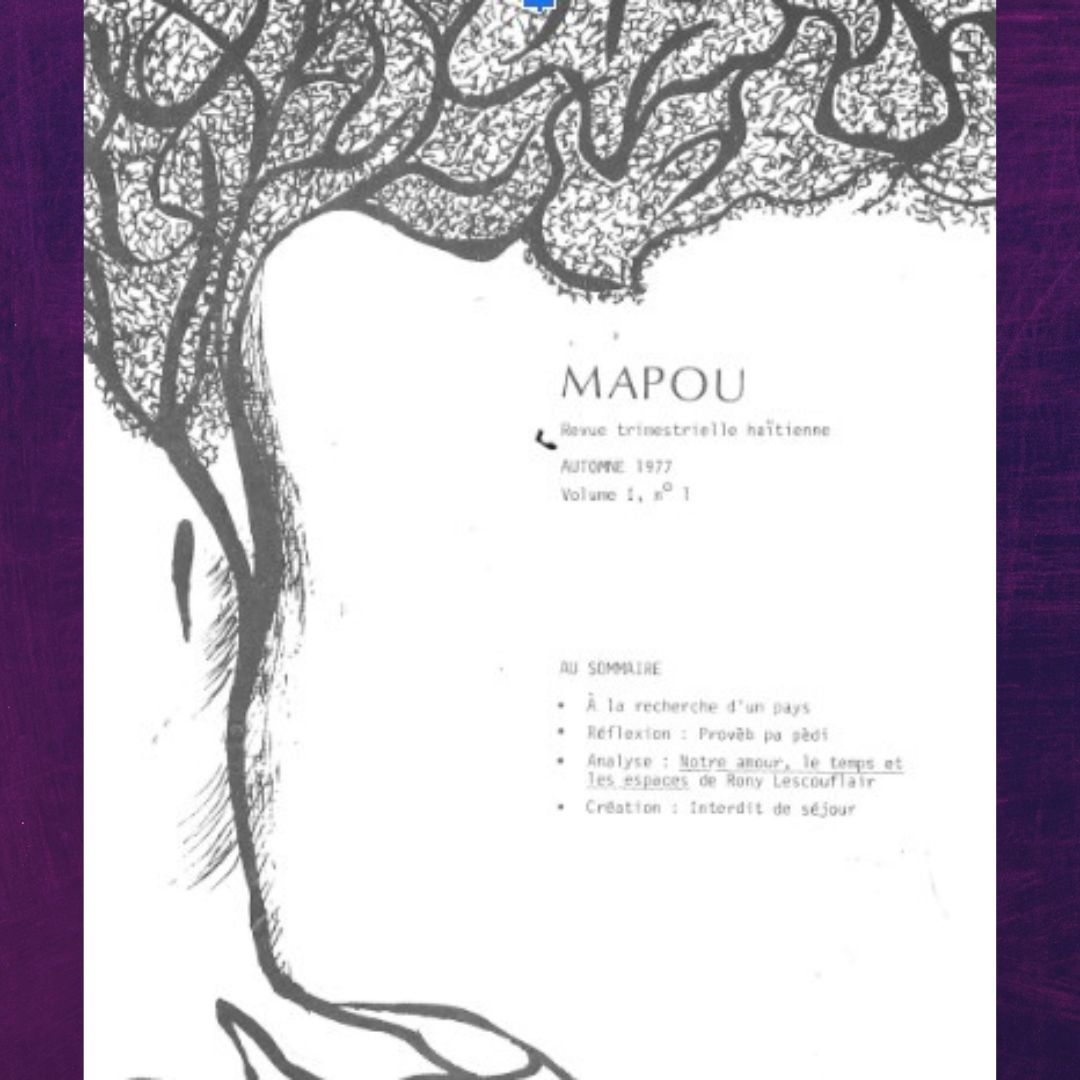
Ndeye Ba, along with Melanie Knight is researching and writing about a little known publication called Mapou which was published in 1977 by Haitians living in Ottawa, Canada. Although the archival record is only of two issues, the Canadian publication reveals interesting reflections from a Haitian diasporic community wrestling with ideas of identity, belonging, power and oppression.
Carcerality and Abolition
Rai Reece, Department of Sociology
Reece examines how carceral processes in Canada are shaped by historical and contemporary narratives of colonial violence (external link) , particularly concerning anti-Black and anti-Indigenous racism. She examines the intersection of punishment and misogynoir as enacted through governance and white settler capitalism.
Stephanie Latty, Department of Criminology
Latty examines the media and legal discourses surrounding Black women and girls who have experienced strip-searching and other forms of state violence in Canada.
Sam Tecle, Department of Sociology
Tecle argues that surveillance, particularly increased CCTV surveillance in Black and racialized neighbourhoods perpetuates racial profiling and policing injustices (external link) rather than addressing systemic issues like poverty, housing, and access to resources, while critics link the initiative to broader patterns of gentrification and displacement.
Lahoma Thomas, Department of Criminology
Thomas focuses on political violence, organized crime, non-state governance, and collective political struggle in the Americas, analyzed through a transnational Black feminist perspective.
.jpg)
Pexels
Lahoma Thomas - 2024 Recipient for SSHRC Insight Development Grant: "Examining the Contours of State Violence in Democracies"
From creative works that explore untold histories to impactful social justice research that addresses contemporary struggles, the diversity and depth of faculty expertise across disciplines continue to shape and enrich our understanding of Black experiences. As these projects develop and flourish, they not only contribute to academic discourse but also play a crucial role in enhancing community well-being locally and globally. At TMU, Black Studies is not just a field of study—it is a force for transformation, actively contributing to a more just, inclusive, and connected world.